



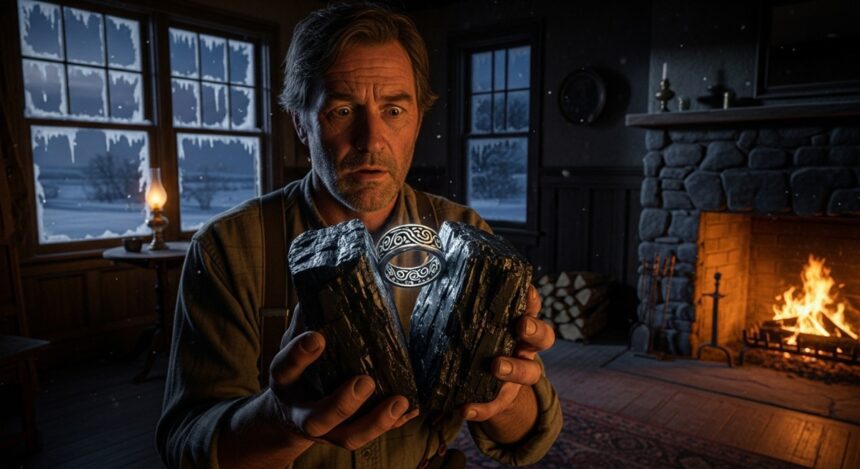
It’s winter evening in 1880s America, the kind where frost claws at the windowpanes and the world outside feels like it’s holding its breath. A farmer, his hands rough as the earth he tills, cracks open a lump of coal for the hearth. The fire spits and hisses, but inside that unremarkable black chunk—something gleams. Not a trick of the light, not a shard of fool’s pyrite, but a ring, forged in metal, sealed within layers that whisper of epochs long devoured by time. Sixty million years, they say. Older than the dust of dinosaurs, older than the first flicker of mammalian eyes in the dark.
One man’s fuel becomes the spark for a riddle that still burns through the corridors of forbidden history: Was this the Ring of Eve, a relic from a civilization swallowed by the planet’s indifferent churn? Or just another sleight of hand in the grand illusion of our origins?
In the dim glow of that forgotten parlor, the ordinary fractures into the uncanny. What if the coal wasn’t just dead plants compressed into shadow, but a vault for secrets we’d never dared to dream?
The Unearthing: A Farmer’s Fire and a Phantom’s Grasp
The tale begins not in some sterile lab or gilded museum, but in the soot-streaked anonymity of rural life. It was the late 19th century, a time when the American heartland pulsed with the raw rhythm of expansion, railroads scarring the soil, miners delving into the earth’s black veins. Our unnamed farmer, ever the pragmatist, hauls home a load of coal from a nondescript mine, the kind that dotted the landscape like wounds. He splits the pieces with an axe, routine as breathing, until one resists. A glint catches his eye: embedded deep, not perched on the surface like a careless loser’s trinket, but fused into the matrix, as if the rock itself had birthed it.
This wasn’t some bauble lost in the bustle of the pit. No, it was a ring, bronze laced with gold, its form deliberate, almost elegant in its simplicity. Eight inches across, they later measured, with a subtle bell-like curve that evoked wedding bands from eras unborn. The farmer, sensing the weight of what he’d stumbled upon, didn’t pocket it for sentiment. He was a man of the market, after all. He sought out appraisers, auctioneers hungry for the exotic, but they demanded proof. Not just the object’s allure, but its provenance—a tether to the void from which it emerged.
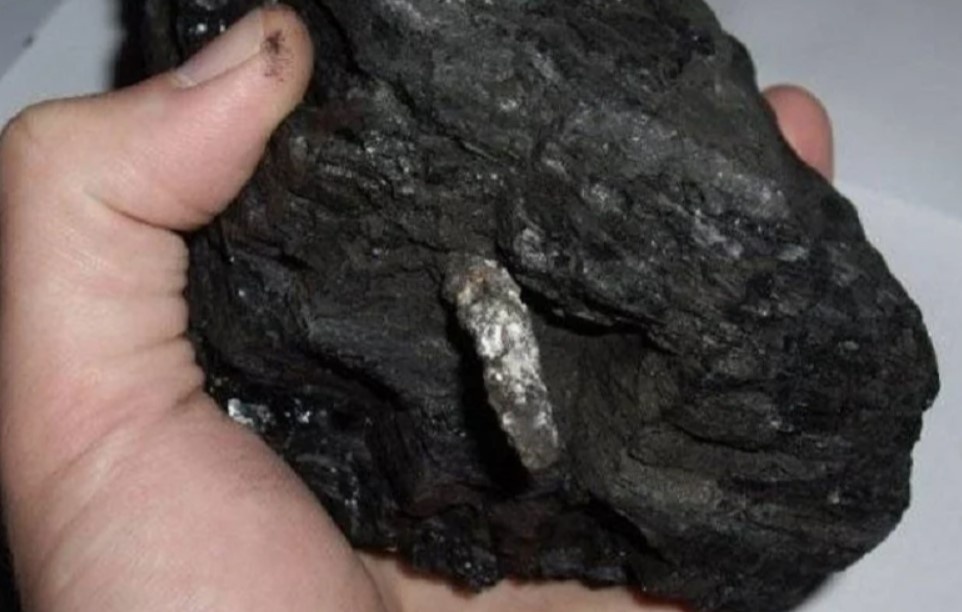
And so, the ring traveled from callused palms to scholarly scrutiny. Geologists descended on the mine, their instruments probing the strata like diviners seeking water in a wasteland. The coal hailed from a seam ninety meters down, a geological autopsy revealing layers etched by cataclysms eons past. Carboniferous echoes, they called it, but the dating pinned it ruthlessly: at least sixty million years. The ring, pristine amid the primordial press, had slumbered through the asteroid’s wrath that felled the titans, through the slow bloom of ferns into forests, through the silent drift of continents. Sold for a tidy fortune—two hundred dollars, a king’s ransom then—the artifact earned its moniker: the Ring of Eve, a nod to the biblical dawn, twisted into something far more profane.
But here’s the shadow that lingers: Why name it for Eve? Was it a sly wink to forbidden knowledge, the fruit that birthed awareness in a garden gone to gravel? Or merely the auctioneer’s flourish, packaging mystery for the masses? In the hands of collectors, it vanished into private vaults, resurfacing only in whispers and yellowed clippings. Yet its echo refuses to fade, a metallic heartbeat in the chest of alternative lore.
The Riddle of Resilience: Forged in Fire, Sealed in Stone
Fast-forward to 1908, when the ring emerges from obscurity for a closer communion with science’s early gaze. X-rays and chemical assays, marvels of the machine age, peel back its veil. The verdict? Bronze alloyed with gold, hammered by hands that knew precision, clean lines, no slag of amateur craft. But the true sorcery lies in its survival. Oxidation, that relentless thief, had grazed it lightly, as if for mere decades, before the coal’s anaerobic embrace halted the decay. Left exposed, it would have crumbled to verdigris ghosts by the 1800s. Instead, it endured, a time capsule mocking entropy’s grasp.
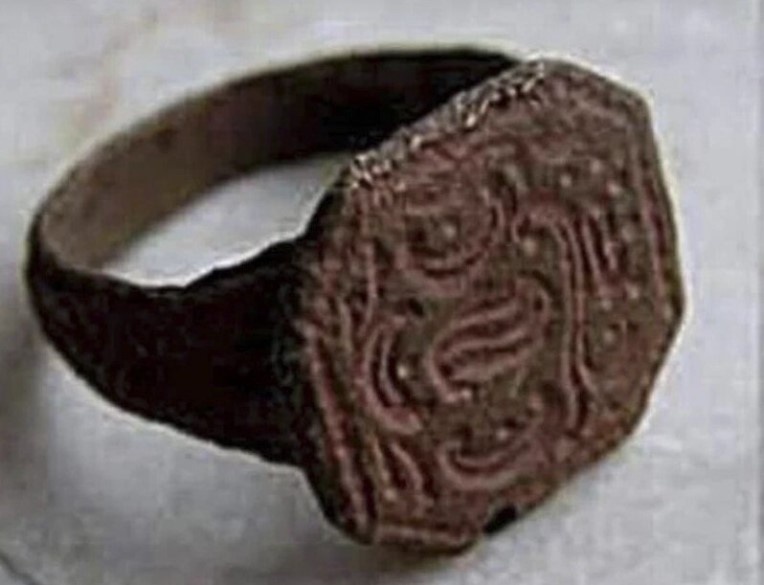
Consider the timeline’s cruelty: Sixty-six million years prior, the Chicxulub impactor scarred the Yucatán, dooming the great lizards to ash-choked graves. Primates wouldn’t stir for another stretch of that gulf; Homo sapiens, with our fleeting genius, lay sixty million years hence. How, then, does a human-hewn hoop nestle in strata predating our genus? The coal, they insist, formed from swampy detritus of a world without warm blood, compressed under burdens no modern mind can fathom. Yet here it is, defying the Darwinian script, a symbol, perhaps, of cycles unseen, where creation and collapse waltz in eternal shadow.
This preservation is accusation. In a universe that erodes empires to sand, what force cocooned this relic? Divine intervention? Cosmic jest? Or the hand of intelligences long eroded to myth? The Ring of Eve doesn’t just challenge geology; it taunts our narrative of progress, suggesting that what we call “first” might be little more than a weary encore.
Golden Threads in the Abyss: Echoes of Mrs. Culp’s Chain
The Ring of Eve stands not alone but as harbinger to a procession of phantoms, each more insistent than the last. Take June 9, 1891, in the drowsy flatlands of Morrisonville, Illinois. Mrs. S.W. Culp, wife to a newspaper man, stokes her stove with coal scraps. A stubborn lump defies her poker; she splits it with a decisive crack. And there, woven into the fracture like a vein of forgotten ore, dangles a gold chain—ten inches of intricate links, eight grams of antiquity, its weave alien to Victorian eyes.
Her initial flicker of doubt? A miner’s mishap, perhaps, a bauble slipped into the bin. But no—the chain’s midsection freed easily, while its ends clung like roots to the coal’s corners. Semicircular imprints scarred the break, mirroring each loop with eerie fidelity, as if the rock had grown around it in jealous custody. No loose intrusion, this; it was interred, intimate as a sarcophagus seal. She bore it to a jeweler, who marveled at the craftsmanship—unfamiliar patterns, defying easy origin.
The Morrisonville Times immortalized it two days hence, their pages a clarion for the curious. Geologists converged, tracing the coal to Taylorville or Pana mines, seams decreed by the Illinois State Geological Survey to span 260 to 320 million years. The Carboniferous again—that fern-choked, amphibian-haunted prelude to life as we presume it. No mammals yet, let alone the dexterous fingers to forge such finery. Witnesses multiplied: family, neighbors, the press’s ink-dry scrutiny. Yet, like Eve’s ring, the chain slipped away post-mortem, bequeathed to kin and lost to the ether.
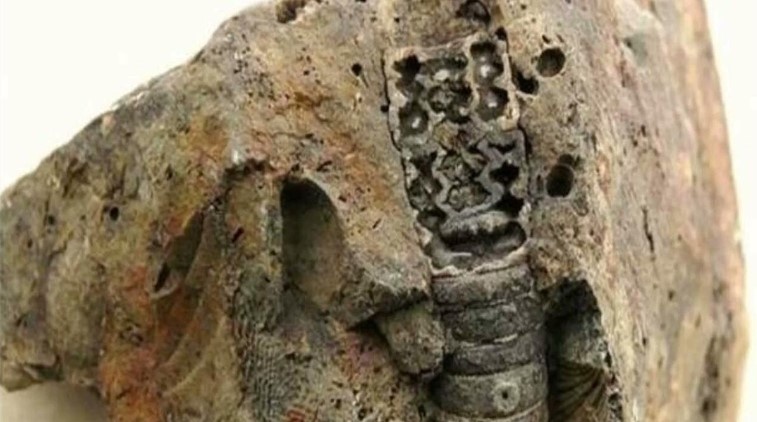
From Wilburton, Oklahoma’s 312-million-year-old pits, miners unearthed silver cubes etched with rivet ghosts—geometric insults to natural chaos. In Idaho’s basalt tombs, ninety-one meters beneath sand-veiled badlands, a gold figurine emerged mid-drill, its feminine form a siren’s call from 11 million years pre-human. Brazil’s 1998 roadworks yielded shellfish casings sheathed in gold leaf, mundane yet metallically adorned. Nails in Scottish coal, bells in Californian clay, mortars in Massachusetts rock, a litany of “out-of-place artifacts,” or OOPArts, as the fringe faithful dub them. Each a puncture in the timeline, bleeding questions: Were these castoffs from a drowned Atlantis, or echoes of extraterrestrial meddlers? Or, in the dystopian twist, harbingers of our own impending obsolescence?
A Pantheon of Paradoxes: The Inventory of the Impossible
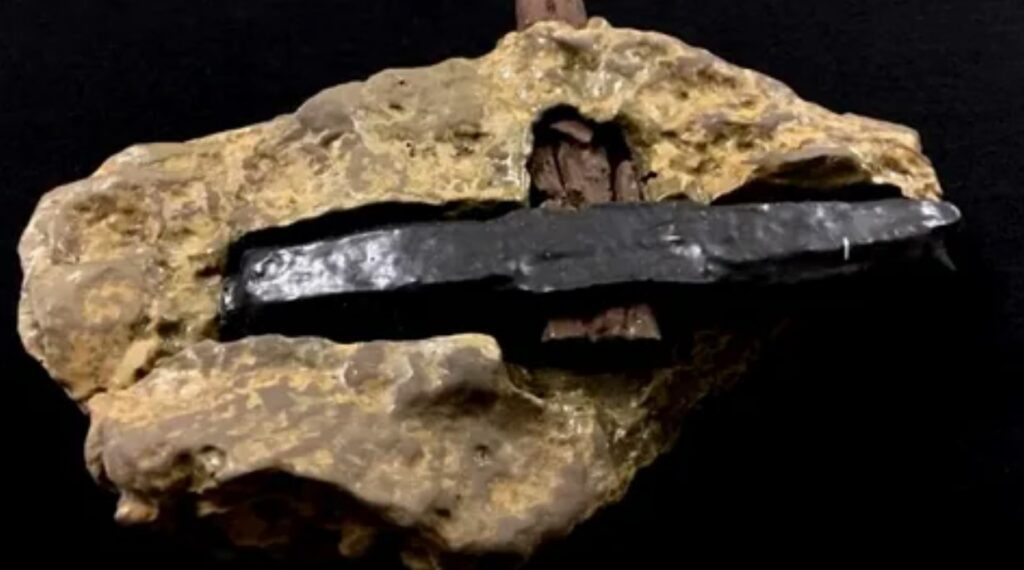
Research more, and the catalog unfurls like a forbidden scroll. The London Hammer, unearthed in 1930s Texas, protrudes from Ordovician limestone, 400 million years old, predating tool-use by eons. Its iron head and partial wooden haft defy erosion, the rock encrusting it like a lover’s grip. Coins from 15th-century molds in 300-million-year strata; iron pots halved in Illinois coal; a cast-iron pestle from 19th-century design in ancient Scottish seams. Globally, the dossier swells: Russian bells in 300-million-year Carboniferous, Mexican figurines in 800,000-year gravels.
These are symbols in a larger symbology. The ring as marital vow from a matriarchal dawn; the chain as binding spell against time’s unraveling; the hammer as thunder-god’s relic, pounding out rhythms of forgotten forges. In their multiplicity, they evoke a cyclical cosmology—not linear ascent from ape to agora, but a spiral of rises and ruins. Civilizations bloom like nightshade in the geologic night, only to be interred by flood, fire, or faultline. The Ring of Eve becomes emblem of this ouroboros: devouring its tail, birthing itself anew.
Supporters weave these threads into tapestry: Earth’s history as palimpsest, overwritten yet legible in rare fissures. Preservation’s lottery is cruel, less than 1% of dinosauria endures; why expect more from metallic ephemera? Cataclysmic resets—pole shifts, supervolcanoes, asteroid symphonies—entomb the evidence under kilometers of reborn crust. Perhaps our predecessors weren’t bipedal kin but chitinous thinkers, avian artificers, or silicon-shelled savants, their tools persisting where bones betray. In this view, OOPArts aren’t hoaxes but holy grails, urging us to question: Are we pioneers or pallbearers?
The Fortress of Doubt: Skeptics and the Shroud of Science
Yet for every enthralled explorer, a cadre of skeptics mans the ramparts, their arsenal forged in empirical steel. Chief indictment: absence. Where lingers the Ring of Eve? Vanished into collector’s crypts, its provenance a vapor trail. Mrs. Culp’s chain? Heirloom to oblivion. The London Hammer? Displayed, yes, but its custodian bars invasive dating, lest revelation dull the drama. These relics evade the gauntlet of modern forensics—mass spectrometry, thermoluminescence—preferring myth’s murk to science’s scalpel.
Deeper still: coal’s chronology crumbles under scrutiny. Once deemed slow-cooked over eons from vegetal viscera, it’s now suspect of swift genesis. Abiogenic origins murmur of hydrocarbons birthed in mantle maelstroms, not mere muck. Experiments birth “coal” from dust in decades, pressure and peril knitting fragments into faux-fossil firmness. A dropped doodad in the 19th century? Easily entombed, its imprint a geological graffiti.
Nature, too, conspires in counterfeits. Moscow’s Fersman Museum hoards gold pseudomorphs—rectilinear nuggets mimicking machined modules, birthed by hydrothermal whims. Concretions in cracks: a linear fracture yields a “chain”; intersecting veins, a “nail.” Mineral mimicry, they call it, where chemistry sculpts simulacra sans sentience. Rapid mineralization seals the ruse, limestone accretes in centuries, not kalpas, sheathing a miner’s mallet in millennial masquerade. The Texas Hammer’s haft, assayed by carbon-14, yields dates from now to 700 years past—no Mesozoic murmur.
Context’s the coup de grâce. True artifacts arrive with strata’s stamp: coordinates, cross-sections, contextual kin. But coal-haul anomalies? Anonymous as alleyway whispers. No excavation logs for the farmer’s trove, no photogenic pit for Culp’s cleft. Provenance evaporates, leaving us adrift in anecdote’s fog.
Fracturing the Facade: But What If the Veil Tears?
Skepticism’s scaffold stands sturdy, yet cracks spiderweb its base. What if one endures the assay—a single shard surfacing from the sedimented silence? Sixty million years: a yawn in cosmic calculus, ample for ascents unchronicled. Mountains metamorphose to meadows; oceans ossify to stone. A civilization’s detritus? Shredded, subducted, scant. Dinosaurs dominated 165 million orbits, bequeathing but bone-fragments and footprint fugues. Why demand mausoleums from metal, when entropy’s the great eraser?
Intelligences not ours, emergent in Eocene amber or Permian peat. fungal federations or cetacean cartels, crafting in currents we can’t conceive. Their leavings—leaden loops, aureate arcs—litter the lithosphere, awaiting our awaking. Or darker: time’s torsion, travelers tumbling through temporal tears, seeding strata with stray souvenirs. Dystopian dread: we’re the interlopers, our epoch the aberration, destined to join the junkyard of bygone brilliances.
These hypotheticals haunt like half-remembered dreams, urging excavation beyond the evident. Kilometer-deep drills, abyssal scans, perhaps the planet’s core cradles codices in crystal. Or maybe the artifacts are metaphors, mirrors for our fragility: in chasing ancient anomalies, we confront our own impending interment.
Whispers from the Wound: Toward an Uncertain Dawn
The Ring of Eve endures as enigma, a bronze barb in the flesh of certainty. Mrs. Culp’s chain clinks in archival afterimages; the hammer hangs in hesitant display; the silver cubes and gold-shelled shells stack in the skeptic’s sidebar. Orthodoxy dismisses them as detritus of deception or design’s deceit—insufficient data, surplus suspicion. No paradigm pivot without pristine proof, they decree, lest we tumble into pseudoscience’s pit.
But the faithful persist, paleontologists of the prohibited, sifting slag for salvation. Each anomaly an arrow against the arrow of time, each OOPArt a omen of overlooked odysseys. Truth? Elusive as ether, suspended in superposition—hoax or herald, fable or fracture.
What we grasp unyielding: these specters stir the stasis. They propel probes into the profound, dismantle dogmas, ignite inquiries that illuminate the interstices. History’s not a highway but a haunted hollow, riddled with riddles that reward the restless. In the Ring of Eve’s gleam, we glimpse not just antiquity’s affront, but our own shadowed splendor, the potential for peril and poetry in the planet’s pulse.
So stoke your hearth with skepticism and wonder alike. Crack the coal of convention. Who knows what glints await in the gloom? The past is a predator, patient and poised, reminding us that in the grand, grinding gearwork of geology, we’re but fleeting cogs—gone tomorrow, but perhaps glimpsed in the strata of forever.