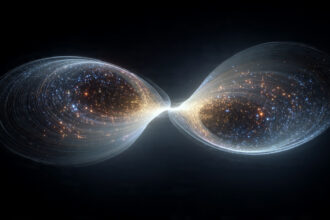




The standard cosmological picture, a single Big Bang 13.8 billion years ago, is not seriously in doubt among physicists. What is actively debated is what happened before it, or whether “before” is even a meaningful question, and several credentialed physicists have spent decades developing serious alternatives to the simplest version of the story.
What follows covers those theories accurately, including one specific piece of claimed evidence that has since been checked by independent researchers and did not hold up.
What the Cosmic Microwave Background Actually Shows
The cosmic microwave background, the CMB, is well established: the oldest light in the observable universe, released roughly 380,000 years after the Big Bang when the early universe cooled enough for photons to travel freely rather than scattering off dense plasma. Satellites including WMAP and, more precisely, the European Space Agency’s Planck mission have mapped this radiation across the entire sky with extraordinary precision, and the tiny temperature variations they’ve recorded, differences of only millionths of a degree, are the seeds from which all subsequent large-scale cosmic structure grew.
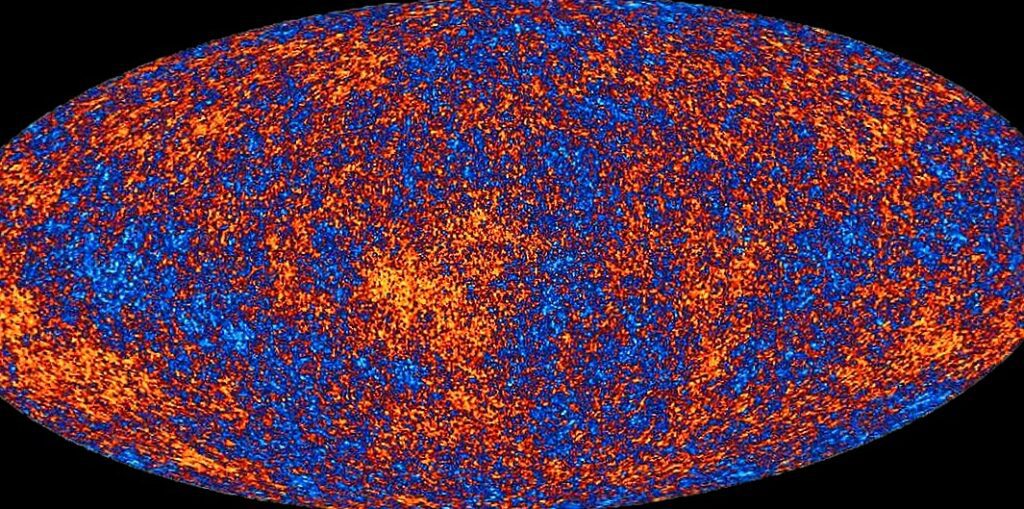
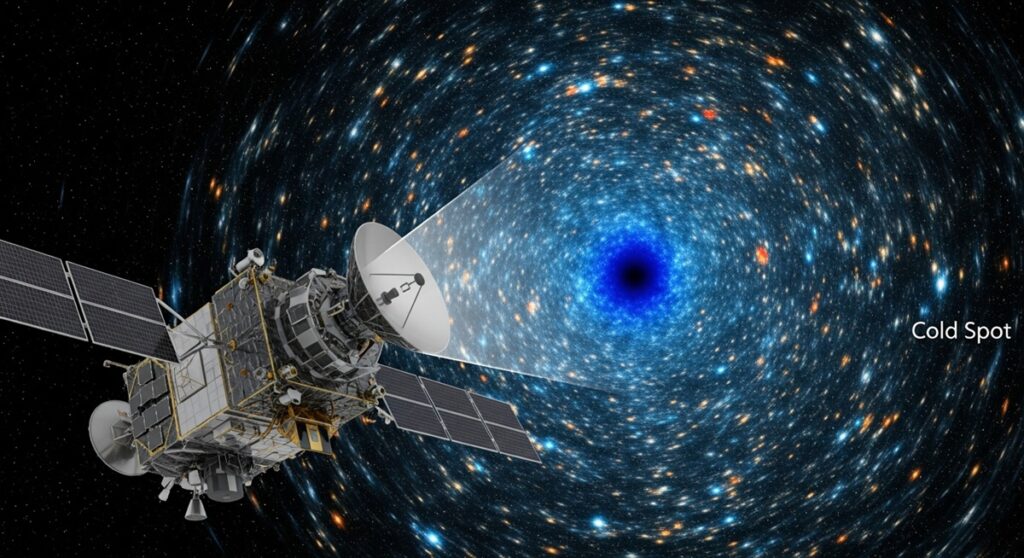
A still-debated feature of the CMB is the Cold Spot, an unusually large region in the southern sky measurably cooler than its surroundings, and a mild statistical anomaly in the CMB’s power spectrum at the largest observable scales, where fluctuations appear somewhat suppressed relative to the simplest predictions of standard inflationary theory. Both of these are published, actively discussed features of the confirmed data. Neither, on its own, overturns the standard model, but both are legitimate reasons some cosmologists continue exploring alternatives to the simplest inflationary picture.
Penrose’s Conformal Cyclic Cosmology
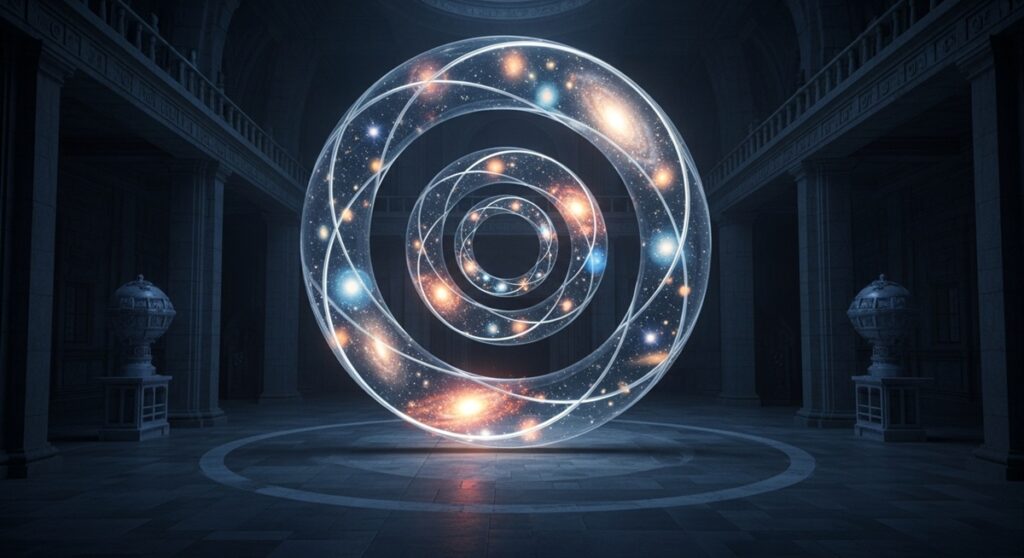
Roger Penrose, a Nobel laureate in physics, proposed Conformal Cyclic Cosmology, CCC, as a serious alternative framework in which the universe doesn’t have a single beginning but instead consists of an endless sequence of “aeons.” In this picture, each aeon expands until it becomes so diffuse and dominated by massless radiation that its geometry becomes mathematically equivalent, through a technique called conformal rescaling, to the extremely hot, dense conditions of a new Big Bang, allowing one aeon to transition smoothly into the next without an actual singularity or true beginning.
The Circles Claim, and What Happened to It
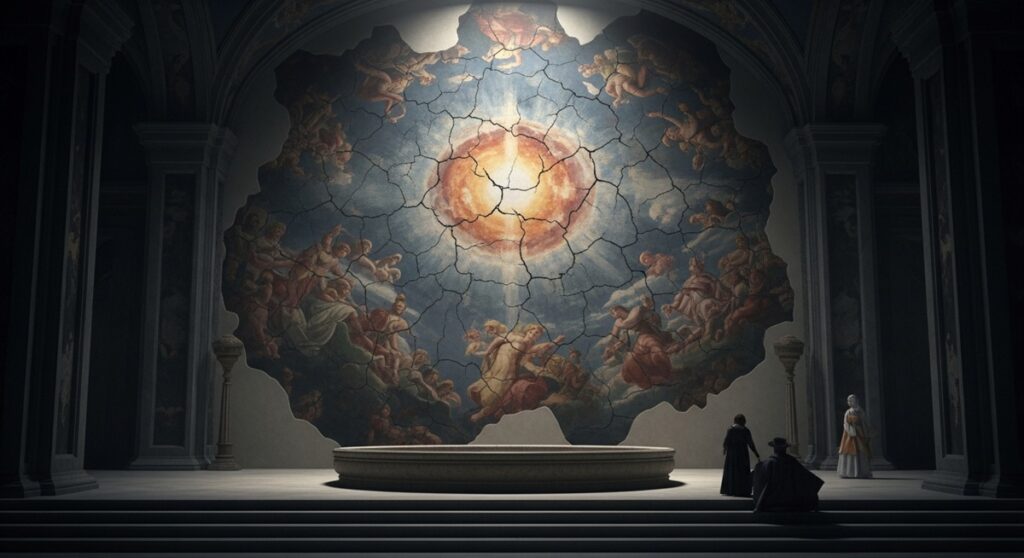
This is where the story needs a direct, honest correction rather than a hopeful one. In 2010, Penrose and physicist Vahe Gurzadyan published a paper claiming to have found concentric circles of unusually low temperature variance in the CMB, which they interpreted as imprints of supermassive black hole collisions from the aeon preceding our own, exactly what CCC would predict, and reported the statistical significance at more than six sigma, an extremely strong result if confirmed.
Three independent research groups, Wehus and Eriksen, Moss, Scott, and Zibin, and Hajian, separately attempted to reproduce this finding using the same WMAP data. All three found that the claimed circles were a statistical artifact: when properly simulated using the standard Lambda-CDM model’s own power spectrum, ordinary random CMB data produces circles of exactly the same apparent significance, with no black hole collisions or prior aeons required. One physicist reviewing the episode summarized it plainly: Gurzadyan and Penrose “have not found evidence for pre-Big Bang phenomena, but have simply re-discovered that the CMB contains structure.” Penrose and Gurzadyan disputed this reanalysis and published further papers defending their original interpretation through the following decade, but a more recent, independent statistical re-analysis of the full Planck and WMAP datasets, completed in 2024, found no significant low-variance circles at all, and no statistically significant evidence for the related “Hawking points” CCC also predicts.
This needs to be stated clearly: the specific observational evidence originally claimed for CCC has not held up under independent scrutiny. This does not, by itself, disprove Conformal Cyclic Cosmology as a theoretical framework, the absence of one predicted signature doesn’t rule out the underlying mathematics, but it does mean the circles should no longer be cited as supporting evidence, and continuing to present them as a live, strengthening case for a cyclic universe misrepresents where the actual scientific record currently stands.
Loop Quantum Gravity and the Big Bounce
A separate and genuinely distinct alternative comes from Loop Quantum Gravity, LQG, an established approach to quantizing gravity in which space itself is not a smooth continuum but is built from discrete, Planck-scale units, developed significantly by physicists including Abhay Ashtekar. In LQG-based cosmological models, a contracting universe doesn’t collapse into an infinitely dense singularity the way it does in classical general relativity. Instead, quantum effects become significant at extremely small scales and produce a repulsive pressure that halts the contraction and triggers a “Big Bounce,” a rebound into a new expanding phase carrying forward structure inherited from before the bounce.
This is an actively researched area of theoretical cosmology, with published simulations from research groups working to determine whether bounce models can reproduce the observed features of the CMB, including that same large-scale power suppression mentioned earlier, as well as, or better than, standard inflationary theory does. It remains a minority position relative to standard inflationary cosmology, and connecting it cleanly to the Standard Model of particle physics and to observed cosmic acceleration remains an open technical challenge its proponents acknowledge.
Problems With Standard Inflation
Standard cosmic inflation, proposed by Alan Guth in 1980, solves substantial, well established problems with the basic Big Bang picture, including the horizon problem, why distant regions of the universe that could never have been in causal contact show the same temperature, and the flatness problem, why the universe’s geometry is so precisely balanced rather than obviously curved. Inflation proposes an extremely brief, exponential burst of expansion in the universe’s first fraction of a second, and its prediction for the statistical pattern of CMB fluctuations, described by the scalar spectral index, has been confirmed by Planck data with considerable precision.
That said, inflation has serious, legitimate critics within mainstream cosmology, not just outside it. Physicist Paul Steinhardt, who helped develop early inflationary theory himself, has become one of its more prominent critics, arguing that the theory’s flexibility, its ability to be adjusted to fit almost any observational outcome through different choices of the hypothetical inflaton field’s properties, makes it difficult to test in a genuinely falsifiable way, and that eternal inflation’s prediction of an unobservable multiverse of bubble universes pushes the theory’s stronger claims beyond the reach of any possible evidence. Steinhardt has co-developed an alternative, the ekpyrotic model, in which the universe’s flatness and structure arise from a slow contraction and bounce driven by colliding higher-dimensional membranes, rather than from inflation’s rapid expansion.
Smolin’s Cosmological Natural Selection
A stranger and more speculative alternative, worth including for accuracy even though it has less mainstream traction than CCC or loop quantum cosmology, comes from physicist Lee Smolin, who proposed cosmological natural selection in the early 1990s. Smolin’s idea is that black holes, rather than being simple endpoints, might each give rise to a new universe on their far side, with the physical constants of that new universe varying slightly from its parent’s, in a way loosely analogous to genetic mutation. Universes whose physical constants happen to favor producing large numbers of black holes would, in this framework, produce proportionally more “offspring” universes, meaning that over enormous timescales spanning many generations of universes, the physical constants we observe in our own universe would be expected to be unusually well suited to black hole formation, since that’s effectively what got selected for.
This theory’s actual scientific standing deserves honest treatment: Smolin has argued it makes a testable prediction, that our universe’s constants should sit near a local maximum for black hole production relative to nearby possible variations, but critics have pointed out that the theory currently lacks a rigorous mechanism connecting black hole interiors to genuinely new universes, and that the “selection” analogy, while intuitive, doesn’t have a demonstrated physical process behind it in the way biological natural selection does. It remains a published idea taken seriously as a thought-provoking possibility rather than a leading contender within cosmology.
Why the Horizon and Flatness Problems Matter This Much
These two founding problems deserve explanation in more detail, since they’re the actual reason all of these alternative theories exist in the first place, not abstract technicalities. The horizon problem is genuinely strange when you sit with it: regions of the CMB sky on opposite sides of the observable universe show almost identical temperatures, to within extraordinary precision, despite being separated by distances so vast that, under standard physics without inflation, light itself would never have had time to travel between them and let them reach thermal equilibrium. Two regions that could never have exchanged so much as a photon somehow ended up at nearly the same temperature, which is the kind of coincidence that demands an explanation rather than a shrug.
The flatness problem is similarly precise. The overall geometry of the universe, whether space curves like the surface of a sphere, curves the opposite way like a saddle, or is flat, is measured to be extraordinarily close to perfectly flat, far closer than would be expected by chance from arbitrary initial conditions. Left alone, any slight deviation from perfect flatness in the early universe should have been dramatically amplified over billions of years of expansion, the way a small wobble in a spinning top grows more pronounced over time rather than less. The fact that the universe today is still so close to flat implies its initial conditions were tuned to an almost absurd degree of precision, unless something in the early universe actively drove it toward flatness.
Standard inflation solves both problems with the same mechanism: a brief period of exponential expansion would have stretched a small, already-equilibrated patch of space to a size larger than our entire observable universe, which explains the uniform temperature, and the same stretching would have flattened out any initial curvature, the way inflating a balloon makes its surface look locally flatter the larger it gets. This is genuinely elegant, and it’s a large part of why inflation became the standard picture. The alternative theories covered above, cyclic models, bounce cosmologies, ekpyrotic contraction, are each attempting to solve the same two problems through a fundamentally different mechanism, generally by proposing a long, slow phase, contraction rather than explosive expansion, that would have had enough time for distant regions to reach equilibrium the ordinary way, without requiring inflation’s very brief, very extreme burst.
Where the Evidence Currently Stands
Planck’s full data release, combined with WMAP’s earlier survey, confirms the Cold Spot and the large-scale power suppression as documented, if modest, features of the actual data, generally reported at around 2 to 3 standard deviations of significance, well below the 5-sigma threshold physicists typically require to call something a confirmed discovery rather than a statistical curiosity worth continued attention. Standard inflationary cosmology remains the consensus position and continues to be refined to accommodate these anomalies. Alternative frameworks like CCC, loop quantum cosmology’s bounce models, and the ekpyrotic scenario remain live, minority research programs pursued by credentialed physicists, taken seriously as theoretical possibilities even where their specific supporting evidence, like the CCC circles, has not survived independent scrutiny.
What Would Actually Settle This
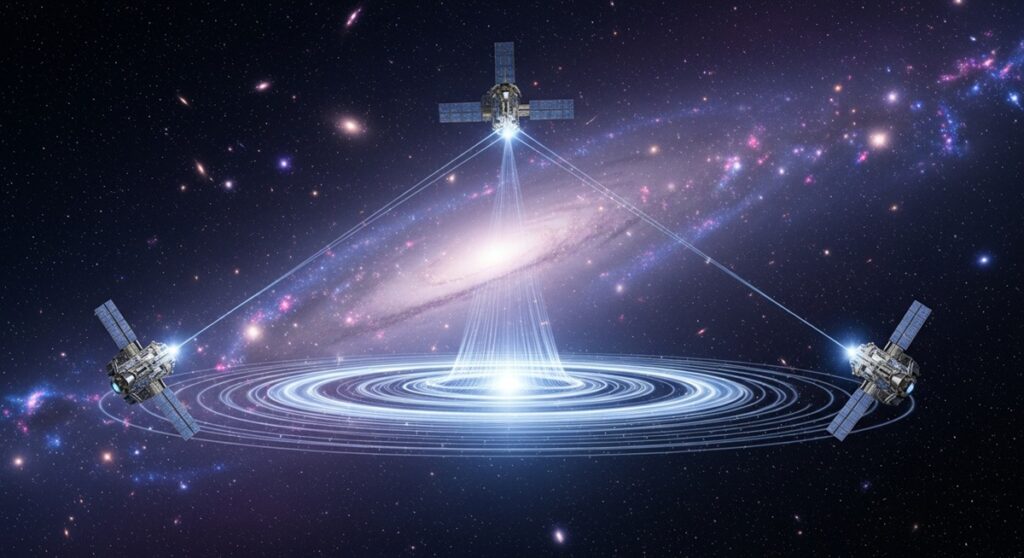
The most promising future test doesn’t come from the CMB at all, since light cannot escape from before the universe became transparent, but from gravitational waves, which can in principle pass through any earlier phase of the universe’s history essentially unimpeded. The European Space Agency’s LISA mission, planned for the 2030s, will use three spacecraft in a triangular formation millions of kilometers apart to detect gravitational wave signatures at frequencies inaccessible to ground-based detectors like LIGO, including, potentially, a primordial gravitational wave background whose specific statistical signature would differ meaningfully between an inflationary origin and a bounce-based one. A confirmed detection consistent with one model and inconsistent with the others would be considerably stronger evidence than anything the CMB alone has produced so far.
Until then, the honest state of the science is this: the Big Bang, in the sense of a hot, dense early universe roughly 13.8 billion years ago, remains extremely well established. What preceded it, or whether the question of “before” even applies, remains a genuinely open theoretical question, actively pursued by serious physicists using established mathematics and rigorous, if so far inconclusive, observational tests. The claimed circles that once seemed like the strongest evidence for one particular answer did not survive independent checking, and that correction is itself part of how this science is supposed to work.