



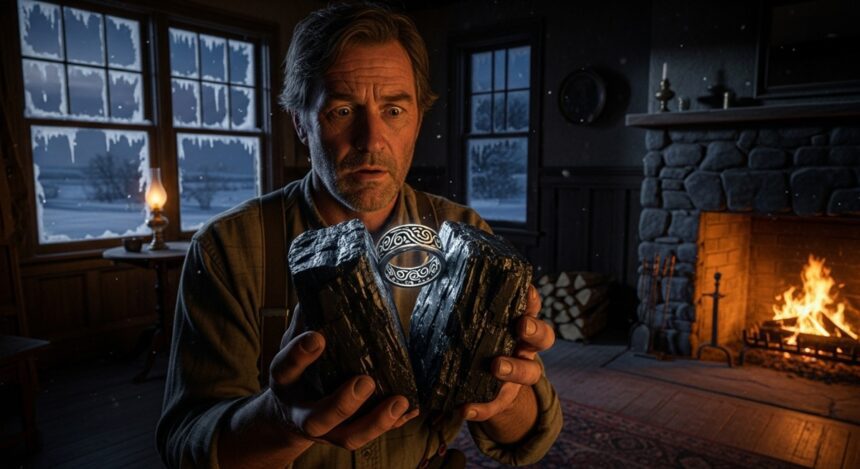
The “Ring of Eve” has no known current location, no surviving photograph, no metallurgical report anyone can examine today, and no independent dating of the ring itself, only of the coal seam it was allegedly found inside, which turns out to be a different, much older number describing the wrong object.
That distinction, the age of the coal versus the age of anything embedded in it, is the single logical error that most out-of-place artifact stories are built on, and it’s worth working through carefully rather than taking on faith.
What Can Actually Be Verified About the Ring
The story, in its most repeated form, describes an 1880s American farmer finding a bronze-and-gold ring inside a lump of coal reportedly mined from roughly 90 meters underground, in a seam later estimated at 60 million years old. Every detail past that point becomes difficult to pin down. No contemporary newspaper account of the discovery has been located by researchers who’ve gone looking. No museum or private collection today claims to hold the actual object. No independent radiometric dating, metallurgical analysis, or archaeological report of the ring itself has ever been published, only secondhand retellings of a retelling. Researchers who’ve traced the story’s spread note it exists almost entirely in reposted, undated internet and social media copy, with details that shift between versions, sometimes Colorado, sometimes unspecified, sometimes with an 1908 X-ray analysis added, without any of those added details tracing to a locatable original source either.
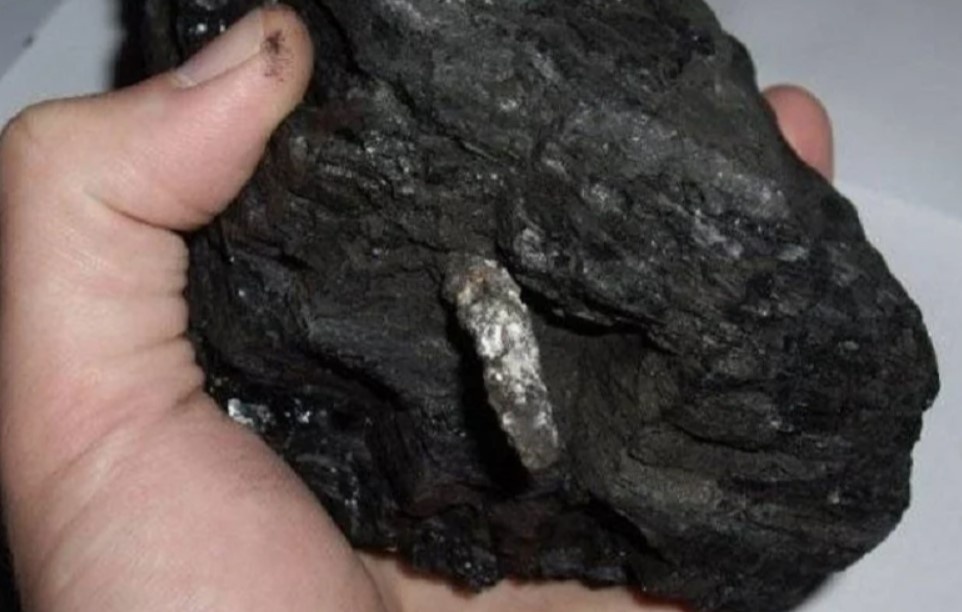
The core logical problem is worth stating plainly. Even if a coal seam is genuinely 60 million years old, that figure describes when the coal itself formed, not the age of anything that might later have become embedded in a crack or cavity within it. An object could enter a fracture in ancient coal recently, during mining, transport, or handling, and the coal’s age would tell you nothing about the object’s age. Treating the two as the same figure is a basic category error, and it’s the same error underlying nearly every “artifact found in ancient coal” story in circulation.
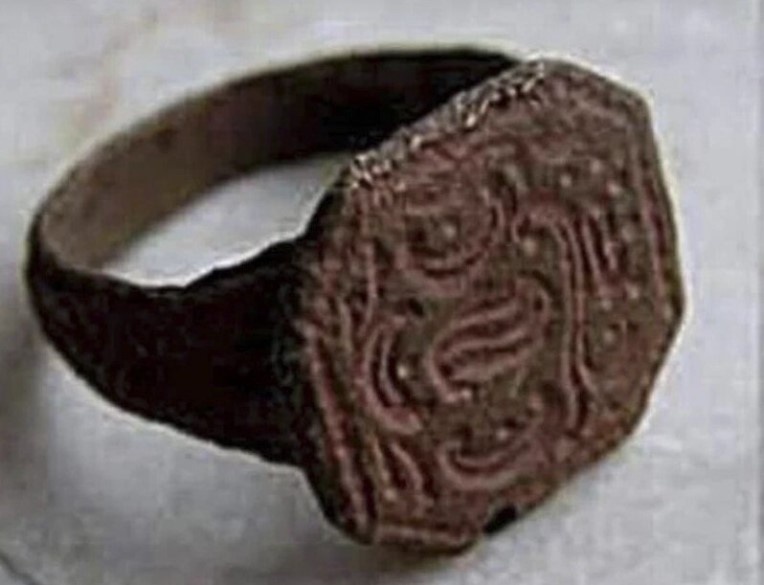
The London Hammer Actually Has Been Tested
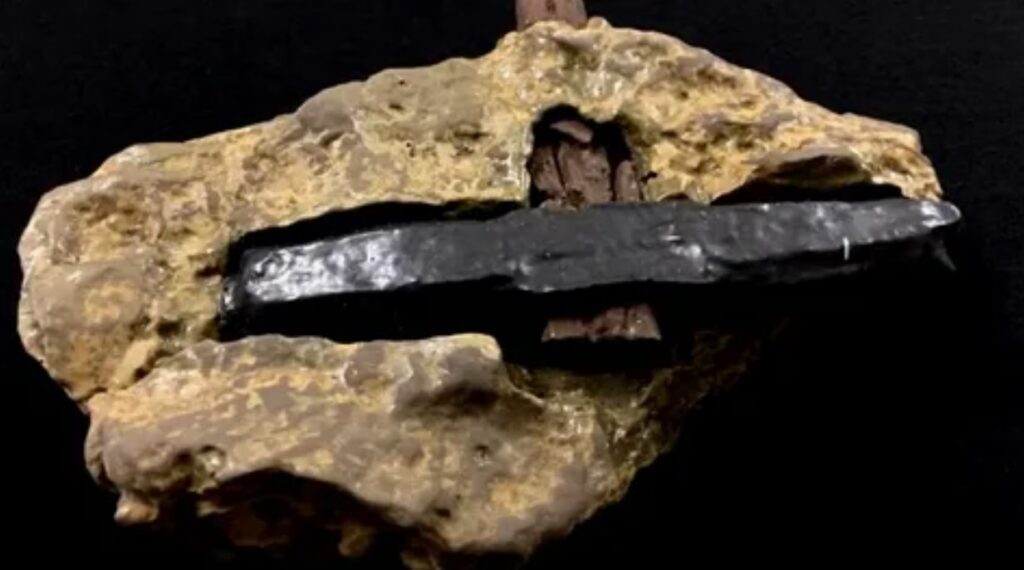
This is the rare OOPArt case where real testing exists and the results are publicly documented, which makes it a useful contrast. The hammer, found near London, Texas in 1936 by Max and Emma Hahn, is a genuine physical object, currently held at Carl Baugh’s Creation Evidence Museum, a young-earth creationist institution rather than a neutral scientific one. When carbon dating was eventually performed on the wooden handle, reported by a Baugh supporter in the late 1990s, the results indicated an age ranging from the present to roughly 700 years, not millions of years. Researcher Glen Kuban, who has examined the hammer directly and published the most thorough independent analysis available, found the tool’s shape and construction consistent with an ordinary 19th-century mining hammer, and concluded that no clear evidence links it to any ancient rock formation. The most likely explanation, supported by the physical evidence, is that mineral-rich groundwater deposited limy sediment around an already-discarded 19th-century tool, hardening into a concretion over a relatively short period, a well-documented, ordinary geological process, not millions of years of burial.
What Happened to Mrs. Culp’s Chain
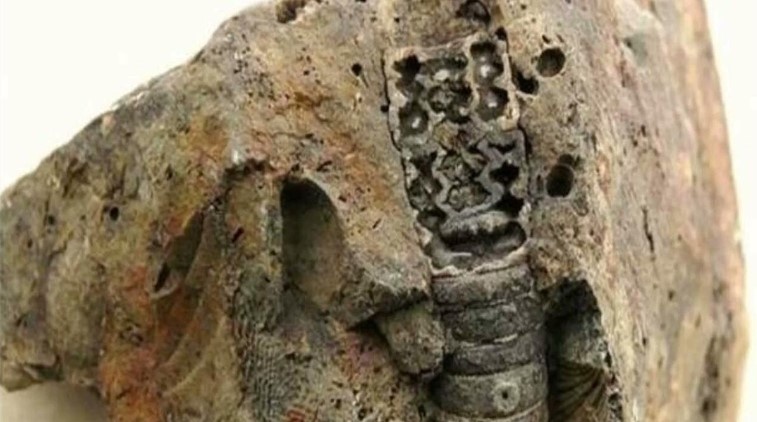
The 1891 Morrisonville, Illinois account, a gold chain reportedly found embedded in coal by Mrs. S.W. Culp, was indeed covered by the local Morrisonville Times at the time, making it one of the more genuinely period-sourced stories in this category. What happened afterward follows the same pattern as the others: the chain passed to family members and was never independently examined by a geologist, metallurgist, or museum, and its current location, like the ring’s, is unknown. A period newspaper account establishes that a story circulated and that people believed it. It doesn’t establish that the chain was actually embedded in coal of the claimed age rather than lost, dropped, or planted by conventional means, since no physical examination of the object by a qualified, disinterested party was ever conducted or published.

Why These Stories Keep Happening
Two ordinary, well-understood processes explain the broader pattern without requiring any lost civilization. First, natural mineral formations regularly produce shapes that look deliberately manufactured to an untrained eye, geological concretions, pseudomorphs, and crystal growths along existing fractures can mimic rings, nails, or chain links closely enough to fool a casual observer, a phenomenon well documented in mineralogy collections like Moscow’s Fersman Museum. Second, coal itself is riddled with natural cracks and cavities, and mining, transport, and handling create ample, mundane opportunities for a genuinely modern object to end up wedged inside a piece of ancient coal long after the coal itself formed. Neither explanation requires deception on any single person’s part. A 19th-century farmer or miner sincerely believing he’d found something extraordinary, without access to the testing that could have settled the question, is a far more economical explanation than a technologically advanced civilization erased so completely that not one other trace of it survives anywhere in the global archaeological or genetic record.

The Missing Step
None of this needs a vanished civilization to be worth examining closely. The Ring of Eve is an untraceable object with no known current location and no independent testing of its own, its “60 million years” borrowed from the coal seam rather than measured from the ring. The London Hammer is a real, still-existing object that actually has been tested, and the results point to an ordinary 19th-century tool, not an ancient one. Mrs. Culp’s chain has a genuine period newspaper record but no surviving physical examination. What connects all three isn’t a hidden pattern in deep time. It’s the same missing step, independent testing of the actual claimed object, that would resolve any of them conclusively, if anyone still had the object to test.