


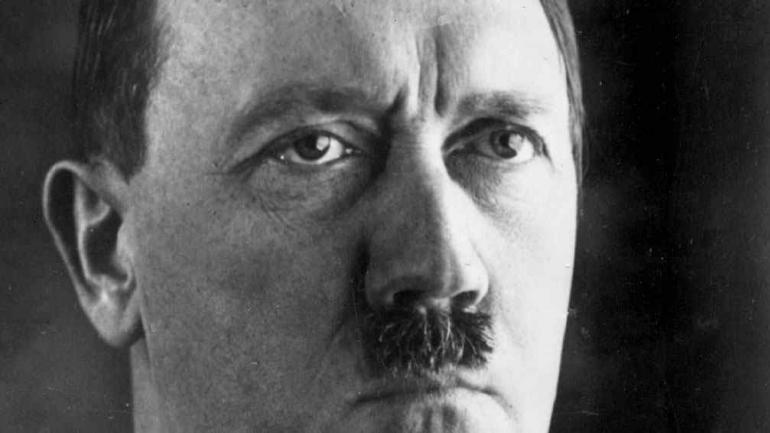
On April 30, 1945, as Soviet artillery reduced Berlin to rubble block by block and the Red Army fought its way toward the Reich Chancellery, Adolf Hitler’s personal staff removed two bodies from the Führerbunker, doused them in petrol, and set them alight in the garden above.
This is the official account. It is supported by eyewitness testimony from bunker personnel, Soviet forensic examination of recovered remains, and dental analysis of teeth held in Russian archives, whose 2018 examination by French forensic specialists found them consistent with Hitler’s known dental records.
It is also an account with evidentiary problems that Western intelligence agencies logged in classified files whose eventual declassification revealed that the question of Hitler’s fate was considered genuinely open by the CIA, FBI, and British intelligence for years after the official account was established.
The evidentiary problems are real. They deserve examination before the survival claim itself.
What the Intelligence Files Actually Said
The FBI maintained a file on Adolf Hitler that ran to hundreds of pages and whose content, available through the FBI Vault’s online archive, shows agency receipt of multiple credible-seeming reports of Hitler’s presence in South America during the years following the war’s end.
Whether these reports represent genuine sightings, deliberate disinformation designed to divert attention from other fugitives, or the normal noise of a postwar intelligence environment saturated with rumor and deliberate misdirection, is the question that the file’s content does not fully resolve. What the file establishes is that the FBI considered the reports seriously enough to receive, catalog, and in some cases investigate them.

The CIA’s engagement with the Hitler survival question is more specific and better sourced. A 2014 record released through the CIA’s Records Search Tool, dated 1955, describes a CIA asset in Venezuela reporting contact with a former German SS trooper who claimed personal knowledge of Hitler’s escape. The record notes that the asset was considered reliable on other matters and that the report was forwarded for further evaluation.
Whether the 1955 CIA record reflects genuine intelligence about Hitler’s survival or the standard processing of unreliable wartime rumor through intelligence channels a decade after the events described, is a question its classification as a working intelligence report rather than a confirmed finding raises. Intelligence agencies receive and file unconfirmed reports as a matter of routine. Filing a report is not confirming it.
The Soviet intelligence problem is more consequential. The Soviet NKVD’s recovery of remains from the Reich Chancellery garden is well established, but the history of those remains in Soviet custody was deliberately obscured by Stalin’s government for political reasons. Stalin told Harry Truman at Potsdam in July 1945 that he believed Hitler was still alive and had escaped, possibly to Spain or Argentina. Whether this represented Stalin’s genuine assessment, deliberate disinformation to maintain postwar uncertainty about German leadership, or something else whose character the Soviet archive has only partially revealed, is the question that Stalin’s recorded statement raises.
The remains recovered by Soviet forces were held in classified conditions for decades. The skull fragment identified by Soviet authorities as Hitler’s was subsequently examined by American forensic researchers using DNA analysis and determined in a 2009 study to belong to a woman under the age of forty, not to Hitler. The University of Connecticut researchers who conducted the analysis, Nick Bellantoni and Linda Strausbaugh, both stated publicly that the finding does not significantly challenge the conclusion that Hitler died in the bunker. The fragment’s mismatch raises a question about which remains the Soviets actually recovered, not a case for survival. The Soviet Union had presented a woman’s skull fragment as Hitler’s skull for approximately seven decades.
Whether this misidentification was deliberate Soviet disinformation designed to protect the genuine remains’ location, a genuine forensic error in the chaos of the war’s final days, or reflects the genuine absence of Hitler’s remains from what Soviet forces recovered, is the question that the DNA finding makes permanently interesting rather than historically settled.
The Infrastructure That Made Escape Possible
Whether Hitler survived or not, the infrastructure that could have moved him from Berlin to South America is established at a level of evidentiary detail that the broader population control narrative around the Holocaust’s perpetrators cannot contest.
The ratlines, the established escape networks that moved Nazi war criminals from defeated Germany to sympathetic destinations in South America, the Middle East, and elsewhere, operated through institutional channels whose participants are named in the declassified historical record.
The Vatican connection runs most specifically through Bishop Alois Hudal, an Austrian bishop based in Rome whose involvement in providing papers, assistance, and safe passage to Nazi war criminals is established in his own published memoir and in the declassified files of multiple intelligence services. Hudal’s confirmed assistance included Franz Stangl, the commandant of Treblinka, Klaus Barbie, the Gestapo chief of Lyon known as the Butcher of Lyon, and Alois Brunner, one of Eichmann’s principal deputies. Whether Hudal’s assistance reflected personal ideological sympathy, institutional Church policy at some level, or individual moral failure that the Vatican did not sanction is the question that the historical record has been debated on without consensus.
The American intelligence connection runs through the Gehlen Organization. Reinhard Gehlen, the head of German military intelligence on the Eastern Front, made a well known arrangement with American intelligence before the war’s end: he surrendered his entire intelligence network, its files, and its personnel to the Americans in exchange for his organization’s incorporation into the postwar American intelligence infrastructure. The Gehlen Organization became the foundation of the West German BND and its members’ Nazi pasts were deliberately overlooked by their American handlers as the price of the organization’s anti-communist utility.
The American willingness to overlook Nazi war crimes when the perpetrators had intelligence value is not a conspiracy theory. It appears in Operation Paperclip, in the Gehlen Organization’s incorporation, in Klaus Barbie’s confirmed employment by the US Army’s Counter Intelligence Corps in postwar Germany, and in the legal framework, the 1948 Intelligence Exception to the Displaced Persons Act, that allowed former Nazis to enter the United States if sponsored by intelligence agencies.
Whether this apparent institutional willingness to prioritize intelligence utility over war crimes accountability would have extended to facilitating Hitler’s personal escape is the question that the known infrastructure motivates asking rather than simply dismissing.
The Men Who Demonstrably Escaped
The well attested cases of senior Nazi figures who escaped justice through the ratlines establish the network’s proven capacity at the highest levels of the Nazi leadership hierarchy, one level below Hitler himself.
Adolf Eichmann organized the logistics of the Holocaust across the occupied territories, coordinating the railway deportations that moved millions of Jews to the extermination camps. He escaped Germany after the war’s end, lived in Austria under false identities, and eventually reached Argentina in 1950 through the ratline network with a Red Cross travel document obtained through Vatican connections. He lived in Buenos Aires as Ricardo Klement for a decade until Israeli Mossad agents identified him, abducted him in 1960, and transported him to Israel for trial. His 1961 trial in Jerusalem and subsequent execution are a matter of historical record.
Eichmann’s escape establishes that the ratline network could move one of the most wanted men in the world, the architect of the logistics of mass murder, from Germany to Argentina and maintain his presence there for ten years under a false identity. Whether this proven capacity extended to moving the most wanted man in the world is the question that Eichmann’s case raises.
Klaus Barbie, the Gestapo chief of Lyon who supervised the torture and murder of thousands of French Resistance members and Jews including the torture of Jean Moulin, escaped Germany through the ratlines with confirmed American CIC assistance. He lived in Bolivia as Klaus Altmann for decades, was identified by Serge and Beate Klarsfeld in 1972, and was eventually extradited to France in 1983 where he was convicted of crimes against humanity in 1987.
Josef Mengele, the Auschwitz physician whose medical experiments on prisoners stand as some of the camp system’s most unrestricted brutality, escaped Germany and reached Argentina in 1949 through the ratline network, subsequently moving to Paraguay and Brazil. He lived in South America under various identities until his death by drowning in Bertioga, Brazil in 1979. His death was confirmed by forensic analysis of exhumed remains in 1985 and DNA analysis in 1992. He lived free for thirty-four years after the war’s end.
These three cases establish that the ratline network had the proven capacity to move senior Nazi perpetrators from Germany to South America and maintain their presence there for decades. The paper trail behind their escapes, the identities used, the routes taken, the papers provided, and the institutional assistance rendered, establishes the network’s operational capability at a level that no comparable evidence has established for Hitler himself.
Abel Basti and the Argentine Investigation
Abel Basti is an Argentine journalist based in Bariloche whose books on the Hitler Argentina hypothesis, including Bariloche Nazi and En los rastros de Hitler published by Planeta Argentina, represent the most sustained journalistic investigation of the survival claim in the Spanish-language literature.
His methodology appears in his published accounts: twenty years of interviewing witnesses in the German-immigrant communities of Argentine Patagonia, the region around Bariloche and the lake districts of southern Argentina and Chile, and in Paraguay and Brazil, seeking accounts of personal contact with Hitler or knowledge of his presence.
His most witnesses are named in his published accounts. Eloísa Luján, who told Basti that she worked as a food taster for a figure she came to understand was Hitler on the San Ramón farm near Bariloche during the Perón era. Angela Soriani, the niece of a cook named Carmen Torrentegui who worked for the same figure. The unnamed former Brazilian military officer, son of a senior Nazi who told Basti that Hitler died on February 5, 1971 and is buried in a crypt beneath what is now a hotel in Paraguay.
Whether these witnesses were accurately reporting genuine personal knowledge, were misidentifying a figure they knew as important within the local German exile community, were repeating stories that circulated in those communities regardless of their accuracy, or were in some cases the product of Basti’s confirmation bias in two decades of searching for evidence of something he had come to believe, is the question that his methodology raises without the available evidence resolving.
The evidentiary gap in Basti’s investigation is what the entire survival hypothesis requires and what no investigation has yet produced: a verified photograph of Hitler in South America after 1945, a document in Hitler’s own handwriting from the postwar period, forensic evidence establishing the absence of Hitler’s remains from the Berlin bunker, or testimony from a witness whose account could be independently corroborated through documentary evidence rather than through other testimonies.
Without one of these, the survival claim rests entirely on witness testimony collected by a journalist who had concluded the survival was real before conducting the investigation. This does not make the testimony false. It does make it insufficient at the library’s evidentiary standard for establishing the claim.
What the Patagonia Context Establishes
The German immigrant community in Argentine Patagonia that Basti’s investigation draws from is well established, and its character provides the social context in which both genuine Hitler sightings and the development of Hitler survival mythology would be equally possible.
The German-speaking immigrant community in Bariloche and the surrounding lake district is confirmed to have received significant Nazi and wartime German emigration during and after the war. The San Carlos de Bariloche municipality and the surrounding area became a known center of German exile community in South America, with architecture, cultural institutions, and social networks that preserved aspects of German culture in an isolated Patagonian setting.
Whether this community’s confirmed presence of multiple Nazi war criminals, whose residencies in the region appear in the postwar intelligence record and in the work of researchers including Uki Goñi whose The Real Odessa documents the Argentine ratline network in forensic detail, created the social conditions for Hitler’s presence to go unremarked in the rural community, or created the social conditions for the development of mythology around Hitler’s presence that oral tradition transmitted through the decades, is the question that the community context raises.
Goñi’s research is the most forensically rigorous investigation of the Argentine Nazi escape network. His account of Argentine President Juan Domingo Perón’s government’s active facilitation of Nazi immigration, including the confirmed activities of Perón’s immigration official Rodolfo Freude and the institutional assistance the Argentine government provided to incoming Nazis, establishes that the Argentine government at the highest levels was aware of and actively facilitated major Nazi war criminals’ establishment in the country.
Whether this apparent institutional facilitation, which Goñi describes with reference to named individuals and institutional decisions, extended to Hitler specifically is the question that the known infrastructure motivates examining without the available evidence resolving.
The Forensic Question
The forensic history of Hitler’s remains is the element of the official account whose real complications most directly support the survival hypothesis’s possibility rather than its probability.
The Soviet recovery of remains from the Reich Chancellery garden in 1945 is well established. The subsequent Soviet handling of those remains was deliberately obscured for political reasons. The skull fragment identified by Soviet authorities as Hitler’s, and exhibited in a Moscow archive for decades, was determined by Connecticut researchers studying the fragment in 2009 to belong to a woman under the age of forty.
Whether the Soviet skull fragment’s female DNA reflects a deliberate Soviet substitution of different remains, a genuine forensic error, or the Soviet recovery of Eva Braun’s remains rather than Hitler’s, is the question that the DNA finding opens without closing.
The teeth held in Russian archives were examined by the 2018 French forensic team and found consistent with Hitler’s known dental records. Whether this consistency reflects genuine Hitler dental remains, consistent documentary reconstruction of what his teeth should look like, or coincidence, is the question that dental morphology analysis without comparative DNA can only partially address.
The absence of a full DNA analysis of the Russian archive materials, comparing them against known living relatives of Hitler for genetic confirmation, is the forensic gap that the official account’s evidentiary foundation has not fully closed.
What Remains Open
The ratline infrastructure moved Adolf Eichmann, Klaus Barbie, Josef Mengele, Franz Stangl, and thousands of other Nazi war criminals from Germany to South America with the assistance of confirmed Catholic Church networks, confirmed American intelligence officers, and confirmed Argentine government facilitation.
The FBI logged multiple South American reports of Hitler’s presence in the postwar years. The CIA filed a 1955 report from a reliable asset describing Hitler’s escape. Stalin told Truman at Potsdam that he believed Hitler was alive.
The skull fragment the Soviet Union identified as Hitler’s for seven decades belonged to a woman.
Abel Basti spent twenty years in the German exile communities of Argentine Patagonia and collected named witness accounts of Hitler’s presence on a farm near Bariloche during the Perón years, under identities whose details he recorded.
Whether Hitler died in the Berlin bunker on April 30, 1945 as the official account maintains, or whether the most wanted man in history used the infrastructure that demonstrably moved his closest subordinates to survive in the exile community that demonstrably harbored them, is the question that the known infrastructure, the recorded intelligence uncertainty, the real forensic complications, and the recorded witness testimony together raise without the available evidence resolving.
The official account has strong evidentiary support. The alternative has real evidentiary complications, institutional precedent, and witness testimony whose independence and reliability cannot be fully established.
The bunker is destroyed. The farm near Bariloche is private property. The crypt beneath the Paraguayan hotel, if it exists, has not been forensically investigated.
Whatever burned in the Reich Chancellery garden on April 30, 1945, the question of what it was has not been answered with the forensic finality that the most consequential identification in modern history requires.
The Investigation Vault | Deep Research
- The Submarine Mystery | Which U-Boats Actually Reached the Argentine Coast?
- Project Orion Connections | How Nazi Technology Was Traded for South American Immunity