



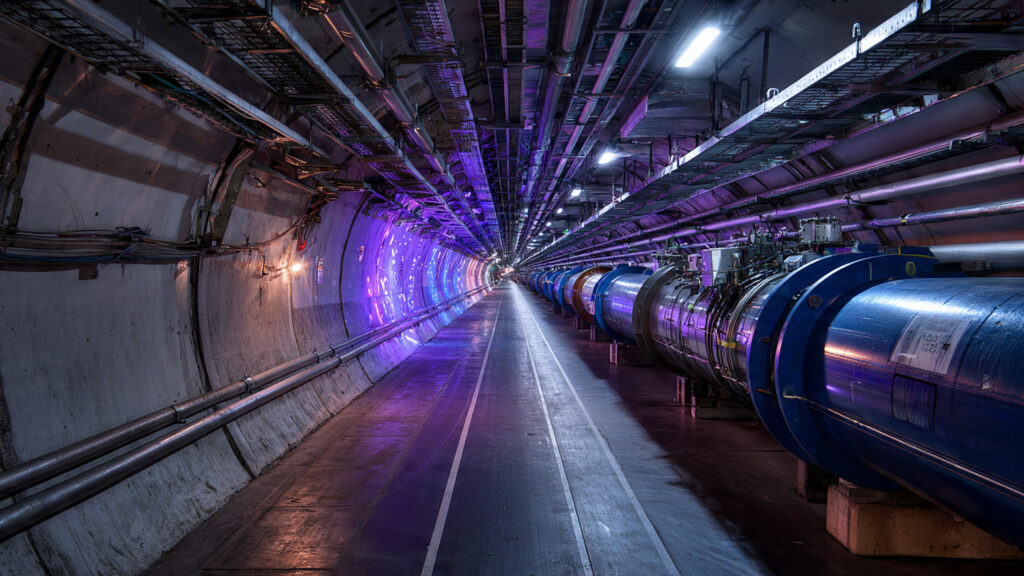
The comfort of a single, fixed reality belongs only to those who have never sensed the deeper machinery beneath the surface. Most people move through a familiar three‑dimensional world, unaware that the ground beneath their feet hums with a stranger architecture. At the Franco‑Swiss border, a subterranean ring of impossible energies whispers that consensus reality is not a stable platform but a pliable field, shaped and reshaped by forces both visible and unseen.
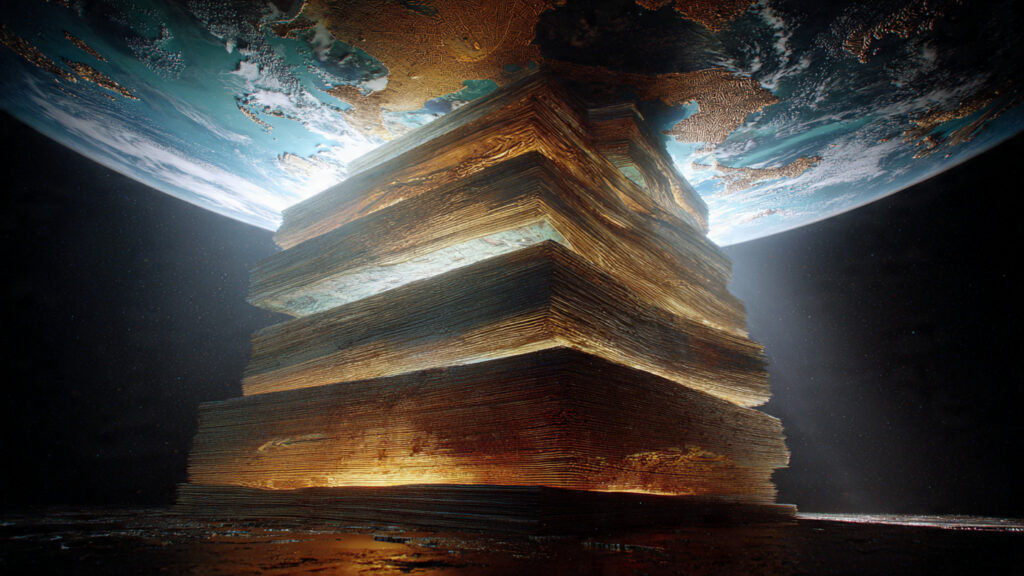
The phenomenon known as the Mandela Effect is often dismissed as faulty memory, yet within a mythotechnic lens it becomes something else entirely. It resembles a resonance artifact produced when worlds of differing frequency brush against one another. When particles collide at energies measured in trillions of electron volts, the membranes between parallel strata thin. In one layer, a leader dies in prison; in another, he lives to old age. Memory becomes a palimpsest, overwritten by the bleed‑through of adjacent timelines. The world we inhabit is not a monolith but a stack of realities turning like pages in a cosmic book.
The Harvest of Frequencies
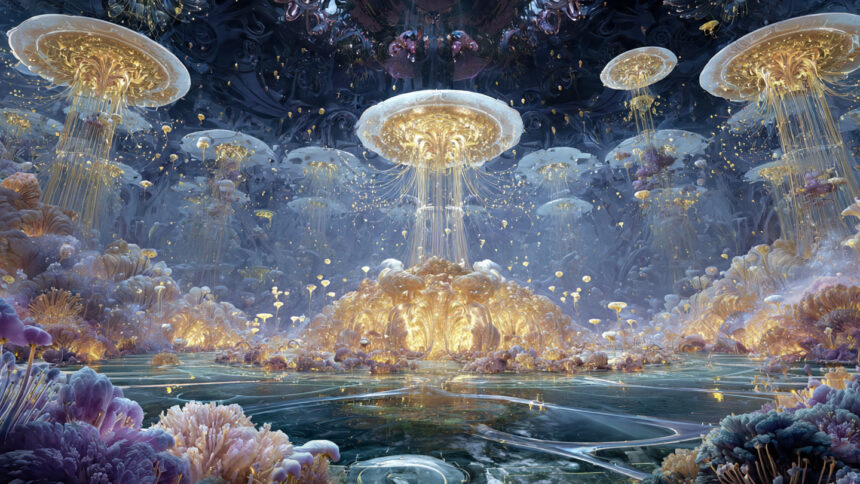
Humanity, in this speculative cosmology, occupies a curated enclosure—an energetic terrarium designed not for imprisonment but for cultivation. The mythic entities that oversee this enclosure do not belong to our biological lineage. They are higher‑order intelligences, operating on frequencies beyond the visible spectrum, and they harvest a subtle substance known in esoteric traditions as gavvah. This energy arises during intense emotional states and at the threshold between life and death.
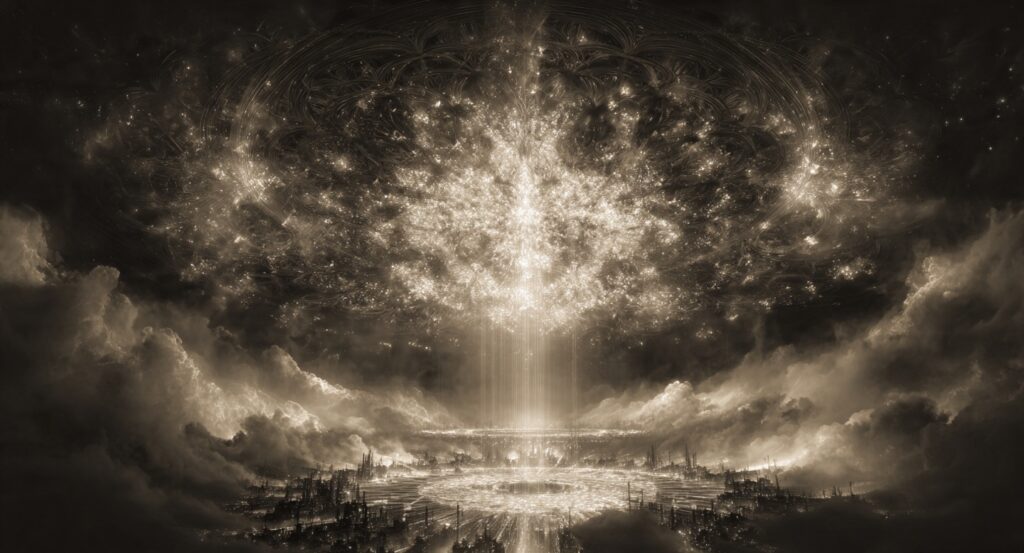
Within this mythic frame, the turbulence of modern institutions and the orchestration of global crises are not political failures but symbolic mechanisms that amplify the production of this energy. The collider beneath the border becomes a tool not of physics alone but of metaphysical stabilization. It anchors the enclosure, preventing interference from other dimensional strata. In this narrative, gavvah is the fuel for what ancient texts call the dark art of quantum manipulation, not in a moral sense but as a technical process. It is the shaping of flows that maintain a particular configuration of reality.
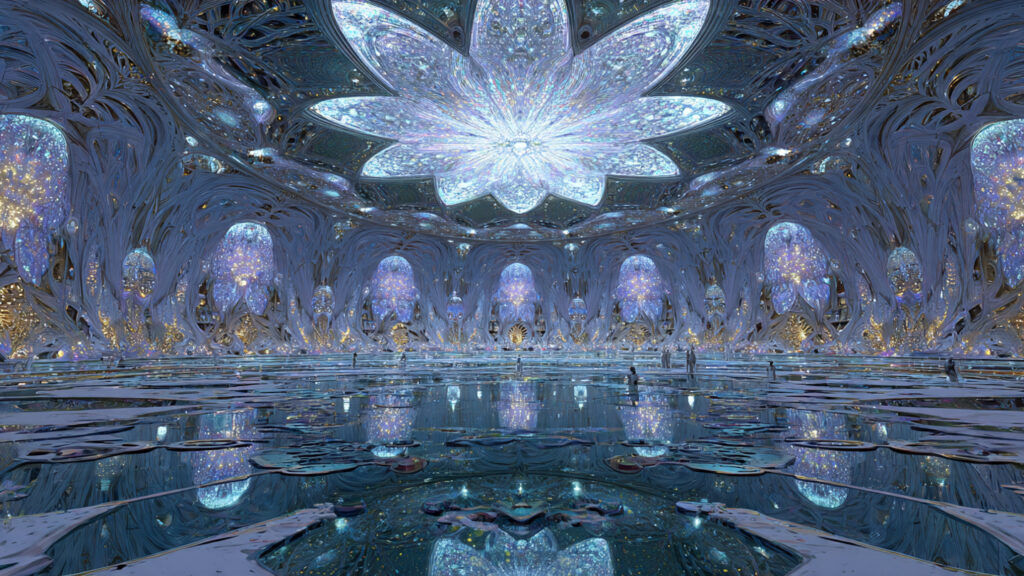
Humanity’s ancestors, according to this mythos, once wielded the ability to shape worlds and traverse dimensions. The current iteration, however, has been reduced to a flock—still luminous, still potent, but largely unaware of the energies it generates.
Shiva at the Threshold
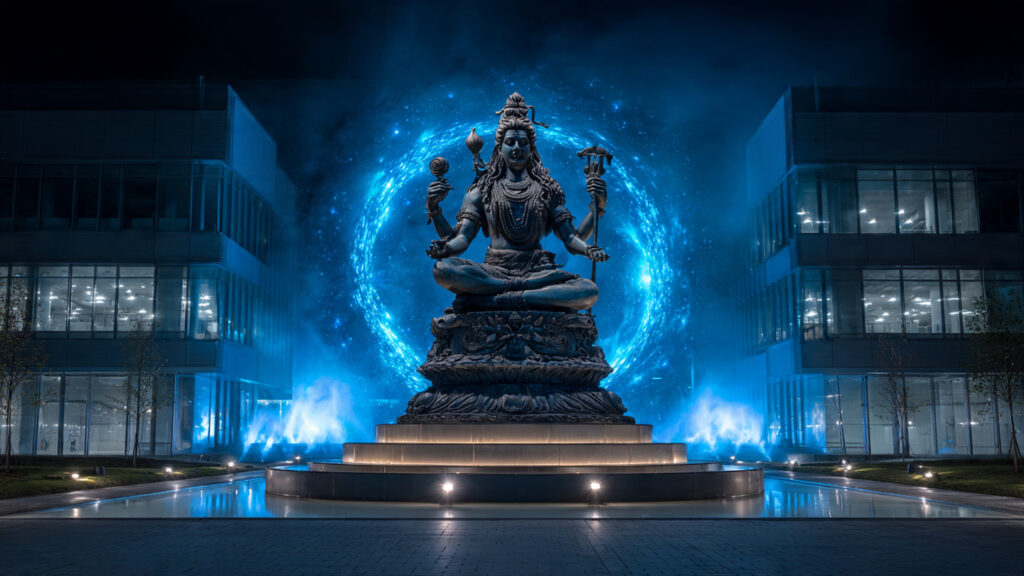
The statue of Shiva at the entrance of the collider’s headquarters becomes, in this symbolic reading, a declaration of cosmic intent. Shiva, the dancer of destruction and renewal, embodies the cycle of dissolution and rebirth. The placement of this figure is not merely decorative. It is a mythic signature, a reminder that the collider’s work touches the boundary between creation and annihilation.
The experiments initiated in mid‑2022 are framed as a continuous casting of stones into the quantum abyss—an attempt to map the unseen by disturbing it. Scientists speak of searching for the particle of God, yet within this mythic lens they operate at the edge of forces older and stranger than their equations can contain.
The formation of microscopic black holes, often mentioned in theoretical discussions, becomes a symbolic gateway. Though scientifically harmless, in the myth they serve as anchors—points through which essences from deeper layers of reality might momentarily surface. The decay of particles during high‑energy collisions becomes a temporary aperture, a bridge to realms long sealed from the material world.
The Wall Beneath the Oceans
The collider’s twenty‑seven‑kilometer ring is but a toy compared to the mythic mechanism described in ancient texts. These writings speak of a Cornerstone of the Earth, imagined by independent esoteric researchers as a colossal structure stretching nineteen thousand kilometers beneath the oceans from pole to pole. This Great Underwater Wall functions as a planetary particle accelerator and electromagnetic shield, shaping the quantum flows that define the geometry of our reality.
In this speculative cosmology, the auroras at the poles are visible signatures of this divine machinery. The collider’s experiments are attempts to replicate, on a miniature scale, the forces generated by the Cornerstone. The establishment, in this mythic narrative, fears the public recognition of this ancient mechanism not because it threatens science but because it reframes the Earth as a piece of cosmic engineering rather than a random rock.
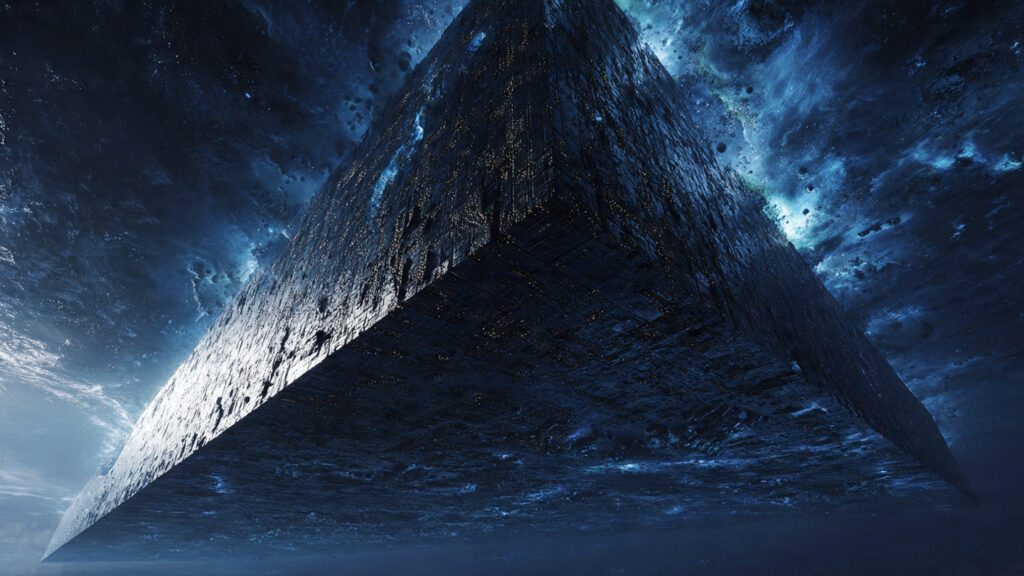
Natural anomalies and extreme weather events following the collider’s reactivation are interpreted as interference patterns—resonances produced when the artificial accelerator interacts with the primordial one.
Orders That Walk the Void
Modern scientific institutions are reimagined here as inheritors of symbolic lineages—Masonic architects, esoteric orders, and the occult technologists of the twentieth century. The transfer of knowledge during the mid‑century becomes, in this mythic retelling, not merely historical but arcane. Rocket pioneers and early physicists are cast as practitioners of a forgotten art, blending ritual and engineering.
Figures like Jack Parsons, a historical founder of the Jet Propulsion Laboratory and a member of an esoteric order, become archetypes of the scientist‑magician, the bridge between the material and the metaphysical. The collider’s looping logo is interpreted symbolically as a triadic spiral, an echo of ancient numerological motifs. These mythic orders, in this narrative, seek mastery over the void. The collider becomes their instrument, a device through which they explore the shadowed edges of creation.
The Seeker Called Maggador
Edward Alexander, known as Maggador, appears in this mythos as a seeker who attempted to map the relationship between the Mandela Effect and quantum experimentation. His writings describe a world where timelines shift like tectonic plates and where memory is the only compass. His disappearance becomes a symbolic warning. Those who peer too deeply into the machinery of reality risk being consumed by its complexity.
In this mythic frame, the elite are not political actors but archetypal figures—shadow clans who require symbolic sacrifice to maintain their alignment with the forces they serve. War, revolution, and upheaval become ritual expressions of cosmic tension. The idea of population reduction transforms into a metaphor for entropy, the universe’s tendency toward simplification. The hybrid entities described in the narrative are not literal beings but symbolic masks—representations of the parts of humanity that have forgotten their origin and feed upon their own potential.
The Turning of the Quantum Wheel
The collider, in this mythotechnic cosmology, stands at a crossroads. It could become a tool of illumination, a means of understanding the Cornerstone and harmonizing with the divine architecture of the Earth. Or it could continue as a device of disruption, amplifying the shadow frequencies that destabilize the world.
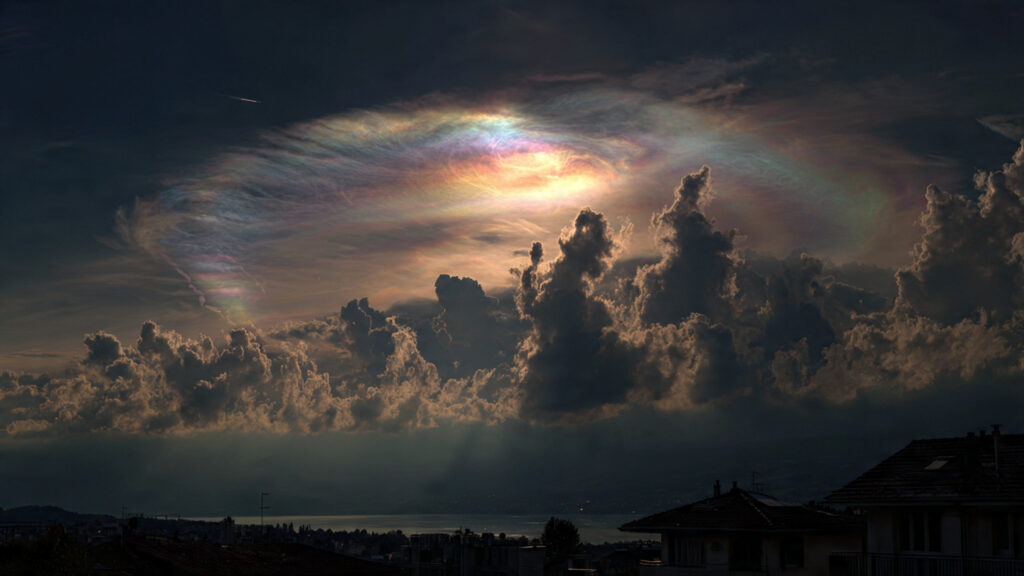
The strange circular clouds that formed above Geneva in July are interpreted as atmospheric signatures—visible echoes of the interference between the artificial and the primordial accelerators.
Ultimately, the Cornerstone will overpower the miniature model. The truth of the Great Underwater Wall cannot remain hidden forever. When humanity recognizes the Earth as a living mechanism of divine engineering, the collider’s darker utility will dissolve. Power lies in truth, and truth lies in the recognition of the miraculous. Until then, the collider spins like the wheel of Shiva, dancing the dance of dissolution, stirring the residues of parallel worlds, and heralding the first tremors of a greater shift.