




We stand at a strange threshold where the predictable past no longer serves as a reliable compass for the future. If we look back just six years, few could have anticipated a global pandemic that would fundamentally rewrite the social contract, ushering in an era of remote existence and digital isolation. Yet, as we peer toward the mid-century mark, the fog begins to lift, revealing a landscape defined not by the sci-fi tropes of flying cars and Martian suburbs, but by a visceral, pragmatic mastery of our own biology and the hidden depths of our planet. The year 2050 is not a destination; it is a metamorphosis of the human condition.
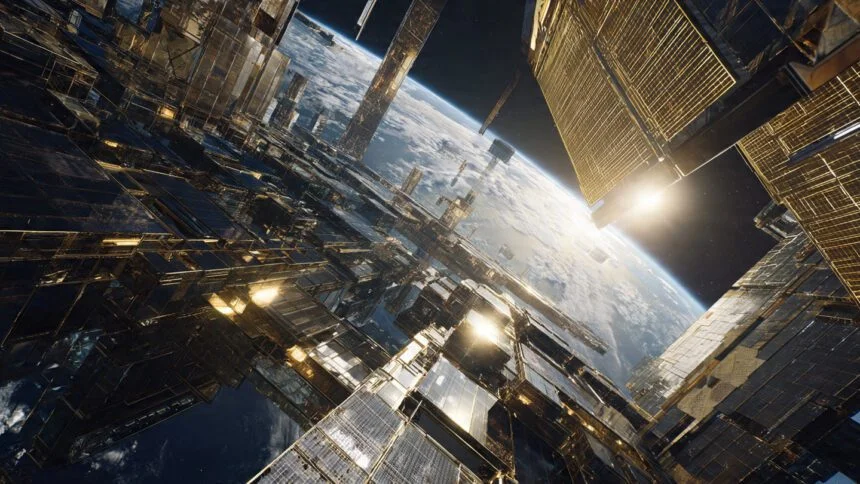
The first major shift is already happening above our heads. By 2035, the information and energy architecture of our species will have migrated into orbit. We are currently witnessing the infancy of this movement with satellite constellations, but the next step is far more radical. Artificial intelligence requires a staggering amount of power, so much so that the current terrestrial grid is buckling under the weight of neural network demands. The solution lies in the infinite flow of solar energy passing by our planet. By placing massive solar arrays and data centers in space, we bypass the limitations of uranium and fossil fuels. In this scenario, the intelligence that governs our world lives in the silent vacuum of the exosphere, powered by a sun that never sets.
Genomic Passports and the End of Random Medicine
As we move into the 2030s, the concept of a standard medical checkup will become an artifact of history. The introduction of genomic passports will provide every individual with a complete map of their DNA. This transition marks the death of the one drug for all approach. Instead of treating symptoms as they appear, the healthcare of the future is predictive and deeply personalized. Doctors will be able to see a disease coming decades before it manifests, allowing for genetic editing and diet interventions that effectively neutralize the threat in its cradle.
This is the era of the digital twin. By accumulating vast amounts of genetic and physiological data, scientists can create a perfect virtual replica of a patient. This twin allows for risk-free testing of aggressive treatments, such as specialized oncology drugs. We will no longer wonder if a specific chemotherapy will work; we will have already seen it succeed on the digital double. Surgery, too, will shift from the hands of the local intern to the autonomous, AI-driven digital twins of the world’s greatest specialists, ensuring that the highest level of expertise is available to everyone, regardless of geography.
Megacities Without the Friction of Traffic
The urban nightmare of traffic jams is nearing its end, but not through the construction of more asphalt. The mass implementation of unmanned transport systems and coordinated autopilots will turn our roads into a fluid, frictionless network. Human drivers are often the primary cause of congestion due to ego, hesitation, and inconsistent speeds. Autopilots, however, operate with a collective intelligence. They can merge, weave, and accelerate in perfect synchronicity, effectively multiplying the capacity of existing roads without adding a single lane.
While the dream of fully electric transport is strong, the next quarter-century will likely see a compromise in the form of high-efficiency hybrids. The energy density of liquid fuel still dwarfs current battery technology, making the hybrid model a necessary bridge. These vehicles will operate as electric cars but will carry their own miniature internal combustion engines as onboard power plants. This pragmatic evolution ensures that we maintain mobility while transitioning away from the traditional gas station model.
The Great Pivot From Mars to the Deep Ocean
There is a growing realization among the scientific elite that the dream of Martian colonies may be a romantic delusion. A human being is a biological entity deeply intertwined with the Earth’s biosphere. To live on Mars, we must bring an entire ecosystem with us, a task of near-impossible complexity. Why struggle to survive in a radioactive vacuum when we have not yet mastered the vast, unexplored territories of our own planet?
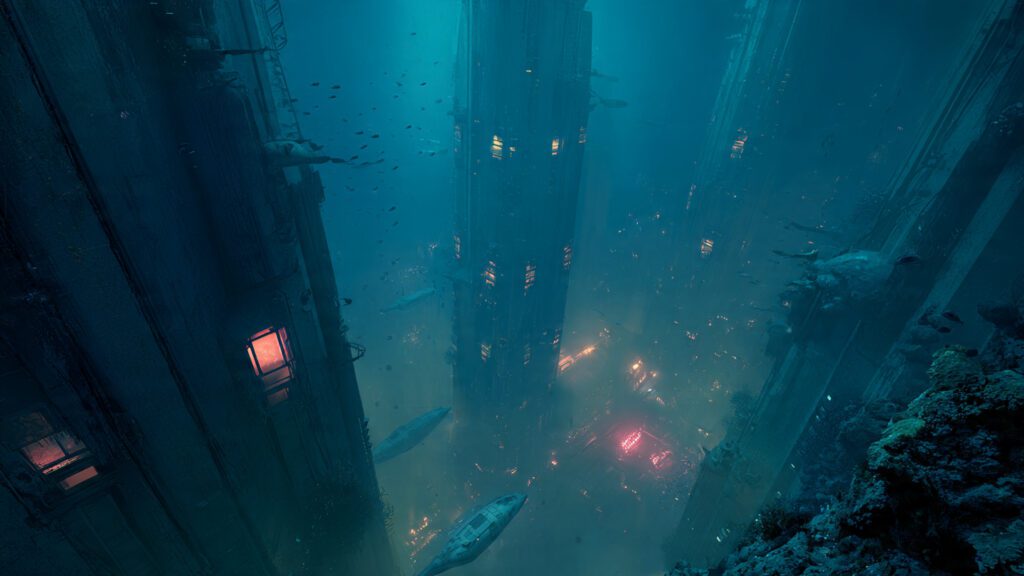
By 2045, the focus of human expansion will shift from the stars to the ocean and the subterranean. The seafloor offers twice as much space as the continents and remains almost entirely undeveloped. We will see the emergence of oceanic niches, underwater habitats, and advanced mining operations that utilize the resources of the abyss. Antarctica, currently a frozen no-man’s-land, may become the next frontier for settlement as climate shifts and technology make the uninhabitable habitable. We aren’t leaving Earth; we are finally learning how to use it.
Humanoids and the Automation of the Physical World
The rise of humanoid robots is no longer confined to the labs of research universities. By 2040, the goal of placing a billion humanoids into the workforce will be well underway. Powered by Vision Language Action technology, these machines can analyze their surroundings and learn tasks they weren’t explicitly programmed for. While they might start as primitive delivery couriers or concierges, they are the harbingers of a world where physical labor is optional.
The incentive for this shift is purely economic. Saving on the costs of delivery and maintenance is a powerful driver for the robotics industry. However, do not expect a robot butler to do your laundry perfectly anytime soon. The complexity of domestic tasks still baffles current AI. Instead, these machines will handle the simpler, repetitive roles of the public sphere, while integrated smart home systems manage the appliances. The humanoid is a tool for the infrastructure, a way to keep the gears of the megacity turning while the human population focuses on higher-order intellectual pursuits.
Space Mining and the Doomsday Threshold
As we look toward the year 2050, space becomes more than a place for satellites; it becomes a mine. Mankind’s first encounter with metal was through meteoric iron, and we are destined to return to that source. Asteroids represent a nearly limitless supply of minerals and rare earth elements, and the technology to capture and mine these small bodies will move from theory to industrial reality.

However, this mastery of celestial mechanics brings a darker possibility. The kinetic energy contained in a medium-sized comet or asteroid is orders of magnitude greater than the entire global nuclear arsenal. The ability to nudge these bodies could result in a doomsday weapon of unprecedented power. In a world where the psychological threshold for using nuclear weapons is decreasing, the threat of a kinetic strike from space may become the new deterrent, the weapon of last resort that maintains a fragile global peace through the promise of mutual, absolute destruction.
The Abolition of Aging and the Genetic Scissors
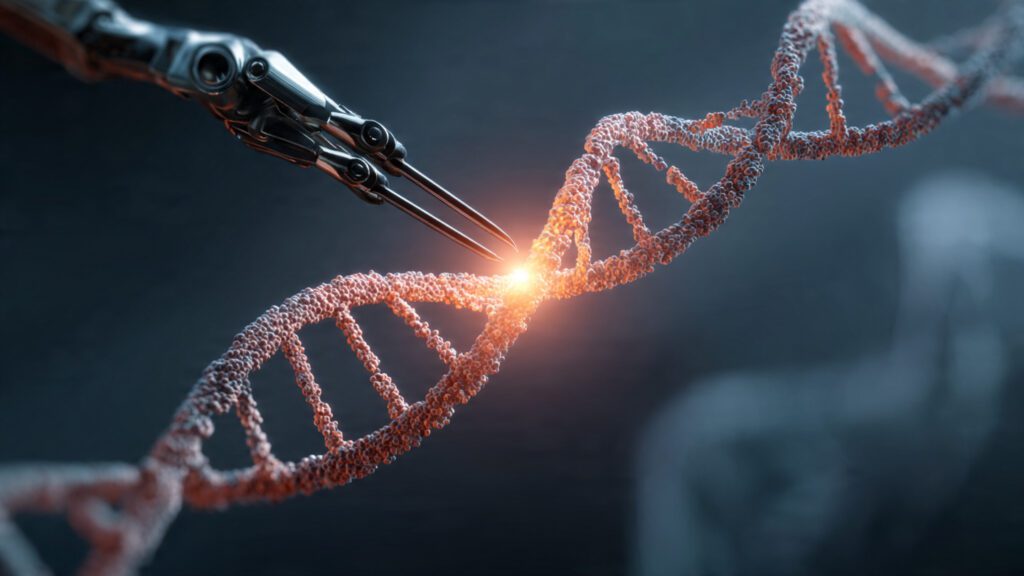
The most profound change in the 2050 landscape is the war on time itself. Advances in neurosciences and physiology will likely open the door to treating and preventing neurodegenerative diseases like Alzheimer’s and Parkinson’s. Through the use of neural implants and the removal of toxic proteins from the brain, we will preserve the human intellect long into old age. But the true revolution lies in the mass use of genetic editing tools like CRISPR.

We are entering the era of the genetic scissors, where incurable hereditary diseases are edited out of the human code. Beyond just curing the sick, the focus will shift to rejuvenation. Anti-aging drugs will first revitalize specific tissues, such as skin and muscle, before systemic solutions for the entire body are found. We are moving toward a future where aging is not an inevitability, but a biological condition that can be managed, delayed, and eventually abolished.
The Ideological Crisis of Extraterrestrial Life
The final frontier of 2050 is not physical, but philosophical. Within the next twenty-five years, our telescopes will likely detect the chemical signatures of biological life on exoplanets. Whether it is a primitive microorganism or a complex biosphere, the discovery of extraterrestrial life will trigger a colossal ideological crisis. It will challenge the foundations of every major religion and force a total re-evaluation of humanity’s place in the cosmos.
As we master our own genome and the depths of our oceans, we will be forced to confront the reality that we are likely not alone. This discovery will not be a moment of triumph, but one of deep reflection. It will signify the end of our planetary isolation and the beginning of a new, terrifyingly vast chapter in human history. The world of 2050 will be smarter, healthier, and faster, but it will also be a world grappling with the realization that the universe is far more crowded and complex than we ever dared to imagine.