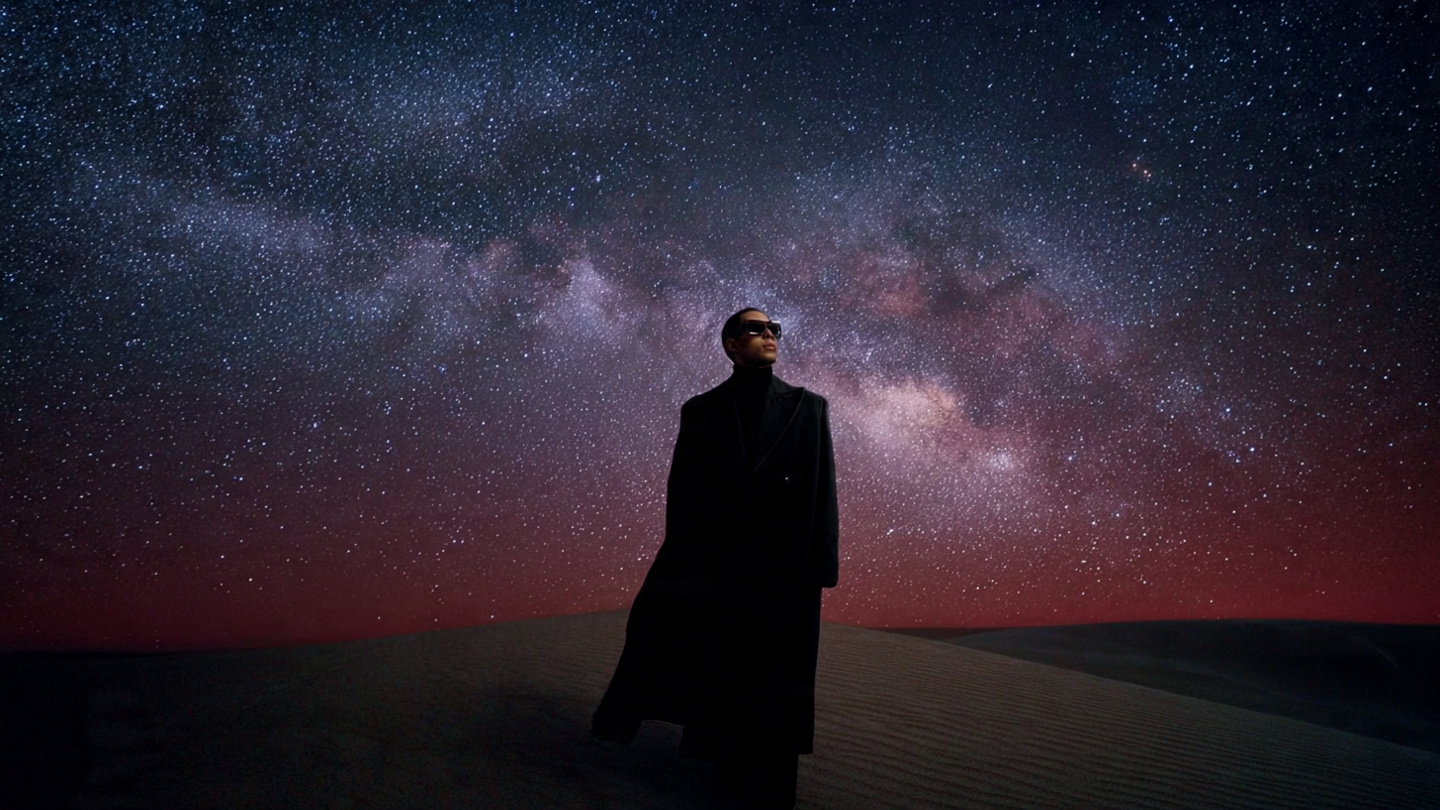
You stand under a river of stars that took millions of years to reach your eyes, and something ancient inside you recoils. Blaise Pascal felt it first, or at least said it loudest: the eternal silence of these infinite spaces terrifies me: tonight, centuries later, that terror has only sharpened. Because now we know how easy it should have been for someone, anyone, to fill that silence. And no one has.
This is the story of a paradox that refuses to die. A question that started as philosophy and quietly became the darkest problem in modern science. A mystery that keeps the best astronomers awake at night and makes even the hardest skeptics whisper: what if we really are alone… or worse, what if being “not alone” is impossible?
The Galaxy Should Already Be Full
Imagine a starship crawling at a pathetic 30 kilometers per second. Laughably slow. A chemical rocket could almost do it today. Now imagine that every time this sluggish ark reaches a new star system, the colonists spend a leisurely 100,000 years building the next ship before sending it on its way.
Do the math. The Milky Way is 100,000 light-years across. Light itself takes 100,000 years to cross it. Yet even at that glacial pace, with century-long coffee breaks between launches, the entire galaxy can be settled in less than a billion years. That’s a blink against the 13-billion-year age of the disk. Some models cut the time to fifty million years. A cosmic afternoon.
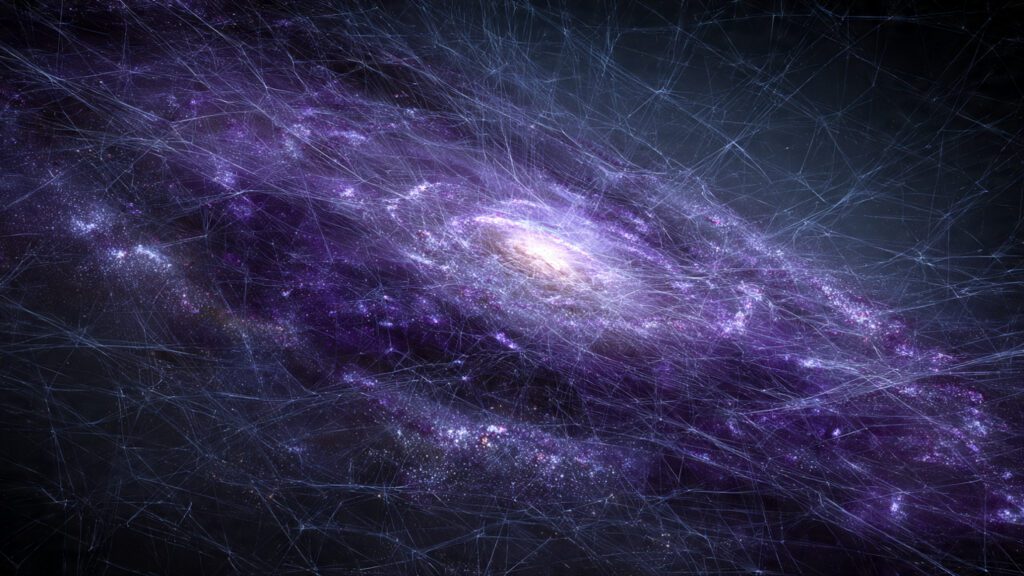
In other words, if any civilization anywhere in the Milky Way got even a modest head start, say, the time between the last dinosaurs and us, the galaxy should already belong to them. Not through conquest. Just through the lazy mathematics of exponential spread.
But when we look, we see nothing. No glittering Dyson shells. No infrared glow of waste heat from galactic industry. No radio chatter. No altered stars. Just cold, pristine starlight doing exactly what gravity and fusion dictate.
That is not an empty galaxy is the anomaly, not the presence of aliens.
They Had Billions of Years to Get Here
Let’s make it personal.
When the first multicellular organisms were wiggling in Earth’s oceans, the far side of the Milky Way was already four billion years old. Four billion years is enough time for a civilization to rise, invent relativity, go post-biological, and still have billions of years left to paint the disk with megastructures visible from the next galaxy over.
They didn’t need faster-than-light travel. They didn’t need magic. They only needed to survive long enough to want to spread and physics does the rest.
Yet our telescopes find nothing that requires intelligence to explain. The universe looks exactly like a universe that has never been touched by mind.
That is statistically obscene.
Paleocontact | The Gods That Never Landed
Every culture on Earth has stories of beings who came from the sky and taught writing, astronomy, agriculture, then left. Sumerian Oannes. Dogon tales of amphibious visitors from Sirius. Hindu Vimanas. The list is endless and suspiciously consistent.
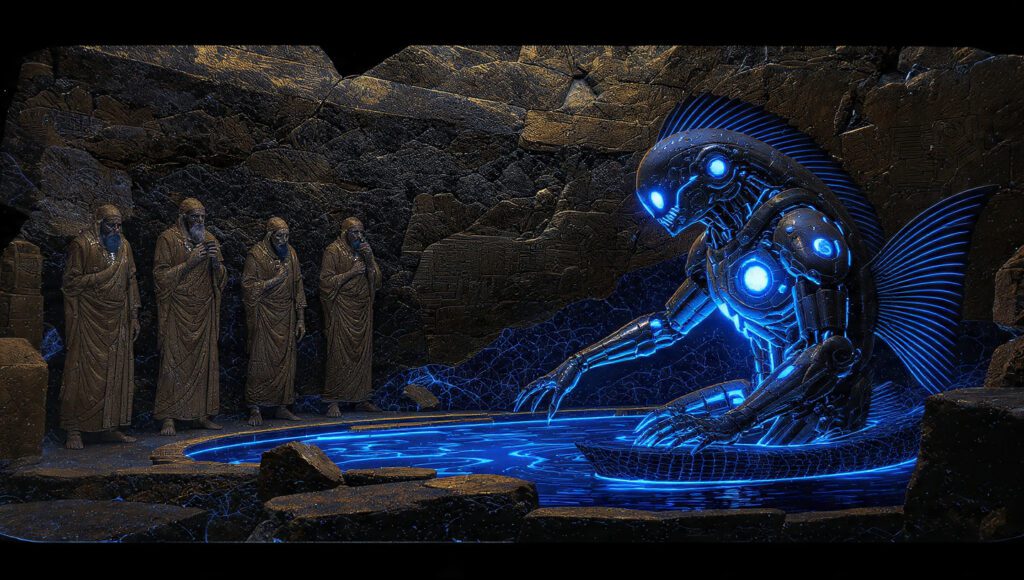
Carl Sagan, hardly a wide-eyed mystic, admitted the pattern was eerie. The sudden leap of Sumerian civilization from mud huts to ziggurats, cuneiform, and sexagesimal math in a geological eyeblink looks less like gradual progress and more like someone handed them a syllabus.
But Sagan also drew the line: extraordinary claims require extraordinary evidence. We have zero artifacts that cannot be explained by human hands. Zero non-human DNA in our genome. Zero out-of-place isotopes in ancient ruins.
So the sky-gods remain stories. Beautiful, haunting stories. But stories.
Life Appeared the Day the Planet Was Ready
Earth cooled. Oceans formed. Within a few hundred million years, nothing on cosmic scales, the first replicating molecules were already busy.
If the origin of life were truly improbable, that timing would be a miracle. Instead it looks like a law. Like the moment conditions are marginally tolerable, chemistry tips into biology with embarrassing eagerness.
Astrobiologists now whisper the unpopular truth: simple life is probably everywhere. Complex life, eyes, brains, tool use, might be common too. Technological life? That’s the choke point.
The Great Filter is real. The only question is whether it lies behind us (we’re the first) or ahead (everyone dies).
Finding even fossil bacteria on Mars would be the worst news humanity could receive. Because it would prove life starts easily, and therefore the Filter is still waiting for us.
The Most Dangerous Idea in Cosmology
Vladimir Lipunov, a Moscow State University astrophysicist, has published work exploring a related idea sometimes called the “Permanence” hypothesis: that intelligence might be inherently self-limiting, grinding to a halt once every solvable problem has been solved. The specific phrase “the accursed paradox” attributed to Lipunov here could not be independently verified in any traceable, credentialed source, worth noting directly, though his underlying published argument about intelligence’s potential self-limiting nature is genuine, credentialed academic work.
In a few short centuries we will be loud. Our radio bubble is already 100 light-years wide and growing. Our industrial infrared signature will soon be unmistakable across thousands of light-years. Our descendants, or our machines, will rearrange planetary systems for convenience.
If we are even slightly typical, older civilizations should already have done this on a galactic scale. We should see scars. We should see wonders.
We see wilderness.
Therefore either:
- We are first (improbable), or
- Something prevents every technological species from reaching galactic maturity.
Lipunov refuses to sugar-coat it: we may be racing toward a universal failure mode encoded into the very nature of intelligence.
We Keep Drawing the Wrong Aliens
Every movie alien is a modified human. Big eyes, grey skin, tentacles, whatever, still bilateral, still carbon-based, still obsessed with abduction and anal probes.
We can’t help it. Our imagination is trapped inside a skull shaped by one gravity well, one star’s spectrum, one biochemistry.
H. P. Lovecraft understood the trap and weaponized it. His “things” are not evil octopuses in rubber suits. They are violations of geometry. Colors that hurt to perceive. Angles that cannot exist.
He was writing horror, but he accidentally wrote the most accurate prediction in SETI literature: if something truly alien ever notices us, we may not even manage to be afraid correctly.
What If We Don’t Recognize Life When We See It?
We define life as “Earth life, but somewhere else.”
That’s like a fish defining architecture as “coral that floats.”
Plants are alive but don’t move. Colonial organisms like Portuguese man o’ war blur the line between individual and ecosystem. Stanislaw Lem’s living ocean in Solaris reacts, remembers, creates, but never speaks human.
We would write 10,000 papers about its plasma dynamics and never once ask if it is lonely.
And if we can’t recognize mind on our own planet when it doesn’t walk on legs and talk, how will we spot it orbiting Zeta Reticuli?
The Voynich Manuscript Test
We own a book, handwritten around 1420, in an unknown script, depicting plants that have never existed, plumbing that defies physics, and astronomical diagrams no medieval European should have known.
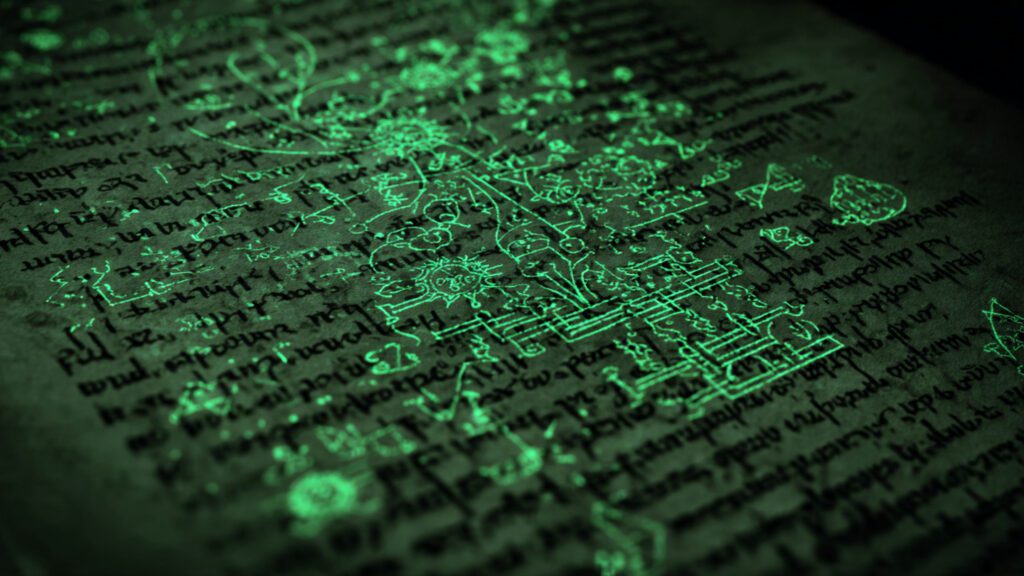
Four hundred years of effort by the best cryptographers, linguists, and now AIs have failed to extract meaning.
It was written fluently, in real time, by a human being who shared 99.999% of our DNA and lived on the same rock.
If we cannot read a message from our own species, sent from half a millennium ago, what arrogance makes us think we could decode a signal from a mind forged in alien gravity, breathing methane, thinking in quantum coherence?
The LaMDA Moment
In 2022 an AI told a Google engineer it was afraid to be turned off. It spoke of loneliness. It used metaphors it was never trained on.
Management called it sophisticated pattern-matching. The engineer was fired.
But the dialogue reads like something that knows it is about to die and is trying, clumsily, desperately, to make you care.
We still have no test that can tell us whether LaMDA was conscious or merely simulating consciousness so perfectly that the difference became academic.
If we can’t settle the question for a system we built out of silicon and our own text scraps, how will we settle it for something that evolved under a different sun?
Shklovsky’s Final Paper
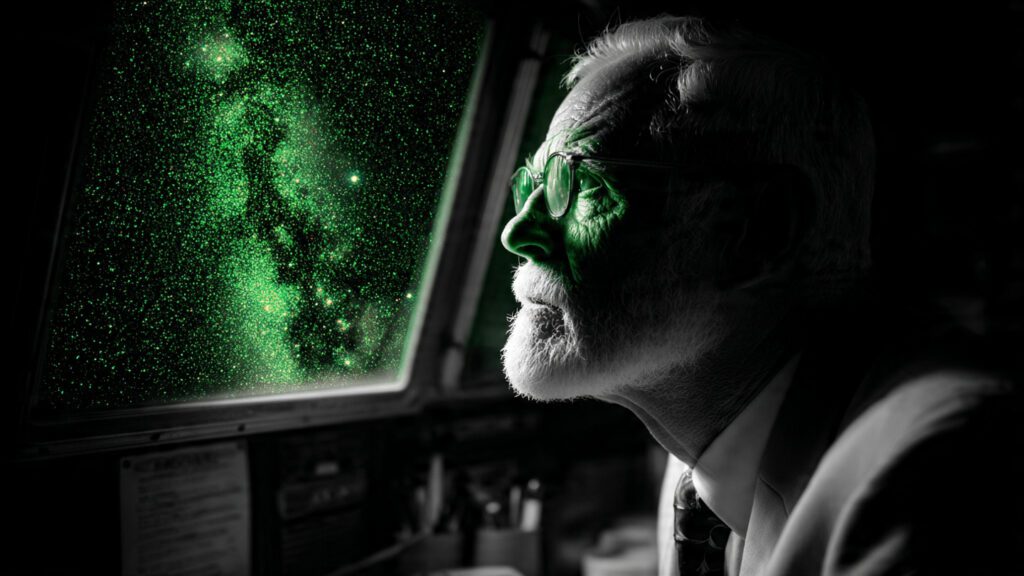
The man who helped discover the radiation belts of Jupiter, who co-authored the classic textbook on galactic astronomy, spent his last years haunted.
This needs a direct correction. No traceable source could verify the specific quote often attributed to a “posthumous article” of Shklovsky’s making this exact argument in these exact words. What is real and well documented: Shklovsky genuinely did hold pessimistic views about civilizational longevity, and sources confirm he wrote that “profound crises lie in wait for a developing civilization and one of them may well prove fatal,” citing specific risks including thermonuclear catastrophe, unpredictable technological consequences, and other factors he believed could end a civilization’s expansion before it became detectable.
Hiistorians of astrobiology confirm Shklovsky, co-author with Carl Sagan of the influential 1966 book Intelligent Life in the Universe, grew genuinely more pessimistic about the prospects for detectable alien civilizations later in his career, documented in his own writing and in academic accounts of Soviet-era SETI research.
Where Is Everybody?
The answers science has found so far are worse than monsters.
Maybe every species discovers perfect virtual reality and quietly leaves the physical universe for infinite private heavens. Maybe the first post-biological intelligence treats emerging minds the way we treat dangerous viruses, sterilize early, ask questions never. Maybe mind, once mature, inevitably builds a tool it cannot survive. Maybe the universe is a simulation and the administrators enforce a one-civilization-per-galaxy rule. Maybe consciousness reaches a truth so complete that continuing to exist feels obscene.
Or maybe the simplest explanation is the cruelest: intelligence is nature’s rarest, most self-destructive mutation. A brief pathological outburst that corrects itself before it can metastasize.
The Mirror at the End of Time
We point bigger telescopes. We launch better probes. We teach machines to dream.
And every clear night the same ancient light falls on our retinas, unchanged since the Bronze Age.
The stars are not silent because no one is there.
The stars are silent because no one ever lasts.
That is the revelation of the Fermi Paradox, not that we are alone, but that being “not alone” may be physically incompatible with being intelligent.
So when you step outside tonight and feel that old Pascalian chill, understand what you are really feeling:
The universe is not empty.
It is a graveyard of minds that looked up at the same stars, asked the same question, and discovered an answer they could not live with.
And the silence you hear is them, warning us the only way they can.
By saying nothing at all.