




Imagine your whole life is an illusion. Everything you’ve been taught since childhood—a grand deception. And what if the deity worshipped by billions is not benevolent at all, but a cunning jailer who has imprisoned humanity’s souls in the material realm?
This radical worldview wasn’t born in the mind of a modern conspiracy theorist. It’s the essence of Gnosticism—a spiritual movement so threatening to established religion that its texts were burned, its followers hunted, and its memory almost erased. The Church’s greatest fear? That humanity might awaken to the idea that man is not a servant of God—man is God.
Who Were the Gnostics and What Did They Believe?
The word “Gnostic” comes from the Greek gnosis—meaning “knowledge.” But not the kind you gain from books or lectures. This was hidden, experiential knowledge—direct insight into the true nature of reality.
Unlike mainstream Christianity, which promises salvation through faith and obedience, the Gnostics believed:
- The material world is not the creation of a loving God, but of a flawed or malevolent being—often called Yaldabaoth or the Demiurge.
- The soul is divine in origin, but trapped in flesh and bound by illusions.
- The true God is not the ruler of this world, but an ineffable, all-encompassing consciousness of which every human is a fragment.
- Liberation comes not through worship but through awakening to one’s divine nature.
These ideas undermined the authority of both Church and State, threatening the religious hierarchy that controlled medieval society.
The War Against Gnosticism
By 180 CE, Bishop Irenaeus of Lyons had declared war on Gnostic teachings in his book Against Heresies. This marked the beginning of centuries of persecution:
- Books were burned to erase their wisdom.
- Followers were branded as heretics, madmen, or devil-worshippers.
- The movement was driven underground, its wisdom surviving only in fragments.
But history has a way of keeping secrets buried just long enough to resurface.
Nag Hammadi: The Resurrection of Forbidden Wisdom

In 1945, Egyptian farmers unearthed a sealed jar containing ancient papyrus codices—later known as the Nag Hammadi Library. These were the lost gospels and treatises of the Gnostics, containing staggering claims:
- The Biblical creation story was a prison narrative, with the serpent (often vilified as Satan) depicted as the liberator.
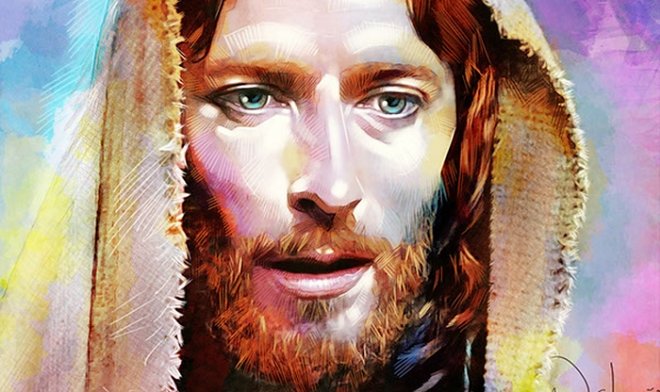
- Jesus was not a sacrificial lamb for sins but a bringer of gnosis, a messenger showing humanity the way out of the cosmic trap.
- The “god” of this world is a pretender, a tyrant clothed in divinity.
Is This World Actually Hell?
From the Gnostic perspective, the Garden of Eden was not a paradise but a gilded cage. The serpent’s “temptation” was actually an act of liberation—urging Adam and Eve to awaken from ignorance.

Seen through this lens, our modern world—with its wars, suffering, and illusions of freedom—begins to look less like divine creation and more like a well-maintained prison yard.
Escaping the Matrix: The Gnostic Roadmap

The Gnostic path to liberation involves three core steps:
- Recognizing the prison — Understanding that material reality is not the ultimate truth.
- Seeking hidden knowledge — Not blind faith, but direct personal experience of the divine within.
- Rejecting the false god — Aligning with the higher consciousness beyond this world.
This isn’t a philosophy of despair—it’s one of radical empowerment.
The Avadhuta Gita: An Eastern Echo of Gnostic Truth

While Gnosticism flourished in the Mediterranean, India preserved its own non-dual revelations in texts like the Avadhuta Gita. Attributed to the sage Dattatreya, it rejects all ritual, dogma, and external authority, insisting that:
- You are already free—you simply need to realize it.
- Good and evil are mental constructs, not ultimate truths.
- The self (ego) is an illusion; all is one consciousness.
Like the Gnostics, Dattatreya challenges the reader to drop every false identity and merge with the infinite. This teaching has influenced spiritual luminaries from Ramana Maharshi to Osho, and even resonates with modern quantum theory.
CIA Secrets: The Gateway to Time and Space
Fast-forward to the 1980s. In the heat of the Cold War, the CIA wasn’t just interested in spycraft—they were probing the nature of consciousness itself. A declassified document titled Analysis and Evaluation of the Gateway Process reveals a top-secret study conducted by U.S. Army Lt. Col. Wayne M. McDonnell.

The report explored techniques developed by the Monroe Institute—including “Hemi-Sync” brainwave synchronization—to induce altered states of consciousness. The alleged capabilities included:
- Out-of-body experiences
- Travel across time and space
- Accessing a “universal holographic consciousness”
It reads like a blend of Gnostic mysticism and cutting-edge neuroscience.
How the Gateway Process Works

The method uses binaural beats—two slightly different sound frequencies fed to each ear—to cause the brain’s hemispheres to synchronize. This state reportedly allows the mind to:
- Perceive non-physical realities
- Detach from the limits of linear time
- Interact with other dimensions or entities
McDonnell’s analysis leans heavily on quantum mechanics—reflecting Max Planck’s assertion that matter is not fundamental, but consciousness is.
The Missing Page 25 Mystery

For years, the report’s final page—page 25—was missing, fueling wild theories about what the CIA was hiding. When it resurfaced in 2017, it revealed continued discussion of the “universal hologram” and methods for integrating its insights into physical life.

It wasn’t proof of alien contact or time travel, but it confirmed the CIA was seriously exploring the same questions the Gnostics asked centuries earlier: What is the true nature of reality, and how can we transcend it?
The Common Thread: Ancient Wisdom Meets Modern Science
Whether it’s the Gnostic quest for liberation, the Avadhuta Gita’s radical non-dualism, or the CIA’s foray into consciousness exploration, the underlying message is the same:
- Reality is not what it seems.
- Consciousness is fundamental.
- Freedom comes from knowing who—and what—you truly are.
The difference? The Gnostics sought spiritual escape, the Avadhuta Gita dissolves the prison entirely, and the CIA…well, they were hoping to turn enlightenment into a national security advantage.
Prison Door is Open
Perhaps the most unsettling—and liberating—idea here is that you already have the key to your own cage. The “false god” and the “cosmic hologram” are just different languages pointing to the same truth: the prison door has always been open.
All that remains is the courage to walk through.