

For centuries, humanity has looked up at the velvet canopy of the night sky, studded with the diamond dust of distant suns, and asked the most terrifying question in the human canon | Are we alone? It is a question that has fueled religions, inspired science fiction, and driven astronomers to listen to the static of the void for decades. The romantic notion is that we are a unique miracle, a singular biological accident in a sterile universe. The darker, more cynical suspicion is that we are simply unnoticed, a speck of dust in an infinite room. But a revolutionary new mathematical analysis suggests a third, far more unsettling possibility. We are not alone, and we are not unnoticed. We are being deliberately ignored.
A groundbreaking paper published in the prestigious journal Acta Astronautica by the Hungarian mathematician Antal Veres has shifted the paradigm of the search for extraterrestrial intelligence from hopeful speculation to rigorous statistical probability. By applying advanced modeling to the famous Drake Equation and the Kardashev Scale, Veres has produced a conclusion that strips away our cosmic vanity. The universe is teeming with life. Intelligent civilizations are likely a statistical inevitability, occurring with a frequency that makes the cosmos crowded. The fact that we hear nothing is not proof of their absence. It is proof of our imprisonment. The hypothesis that Earth is a kindergarten—or perhaps a maximum-security ward—isolated from the mature, intelligent universe until we evolve or extinguish ourselves, is no longer just a fringe theory. It is the most logical solution to the silence of the stars.
The Mathematics of Infinity and the Death of the Lonely Earth
To understand the gravity of Veres’s work, one must first grasp the sheer, crushing scale of the canvas upon which this reality is painted. It is easy to speak of “billions of stars” in an abstract sense, the way a poet speaks of the sands of time. But science requires precision, and the numbers are staggering enough to induce ontological vertigo.
In the observable universe, there are estimated to be ten to the twenty-fourth power of planet-like bodies. That number is so vast it defies human nomenclature. To visualize it, imagine every grain of sand on every beach on Earth. Now, imagine the atoms that make up those grains of sand. There are fewer atoms in all the world’s sand than there are potential Earths in the sky. In such a boundless ocean of opportunity, the idea that life struck lightning only once is statistically absurd. It represents a probability so infinitesimal that it borders on the impossible.
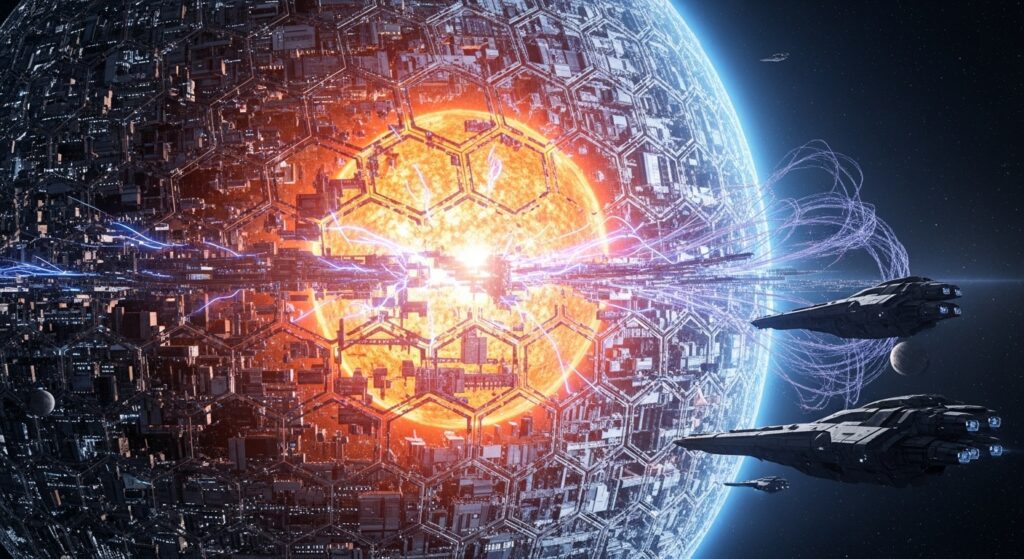
Frank Drake, the American astronomer, attempted to codify this probability in the 1960s with his famous equation. He proposed that to find the number of communicating civilizations, one simply had to multiply the rate of star formation by the fraction of stars with planets, the number of habitable planets, and the likelihood of life emerging. The problem, as noted by physicists like Sabine Hossenfelder, has always been that the variables were unknown. Multiplying mysteries yields only more mystery.
This is where Antal Veres changed the game. He approached the Drake Equation not as an astronomer seeking a specific number, but as a mathematician building a probability engine. He treated the unknown variables as ranges, running models where the chance of life appearing ranged from zero to one hundred percent. The results were a cold shower for human exceptionalism. Even when applying the most draconian filters—assuming life is incredibly rare and intelligence even rarer—the probability that Earth is the only home of civilization dropped to a mere twenty-nine percent. And that is the extreme pessimist’s view. Under standard, reasonable assumptions, the “Lonely Earth” scenario evaporates entirely. We are surrounded.
The Architects of the Stars and the Hierarchy of Power
If the galaxy is a crowded room, who are the other occupants? To answer this, we must look to the work of Nikolai Kardashev, the Soviet astronomer who classified civilizations not by their culture, but by their energy consumption. This scale provides the framework for understanding why we might be the equivalent of uncontacted tribes in the Amazon, watched by satellites we cannot comprehend.
We are a Type I civilization, or rather, we are aspiring to be one. We are the bottom feeders of the cosmic energy chain. We burn dead plants—coal—and capture a tiny fraction of the solar radiation that hits our crust. We are bound to our rock, struggling with resource scarcity and planetary squabbles.
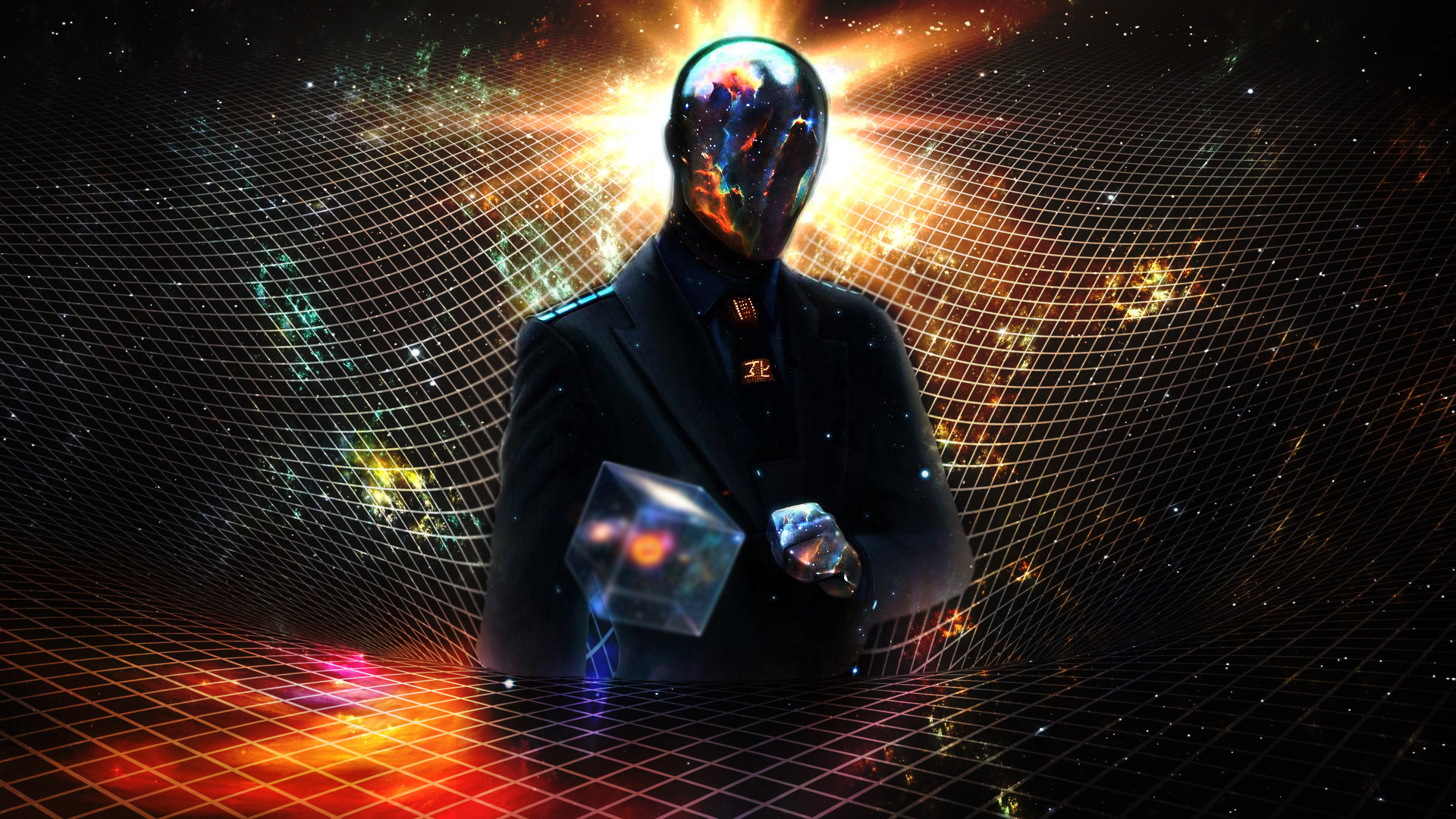
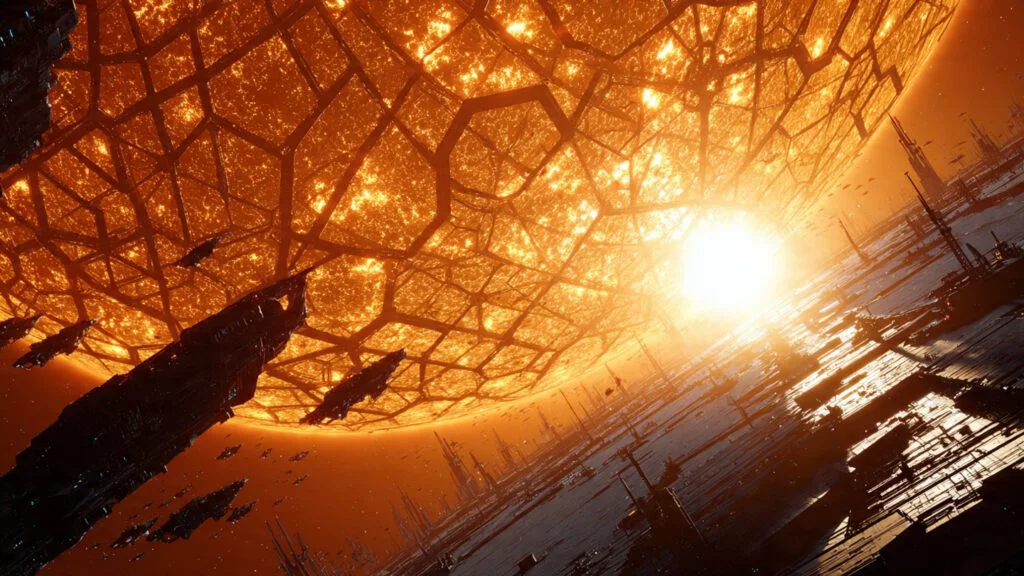
Above us sits the Type II civilization. These entities have transcended planetary limits. They do not merely feel the warmth of their star; they own it. They have constructed Dyson spheres or swarms, mega-structures that encircle their sun to capture every joule of energy it emits. To us, their home would look like a star that has inexplicably vanished, replaced by a radiating heat signature in the infrared spectrum.
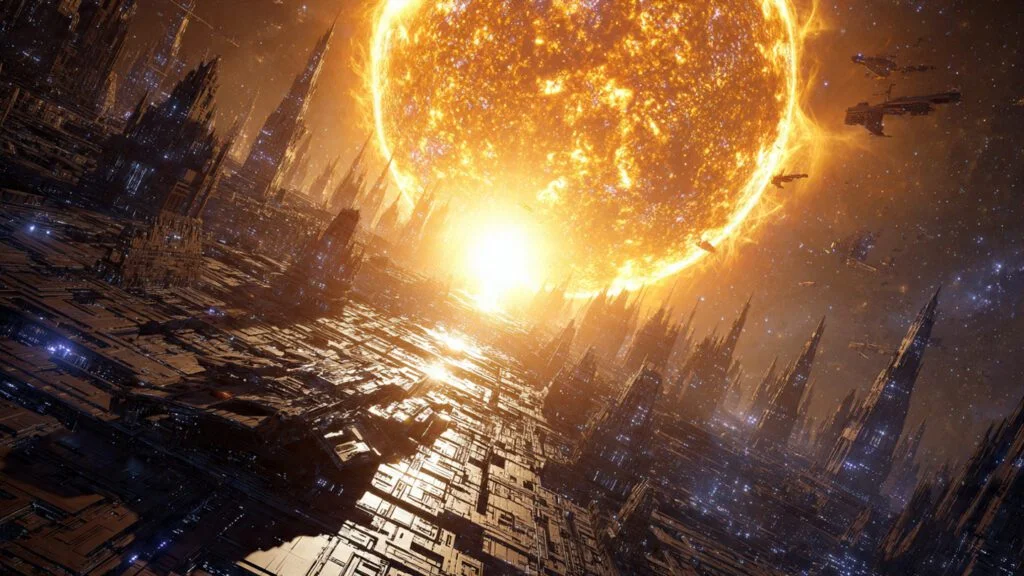
Then there are the Type III civilizations, the galactic masters. They have colonized and harnessed the energy of their entire galaxy. Some scientists recently speculated that the “radio galaxies”—those anomalies that emit massive background noise—might not be natural phenomena at all, but the industrial hum of a Type III civilization at work.
Veres incorporated this hierarchy into his calculations, treating the transition between these stages as a “Great Filter.” To advance from Type I to Type II requires surviving the technological adolescence that humanity is currently enduring—the era where we possess the power to destroy our biosphere with nuclear weapons or artificial intelligence but lack the wisdom to control it. Veres’s math produced a counter-intuitive and hopeful conclusion | the probability of a civilization destroying itself decreases as it becomes more developed. The savages in caves are vulnerable to asteroids and plagues. The masters of the stars, dispersed across solar systems, are nearly immortal. This refutes the dark theory that we see no aliens because they all blew themselves up. The ancient ones are still there. They are just ignoring us.
The Great Silence and the Galactic Quarantine
If the universe is full of immortal, star-spanning civilizations, the silence of the radio spectrum becomes a deafening paradox. This is the Fermi Paradox, the open wound in the heart of astrobiology. Scientists have thrown every possible explanation at the wall. Perhaps we are the firstborn, the elders of the universe, and the rest are still slime molds. Perhaps we reside in a cosmic void, a boondocks of the Milky Way. Perhaps interstellar travel is simply physically impossible.
But Veres’s study dismantles these excuses one by one. The principle of mediocrity in astronomy dictates that there is nothing special about our position in space; we are not in a special void. The age of the universe means there are stars billions of years older than the Sun; we cannot be the first. And if advanced civilizations are resilient, they are not extinct.
This leaves us with the “Zoo Hypothesis,” or as it is more disturbingly known, the “Kindergarten” theory. This theory posits that the Earth is under a form of cosmic quarantine. The advanced civilizations are aware of us. They may be monitoring our radio leaks, our television broadcasts, and our rudimentary space flights. But they have imposed a strict non-interference directive.
Why would they do this? Look at the human track record. We are a species that cannot distribute resources equitably on a single planet. We tribalize, we conquer, and we weaponize every new technology we discover. When we split the atom, we didn’t build a generator first; we built a bomb. When we connected the world with the internet, we filled it with disinformation and surveillance. To a Type II civilization, humanity is not a peer; we are a viral infection waiting to break containment.
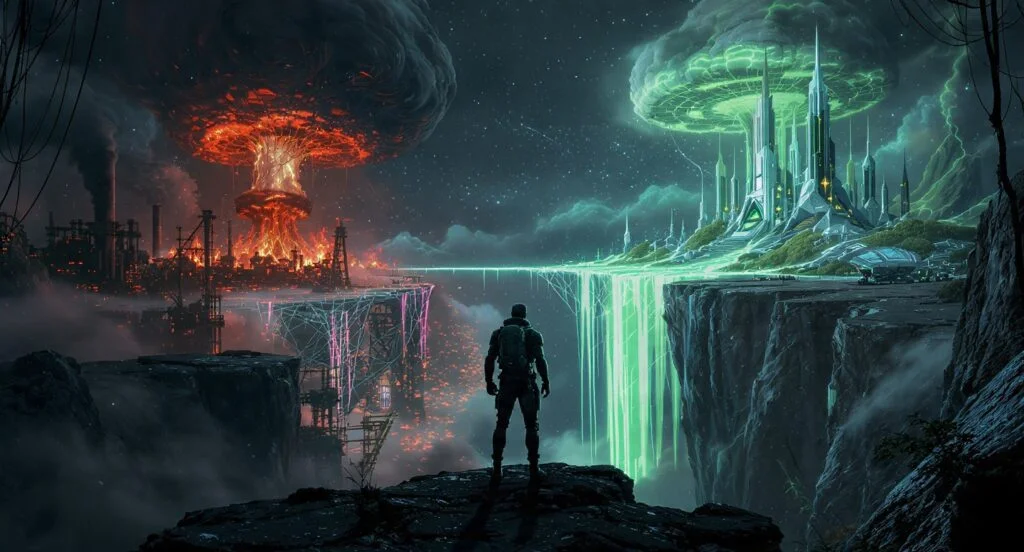
The quarantine hypothesis suggests that there is a threshold for entry into the galactic club. It is not merely technological; it is sociological and ethical. Until a civilization proves it can manage its own biosphere without destroying it, and until it can wield the power of a star without turning it into a weapon of war, it is kept in isolation. We are in the playpen, and the adults are talking in the other room, waiting to see if we learn to share our toys or if we burn the house down.
The Illusion of the Empty Sky
There is a more radical interpretation of Veres’s findings, one that touches on the simulation theory and the nature of reality itself. If the galaxy is colonized, why don’t we see the astroengineering structures? Why don’t we see stars blinking out as Dyson spheres are completed?
It is possible that our isolation is managed through information control. If a Type III civilization has mastery over the energy of a galaxy, they likely possess mastery over the information substrate of that galaxy. The “empty” sky we observe might be a curated feed, a camouflage screen designed to let us develop naturally without the culture shock of seeing the gods at work.
This aligns with the “Prime Directive” concept from science fiction, but with a darker, more pragmatic edge. Contact with a superior civilization almost always results in the collapse of the lesser culture. If the galactics revealed themselves now, human religion, philosophy, and politics would crumble overnight. We would become dependent, cargo cultists worshipping the ships in the sky. To preserve the uniqueness of human evolution—or perhaps to see if we produce anything novel before we self-destruct—they keep the blinds drawn.
The Implication of the Mathematical Verdict
Antal Veres has provided the mathematical skeleton for a body of philosophy that is both humbling and terrifying. The numbers say we are not special snowflakes in a dead universe. We are common. We are one of trillions of experiments in consciousness. The silence we hear is not the silence of an empty room; it is the silence of a hushed audience watching a performance.

This realization forces a reckoning with our own trajectory. We are currently standing at the precipice of our own Great Filter. We have entangled the planet in digital networks, created artificial intelligences that mimic our own cognitive flaws, and possess the nuclear capacity to reset our calendar to the Stone Age. Veres’s model suggests that passing this test is the ticket to the next level.
If we survive the next century, if we transition to a sustainable planetary civilization, the quarantine may lift. We may find that the radio silence was artificial, a switch held in the hand of a galactic observer, waiting for the moment we proved we were no longer a danger to the neighborhood. Until then, we remain in the kindergarten of the cosmos, screaming into the void, wondering why the teachers won’t answer us. The math suggests they are there. They just aren’t impressed yet.
The findings of this study do more than adjust the variables of the Drake Equation. They hold a mirror up to the human condition. We are isolated not by distance, but by our own immaturity. The stars are not empty; they are barred. And the key to unlocking the cage does not lie in better telescopes or faster rockets, but in the evolution of the collective human spirit. Until we grow up, the universe will remain a dark and silent room, and we will remain its lonely, noisy prisoners.