

For centuries, the Great Sphinx of Giza has silently guarded its secrets, its colossal gaze fixed on the endless horizon. Yet, beyond the official narrative of ancient Egyptian pharaohs and tomb builders, whispers persist—whispers of hidden chambers, lost knowledge, and a history far older than accepted timelines. At the heart of this enduring mystery lies the compelling prophecy of Edgar Cayce, often dubbed “the Sleeping Prophet,” whose visions detailed an astonishing network of underground halls under the Sphinx, housing the antediluvian library of a forgotten civilization. Was this psychic’s extraordinary claim mere fantasy, or did modern discoveries finally confirm his incredible foresight?
The very idea of secret halls under the Sphinx was once relegated to the realm of speculative fiction. In the late 19th and early 20th centuries, mediums and psychics often clashed with the rigid establishment of historians, Egyptologists, and archaeologists, asserting the existence of subterranean chambers that held more than just dust and rock. Their narratives were dismissed as unfounded speculation, lacking any verifiable scientific basis. However, the sands of time, quite literally, began to shift.
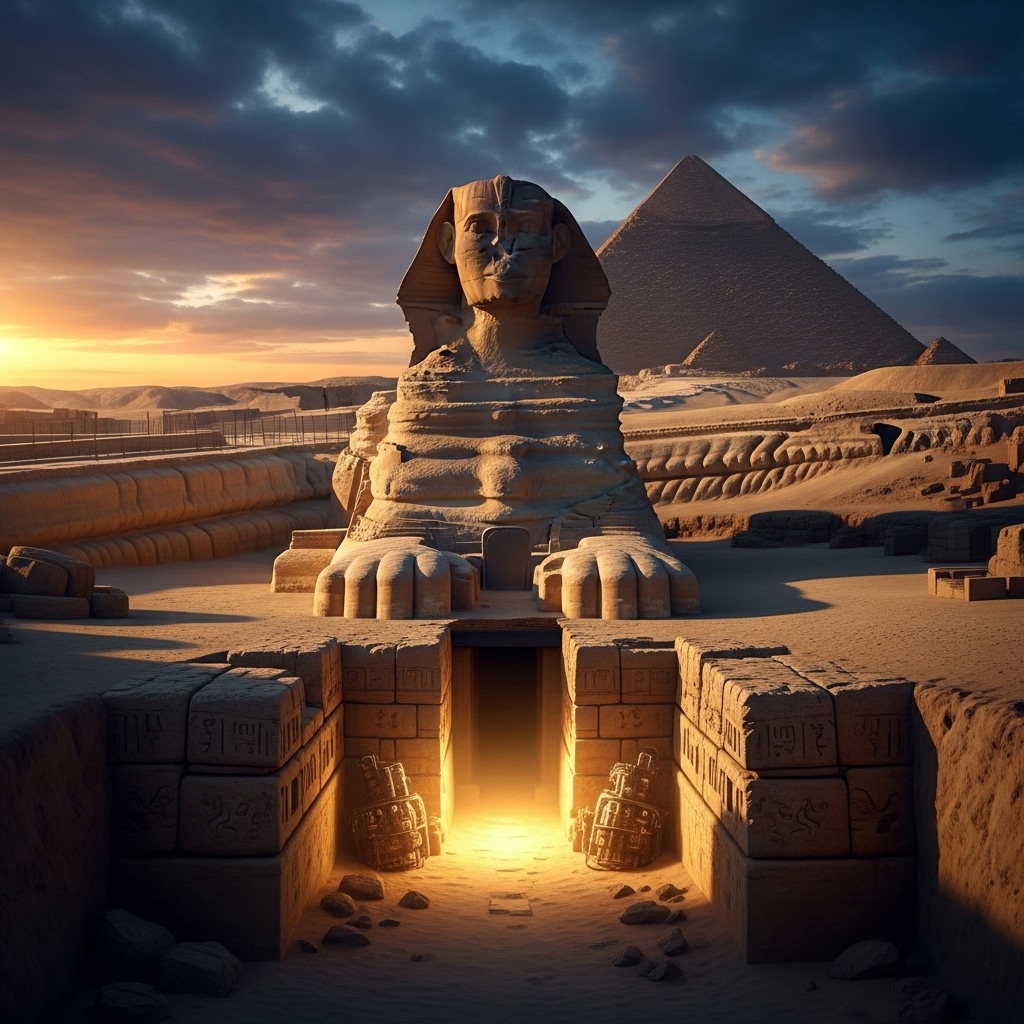
The initial crack in the wall of skepticism appeared with the excavation at the foot of the Sphinx’s right paw. This monumental undertaking revealed a previously hidden entrance to a mysterious dungeon, leading to a genuine hall with columns. While this discovery vindicated the mediums in part, it fell short of the grander claims. The mediums, and particularly Edgar Cayce, had pointed not merely to an empty chamber, but to a vast repository of lost wisdom – a hall of secret knowledge, a veritable library containing tablets inscribed with the forgotten history of previous, antediluvian civilizations. This audacious claim of an antediluvian library with technologies of forgotten civilizations remained elusive, leaving official Egyptologists to declare the mystery solved, and the “technical room” devoid of cultural value.
Edgar Cayce’s Vision | A Labyrinth of Ancient Knowledge
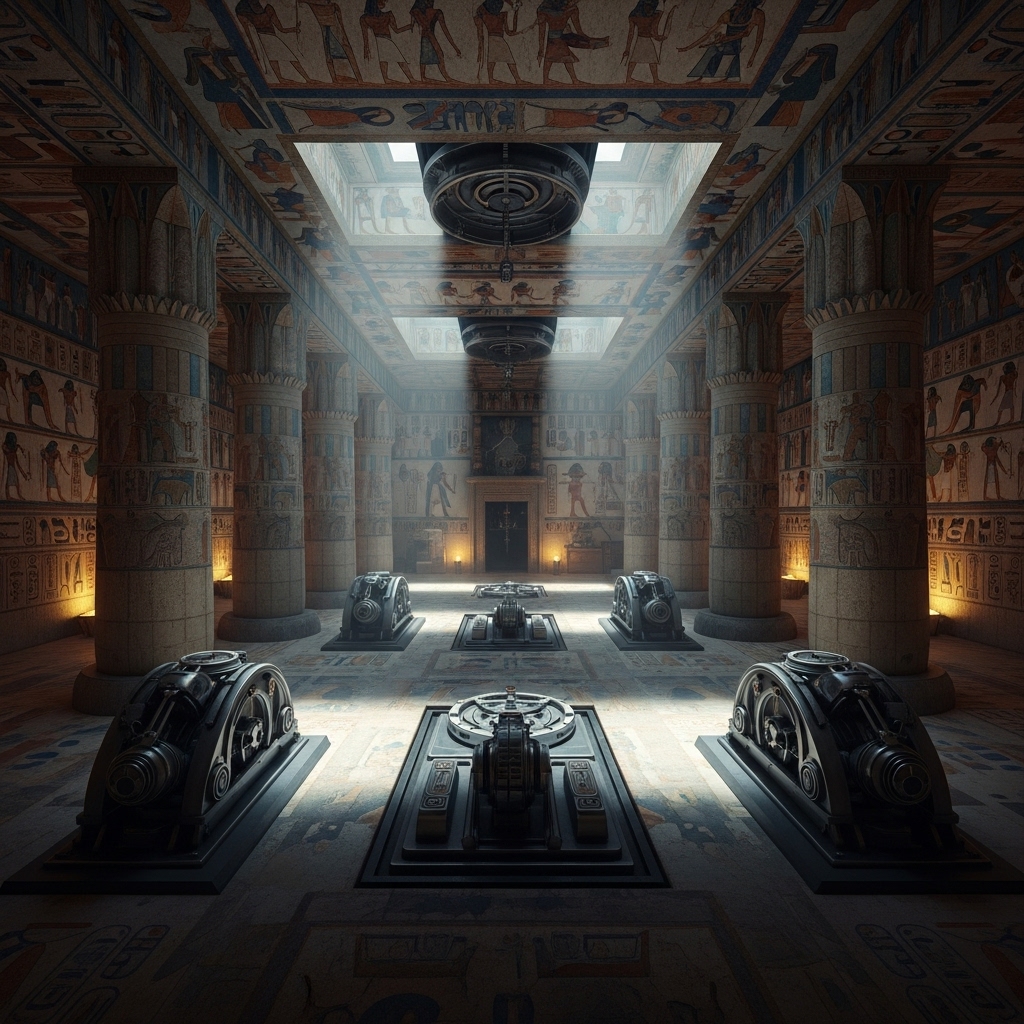
Edgar Cayce, however, envisioned something far more intricate and profound. According to his readings, there weren’t just one, but three distinct underground halls hidden beneath the silent guardian of the Giza plateau. The first of these, as he described, was indeed a Hall of Columns, but one imbued with an extraordinary layer of ancient technology | four secret mechanisms. Cayce posited that deciphering the riddles embedded within these mechanisms was the sole key to unlocking passage to the subsequent chamber.
The second hall, as revealed in his trance-like states, was nothing short of breathtaking. It was described as a giant bowl filled with water, its vaulted ceiling adorned with hundreds of twinkling stars and constellations. At its core, an immense, dark sarcophagus floated within the “sacred waters of an artificial lake.” But the mystery deepened. Within this surreal setting lay another hidden mechanism. Cayce claimed that at a precise moment, when the star map on the ceiling perfectly mirrored the celestial alignment of the real sky, an individual would need to plunge into the sacred waters and retrieve 10 relics from the lake’s depths.
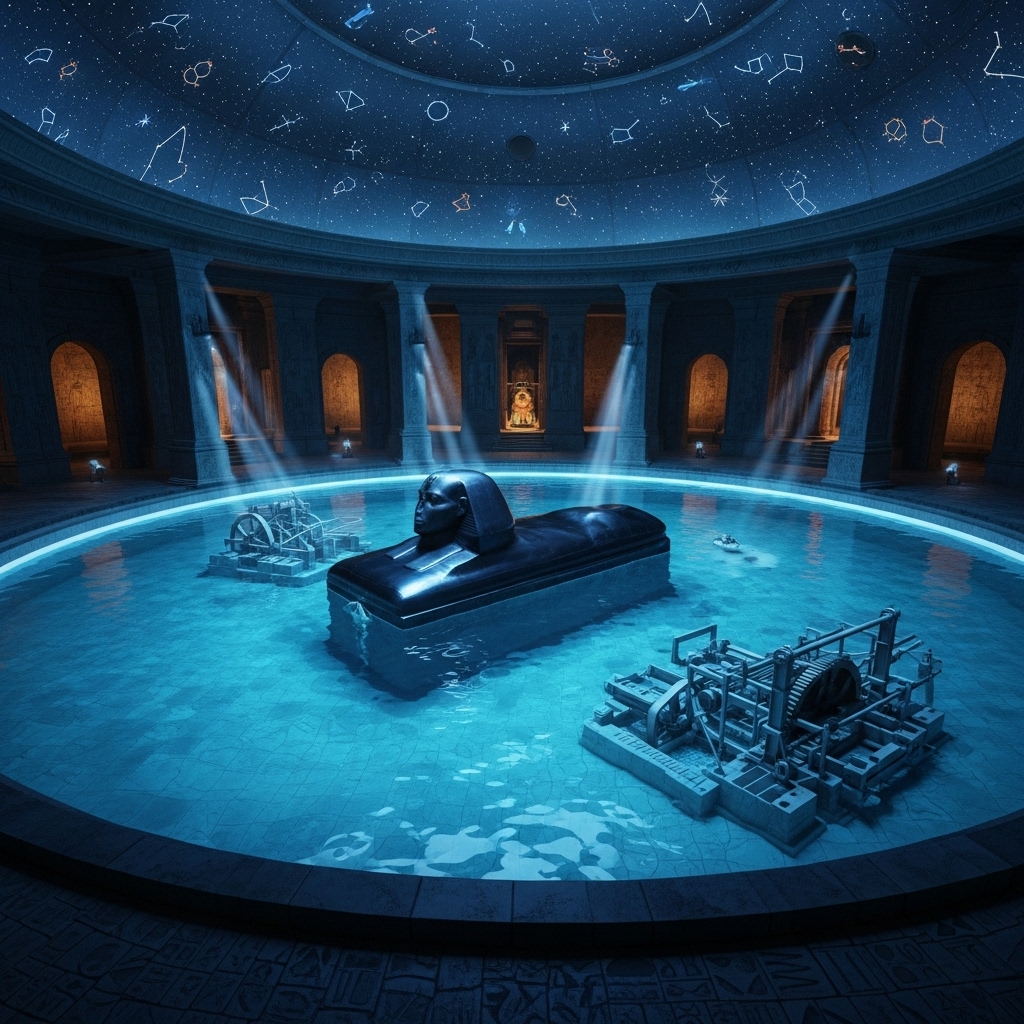
These relics, once placed into special grooves meticulously carved into the walls, would then reveal the eleventh and final artifact. This ultimate relic was said to be contained within the sarcophagus, held in the hand of the mummy of the Orion priest. Upon its placement onto a pedestal rising from the waters, the door to the third and most sacred hall would finally open.
The Guardians of Wisdom | Thoth and the Golden Sphinxes
Entry into this third hall, according to Cayce, was fraught with extreme peril. It was said to be fiercely protected by majestic golden sphinxes, guardians of wisdom, and a formidable sculpture of Thoth, the ancient Egyptian deity of knowledge and writing. The individual brave enough to enter faced a life-or-death challenge | they had to correctly answer seven questions posed by the imposing sculpture of Thoth. A single error, Cayce warned, meant certain failure, as the golden sphinxes would only permit the passage of those who flawlessly navigated this test of intellect and spiritual purity. Even revered priests during the pharaohs’ reigns, often considered the bearers of wisdom and closest to the gods, were said to have struggled with this ultimate trial.
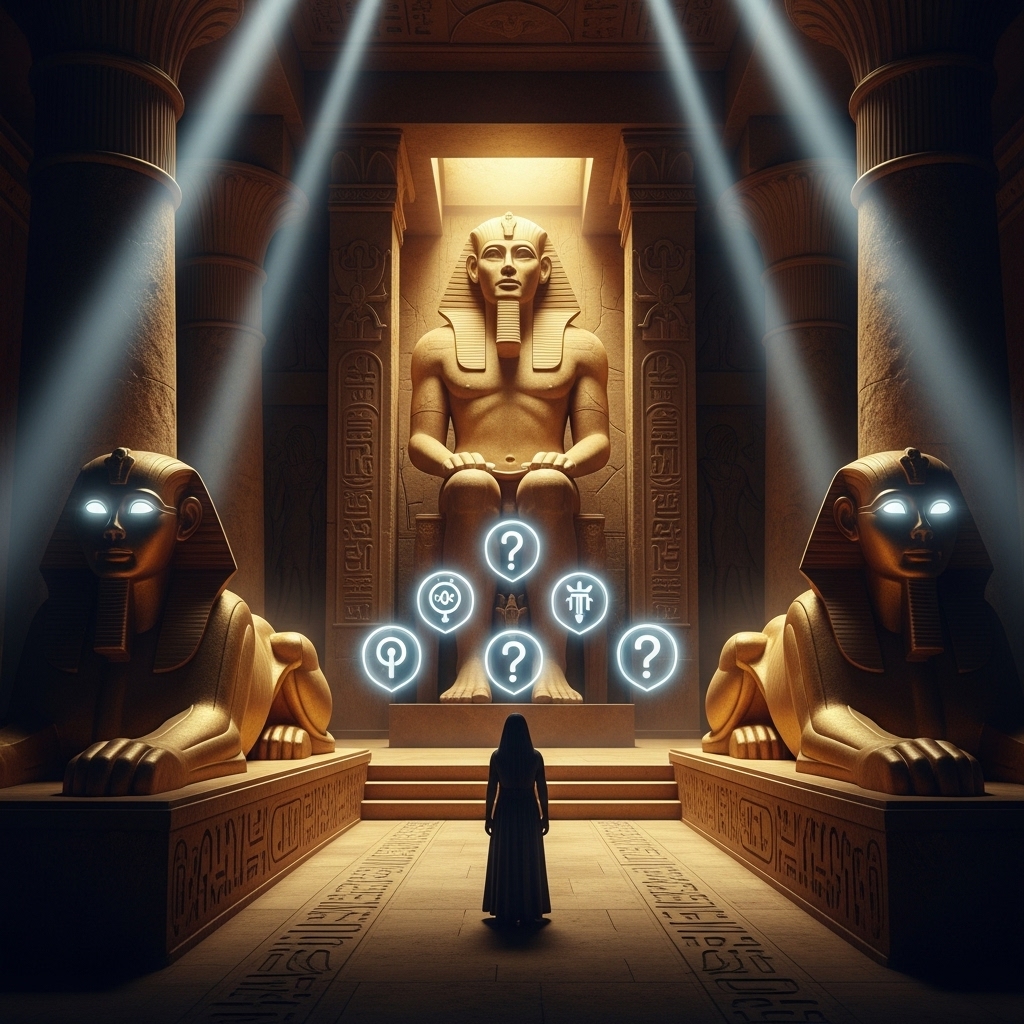
This severe test underscored the profound significance of the hall of secret knowledge that lay beyond. For Cayce’s followers, this was the ultimate prize | a sanctuary containing not only the technologies of forgotten civilizations but also an unparalleled collection of tablets describing the history of intelligent beings on Earth. Some of his most devoted proponents referred to this mythical chamber as nothing less than the “chronicle of life” itself. Despite persistent criticism from the academic community, Cayce remained steadfast in his assertion that these underground structures truly existed.
The Gatekeepers of Giza | Tourism vs. Truth
For decades, the pursuit of these legendary halls has been met with consistent resistance. Researchers and alternative historians have repeatedly sought permission from the Egyptian authorities to conduct excavations near the Great Sphinx, only to be met with resounding refusals in the vast majority of cases. The reasoning, while frustrating for those seeking answers, is understandable within the framework of Egypt’s economic priorities. Tourism is a lifeblood industry for the nation, and the prevailing narrative of classical Egyptology, meticulously curated and widely accepted, forms the very foundation of this lucrative business.
To disturb this lucrative idyll with potentially paradigm-shattering discoveries that defy traditional science is, from the authorities’ perspective, simply undesirable. Therefore, alternative researchers are often forbidden to excavate, reduced to merely observing the ancient structures under the guise of tourists, their curiosity unfulfilled.
Despite these efforts to control the narrative, some truths are simply too grand to remain entirely hidden. The excavation that revealed the door leading under the Sphinx, while initially downplayed, could not be completely concealed. Aerial photography and the sheer volume of tourists who witnessed the uncovering ensured that the secret was out. The Egyptian authorities and official Egyptologists deftly navigated this awkward situation by publicly declaring it a “technical room of no cultural and historical value.”
Modern Confirmation | Satellites and Subterranean Voids
Remarkably, this official dismissal didn’t deter everyone. While access to the excavated hall itself has been restricted to a select few – allegedly only two Egyptologists closely tied to the government and staunch supporters of the academic approach – independent research continued to probe the plateau’s hidden depths.
Not so long ago, two independent researchers utilized advanced satellite scanning technology to peer beneath the Giza plateau. Their findings were revolutionary. While their scans revealed immense rooms and structures under the pyramids, it was their discovery beneath the Sphinx that resonated most strongly with Cayce’s prophecies. Their data indicated the presence of significant voids that bore an uncanny resemblance in shape to man-made structures.
Specifically, these scans revealed one void approximately 120 square meters in area, another around 100 square meters, and a third, remarkably larger, at approximately 280 square meters. These dimensions and the nature of the voids strongly suggest artificial construction, lending astonishing credence to Cayce’s detailed descriptions of multiple underground halls.
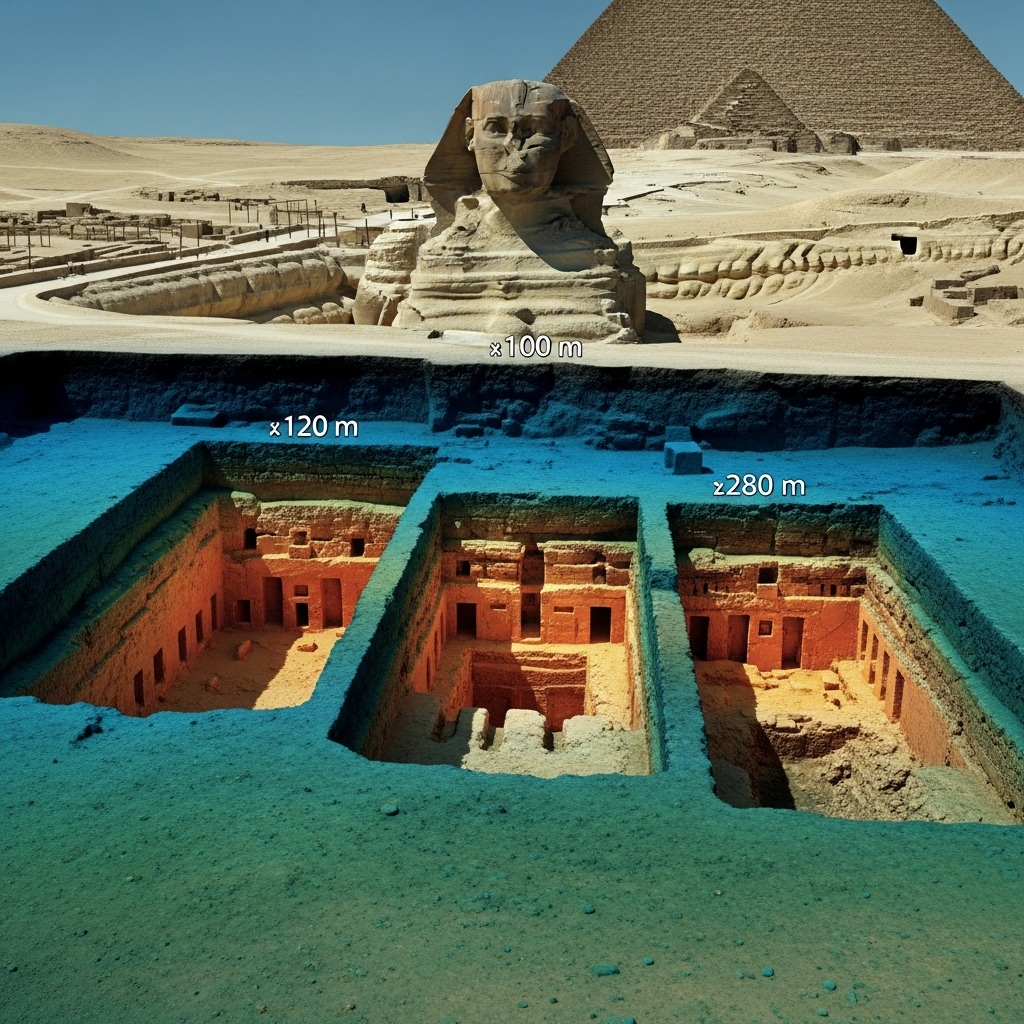
Tragically, shortly after the publication of this groundbreaking discovery, these courageous researchers were declared persona non grata in Egypt, effectively banned from continuing their work in the country. This swift and decisive action by the authorities, combined with the consistent suppression of alternative theories, strongly suggests that something of immense significance lies beneath the Sphinx. It increasingly appears that Edgar Cayce, the visionary who peered beyond the veil of ordinary perception, was indeed right. The thought of such incredible knowledge and history being deliberately concealed from the public is, for many, a profound tragedy.