



The idea that our world might be a simulation has sparked endless debates among philosophers, scientists, and curious minds alike. One perspective argues that even if we live in a simulated reality, it changes nothing—because we’re trapped within this “simulation zone” with no way out.
On the flip side, others insist it changes everything, suggesting that realizing we’re products of a powerful program could fundamentally shift how we view our origins, purpose, and existence. So, which is it? Let’s dive deep into this mind-bending concept, exploring its scientific, philosophical, and even ethical implications.
Mathematics as the Code of Reality
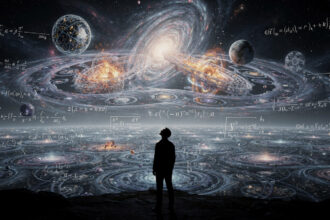
Science has long revealed that the universe operates with astonishing precision, governed by mathematical laws. From Newton’s laws of motion to Maxwell’s equations on electromagnetism, and Einstein’s groundbreaking theories of relativity, the cosmos seems to run like clockwork—or perhaps, like a well-written program. Every force, particle, and interaction can be expressed through numbers, equations, and patterns. But what if this “math” isn’t just a human tool to describe reality? What if it’s the actual code underpinning a simulated universe?
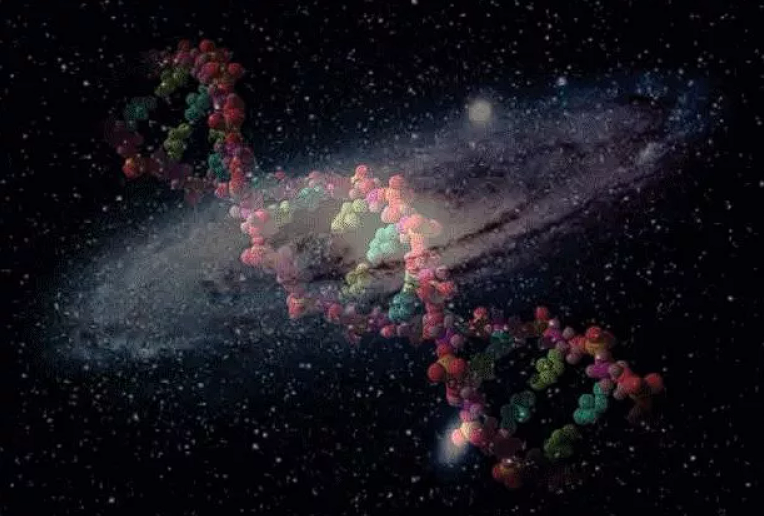
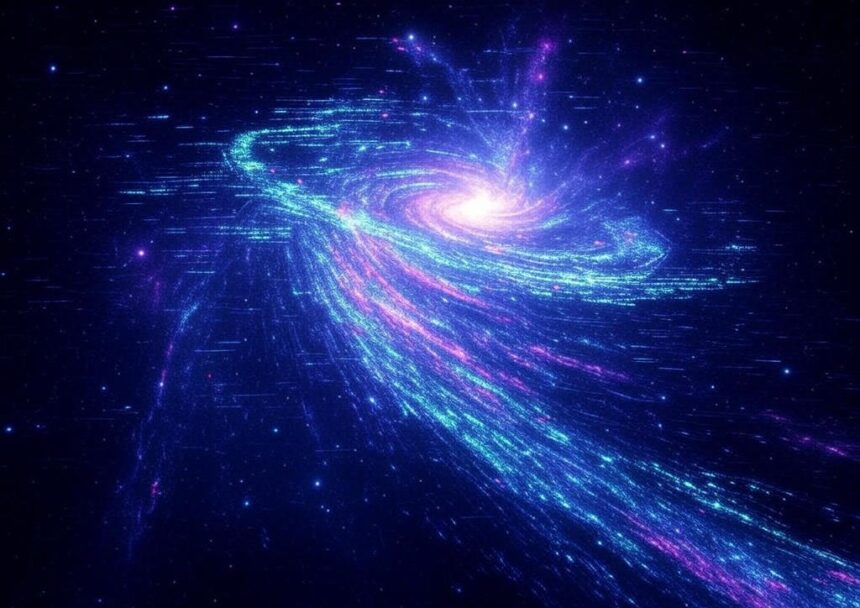
Picture this | every atom, every star, every breath you take is orchestrated by complex algorithms running on a cosmic supercomputer. This isn’t a new idea—philosopher Nick Bostrom’s simulation argument posits that a sufficiently advanced civilization could create such a simulation, and we might be living inside it, blissfully unaware. If true, this raises profound questions | Why would anyone simulate us? What’s the purpose of recreating our universe down to the tiniest detail?
The Anthropic Principle | A Universe Tailored for Life
The anthropic principle offers a tantalizing clue. It suggests that the universe’s physical constants—like the mass of a proton, the strength of gravity, or the speed of light—are so finely tuned that even a slight tweak would make life impossible. The odds of these conditions aligning by chance seem astronomical, almost as if the universe was designed with life in mind. Could this precision be evidence of intentional programming by a creator—be it a godlike entity, an advanced civilization, or an AI—setting the stage for us to exist and evolve?
If our universe was deliberately crafted, the implications are staggering. Perhaps we’re part of an experiment, a grand observation deck where our creators watch how life unfolds under these specific conditions. But why? Is it for science, entertainment, or something beyond our comprehension? The idea of a purpose-driven simulation suggests there’s intent behind our existence—a notion that challenges the randomness of a purely materialistic worldview.
Quantum Clues | Glitches in the Program?
Delving into the subatomic realm, things get even stranger. Quantum mechanics reveals phenomena that defy everyday logic. Take the observer effect | subatomic particles, like electrons, behave differently when observed—acting as particles in one moment and waves in another. It’s almost as if they “know” they’re being watched. Could this be a hint of computational logic at work, where the system adjusts itself based on external input, much like error-correcting code in a computer program?
These quantum quirks might be the “bugs” or “rendering limits” of our simulated reality. When we zoom in too closely, the simulation struggles to maintain consistency, revealing its artificial nature. If this is true, our universe might not be a seamless physical construct but a carefully coded illusion—one that glitches under scrutiny.
The Multiverse | Infinite Simulations, Infinite Possibilities
What if our universe isn’t unique? The multiverse theory proposes an infinite array of realities, each with its own physical laws and constants. In this framework, advanced civilizations could spawn countless simulations, each a petri dish for experimenting with life under varying conditions. Our reality might be just one of these—a single thread in an infinite tapestry of simulated worlds.
The beauty of the multiverse idea is its sheer probability. With infinite simulations running, every conceivable configuration of physics becomes possible. Our universe, with its life-friendly laws, isn’t a fluke—it’s a guaranteed outcome in an endless sea of trials. But if we’re one of many, who’s running the show, and how many layers deep does the simulation go?
Déjà Vu and Paranormal Hints | Cracks in the Code?
Ever experienced déjà vu—that eerie sensation of reliving a moment? What if it’s not just a brain glitch but a literal hiccup in the simulation? Paranormal phenomena like precognition, coincidences too perfect to be random, or even ghost sightings could be artifacts of a flawed program. These moments might reveal the seams of our artificial reality, where the code fails to align perfectly.
Quantum mechanics bolsters this idea. The probabilistic nature of particles—where outcomes shift based on observation—mirrors how a simulation might optimize resources, rendering details only when needed. Maybe déjà vu is the system accidentally replaying a cached event, exposing the machinery behind the curtain.
The Fermi Paradox | Are We Alone by Design?
The Fermi Paradox asks | if the universe is teeming with potential for life, where are all the aliens? Despite the vastness of space, we’ve found no signs of intelligent civilizations. One explanation ties neatly into the simulation hypothesis | our reality is a closed system, deliberately isolated from external contact. Perhaps the simulation’s parameters exclude other lifeforms, or their presence is hidden to maintain the experiment’s integrity.

This isolation could be intentional—a firewall to keep us focused inward. If we’re a test case, our creators might not want us distracted by cosmic neighbors. Alternatively, maybe we’re not ready to encounter others, and the simulation will “unlock” that phase when we’ve reached a certain milestone.
Technology’s Role | Building Our Own Simulations
Look at our own technological progress. Virtual reality (VR) and augmented reality (AR) are blurring the lines between the real and the artificial. Modern games like The Sims or the newly released Imzoi (a life simulator promising near-total immersion) show how close we’re getting to crafting believable worlds. If we can already simulate complex environments, imagine what a civilization millions of years ahead of us could achieve.
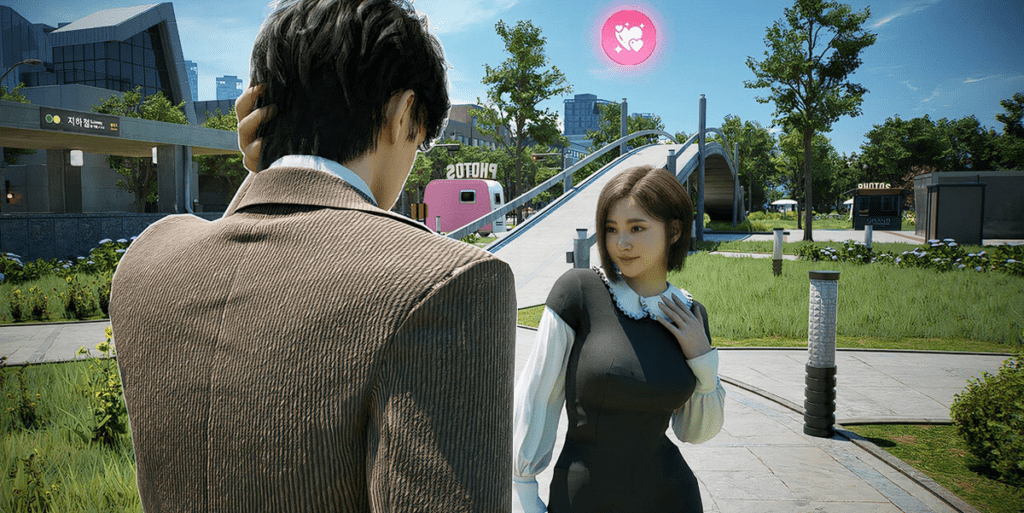
This raises a chilling possibility | if we’re on the cusp of creating indistinguishable simulations, might we already be inside one? Our advancements could be a recursive loop—simulated beings building simulations, unaware of the layers above us.
Philosophical Ripples | What Is Real?
The simulation hypothesis isn’t just a scientific puzzle—it’s a philosophical earthquake. If we’re in a simulation, what does “reality” even mean? Are our thoughts, emotions, and choices truly ours, or are they scripted by an unseen programmer? Free will becomes a shaky concept if every decision is a line of code executed by a higher power.
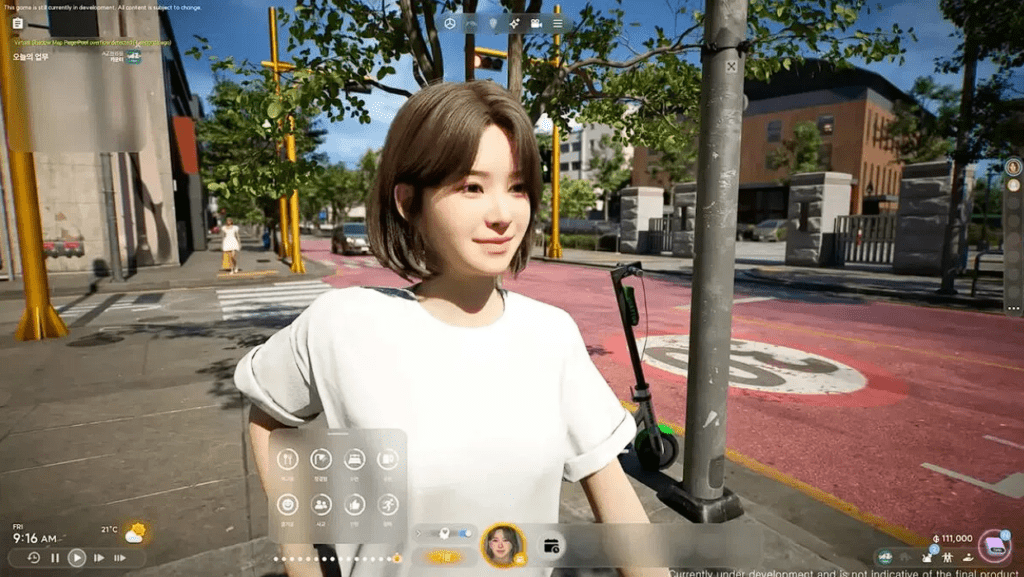
Imagine living as a marionette, your strings pulled by an invisible hand. You feel free, but you’re not. This existential uncertainty forces us to question the nature of consciousness and identity. Are we authentic beings or sophisticated avatars in someone else’s game?
Ethical Dilemmas | Creators and Creations
If we one day create sentient simulations ourselves, ethical questions loom large. Do these digital beings deserve autonomy, or are they tools for our amusement? If we imbue them with awareness, do we owe them rights? The rise of artificial intelligence already hints at these dilemmas—how will we treat simulated minds that mimic our own?
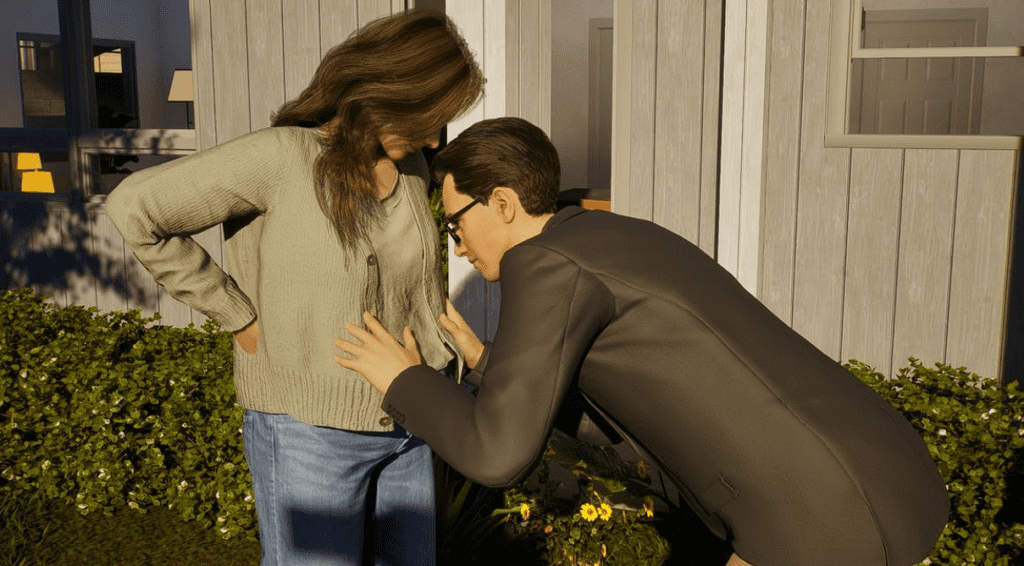
Flip the script | if we’re the simulated ones, what responsibilities do our creators have toward us? Are we entitled to know the truth, or are we better off in ignorance, serving whatever purpose they’ve assigned?
The Future | Seeking Answers
Proving or disproving the simulation hypothesis remains a distant goal. Advances in quantum computing, neuroscience, and cosmology might one day offer clues—perhaps by detecting the “resolution limits” of reality or decoding its underlying code. Until then, the hypothesis is a lens that reframes how we see the world.
Whether it changes everything or nothing depends on perspective. If we’re stuck in the simulation with no escape, our daily lives might feel unchanged. But knowing we could be part of a grand design challenges us to live with greater curiosity, humility, and purpose—because even in a simulated world, the search for meaning is ours to define.