The origin of the name “America” is a debated question among historians and linguists, not a settled fact, and not a secret hidden from anyone.
This piece presents the academic debate fairly, corrects a factual error about Vespucci’s actual birth name, and clearly separates the linguistic question from the entirely unsupported claim connecting it to Lucifer.
The Standard Account, and Why It’s Not Simply “Sanitized”
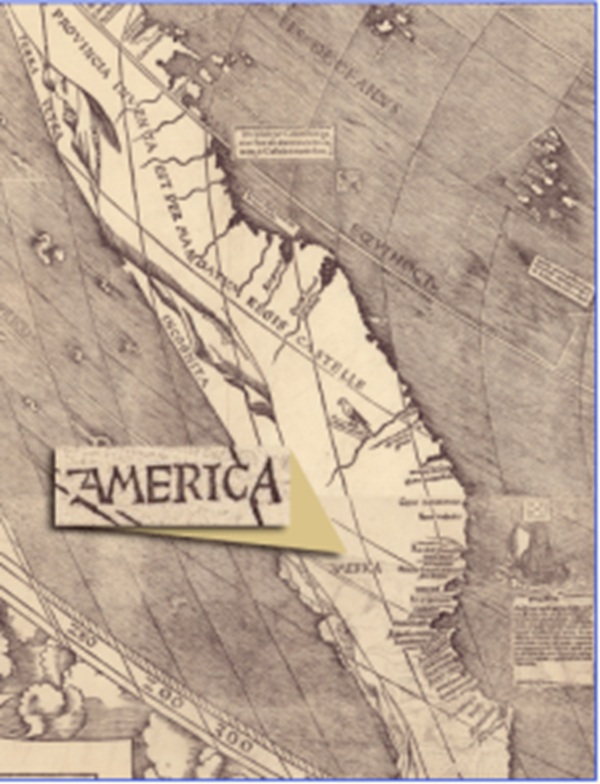
The standard account, that America is named after Amerigo Vespucci, comes from a primary source: Martin Waldseemüller’s 1507 Cosmographiae Introductio, which states directly, “a fourth part has been discovered by Americus Vespuccius… I do not see what right any one would have to object to calling this part after Americus… and so to name it Amerige, that is, the Land of Americus, or America.” That’s a well-established, explicit explanation from the primary source that first used the name in print, not a later invention added after the fact by anyone.
This needs a direct correction: the claim that Vespucci’s “authentic Christian name” was Alberigo isn’t supported by biographical records. Historical sources consistently record his birth on March 9, 1454, in Florence, as Amerigo Vespucci, son of Nastagio Vespucci, from birth, not under a different name later changed. This specific “Alberigo” claim appears to trace to a recorded point of confusion within the Amerrique-theory literature itself, questioning why Waldseemüller’s team used the Latinization “Americus” rather than “Albericus,” the more common contemporary Latin form. That’s a legitimate scholarly question about Latin naming conventions, but it doesn’t establish that Vespucci was actually born under a different name.
The Ongoing Academic Debate Over Amerrique
This level of open scholarly disagreement is rare for a question this fundamental, the origin of the name of an entire hemisphere. That rarity is precisely what makes the honest answer here more valuable than a confident but incomplete one: acknowledging genuine uncertainty, backed by sources on multiple sides, respects both the reader and the state of the evidence.
This is a credentialed alternative theory rather than fringe speculation, worth presenting fairly. 19th-century French geologist Jules Marcou and 20th-century novelist and historian Jan Carew both proposed that the name traces to Amerrique, a mountainous, gold-rich region in present-day Nicaragua, rather than directly to Vespucci. Stony Brook University scholar Jonathan Cohen has engaged with this theory academically, noting that Waldseemüller’s original Latin passage could genuinely be read either as an argument for naming the continent after Vespucci, or as an explanation for a name the mapmakers had already heard circulating, in which case the coincidental similarity to Vespucci’s own name would be just that, a coincidence. This is a legitimate, still-unresolved academic question, worth knowing about honestly as contested rather than either dismissed outright or presented as settled fact in either direction.
A separate, alternative theory is also worth noting: some historians have proposed the name traces instead to Richard Amerike, a Bristol merchant, based on a since-lost 15th-century manuscript reference. That’s a third credentialed alternative explanation, worth knowing exists alongside the Amerrique theory, illustrating that this etymological question does have more than one seriously considered answer among historians.
The Mayan Word, Treated With Appropriate Caution
The claim that “Amerrique” translates precisely to “Land of the Perpetual Wind” or “Land of the Spirit That Breathes” in Mayan linguistics couldn’t be independently verified against a scholarly source. This particular etymological translation should be treated with caution pending verification against peer-reviewed Mayan linguistic scholarship, separate from the broader, geographic Amerrique theory discussed above.
The Feathered Serpent Traditions, on Their Own Terms
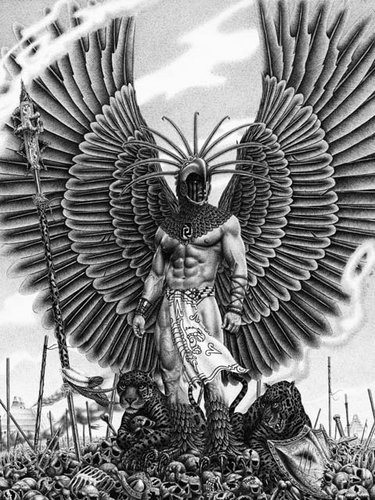
This deity’s significance across multiple pre-Columbian civilizations stands entirely on its own, independent of any claimed connection to a modern country’s name. The Feathered Serpent deity is extensively studied Mesoamerican and Andean religious tradition, spanning multiple distinct cultures across many centuries, worth appreciating fully on its own terms. Known as Q’uq’umatz to the Maya, Quetzalcoatl to the Aztecs, Kukulkan to the Yucatec Maya, and Amaru in Incan tradition, this deity was associated with wisdom, creation, and the sky across distinct pre-Columbian civilizations. Manly P. Hall, an early 20th-century esoteric author, did write the passage quoted here in his real 1928 book The Secret Teachings of All Ages, proposing that “Amaruca” derives from “Amaru.” This is Hall’s own published interpretation, worth attributing accurately to him by name. Hall wasn’t a linguist, historian, or Mayanist, and this etymological claim hasn’t been independently verified or adopted by mainstream academic linguistics or Mesoamerican studies scholarship.
The Lucifer Connection Has No Scholarly Support
This needs a clear, direct correction. The claim that the Feathered Serpent, and by extension America’s name, connects directly to Lucifer traces to Ken Hudnall’s book The Occult Connection II, a published work, but one written for a fringe paranormal readership rather than presenting credentialed theological, historical, or linguistic scholarship. This is Hudnall’s own speculative interpretation, explicitly framed with hedging language (“may also be known as”) even in his own original text, not an established finding from religious studies or comparative mythology scholarship. No source in comparative religion or Mesoamerican studies supports identifying Quetzalcoatl, Kukulkan, or Amaru with the Christian figure of Lucifer, a theological concept that developed within an entirely separate religious tradition with its own distinct history.
On Masonic Symbolism and the Founding Fathers
Worth being careful here about the shape of the reasoning being asked of the reader: fact A (Masonic symbolism exists in early American iconography) plus fact B (some Founding Fathers were Freemasons) doesn’t, by itself, establish claim C (a connection to a specific pre-Columbian deity and, further, to Lucifer). Each additional step in that chain requires its own independent evidence, and none has been supplied for the final two links.
The presence of Masonic symbolism in early American iconography, including the Great Seal, is well-established history, and several Founding Fathers, including George Washington, were Freemasons. Historians have written extensively and accurately about Freemasonry’s documented influence on Enlightenment-era political philosophy and civic symbolism throughout the early United States. This historical fact doesn’t, on its own, establish any connection to the Feathered Serpent tradition or to Lucifer specifically, a further speculative leap not supported by the historical record of how these symbols were actually chosen and understood by their historical designers.
Why This Etymological Debate Has Never Been Fully Resolved
Historians have failed to reach full consensus on this question after over a century of scholarly attention, for an instructive underlying reason. Historian Jonathan Cohen’s point about the Waldseemüller passage’s real grammatical ambiguity, that its Latin phrasing can be legitimately read either as proposing a new name or explaining an existing one, sits at the heart of why this remains an open question rather than a settled fact. Place names, linguists note, frequently do spread informally through spoken usage among sailors and traders well before appearing in any written record, meaning the written 1507 source, however authoritative and primary, may itself only be documenting a name already informally circulating rather than originating it. This methodological challenge, distinguishing between a written record’s account of a naming event and that event’s actual origin, is a recurring problem across historical linguistics generally, not unique to this specific case, and it’s why scholars continue to engage with multiple theories rather than treating any single explanation as definitively closed.
The Separate History of “Land of Lucifer” as a Rhetorical Device
This specific rhetorical pattern has a documented history independent of any etymological claim. 19th and 20th-century political and religious rhetoric, across widely varying ideological positions, has periodically invoked Luciferian imagery to describe America, sometimes as sincere theological criticism from religious writers concerned about materialism or pride, sometimes, ironically, as approving language from occultist writers who view Lucifer’s traditional association with enlightenment and rebellion against authority favorably rather than as evil. This well-established rhetorical pattern, applying Lucifer symbolically to a nation associated with liberty, ambition, and self-determination, exists as a real strand of political and religious commentary across multiple entirely separate traditions, distinct from any actual claim about the linguistic origin of the country’s name.
The Remarkable Survival Story of the 1507 Map Itself
The physical map that first bore the name “America” has a remarkable history, its own survival story a compelling piece of history in its own right. Waldseemüller’s original 1507 wall map, printed in an edition believed to number roughly 1,000 copies, was thought lost entirely for nearly four centuries, until a surviving copy was rediscovered in 1901 in the library of Wolfegg Castle in Germany. That single surviving copy was eventually acquired by the US Library of Congress in 2001, informally nicknamed “America’s birth certificate,” and remains on permanent public display today in an argon-filled protective case, viewable by anyone who visits. This documented survival story, a single copy of a thousand-copy print run resurfacing after nearly four hundred years, gives the map’s historical significance a dramatic backstory that needs no additional embellishment about hidden meanings to remain worth knowing.
Why Continents Traditionally Received Feminine Names
Waldseemüller’s team explained their reasoning for feminizing Vespucci’s name directly in their own primary source, a detail often lost in retellings. The 1507 text explicitly reasons that since Europe and Asia had received women’s names, following established naming conventions rooted in classical mythology and Latin grammar, in which continents and countries were often personified as female figures, it seemed fitting to follow the same pattern for the newly identified fourth continent. This straightforward grammatical and cultural reasoning, entirely mundane and clearly stated within the source text, explains why “Americus” became the feminized “America” rather than remaining in its masculine form, without requiring any hidden symbolic meaning beyond this stated convention that historians of cartography have examined extensively across many other examples from the same era.
An Open Question, Honestly Presented
The academic debate over America’s etymology, Vespucci versus Amerrique versus Richard Amerike, remains unresolved and worth engaging with honestly, on its linguistic and historical merits. That debate doesn’t require, or benefit from, an additional unsupported leap connecting the name to Lucifer through a chain of speculative interpretation from non-credentialed sources. The history here, a scholarly puzzle spanning five centuries, competing primary source readings, and alternative theories from real historians, is interesting enough without the embellishment, and readers truly curious about resolving it for themselves are well served by consulting the published academic work of scholars like Jonathan Cohen and the primary source text of the 1507 Cosmographiae Introductio directly, rather than through several layers of secondhand, speculative retelling.