On 24 January 1597, a Dutch sailor named Gerrit de Veer looked out from a driftwood house on the frozen coast of Novaya Zemlya and saw the sun. It should not have been there. By every reckoning the crew of Willem Barentsz could make, the polar night had two more weeks to run, and when de Veer told the others they laughed at him. Three days later they all saw it, a full red disc resting on the ice. Science needed almost four centuries to explain what they had seen, a mirage in which layers of cold air bend sunlight around the curve of the Earth. It is still called the Novaya Zemlya effect.
The islands have been showing people things that should not be there ever since. In the twentieth century the Soviet Union emptied them, sealed them and turned them into a proving ground for the largest bombs ever built. In the twenty-first, a legend placed something far older beneath the ice: the ruins of Hyperborea, the lost civilisation of the north, found by a joint Soviet and German expedition in 1935 and guarded ever after by Stalin’s secret police.
- The Sun That Came Back Too Early
- The Islands Emptied for the Bomb
- Fifty Megatons Over Sukhoy Nos
- The Legend Beneath the Ice
- The Policeman Who Hunted Shambhala
- Barchenko on the Kola Tundra
- The Red Baron and His Six Dimensions
- The Ahnenerbe Never Sailed East
- How Four Stories Became One
- What the Ice Keeps on Novaya Zemlya
- The Verdict | Debunked
- Quick Answers About Novaya Zemlya
Every piece of that legend leads back to a person, a place or an institution that existed. The trouble lies in how the pieces were put together, and this file takes them apart one by one.
The Sun That Came Back Too Early
Novaya Zemlya, the New Land, is a long, curved chain of islands that runs nearly a thousand kilometres north into the Arctic Ocean, the stony tail of the Ural Mountains, dividing the Barents Sea from the Kara Sea. Two main islands, Severny in the north and Yuzhny in the south, are split by a narrow strait called Matochkin Shar. Much of the northern island lies under a permanent cap of ice. Pomor hunters from the White Sea coast sailed there for walrus and seal long before any European map named it, and in the nineteenth century Nenets families were settled on its southern shores.
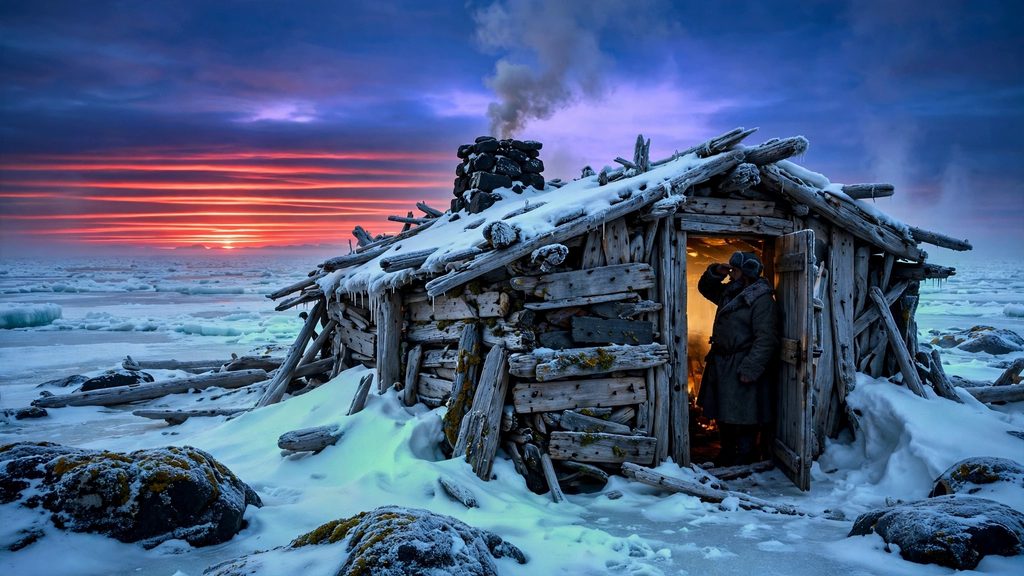
Barentsz came in 1596, on his third attempt to find a sea route north of Russia to China. Off the northeast coast his ship was locked in the ice, and the crew built a house from driftwood and ship’s timber at a place they named Ice Haven. They called the house Het Behouden Huys, the Saved House. Through the winter they fought cold, scurvy and polar bears, and when the light returned they escaped south in two open boats. Barentsz died on the way. In 1871 the Norwegian skipper Elling Carlsen found the house still standing, with the crew’s pots, tools, books and a clock left inside.
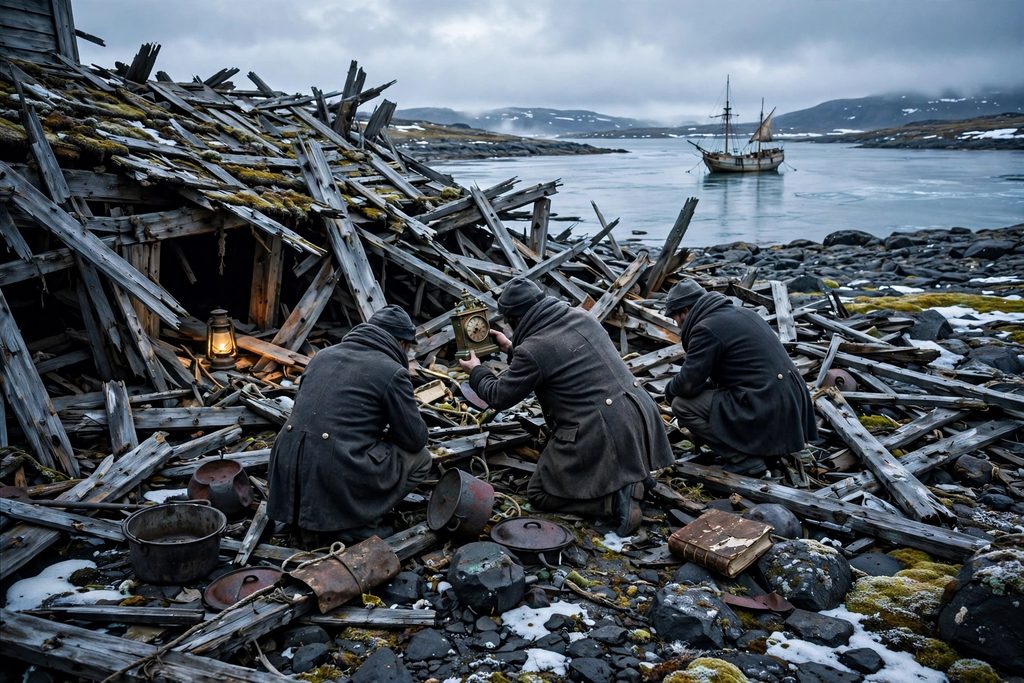
De Veer’s journal of the voyage recorded the early sun, and for centuries readers assumed he had muddled his calendars. In the twentieth century physicists showed that the mirage could happen just as he described, when sunlight travels hundreds of kilometres through a layer of cold air and bends with the Earth. It was the first time the islands showed travellers something that seemed impossible, and the answer turned out to be light and cold.
- 1596 to 1597
Barentsz and his crew winter at Ice Haven in the Saved House.
- 24 Jan 1597
Gerrit de Veer sees the sun two weeks early, the Novaya Zemlya effect.
- 1871
Elling Carlsen finds the Saved House still standing.
- Aug 1922
Barchenko’s expedition reaches Lovozero and Seydozero on Kola.
- 1923
Barchenko founds the Unified Labour Brotherhood. Bokiy joins.
- 1 Jul 1935
The Ahnenerbe is founded under Himmler.
- 1935
A joint Soviet and German team finds Hyperborea on Novaya Zemlya, in the legend.
- 15 Nov 1937
Bokiy is shot. Barchenko follows in April 1938.
- 1938
Bartini is arrested and sent to a prison design bureau.
- 1954
Novaya Zemlya becomes a test site. Its people are moved away.
- 21 Sep 1955
The first nuclear test, a torpedo in Chernaya Bay.
- 30 Oct 1961
The Tsar Bomba explodes over Sukhoy Nos.
- 1965
Bartini publishes his paper on dimensions and constants.
- 24 Oct 1990
The last Soviet test on Novaya Zemlya.
- 1997
Valery Demin’s Hyperborea-97 expedition goes to Seydozero.
- Later
Websites and videos place Hyperborea under the test site.
The Islands Emptied for the Bomb
In 1954 the Soviet government chose Novaya Zemlya as its northern nuclear test site. The Kazakh steppe at Semipalatinsk was too close to towns for the largest explosions, and the Arctic islands were remote, mountainous and surrounded by sea. More than five hundred inhabitants were moved to the mainland. Soviet maps went on showing the coastal settlements until 1956, the year full military control was established, and then the names faded. A garrison town grew at Belushya Guba on the southern island.
The first test came on 21 September 1955, when a nuclear torpedo was exploded underwater in Chernaya Bay. Over the next thirty-five years the archipelago became one of the busiest nuclear ranges on Earth. A study by seismologists at Columbia University’s Lamont-Doherty Earth Observatory and the United States Geological Survey, published in Science and Global Security in 2005, counted 130 tests there, with 224 separate devices and a combined yield of about 265 megatons. Bombs were dropped over the northern island, set off in the bays and fired deep inside tunnels driven into the mountains along Matochkin Shar.
Some of those tunnels leaked radioactive gas. On 12 September 1973 four devices with a combined yield of 4.2 megatons were fired together under the northern island. The shock registered as a magnitude 6.97 earthquake and brought down some eighty million tonnes of rock, which dammed two glacial streams and made a new lake two kilometres long. The last Soviet test on Novaya Zemlya took place on 24 October 1990. The seas around the islands keep their own legacy. Thousands of containers of radioactive waste were dumped in the Kara Sea, and in 1981 the Soviet navy scuttled the nuclear submarine K-27, reactors and all, in a bay off the eastern coast.
Fifty Megatons Over Sukhoy Nos
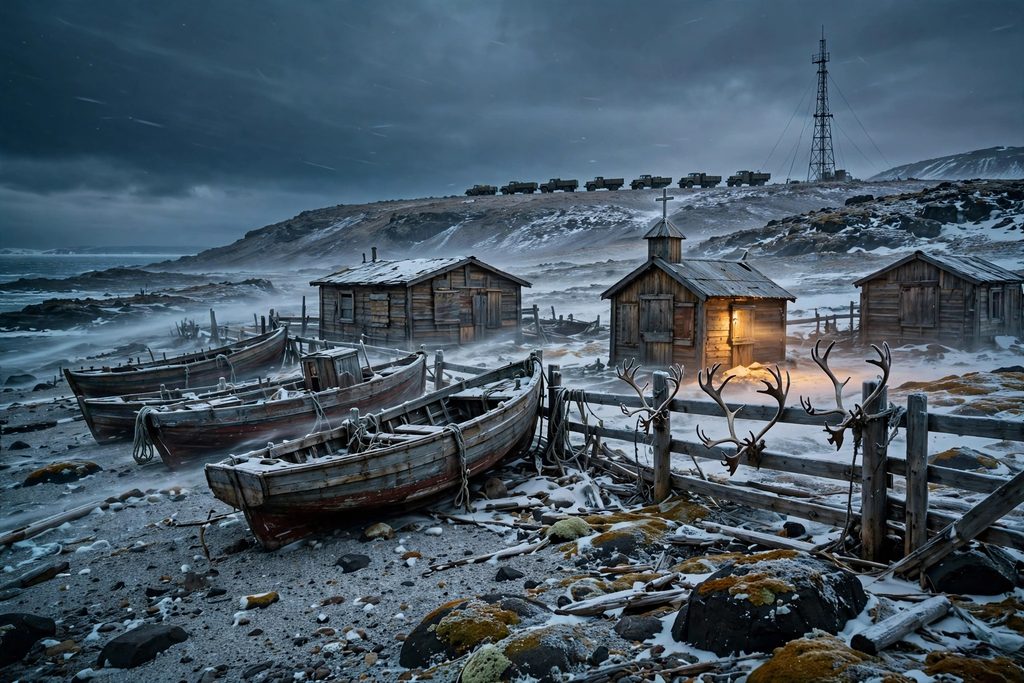
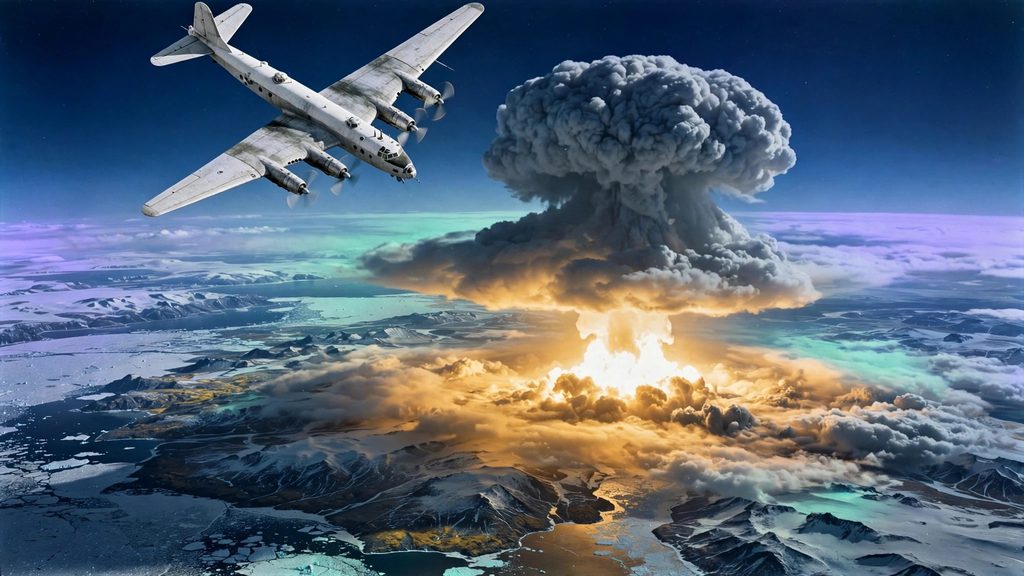
The explosion that made the islands famous came on the morning of 30 October 1961. A Tu-95V bomber commanded by Major Andrei Durnovtsev carried a single weapon, the AN602, under its belly. Its designers, a team led by Andrei Sakharov at the closed city of Arzamas-16, had planned it for about a hundred megatons. For the test they swapped part of its uranium for lead, halving the yield and the fallout.
At about 11.32 Moscow time the bomber released it from ten and a half kilometres. A huge parachute slowed its fall to give the crew time to escape, and at about four kilometres above the Mityushikha Bay range, on the Sukhoy Nos peninsula of the northern island, the bomb exploded with a force of about fifty megatons. It was the most powerful explosion ever made by human beings, and the world came to know it as the Tsar Bomba.
The fireball was about eight kilometres wide and rose almost to the height of the aircraft that dropped it. It could be seen nearly a thousand kilometres away. The cloud climbed to about sixty-seven kilometres. Buildings in the settlement of Severny, fifty-five kilometres from the blast, were destroyed. Glass shattered on Dikson Island, 780 kilometres away, and the shock wave broke windows in Norway and Finland. The seismic wave travelled around the globe three times. Durnovtsev’s aircraft dropped about a kilometre in the turbulence and flew home.
A place that has held that much fire draws stories to it, and the stories did come.
The Legend Beneath the Ice
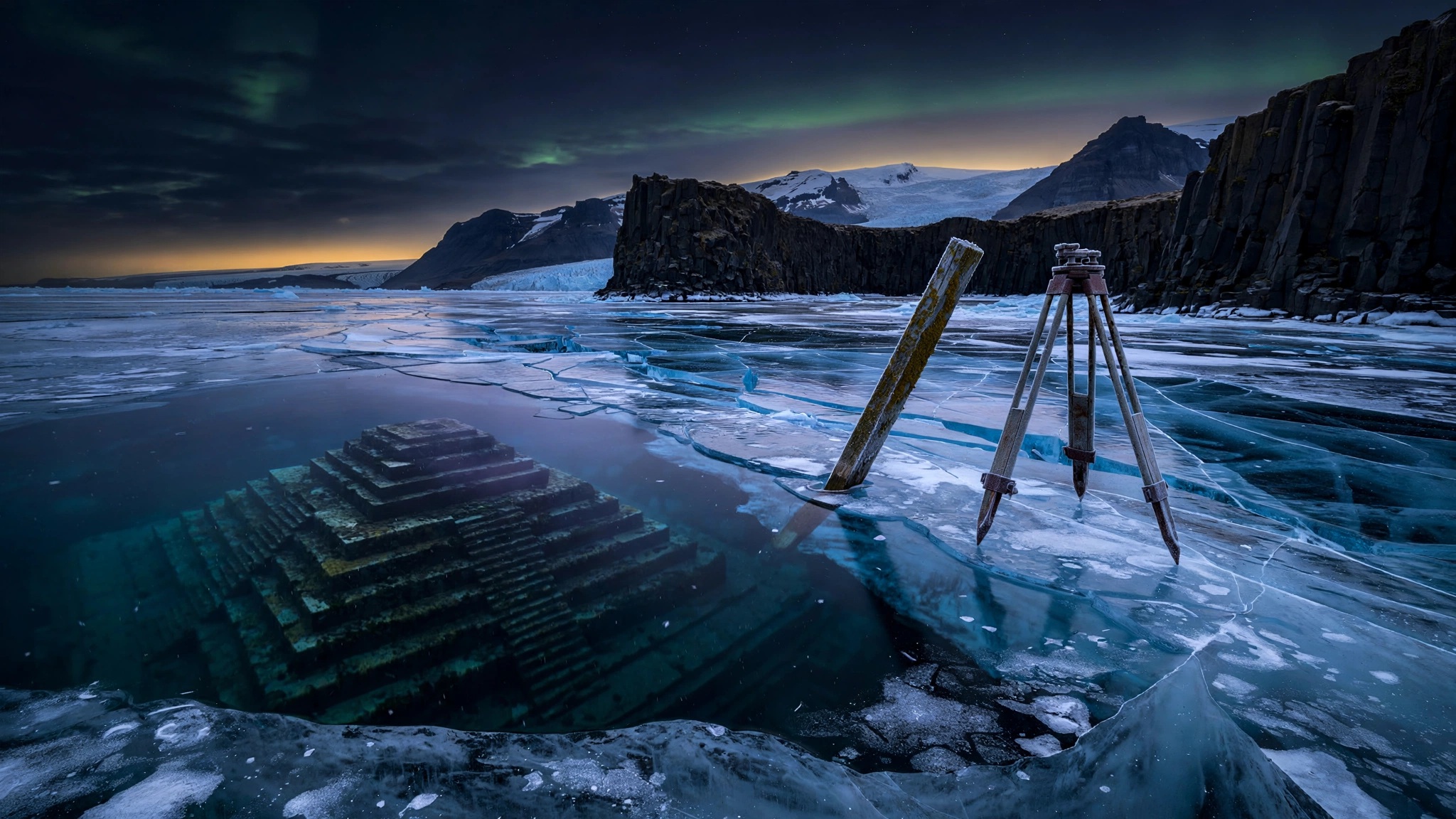
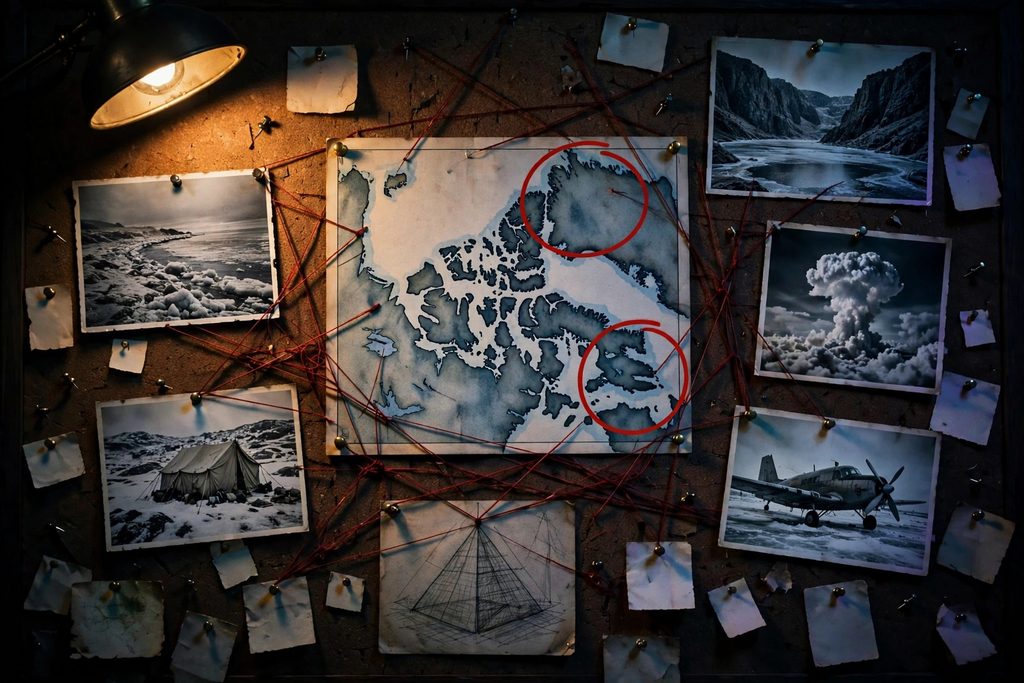
The legend exists in many versions, but its core runs like this. In 1935 Soviet researchers, working in secret with German scholars of the Ahnenerbe, reached Novaya Zemlya and found ruins under the ice. There were pyramids of silver etched with shifting writing that looked like Coptic, filigree statues of the crocodile god Sobek dressed as if for a laboratory, and a warm labyrinth guarded by the statue of a mermaid, inside which the minds of visitors changed. The find was sealed by Gleb Bokiy’s secret department. Decades later the aircraft designer Robert Bartini ran a laboratory on the site that explored time and the reversal of cause and effect, and some versions add a Siberian exile for Bartini after 1953. The nuclear tests, in this telling, were cover for the work below.
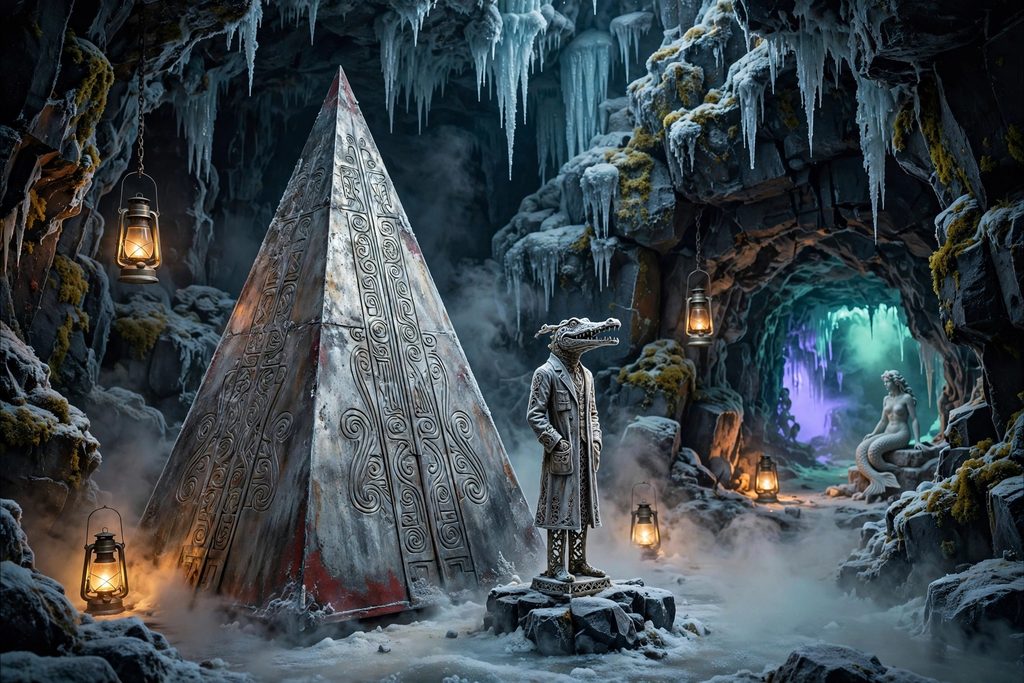
No author, date or original source is attached to any of it. The story circulates in videos, forums and translated websites, each repeating the last, and its earliest version has not been traced. What it does contain is a cast of names, and each name can be checked.
The Policeman Who Hunted Shambhala
The secret police chief of the legend is Gleb Ivanovich Bokiy, and his file needs no help to unsettle a reader. Born in Tiflis in 1879, he became a Bolshevik as a student in St Petersburg and was arrested again and again under the tsar. After the revolution he rose quickly. From January 1921 he ran the secret police’s Special Department through every change of its name, from Cheka to GPU, OGPU and NKVD, and he held it until his arrest. Its business was ciphers and secrets, breaking the codes of others and guarding the state’s own. The historian Anne Applebaum describes him in the early 1920s as the OGPU official in charge of the concentration camps, the years when the first great camp was rising on the Solovetsky Islands in the White Sea.
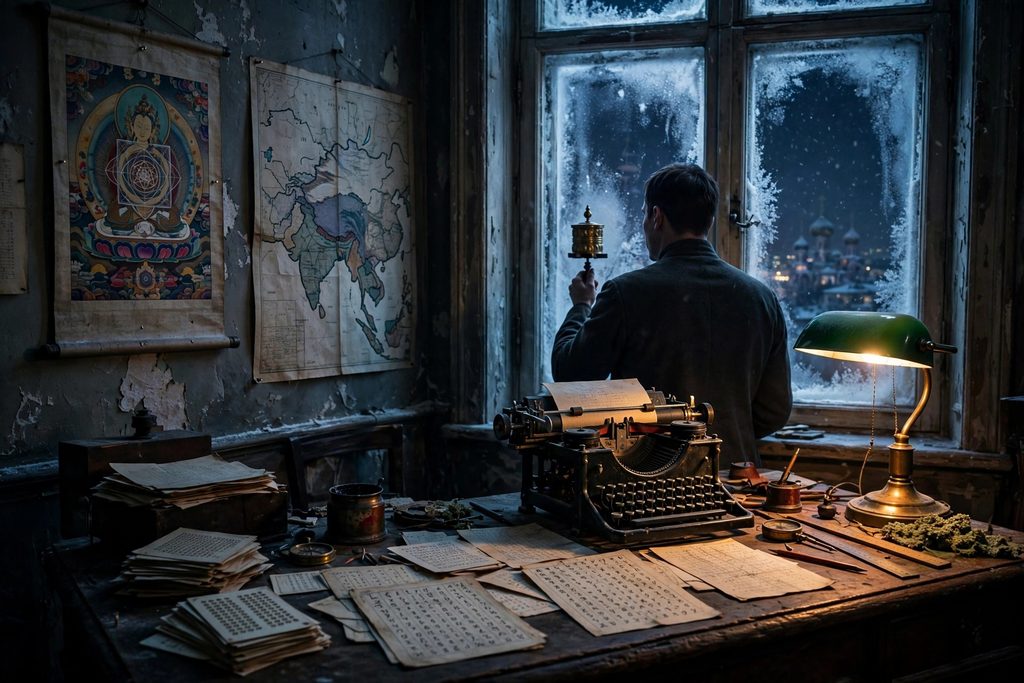
Bokiy wanted something more than secrets. Through the adventurer and agent Yakov Blyumkin he met Alexander Barchenko, a writer and mystic who believed that an ancient wisdom survived in the remote places of Asia and the far north. Under the protection of the secret police a laboratory of neuroenergetics was set up for Barchenko to study telepathy, hypnosis and the powers of the mind, in a building that some accounts place on Kuznetsky Most in central Moscow. In 1923 Barchenko founded an esoteric circle, the Unified Labour Brotherhood, and Bokiy joined it. Together they dreamed of reaching Shambhala, the hidden kingdom of Tibetan Buddhism, and of joining its Kalachakra teachings to communism to create a new kind of human being. The expedition they planned for Inner Asia never left, and the Foreign Commissariat sent its own.
The rumours around Bokiy grew darker with time. Files carried west by the defector Vasili Mitrokhin claim he held orgies at his dacha under the pretext of tantric study, and some Russian writers have suggested that his gatherings inspired Satan’s ball in Bulgakov’s The Master and Margarita, where the devil Woland arrives in Moscow with a retinue and a talent for secrets. None of it brought Bokiy anywhere near Novaya Zemlya. He was arrested on 16 May 1937, sentenced to death on 15 November and shot the same day. In 1956 the court that had condemned him cleared his name.
Barchenko on the Kola Tundra
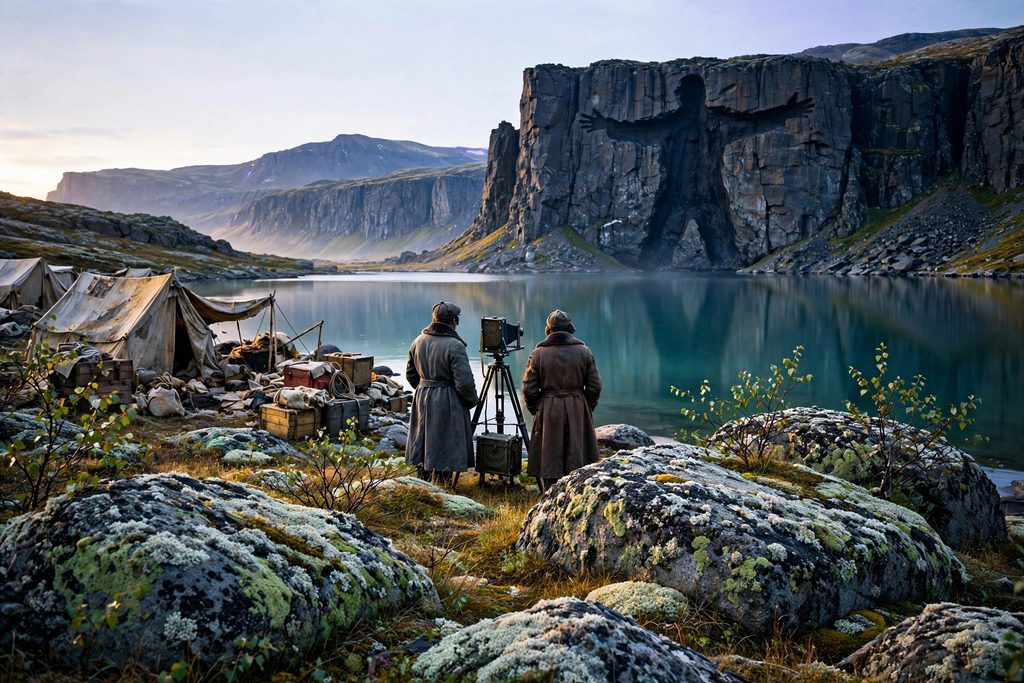
The expedition the legend borrows did take place, but on another shore. In August 1922 Barchenko led a small party to the Lovozero tundra in the middle of the Kola Peninsula, connected by most accounts to Vladimir Bekhterev’s Brain Institute in Petrograd. Its stated purpose was meryachenie, a state described among Arctic peoples in which whole groups fell into trance, copying one another’s movements and seeming to feel no pain. Psychiatrists called it polar hysteria. Members of the expedition said they felt it themselves, and one, a quartermaster named Pilipenko, was seized by it near a pale stone column.
Around Lake Seydozero, sacred to the Sami, the party reported the things Barchenko had hoped to find, a paved road, cubic blocks of stone, the column, several pyramids and a chasm leading into the ground that no one entered. On a cliff above the lake stands a dark figure with outstretched arms, some seventy metres tall, which the Sami call Kuyva, a giant turned to stone. To Barchenko it was a carving, and the whole landscape was the remains of Hyperborea. The full story of the stone giant and the pyramid claims that followed is told in Hyperborea.
In the same years the mineralogist Alexander Fersman was leading survey parties across the neighbouring Khibiny massif, work that made the Kola tundra one of the best-mapped mineral regions in the Soviet Union and gave it apatite mines and a new city, Kirovsk. Later retellings say Fersman disputed Barchenko’s reading of the stones, although no letter or report of his on the subject has been cited. What his surveys left behind were mines, not ruins.
The expedition’s diaries have never been released. A request to the FSB archive in the 2000s was answered that they remain a state secret, and another account says they were burned in 1941 as German armies neared Moscow. Barchenko was arrested in 1937 and shot in April 1938, months after his patron. The astrophysicist Alexander Kondiain, who had gone north with him, died in the purges too.
The search came back in 1997, when the philosopher Valery Demin led an expedition to Seydozero called Hyperborea-97, followed by Hyperborea-98, and announced stairways, observatories and pyramids. Scholars who have studied the revival note that it was bound up with a modern theory of a northern homeland for an Aryan people, an idea with a long and ugly history. Neither century’s searchers ever worked on Novaya Zemlya. Seydozero lies some 800 kilometres to the west, across the Barents Sea.
The Red Baron and His Six Dimensions
If Bokiy gives the legend its occult police, Robert Bartini gives it physics. He was born in 1897 in Fiume, then part of Austria-Hungary, and claimed descent from a noble family, which earned him the nickname of the Red Baron. A communist, he left Italy after the Fascist takeover of 1922, and the Italian party sent him to the Soviet Union as an aviation engineer. There he became Robert Ludvigovich Bartini and one of its boldest designers. His Stal-6 fighter set a Soviet speed record in 1933, and his stainless steel Stal-7 airliner set an international one. Another design, the DAR, was a steel flying boat built for long-range reconnaissance over the Arctic.
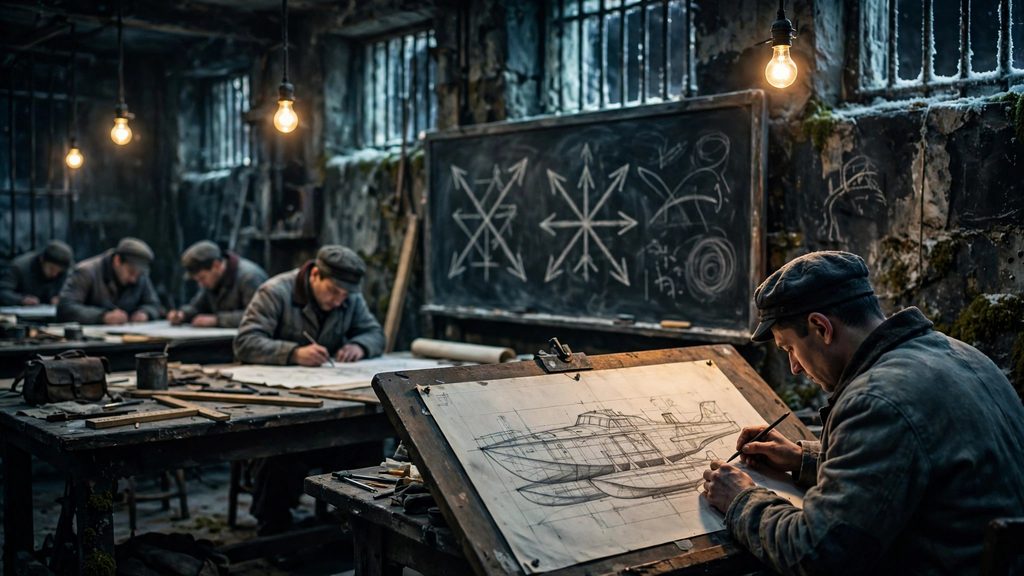
In 1938 the NKVD arrested him as an enemy of the people and a spy for Fascist Italy, and a troika gave him ten years. He served them as a prisoner engineer in TsKB-29, a secret design bureau of the NKVD in Moscow, working beside Andrei Tupolev, another prisoner, on the Tu-2 bomber. Released in 1946, he worked in Taganrog and then from 1952 at the aviation research institute in Novosibirsk, and he was formally rehabilitated in 1956.
In 1965 the Soviet Academy of Sciences printed a short paper by Bartini in its journal Doklady, with help from the physicists Bruno Pontecorvo and Semyon Gershtein, under the title Some relations between physical constants. It treated the number of dimensions of space and time as something that varies, equal to four only on average, and drew numerical links between the constants of nature. His admirers later described a Bartini world of three dimensions of space and three of time. Some physicists at first took the name Roberto Oros di Bartini for a hoax. His last great machine, the VVA-14, an ekranoplan meant to hunt submarines low over the sea, was built at the Beriev works in Taganrog and flew in the 1970s. He received the Order of Lenin in 1967 and died in Moscow on 6 December 1974. Rumour links him to a secret circle of thinkers called ATON, which no record describes.
The legend gives him a time laboratory under the Arctic ice and a Siberian exile after 1953. His record holds a prison design bureau, a steel flying boat built for the north and a theory of time published thirty years after the supposed expedition of 1935. It holds no laboratory on Novaya Zemlya.
The Ahnenerbe Never Sailed East
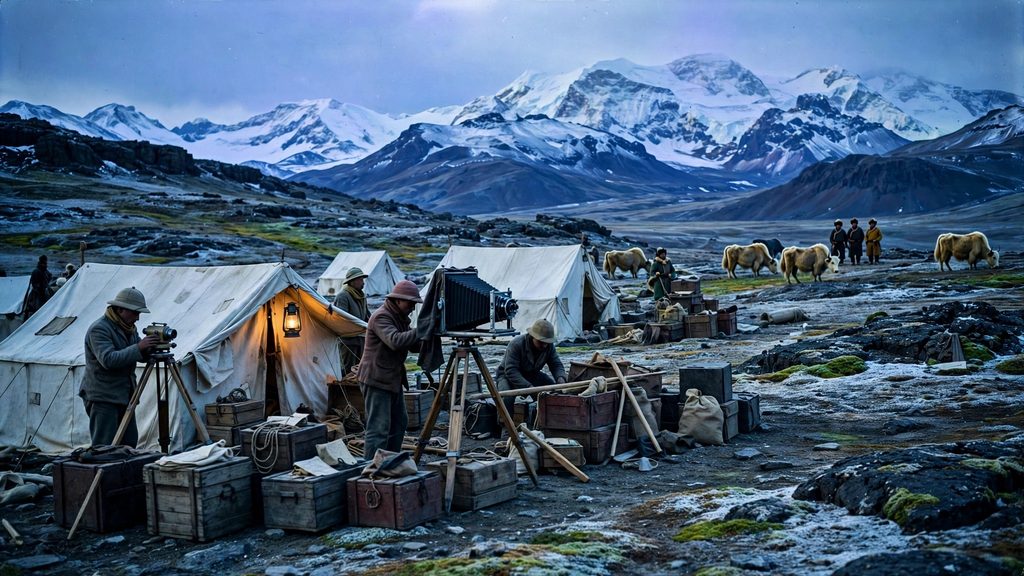
The German half of the story rests on an institution that existed. The Ahnenerbe, the Ancestral Heritage society, was founded on 1 July 1935 under the patronage of Heinrich Himmler to prove the ancient glory of a supposed Aryan race. Its scholars dug, measured skulls and travelled, and its best known journey, Ernst Schäfer’s expedition of 1938 and 1939, went to Tibet. Himmler’s institute and its methods are traced in the Ahnenerbe.
In 1935 Nazi Germany and the Soviet Union were sworn ideological enemies, and in November 1936 Germany signed the Anti-Comintern Pact, aimed squarely at Moscow. A joint expedition by the two into a Soviet military region, in search of the ancestors Himmler wanted for his own race, would have left traces in two sets of archives, in diplomatic papers and in the memoirs of everyone involved. None has been cited. The silver pyramids, the Sobek statues, the mermaid and the labyrinth that changes the mind appear in no excavation report, museum register, photograph of known origin or field notebook. They belong to the look of a pulp adventure, not to the paperwork that every dig leaves behind.
How Four Stories Became One
Set side by side, the parts of the legend come from different places and different decades. Kola supplied the expedition. Novaya Zemlya supplied the forbidden ground. Bokiy supplied the secret police, Barchenko supplied Hyperborea, Bartini supplied the physics, the Ahnenerbe supplied the Nazis and the Soviet state supplied decades of silence. The internet supplied the glue.
Modern legends are often built this way. Very little is invented from nothing. People who lived, institutions that existed and places on the map are moved together until they seem to tell one story, and each authentic part lends its weight to the whole. But a man standing near an event is not part of it. A closed test site does not prove an ancient city. An odd theory of time does not prove that anyone built a machine to test it.
The legend also moves its own map. The Greek Hyperboreans lived somewhere beyond the north wind. Barchenko searched on Kola, and so did Demin. The bombs fell on Novaya Zemlya. In the retelling all of them merge into one frozen north, as if the whole Russian Arctic were a single site. They are separate places, hundreds of kilometres apart, with separate histories, and evidence from one cannot be carried to another.
Silence does the rest. When an archive is closed, every missing page can be read as proof of what it hid. A missing archive shows that something was kept, not what it was. On Novaya Zemlya a great deal of what was kept is now known, because the tests have since been studied, measured and published.
What the Ice Keeps on Novaya Zemlya
Take Hyperborea away and the islands lose none of their pull. A state cleared a stretch of the Arctic of its people and set off explosions above it, beneath it and in the sea around it. Tunnels were driven into the mountains of Matochkin Shar, and one shot brought down a mountainside and made a lake. A submarine lies with its reactors on the floor of a bay off the eastern coast. The largest explosion humans have ever made flashed over Sukhoy Nos, and the cold sky above the islands still bends the sun the way it did for the crew of Barentsz.
The men the legend borrowed were extraordinary on their own. A policeman who guarded the state’s codes went looking for Shambhala and was shot. A mystic went north to study a trance and came back speaking of pyramids. An Italian baron designed aircraft in a prison and theories of time in his old age. None of them needed an ancient city under the ice. Hyperborea was never buried on Novaya Zemlya. It was buried in the gaps between their stories.
The Verdict | Debunked
Novaya Zemlya was the Soviet Union’s main nuclear test site from 1955 to 1990, the scene of 130 tests and of the Tsar Bomba in 1961, emptied of its inhabitants and closed to outsiders. Gleb Bokiy and Alexander Barchenko did pursue occult and Buddhist ideas under the protection of the secret police, Barchenko did lead an expedition to Kola in 1922 in search of Hyperborea, and Robert Bartini did publish a theory of varying dimensions in 1965.
The claim that a joint Soviet and German expedition found Hyperborean ruins under Novaya Zemlya in 1935, and that the site was later studied in secret, falls apart on every test. No source from the period records the expedition, the artefacts or the laboratory. The Kola expedition took place some 800 kilometres away, Bartini’s theory came thirty years later, and the Ahnenerbe’s record never reaches the Soviet Arctic. The legend is a collage of other people’s lives, pasted onto the one place no outsider could visit. Debunked, on the evidence of the map as much as the archive.
- Claim tested
- In 1935 a joint Soviet and German expedition found the ruins of Hyperborea under the ice of Novaya Zemlya, which the Soviet secret police then sealed and Robert Bartini later studied in a secret laboratory.
- Oldest record
- Off the ladder · Unsourced
Uncredited websites and videos. No source from 1935 or any later decade has been cited, and the earliest version has not been traced. - The record supports
- That Novaya Zemlya was a closed Soviet nuclear test site from 1955 to 1990, that Bokiy and Barchenko pursued occult research, and that Barchenko led a Kola expedition in 1922.
- It does not support
- A 1935 Soviet and German expedition to Novaya Zemlya, Hyperborean ruins, the pyramids and statues, or any laboratory beneath the ice.
- Explanations weighed
- A collage of separate histories, Kola, the test site, Bokiy, Bartini and the Ahnenerbe, set on a place no outsider could visit.
- What would change it
- Expedition papers from 1935, a photograph of known origin, or any object from the site.
The Greek people beyond the north wind, Barchenko’s stone giant and the pyramids of Seydozero are followed in Hyperborea, and the map that first set a polar continent before European eyes is traced in Mercator’s Arctic. Himmler’s institute of scholars is opened up in the Ahnenerbe, and the occult theory of races it fed on is unpicked in the root-race doctrine. The Soviet chemist who hunted Atlantis, and the Nazi bunker that crept into his story, appear in Nikolai Zhirov, while Shambhala, the kingdom Bokiy hoped to reach, waits in Agartha. Another rumoured Soviet project is taken apart in Project Comet-6, and the Soviet pilots who met things in the sky are gathered in Soviet UFO encounters. The Atlas marks the Tsar Bomba’s range at Sukhoy Nos. A test record outweighs a pyramid no one photographed, as the Archive Standard sets out, and the Novaya Zemlya legend takes its place among the debunked files in the Verdict Index.
Quick Answers About Novaya Zemlya
Is there an ancient civilisation under Novaya Zemlya?
No trace of one has been found. No excavation, object or record from 1935 supports the story of Hyperborean ruins beneath the ice, which appears only in modern retellings with no named source.
What happened on Novaya Zemlya?
From 1955 to 1990 it was the Soviet Union’s main nuclear test site. About 130 tests took place there, in the air, underwater and in tunnels, after its inhabitants were moved to the mainland.
Where was the Tsar Bomba dropped?
Over the Sukhoy Nos peninsula on Severny Island, Novaya Zemlya, on 30 October 1961. It exploded about four kilometres above the ground with a yield of about fifty megatons.
Did the Soviet Union search for Hyperborea?
Alexander Barchenko, protected by the secret police official Gleb Bokiy, led an expedition to the Kola Peninsula in 1922 and believed he had found its traces. No Soviet search on Novaya Zemlya is on record.
What is the Novaya Zemlya effect?
A polar mirage in which layers of cold air bend sunlight around the curve of the Earth, so the sun appears before it has risen. The crew of Willem Barentsz saw it in January 1597.