



Something changed in 1945.
Not the sightings. Those came first. Reports of anomalous objects in the sky extend backward through the historical record for centuries, long before aviation, radar, rocketry, or any other technology that could plausibly have produced the modern category of unidentified aerial phenomenon. Medieval illuminated manuscripts contain depictions of objects in the sky whose forms resist straightforward identification as ordinary celestial phenomena. The Nuremberg broadsheet of 1561 describes and depicts an extraordinary display of objects over the city, including spheres, crosses, cylinders, and other forms that witnesses interpreted through the visual language available to them. The great airship wave of 1896–97 produced thousands of reports across the United States, many describing enormous aerial objects displaying apparent control and maneuverability at a moment when no human airship technology could plausibly account for the entire phenomenon. Whatever these historical cases ultimately represent, the important point is not that they prove extraterrestrial visitation. They do not. The important point is that the phenomenon, whatever its underlying nature, did not begin with the atomic age. The historical record establishes a baseline. Something anomalous was being reported before humanity possessed the technological vocabulary to explain it.
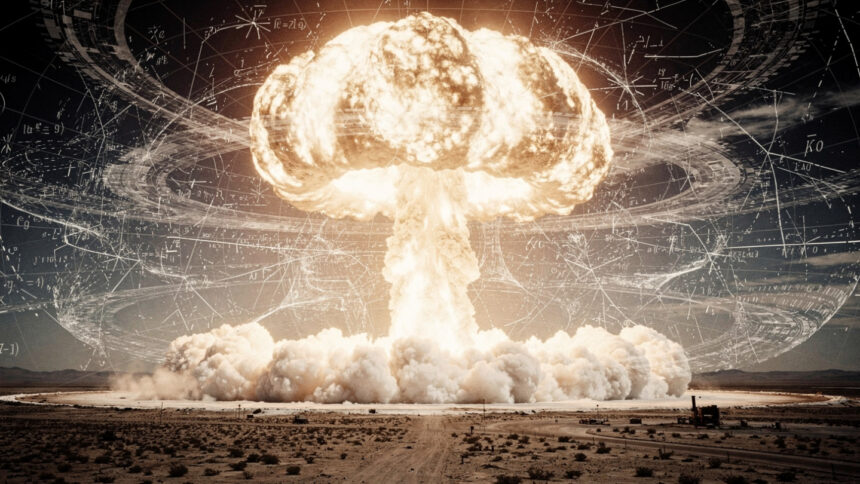
What changed in 1945 was therefore not the existence of the phenomenon but the character of the environment into which the phenomenon was operating. On July 16, 1945, at 5:29 AM Mountain War Time, the Trinity test in the New Mexico desert produced the first artificial nuclear detonation in human history. The explosion released energy on an unprecedented scale, producing a fireball visible for enormous distances, a shockwave felt far beyond the immediate test site, and a mushroom cloud that rose tens of thousands of feet into the atmosphere. Humanity had crossed a technological threshold that was qualitatively different from the invention of the airplane, the radio, the tank, or even conventional strategic bombing. For the first time, human beings possessed a technology capable of placing the continued habitability of the planetary environment itself within the range of deliberate human action. That distinction matters. The first airplane changed how human beings moved through the environment. The first atomic bomb changed what human beings could do to the environment.
Within the following two years, the modern UAP era emerged into public and institutional consciousness with extraordinary speed. In 1947, Kenneth Arnold’s report of objects moving at extraordinary speed gave the emerging phenomenon its most famous popular description, while the Roswell incident transformed the question from scattered aerial reports into a matter of military and public controversy. The United States Air Force established Project Sign in 1948, followed by Project Grudge and eventually Project Blue Book. The phenomenon had become institutionalized as an intelligence and security problem even before there was any accepted explanation for what was being observed. The conventional reading of this history is that the United States had entered the age of aviation and nuclear weapons, public fascination with strange objects had increased, and governments were therefore compelled to investigate. That explanation is reasonable as far as it goes. It does not, however, explain the more specific pattern that emerged afterward: the repeated concentration of anomalous aerial activity around nuclear weapons facilities, nuclear storage sites, missile fields, weapons systems, and other locations where humanity’s most consequential technological threshold was being developed, maintained, and exercised.

The correlation between nuclear development and UAP activity has been documented most extensively in the work of Robert Hastings, whose decades of research involved locating and interviewing military personnel who reported encounters with unidentified objects at nuclear weapons facilities. Hastings’s work, including more than 150 witnesses according to his published account, does not by itself establish what the objects were or where they came from. That distinction is essential. Testimony establishes testimony. It does not automatically establish causation. What the testimony does establish is that a recurring category of incidents was reported by personnel whose duties placed them directly inside the nuclear-weapons infrastructure of the United States, and that these reports repeatedly involved objects appearing over or near facilities at precisely the locations where nuclear weapons were stored, controlled, tested, or prepared for deployment. Hastings’s 2010 congressional briefing, in which seven former Air Force personnel described incidents involving UAP and nuclear weapons systems, brought this testimony into a public forum, but the underlying question is larger than any individual witness. If one incident were the only case, it could be dismissed as error, coincidence, faulty instrumentation, memory contamination, or misidentification. When similar incidents recur across decades, across facilities, across military commands, and eventually across national boundaries, the analytical problem changes. The question is no longer whether every witness is correct. The question becomes whether the recurrence itself contains information.
The extraterrestrial-visitation hypothesis interprets that recurrence in a familiar way: an advanced civilization has reached Earth and is monitoring humanity’s development of nuclear weapons, perhaps because nuclear technology represents a danger to humanity, to the planet, or even to the wider environment in which such a civilization operates. The classified-human-technology hypothesis takes the opposite direction, interpreting the objects as products of secret terrestrial programs whose capabilities have remained hidden from the public. Both hypotheses possess explanatory power in particular cases. Neither, however, naturally explains the entire historical pattern. A terrestrial secret-technology explanation must account for reports that predate modern classified aerospace programs and must explain why the same phenomenon appears to have interacted with nuclear infrastructure belonging to rival geopolitical powers. An extraterrestrial-visitation explanation must explain why the phenomenon behaves less like a visiting civilization conducting conventional contact and more like an intermittent monitoring system whose observable interventions repeatedly concentrate around specific technological thresholds. Most importantly, both hypotheses tend to begin with the assumption that the objects are the primary reality and the surrounding environment is merely the stage on which they appear. The evidence permits another possibility. Perhaps the objects are not the message. Perhaps the pattern of intervention is.
The computed-system framework developed across the preceding articles offers a third interpretation. It does not require the phenomenon to be a fleet of spacecraft arriving from another star, and it does not require the objects to be secret aircraft manufactured somewhere on Earth. It treats the anomalous objects, the consciousness effects, the apparent information anomalies, and the recurring nuclear correlation as different manifestations of an underlying system interacting with the environment it maintains. That possibility is more disturbing precisely because it changes the question. The relevant question is no longer, “Who is visiting us?” It becomes, “What is being monitored?” And once that question is asked against the accumulated record, the nuclear correlation becomes difficult to treat as incidental.
What the Maintenance Piece Established
The Maintenance piece established the next layer of the argument. Across three independent research programs examined in that article, the recurring question was not simply whether consciousness exists, but whether consciousness and information are related to the physical substrate in the way conventional materialism assumes. The evidence discussed there was presented as converging on a more unusual possibility: that consciousness may have access to information beyond the ordinary limits imposed by its physical interface, and that what appears to an observer as a stable material world may have a deeper informational structure that is not continuously rendered in the naive sense. James Gates’s work on error-correcting-code structures in equations associated with fundamental physics was treated as evidence bearing on the informational character of physical law. The STARGATE research program was examined as evidence that consciousness had been investigated as a possible information-access mechanism, Pim van Lommel’s work on near-death experiences was examined as a challenge to the assumption that consciousness can be straightforwardly reduced to ordinary brain function, and Wheeler’s delayed-choice experiments were used to illuminate the stranger implication that observation is not always cleanly separable from the state of the system being observed. None of these lines of evidence, considered individually, proves that reality is a computer simulation. That is not the claim. The cumulative argument is that a physical universe whose laws exhibit informational structure, whose observational behavior resists naive realism, and whose consciousness interface may not be exhausted by ordinary material mechanisms is compatible with a deeper computational architecture.
From that framework came the concept of maintenance. If the environment is a computed or information-governed system, and if the system possesses mechanisms capable of detecting and correcting states that threaten its continued operation, then maintenance need not resemble a human technician repairing a machine. It could operate through information, through probability, through consciousness, through physical anomalies, or through temporary manifestations rendered into the perceptual environment of the inhabitants. The maintenance would not need to be visible continuously because a functioning maintenance system has no reason to intervene continuously. It would become visible when particular thresholds were crossed. That distinction is the key to the UAP question. A maintained environment should not necessarily produce a uniform distribution of anomalous events. It should produce a selective distribution. The anomalies should become more visible where the state of the system becomes more consequential.
The question the Maintenance piece therefore left open was not whether intervention could occur. It was what conditions would trigger it. A surveillance architecture does not monitor every state with equal intensity. A biological immune system does not attack every molecule it encounters. A computer’s error-correction mechanism does not rewrite every bit continuously. Maintenance is conditional. It responds to deviation, threshold, instability, or threat. If the UAP phenomenon represents an operational component of such a maintenance architecture, then the distribution of UAP incidents should contain evidence of the conditions under which the system becomes observable. The nuclear record provides exactly the kind of threshold we would expect to matter: a technological development that transformed humanity’s capacity to alter the environment itself, followed by repeated reports of anomalous activity around the infrastructure responsible for controlling that capability.
That is the pattern this article examines.
The Nuclear Correlation
Robert Hastings’s research is important not because it settles the identity of the phenomenon, but because it provides a body of testimony large enough to make the nuclear correlation impossible to dismiss merely as a single extraordinary encounter. His 2008 book UFOs and Nukes: Extraordinary Encounters at Nuclear Weapons Sites assembled accounts from military personnel who described unidentified objects appearing at or around nuclear weapons facilities, missile fields, storage areas, and launch complexes. The evidentiary status of the individual cases varies, and that variation should not be concealed. Some accounts depend primarily upon retrospective witness testimony, others have documentary traces. Still others have been disputed or interpreted differently by the institutions involved. A serious analysis therefore cannot treat every incident as equally established. But the opposite mistake is equally serious: treating uncertainty in individual cases as though it erases recurrence across the dataset. The proper unit of analysis is the pattern. When personnel at different facilities, under different commands, in different decades, report anomalous objects in proximity to nuclear weapons and, in some cases, report simultaneous anomalies in the weapons systems themselves, the accumulated record becomes a question of correlation even before it becomes a question of explanation.
The March 1967 events at Malmstrom Air Force Base in Montana are among the most frequently cited examples. Captain Robert Salas, an Air Force missile launch officer, reported that while he was on duty in an underground launch-control facility, security personnel reported an unusual glowing object outside the facility. Shortly afterward, the missile systems under the facility’s control began registering no-go conditions. The central claim surrounding the incident is extraordinary: ten Minuteman missiles became unable to launch while the object was reportedly present. Salas later testified publicly about the event, including at the 2010 National Press Club briefing. The exact causal relationship between the object and the missile failures remains disputed, testimony that an object was present does not by itself prove that the object caused the systems to fail. But the underlying incident is not merely a story that appeared decades later in UFO literature. It concerns a real missile facility, real launch systems, real personnel, and documented missile shutdowns whose interpretation remains contested. That distinction is important because it identifies the actual evidentiary question. The question is not whether the story sounds extraordinary. It is whether the anomalous aerial report and the simultaneous weapons-system anomaly were independent events that happened to coincide, or manifestations of the same event.
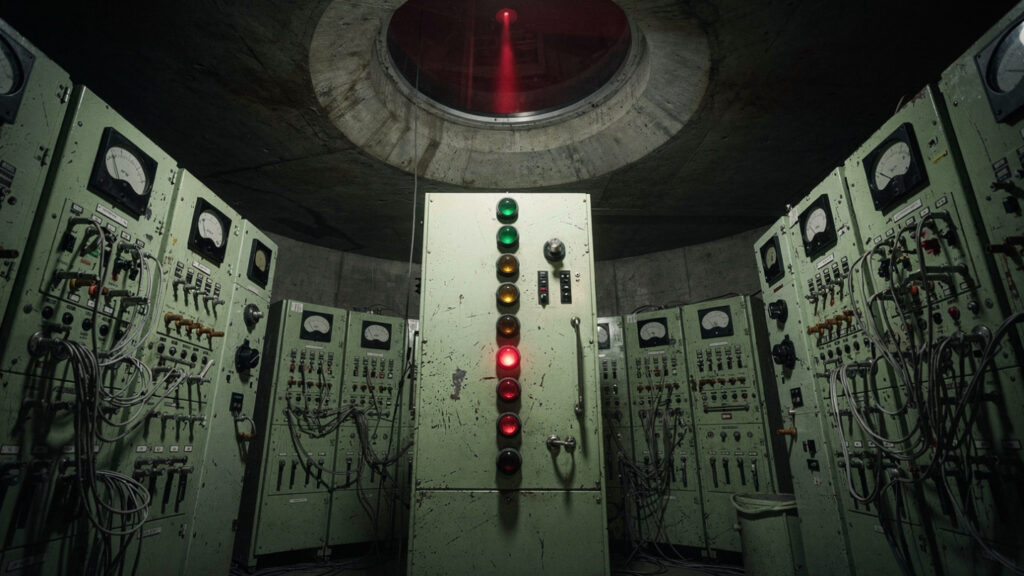
Salas’s testimony matters because the incident illustrates the operational signature that repeatedly appears in the broader literature: observation of an anomalous object is followed not merely by another sighting, but by an anomaly involving the technological system located beneath or around it. That is a different category of event from an unidentified light crossing the sky. If the phenomenon were simply an unknown aircraft, the central mystery would be its propulsion, origin, or purpose. When the reported phenomenon is repeatedly associated with changes in the operation of nuclear systems, the mystery expands from identification to interaction. The object is no longer merely being observed. It appears, at least in the testimony, to be interacting with infrastructure. That is the feature that makes the nuclear cases analytically significant. The extraordinary claim is not simply that something unknown was flying over a missile field. It is that the unknown event was associated with the behavior of the missile system itself.
At Minot Air Force Base in North Dakota in October 1968, multiple Air Force personnel reported a large glowing object associated with the base while nuclear-armed B-52 aircraft were on alert. The incident was reported through official channels and subsequently investigated. Again, the existence of an official report does not establish that the object was extraterrestrial, artificial, or responsible for any particular system behavior. It establishes something more limited and therefore more defensible: military personnel encountered an unidentified aerial phenomenon in the vicinity of a strategic nuclear facility and treated the event as sufficiently unusual to warrant official reporting. The distinction between what the record establishes and what later interpretations add is precisely what must be preserved if the larger pattern is to remain credible.
The October 1975 incidents at Loring Air Force Base in Maine add another dimension. Reports described unidentified objects penetrating restricted airspace over or near the nuclear weapons storage area on multiple occasions. Strategic Air Command was involved in the response, and records released through FOIA provide documentary evidence that the incidents were reported and investigated. Again, the documents do not provide a simple answer to the identity of the objects. They instead establish the recurring problem: unidentified aerial activity was being reported around facilities whose security protocols existed precisely because the material contained there was among the most consequential in the military system. The phenomenon was not merely appearing over cities, highways, or remote wilderness. It repeatedly appeared where the consequences of unauthorized access were considered extraordinarily serious.
Then there is Rendlesham Forest in Suffolk, England, December 1980, an incident that occupies a unique position in the UAP record because of the quantity and character of the surviving documentation. The events occurred adjacent to RAF Bentwaters and RAF Woodbridge, installations associated with United States Air Force operations in the United Kingdom and with NATO’s nuclear posture during the Cold War. Lieutenant Colonel Charles Halt’s contemporaneous memorandum and the audio recording made during the investigation are part of the public record. The incident has been interpreted in radically different ways, and some individual claims surrounding it remain contested. Yet the relevant point for the present argument is narrower: military personnel reported unusual aerial activity in a highly sensitive military environment, and the location’s relationship to nuclear weapons infrastructure was not an incidental feature invented afterward. The nuclear context was already present when the event occurred.
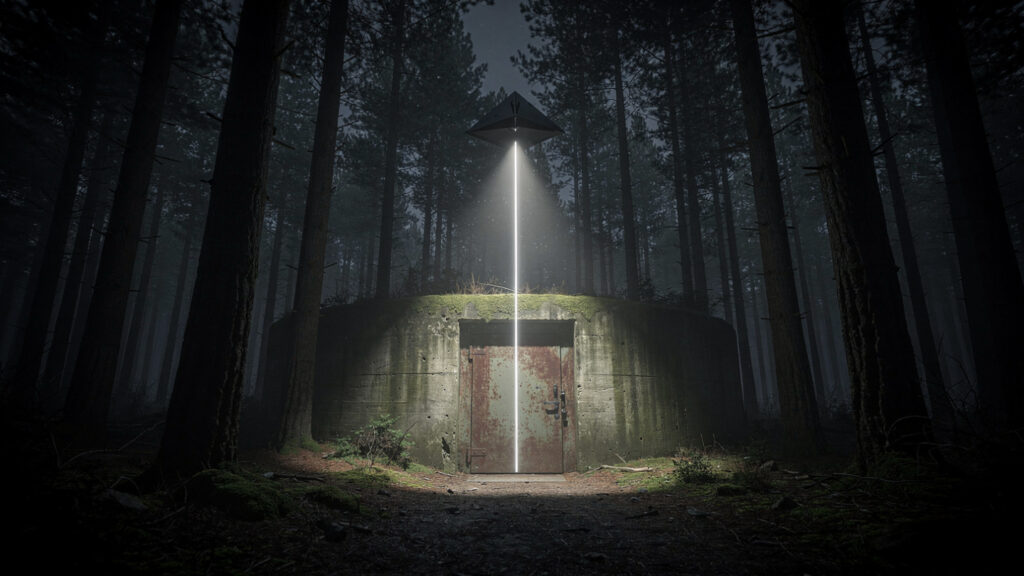
The Soviet record introduces an especially important complication because it removes the possibility that the apparent correlation can be understood solely as an artifact of American reporting culture. Accounts associated with Soviet nuclear facilities, including the Byelokoroviche missile-base incident discussed in the UAP literature, describe anomalous aerial activity accompanied by unusual behavior in missile-control systems. The Soviet material is less accessible and less transparent than the American record, and the evidentiary basis of particular cases must therefore be treated with caution. That caution does not make the reports irrelevant. It makes them more important to the question of what would constitute a genuine pattern. If similar reports existed only in one country’s literature, cultural, institutional, or reporting biases would remain a powerful alternative explanation. When analogous claims appear in the records and recollections associated with opposing nuclear powers, the possibility of a broader environmental correlation becomes harder to exclude.
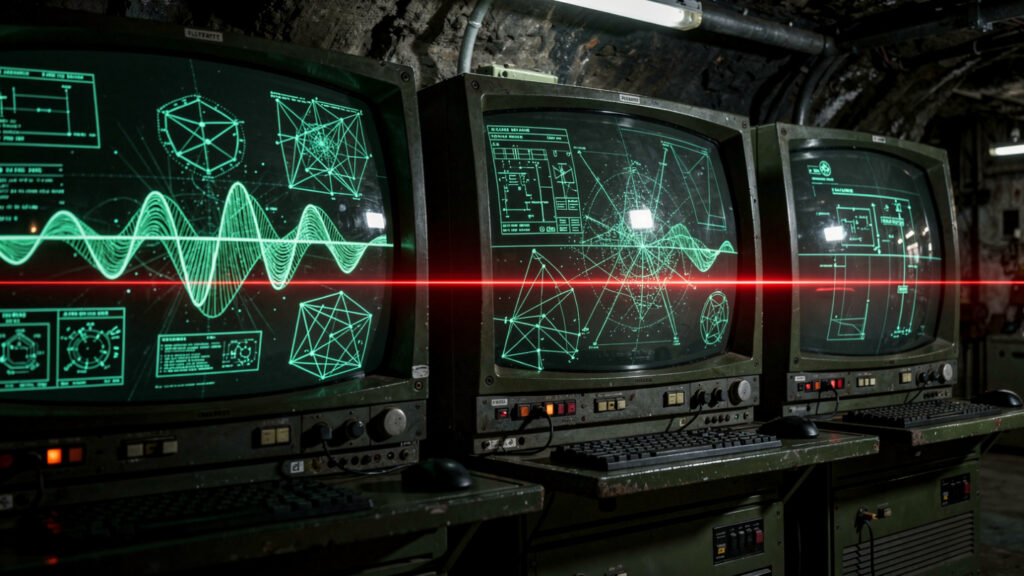
Taken individually, these cases can be argued away. One can question a witness, dispute a document’s interpretation, propose an equipment failure, invoke atmospheric phenomena, identify a conventional aircraft, or argue that later researchers connected events that were never causally related. Serious investigation should do all of those things where the evidence permits them. But the existence of alternative explanations for individual incidents does not eliminate the statistical and historical question raised by the collection as a whole. Why does the phenomenon repeatedly appear around nuclear weapons infrastructure? Why does the pattern extend across rival nations? Why does it include not only sightings but reported interactions with the systems themselves? And why does the modern concentration of these cases emerge after the nuclear threshold rather than following the development of aviation in a comparable way? The more cases are assembled, the less useful it becomes to ask only what each individual object was. The more useful question becomes what condition all of these locations shared.
The answer is obvious.
The Robertson Panel’s Error
The Robertson Panel, convened in January 1953 at the request of the CIA, represents one of the most consequential institutional decisions in the history of the UAP phenomenon because it established not merely a conclusion but a way of seeing. The panel was asked to assess the national-security implications of the growing volume of unidentified-object reports, and its recommendations emphasized the danger that public fascination could be exploited by an adversary or could overload military communications with irrelevant reports. The panel recommended measures designed to reduce public interest and encourage the debunking of UAP reports. In the institutional history that followed, this became part of the architecture through which the phenomenon was managed. Project Blue Book inherited an environment in which the burden was frequently placed on explaining reports away rather than constructing an open-ended research program capable of discovering what remained unexplained. J. Allen Hynek’s own intellectual evolution is revealing in this context: a scientist initially associated with the effort to identify conventional explanations eventually became one of the strongest voices arguing that the unexplained residue deserved genuine scientific attention. The lesson is not that every UAP was genuine. The lesson is that an institution can create a framework in which the unresolved remainder becomes almost impossible to study as a pattern.
The Robertson Panel’s error, viewed from the perspective of the decades that followed, was therefore not necessarily that its members were wrong to worry about national security. It was that the problem was framed too narrowly. UAP were treated primarily as a communications and public-order problem at the very moment when a more consequential possibility was beginning to emerge: that the phenomenon might contain information about the behavior of strategic technologies. The distinction is fundamental. If an unidentified object over a city is simply a misidentified aircraft, then suppressing unnecessary public alarm may appear defensible. If unidentified objects repeatedly appear over missile fields, nuclear storage facilities, and weapons systems, then suppressing the reports removes precisely the information required to determine whether those events share a common cause. The institutional decision therefore had a secondary consequence that may have been more important than the original objective. It fragmented the dataset. Incidents were investigated locally. Reports were classified, filed, dismissed, or forgotten. Witnesses carried memories of events that were never compared systematically with incidents occurring at other facilities or in other countries. The result was a phenomenon that remained visible in individual pieces while becoming almost invisible as a system.
That fragmentation matters because patterns are often the first thing destroyed when unusual events are treated as isolated anomalies. A single missile failure is a maintenance problem. A single unidentified object is an aviation problem. A single report from a security guard is a witness problem. Ten missiles failing during an alleged UAP event, however, become a systems problem. Similar reports at another nuclear facility become a pattern problem. Similar reports in another country become an environmental problem. The analytical level changes as the observations accumulate. The Robertson framework was designed around the first level: individual reports and their potential social consequences. The nuclear record points toward the later levels, where the relevant question is no longer whether an individual observation is strange but whether the distribution of observations is itself strange.
The researchers who eventually assembled the nuclear correlation therefore performed an analytical operation that the institutional structure had not been designed to perform. Through FOIA requests, interviews, historical records, military documentation, and comparison across cases, they treated incidents as members of a dataset rather than as independent curiosities. That does not automatically make their conclusions correct. It does, however, make the dataset visible. And once the dataset is visible, the central question becomes unavoidable: if a phenomenon has been observed repeatedly at the same category of strategic infrastructure for decades, what mechanism would produce that distribution?

The significance of the Robertson Panel is therefore larger than the familiar story of government secrecy. The deeper issue is epistemic. Once an institution decides that a category of observation is primarily a nuisance, it changes what can be learned from the observations. The reports do not disappear, but the connections between them do. And if the phenomenon is genuinely structured, the lost connections may be more important than the individual reports themselves. The pattern was not necessarily hidden because every document was locked away. It was hidden because no one was institutionally encouraged to ask the right question of the complete record.
The Operational Signature
A maintenance system monitoring a computed environment for threshold conditions should produce an operational signature. That signature can be derived before identifying the mechanism itself. If the system is genuinely maintaining an environment, intervention should not occur randomly. It should become more visible when the state of the environment approaches a condition that matters to the system’s continued operation. The system should therefore exhibit selectivity. It should appear where the relevant threshold is being approached, interact with the infrastructure associated with that threshold, and withdraw when the threshold passes or stabilizes. The expected pattern is not continuous occupation. It is conditional visibility. Not visitation. Inspection.
The recorded UAP distribution is not uniform. The phenomenon does not appear with equal frequency in every location, around every category of infrastructure, or during every category of human activity. The UAP distribution instead contains concentrations around particular environments and events. Some of the most persistent concentrations involve military installations, weapons facilities, nuclear sites, and other locations where highly consequential technologies are developed or controlled. If the phenomenon were simply extraterrestrial tourism, this distribution would require an additional explanation. Why would visitors from another star system repeatedly choose nuclear facilities as a preferred observational environment? The answer could be strategic interest, scientific interest, concern about human self-destruction, or some other motive. But all of those explanations require an additional assumption about the visitors’ intentions. The maintenance model requires fewer assumptions. If nuclear weapons represent a threshold condition in the environment, then nuclear facilities are precisely where maintenance attention should become visible.
The first nuclear detonation is therefore significant not because it was the first impressive human technology but because it changed the system’s risk profile. The invention of the airplane altered human mobility. The development of radar altered human detection. The development of intercontinental ballistic missiles altered the geometry of warfare. Nuclear weapons altered the maximum damage human beings could inflict upon the planetary environment itself. In computational terms, the relevant variable is not the sophistication of the machine but the magnitude of the state change it makes possible. A threshold event occurs when the system’s inhabitants acquire a capability that changes the range of possible future states. Trinity was such an event. It created a new branch in the space of human action: humanity could now make the environment itself substantially less habitable through a deliberate technological act.
If a maintenance architecture were designed to monitor that kind of threshold, the expected signature would be straightforward. Increased observation around nuclear facilities. Increased anomalies during testing, deployment, activation, or periods of heightened readiness. Interaction with the systems responsible for nuclear capability rather than merely passive observation from a distance. Appearance across national boundaries because the relevant variable is not which government possesses the weapon but the existence of the capability itself. And, critically, intervention that is proportional rather than absolute: enough to demonstrate access or impose a temporary constraint, but not necessarily enough to eliminate the technology permanently. This is almost exactly the structure described by the nuclear UAP literature.
The Malmstrom case is particularly significant within this framework because the reported phenomenon was not simply associated with a missile field. It was associated with the operational status of the missiles. The Soviet accounts, whatever their individual evidentiary limitations, are significant for the same reason: the reported anomaly involved launch-control systems rather than merely the visual observation of an object. The distinction separates surveillance from interaction. A system capable only of watching a weapon would produce one signature. A system capable of reading, communicating with, or altering the weapon’s control architecture would produce another. The recurring reports suggest the second category often enough that it must at least be considered as a hypothesis.
The geographical distribution strengthens the same inference. The phenomenon does not respect national boundaries in the way human military systems do. American missile fields, British bases, Soviet installations, and other nuclear environments belong to different political systems but share one relevant property: they contain technologies capable of changing the global environment. If the phenomenon were aligned with one political actor, a geopolitical distribution would be expected. If it were aligned with the environmental condition represented by nuclear weapons themselves, a transnational distribution would be expected. The record looks much more like the latter.
A maintenance system whose operational signature matches this pattern does not need to be imagined as an extraterrestrial civilization arriving from another star, establishing a base, and conducting reconnaissance flights over Earth. It could instead be an internal function of the environment itself: a layer of the system becoming visible when the inhabitants approach a threshold that matters to the system’s continued operation. This is the significance of the Architects argument developed earlier in the series. If the universe contains the signature of an information-governed architecture, and if the architecture contains mechanisms capable of maintaining system integrity, then the appearance of UAP around nuclear infrastructure becomes qualitatively different from the question “Are aliens visiting Earth?” The more precise question becomes: “Is the system responding to a dangerous change in its own state?”
The Hitchhiker Effect and the Interface
The nuclear correlation explains where the phenomenon becomes operationally visible. Another category of UAP evidence raises the question of how the phenomenon interacts with human observers. This is where the so-called hitchhiker effect becomes relevant, although it must be handled with a much higher degree of evidentiary caution than the strongest documentary cases. Colm Kelleher and George Knapp’s work on Skinwalker Ranch describes reports in which anomalous activity appeared to continue beyond the original location of an encounter, with witnesses reporting subsequent experiences after leaving the ranch. Some accounts involve family members who were not present during the original events, unusual perceptions, apparent physiological effects, or anomalous behavior associated with electronic devices. The evidentiary status of these reports varies substantially, and the strongest version of the claim—that an external phenomenon literally follows individuals home—has not been demonstrated to the standard required for a scientific conclusion. But the broader category is important because it raises a question that a purely mechanical spacecraft hypothesis handles poorly: why would a phenomenon apparently associated with objects in physical space sometimes seem to migrate into the psychological and perceptual environment of the witness?
The Skinwalker Ranch literature is not required to answer that question. The larger UAP record already contains a recurring association between encounters and altered states of perception, memory, cognition, physiological response, and reported effects on electronic systems. The important observation is not that every such claim is true. It is that the phenomenon repeatedly appears in the literature as something that does not remain neatly confined to a physical object moving through physical space. John Keel’s field investigations are relevant here because Keel eventually rejected the straightforward extraterrestrial-spacecraft interpretation and instead argued that the phenomenon behaved as though it interacted directly with human consciousness and cultural expectation. His work was controversial, and many of his interpretations remain speculative. Yet the structural insight is valuable: perhaps the phenomenon is not best understood as a machine that occasionally enters our atmosphere, but as an event that uses the observer’s perceptual interface as part of its manifestation.

That possibility becomes considerably more interesting when placed beside the STARGATE material discussed in the Maintenance piece. The historical STARGATE programs investigated whether human consciousness could obtain information about targets that were inaccessible through ordinary sensory channels. The results, interpretations, and methodological controversies surrounding those programs remain heavily debated, and they should not be transformed into proof of a computed universe. But within the framework established across the series, the conceptual symmetry is difficult to ignore. If consciousness can function as an information-access interface, then the direction of information flow need not be limited to human-to-system access. The same interface could theoretically permit system-to-human interaction. One direction would appear as anomalous perception or information acquisition. The other could appear as an external event that modifies perception, cognition, expectation, or the observer’s subsequent experience.
The interface therefore runs both directions.
The Maintenance article examined the possibility that consciousness can access information beyond its ordinary interface. The UAP literature supplies a different category of report: cases in which something apparently external seems to interact with consciousness rather than merely appearing before the eyes. If both categories were eventually shown to arise from the same underlying architecture, then the distinction between “physical” and “psychological” UAP effects would become less meaningful. In a computed environment, the physical and informational layers are not necessarily separate domains. The observer is part of the system. Consciousness is part of the interface. A phenomenon capable of interacting at the interface could therefore produce manifestations that look physical in one context, informational in another, and psychological in a third without requiring three different causes.
What the Pattern Reveals About the System’s Purpose
At this point the argument can be stated more precisely. If the universe is a maintained informational environment, and if the UAP phenomenon represents one of the mechanisms through which that environment monitors threshold conditions, then the nuclear correlation provides evidence about what the system considers consequential. The system does not appear, from the record available to us, to intervene every time humanity invents something dangerous. It does not prevent war, disease, ecological destruction, or technological accidents in any obvious systematic way. Its apparent concentration around nuclear infrastructure therefore cannot be interpreted as a general prohibition against human violence. Something more specific appears to be happening. The phenomenon becomes visible around a capability whose potential consequences extend beyond ordinary human conflict and into the stability of the planetary environment itself.
The distinction between development and deployment is equally important. The reported UAP activity did not stop humanity from building nuclear weapons. It did not prevent the Soviet Union, the United States, Britain, France, China, or other nuclear powers from developing increasingly sophisticated arsenals. The apparent interventions, where the strongest accounts are accepted, occur at the level of operational systems. Missiles become unavailable. Launch-control systems behave anomalously. Objects appear over weapons facilities. Restricted airspace is penetrated. The pattern therefore does not resemble an attempt to erase nuclear technology from human history. It resembles monitoring of the technology’s operational state. That is precisely what a maintenance architecture would do if its objective were not to control the inhabitants but to prevent a particular class of system failure.
This distinction also changes the meaning of the most extraordinary reports. If a phenomenon can temporarily disable nuclear weapons without permanently destroying them, the action itself would, under this model, become informational: a system demonstrating capability without exercising total control. It has shown access. It has not imposed permanent disarmament. That is a very different behavior from a civilization attempting to conquer, invade, or colonize the planet. It is also different from a civilization simply observing humanity from a safe distance. A system that repeatedly demonstrates that it can interact with the weapons while leaving the weapons in human possession is behaving as though the relevant variable is not possession of the capability but the conditions under which that capability is exercised.
Under that interpretation, the apparent message is not encoded in language. It is encoded in demonstrated capability. The phenomenon does not need to tell humanity, “We can see your weapons.” It only needs to appear where the weapons are. It does not need to tell humanity, “We can access your systems.” A missile shutdown is more informative than a transmission. It does not need to tell humanity, “We are monitoring your threshold decisions.” It only needs to become visible when the threshold is approached. The communication is behavioral. The system reveals what it can do by doing exactly enough to make the capability unmistakable while stopping short of permanently assuming control.
This would explain why the extraterrestrial-visitation model feels intuitively attractive but analytically incomplete. We have been trained by science fiction to interpret an unexplained object as a vehicle and the vehicle as evidence of a civilization. That chain of reasoning is understandable because human technology is built around machines that travel from one place to another. But a sufficiently advanced system does not necessarily need to operate according to the same architecture as human machines. If the phenomenon is part of a computational maintenance layer, then an apparent craft could be an interface object: a rendered manifestation optimized for interaction with the perceptual system of the observer. The “craft” would be real in the sense that the observer genuinely encountered it, but its reality would not necessarily imply that a metal vehicle crossed interstellar space to reach the encounter location.
The Architects piece identified the possibility of a system containing an embedded maintenance signature. The Maintenance piece extended that argument into consciousness, suggesting that the maintenance function may operate through the same informational architecture that makes consciousness possible. This article adds the environmental trigger the model would predict. Under that model, maintenance would not be merely present but would become visible at a particular category of threshold: the point at which the inhabitants acquire the capacity to destroy or catastrophically alter the environment itself.
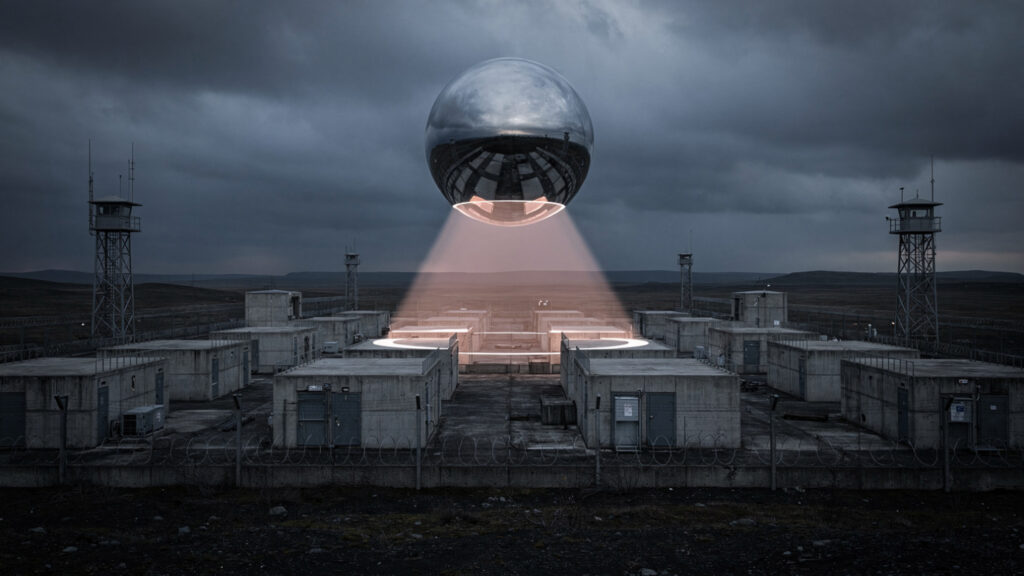
Taken together, the three pieces sketch one interpretive model at increasing levels of resolution, not a demonstrated architecture. The Architects piece asks whether the universe contains evidence of design or computational structure. The Maintenance piece asks whether that structure could possess active mechanisms capable of interacting with consciousness. This piece asks where, if that model holds, its effects would become visible in the external record. Under that model, the UAP-nuclear correlation points to the most consequential technological threshold humanity has crossed. The same interpretive layer that would appear informational at the level of physics and interactive at the level of consciousness may become operational at the level of planetary risk. That would be a more economical reading of the evidence than treating every category as an unrelated mystery, if the underlying model from Architects and Maintenance holds.
The Disclosure Question
The modern disclosure movement has generally framed the central question in terms of extraterrestrial contact. From the Robertson Panel through Project Blue Book, later military programs such as AATIP, the resurgence of congressional interest, and the testimony surrounding David Grusch, the public debate has repeatedly returned to the possibility that governments possess information concerning non-human technology, recovered objects, or biological material. That question is legitimate. It is also narrower than the evidence requires. If the phenomenon is not primarily a visiting civilization but an internal component of the environment’s maintenance architecture, then the most important information would not necessarily consist of spacecraft or bodies. It would consist of evidence about the nature of reality itself: evidence that the environment is informationally structured, that consciousness interacts with that structure, and that some form of intelligence or automated architecture is capable of monitoring and intervening in human technological systems.
That would be a disclosure of an entirely different order. Extraterrestrial contact would mean that humanity is not alone in a universe containing multiple independent civilizations. That would be extraordinary, but it would leave the basic architecture of reality intact. A civilization from another star would still exist within the same physical universe we inhabit. Its technology might be unimaginably advanced, but it would remain an external actor. The discovery of an operational maintenance architecture would be more unsettling because it would imply that the environment in which humanity believes itself to be operating is not merely inhabited by other actors. It is being monitored from within its own architecture. The distinction is profound. Extraterrestrials would be visitors. A maintenance system would be part of the world itself.
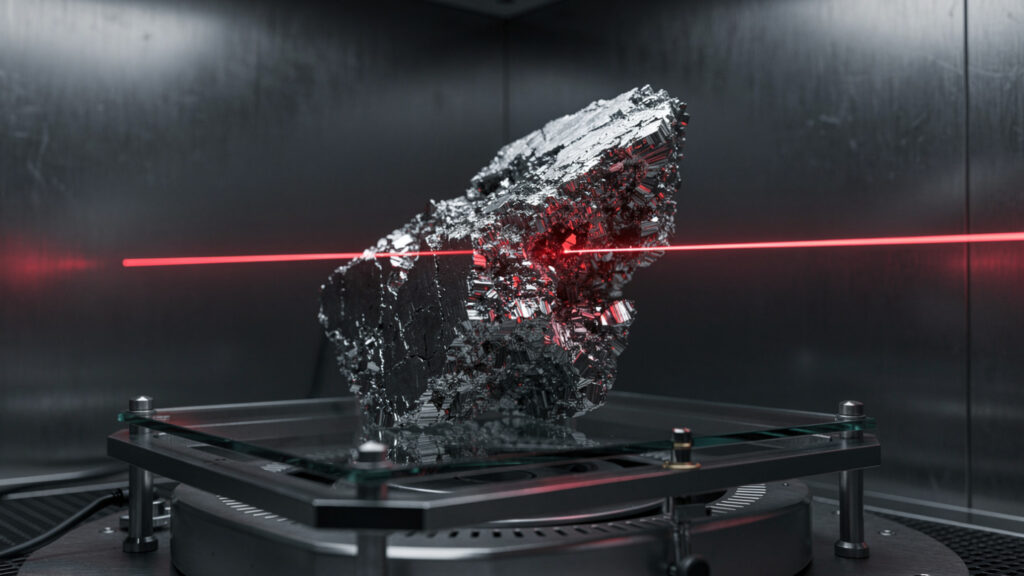
If the nuclear incidents represent genuine interaction with weapons systems, then the implications become still more specific. The phenomenon would possess access to the environment at a level deeper than ordinary observation. It would be capable of detecting the state of strategic systems, approaching facilities without being prevented by conventional security, and in the strongest cases influencing the operation of the systems themselves. It would operate across political boundaries. It would appear to distinguish between ordinary human activity and a particular category of technological threshold. And, perhaps most importantly, it would demonstrate restraint. The weapons remain. The arsenals remain. Humanity retains the capacity to destroy itself. Whatever the phenomenon is, it has not simply taken that capacity away.
That restraint is difficult to reconcile with the simplest versions of the invasion hypothesis. An invading civilization does not normally demonstrate overwhelming access to an adversary’s strategic weapons systems and then repeatedly decline to neutralize them. A conquering civilization does not need to send ambiguous signals over missile fields for decades. A civilization conducting reconnaissance could certainly behave this way, but then the nuclear correlation still demands an explanation: why does reconnaissance concentrate so strongly on one category of human capability? The maintenance hypothesis answers directly. Nuclear weapons are not interesting because they are military weapons. They are interesting because they represent a threshold in the state of the environment.
The institutional history adds another layer, although it must not be overstated. The Robertson Panel established a framework for managing public UAP interest in 1953. The later nuclear incidents occurred within that institutional environment. This does not prove that governments understood the phenomenon as a maintenance architecture and deliberately concealed that conclusion. There is no sufficient evidence for such a claim. Institutional momentum, classification procedures, national-security concerns, bureaucratic incentives, embarrassment, and fear of adversarial exploitation are all capable of explaining why unusual reports remained fragmented. The stronger and more defensible conclusion is narrower: the institutional structure created in the early Cold War was poorly suited to discovering a cross-decadal pattern in which UAP incidents were treated as isolated local events. Whatever the original motive, the effect was the same. The pattern was difficult to see.
What the surviving record does support is more interesting than the strongest conspiracy claim. A phenomenon reported for decades around nuclear weapons facilities was repeatedly investigated through institutional structures that were not designed to preserve and compare every unresolved observation as part of a single longitudinal dataset. Researchers outside those structures later assembled portions of the record and found a recurring correlation between UAP activity and nuclear infrastructure. The correlation remains imperfect, the evidence remains uneven, and the causal mechanism remains unidentified. But the existence of uncertainty does not erase the pattern. It defines the next research problem.
The disclosure question should therefore be reformulated. It is not simply whether governments possess evidence of extraterrestrial visitors. It is whether the governments that have spent decades collecting, classifying, dismissing, and sometimes releasing UAP information possess evidence that the phenomenon interacts with the architecture of the environment itself. It is whether the nuclear incidents are isolated anomalies or manifestations of a larger operational system. It is whether consciousness and UAP interaction belong to the same informational interface. And it is whether the apparent maintenance function identified conceptually in the preceding articles has an observable counterpart in the physical record.
The answer to those questions cannot honestly be declared proven from the available evidence. But the pattern is strong enough to make the questions legitimate. That distinction matters. A theory does not become more credible by pretending its weakest evidence is stronger than it is. It becomes more credible when it survives the strongest objections that can be brought against it. The nuclear correlation does not prove a computed universe. It does not prove non-human operators. It does not prove that every UAP near a weapons facility was part of a single phenomenon. What it does is establish an empirical problem for which the conventional visitation narrative is not the only possible explanation, and perhaps not the most economical one.
The Architects piece argued that the system contains a signature. The Maintenance piece argued that the signature is not passive, that the system may possess mechanisms capable of interacting with consciousness and correcting states within the environment. This article adds the most unsettling observation of all: the phenomenon appears repeatedly at the point where human technological capability crosses from changing the environment to threatening its continued stability. The pattern is not simply that something is watching humanity. The pattern is that something appears to become operational when humanity develops the capacity to damage the system it inhabits.
The weapons are still there. The facilities are still there. The reports have not stopped, and the correlation between them remains exactly as documented as it was at the start of this piece: real, uneven, unexplained, and open to more than one economical reading. The maintenance model is the interpretation this piece has argued for, not the conclusion the record has independently confirmed. What the record actually supports is narrower and, in its way, more unsettling for being unresolved: something keeps appearing at precisely the threshold where human technology could end human history, and six decades of institutional effort have neither explained why nor made the pattern go away. That is the inspection this piece can honestly claim. Whether anything is doing the inspecting remains the open question the evidence has not yet answered.
The Tehran incident belongs to the same unresolved category, a documented military encounter where trained pilots described something the historical record has never managed to explain.