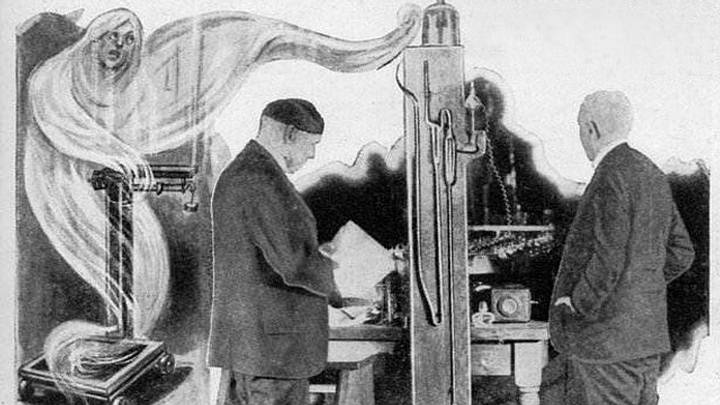



What is the first thing that comes to mind when talking about “space wars”? Surely, images of spaceships traveling at full speed, planets in full blast or unexpected alien invasions that seem to be taken from sagas like Star Wars, Battlestar Galactica or Alien.
However, while space wars are unlikely to manifest like this in the real world, we are closer than we think that the armed conflict will move into space”. In fact, according to experts, it is “inevitable”, and it will happen sooner rather than later.
Yes, “inevitable” is a very forceful word, but not excessive. After all, the goal in any war is to take away from the enemy the ability to operate properly. And actually, military forces are highly dependent on space, from spy satellites to GPS technology used by soldiers on the battlefield. It would also mean a very juicy economic opportunity for the aviation and arms industry.
The militarization of space itself is nothing new. Since time immemorial, the human being has looked up to the sky in search of answers, but after the Cold War, it began to look at it to turn it into a military and even commercial resource, as it shows the take off of Crew Dragon last May 31, he gave the starting gun to the private space race.
This period marked the beginning of the space race, a fast-paced technological struggle between the United States and the Soviet Union to conquer space. From 1955 to 1975, a series of discoveries followed one another, beginning with Sputnik, the first satellite to launch into space, and culminating in the arrival of man on the moon. Each new technological advance contributed to pave the way that leads us to the current situation.
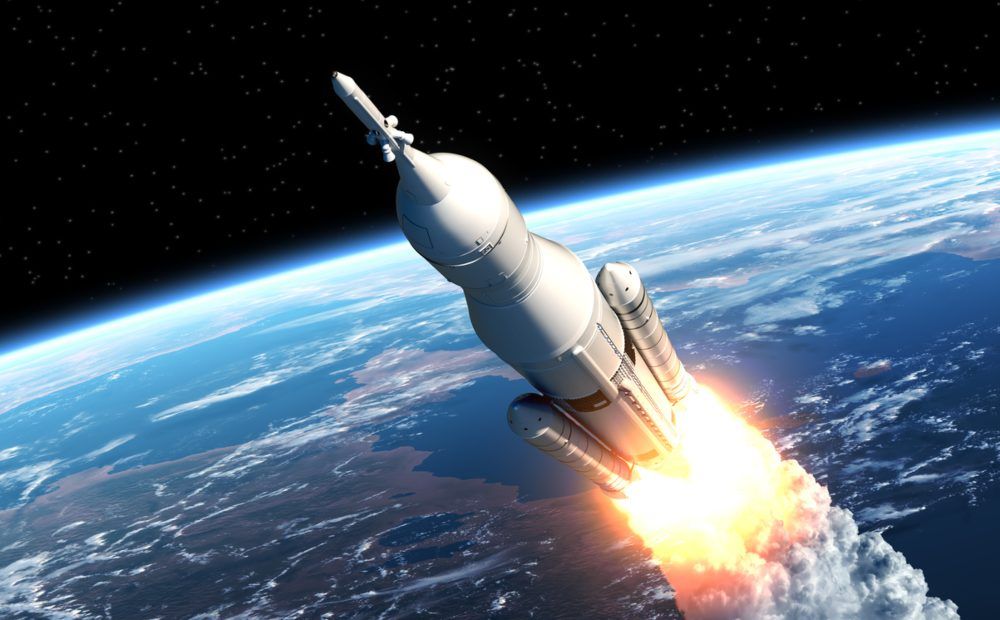
So what would a real war in space look like? Although there is little information available to the public, undoubtedly the great powers are preparing to fight their future battles in outer space.
The use of anti-satellite weapons could be one of the main strategies. In fact, even though they have not been used as an attack, some superpowers have already flaunted their missile handling skills. In 2007, China destroyed one of its own weather satellites to highlight your resources. And this past April 15, Russia launched a test missile that set off alarms in Washington.
Another of the star strategies would undoubtedly be cyber attacks. A team of hackers could neutralize an enemy satellite by manipulating its software to take it out of orbit, or force it to move violently to break one of its parts. Another option would be directed energy weapons, that is, lasers. Apparently these already are currently used to “confuse” spy satellites and momentarily interrupt your data collection.
But what does all this mean for ordinary citizens? At first sight, the transfer of the war abroad from Earth may seem advantageous. The destruction of the planet would be avoided and human lives would be saved. Wouldn’t we all come out winning? The reality is not so simple.
Today, our society is completely dependent on space technology. The failure of a satellite would have dire consequences such as leaving thousands of people incommunicado, halting financial markets, or disabling emergency services. It would also render many of the appliances we use daily useless.
But that’s not the only problem. The Earth is surrounded by a belt of artificial objects in which there is more and more space debris. That is, remains of satellites, ships, launch vehicles, among others, that have been abandoned.
This increase in the volume of debris in Earth’s orbit has alerted the Roscosmos, the Russian space agency, which has warned that this accumulation could trigger Kessler’s syndrome. According to this theory by former NASA scientist Donald J. Kessler, the greater the volume of objects in orbit, the greater the risk of impact between bodies. This would cause a ripple effect in which the impact of two bodies would create more space debris, which in turn would increase the chance of another collision occurring and damaging a satellite or space station.
The hypothetical launch of a missile would accelerate this process and form such a cloud of space debris that would affect artifacts whose operation is essential for the development of our society, creating apocalyptic settings. The icing on the cake is that Earth’s orbit could become inaccessible, so our access to space would be blocked, leaving humanity trapped on Earth.
In this situation, we can only hope that international organizations take a step forward to regulate this new reality. If this future is, as they say, inevitable, let us hope that the gears of the law are put in place to guarantee the well-being of the population.