

We cling to the comforting delusion that we are the apex predators of this rock, the solitary masters of a lonely blue marble. It is a necessary arrogance. It keeps us sleeping soundly at night, convinced that the only eyes watching us are the ones we see in the mirror. But the silence of the wilderness and the deep, vibrating hum beneath our cities tell a different story. We were never alone. We are not alone now.
The crowds you push through on your morning commute are not a homogenous mass of humanity. There are others walking among us, wearing our skin like a borrowed coat, or watching from places where our maps simply stop. They are the neighbors we refuse to acknowledge, the landlords of a planet we foolishly think we own.
Who are they?
The White-Eyed Ghosts of the Stone
Go to the Urals or the Altai Mountains, and the wind sounds different. It carries the whisper of the “Chud,” the “sikhirtya,” the “divya.” These aren’t just folklore. They represent a persistent, terrifying memory etched into the collective consciousness of the North. The Nenets speak of them with a reverence born of fear—small stature, light eyes that reflect the dark like a cat’s, hair the color of bone.

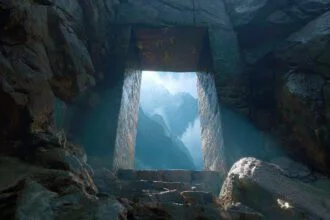
History books like the Initial Chronicle of Nestor don’t paint them as monsters, but as neighbors with an incomprehensible agenda. They lived in the mountain veins, trading furs for iron through carved windows in the rock, speaking a tongue that sounded like stones grinding together. They didn’t vanish into thin air; they went into the stone. They retreated. When a civilization goes underground, it doesn’t die. It adapts. It hardens.
In 1928, researchers in the Urals recorded accounts of “wonderful people” living inside the mountains, possessors of a high culture and a light source that rivaled the sun without burning. Think about that. Bioluminescence? Geothermal harnessing? Or technology we haven’t even dreamt of yet? The Samoyeds told A. Schrenk of the Sirtes who explicitly rejected our surface world.
“Leave us alone,” they said. “We avoid the sunlight… and prefer the darkness.”
That is not the plea of a primitive caveman. That is the statement of a species that has chosen isolation over integration. They know where the gold is, but they don’t care about it. To them, our currency is just shiny dirt.
The Giants of the North
Before the ice came, the Greeks sailed north to a land where the sea tasted sweet and men stood tall enough to touch the lower clouds. They called it Hyperborea, the place beyond the north wind and described its inhabitants as gentle giants who never fell sick and who ended their own lives, not from despair, but from simple satiety with immortality. We filed the story under myth and moved on.
Then, in 1910, the Russian imperial census quietly recorded 67,000 “Hyperboreans” living among the Chukchi and Yukaghir. The entry vanished from every subsequent edition. Clerical error, the archivists insist. Perhaps. Or perhaps the last official acknowledgment of a bloodline that simply grew tired of being counted.

The maps show Hyperborea in the north, a paradise before the ice claimed it. The Greeks weren’t writing fantasy; they were recording history we’ve forgotten. These weren’t just tall men; they were giants, immune to disease, ending their lives only when they grew bored of existence. That is not biology as we know it. That is genetic mastery. If they dissolved into the smaller tribes, their blood still runs in the veins of the North, a dormant code waiting to reactivate. We look for them in the census, but we should be looking for them in the unexplained outliers of human physiology.
The Disclosure We Ignored
Edward Snowden didn’t just expose the NSA. He cracked the door open on something far older. Buried in the data dumps of the 90s was classified information on “extremophiles.” Not bacteria on a thermal vent, but advanced, sentient life forms that evolved in the mantle, in the high-pressure furnaces of the deep earth.
Snowden’s leak suggests a simple, terrifying mathematical probability | they got here first. They had millions of years of head start while our ancestors were still trying to figure out which mushrooms didn’t kill them. They live in the pressure zones, the radiation belts, the places we call uninhabitable. To them, the surface is a low-pressure vacuum, a chaotic, unstable frontier. We are the ants living on the roof of their skyscraper.
The Guardian in the Sky

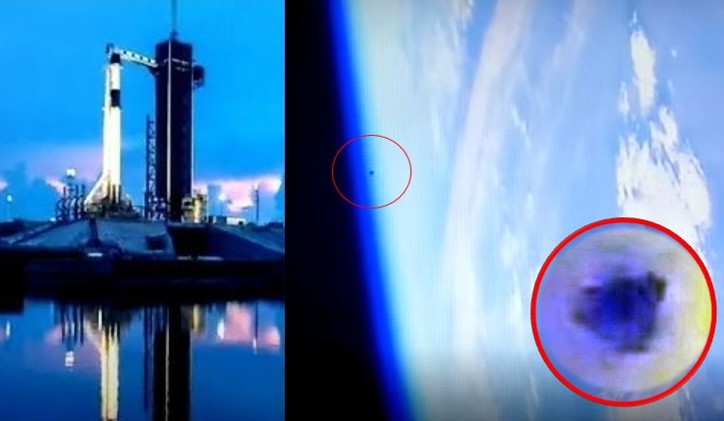
February 2013. Chelyabinsk. A rock the size of a building screams into the atmosphere at eighteen kilometers per second. It should have wiped the city off the map. Instead, it shattered. Frame-by-frame analysis of the footage shows something striking the meteor from behind. No nation on Earth possessed that weapon then. None possess it now.
Someone else answered the doorbell before we even knew it was ringing.
Who shot it down?
The narrative of “aliens” is a convenient distraction. Why would visitors from Zeta Reticuli care if a Russian industrial city gets flattened? But if you live in the basement, you definitely care if the roof catches fire. A terrestrial parallel civilization, the ones Admiral Byrd allegedly met in the hollows of the poles, would have a vested interest in planetary defense. They aren’t saving us. They are saving their property.
Admiral Byrd’s diary is often dismissed as the hallucinations of a polar fever, but the consistency of the account is unnerving. Green lands in the ice. Mammoths. A highly advanced city that intercepted his flight not with aggression, but with a warning. They opened a door for him, a portal to a parallel geography that defies our satellite maps. They told him they were the older race. They are the ones watching the skies, intercepting the kinetic bombardment that the universe throws at us, maintaining the structural integrity of the cage we live in.

The diary was locked away for decades. When it finally surfaced, the establishment called it polar madness. The consistency of the account, down to compass needles spinning in perfect circles, suggests something colder than hallucination.
The Absent Landlords
Every culture remembers the gods. They came down, they taught us how to stack stones and track stars, and then they left. Or so they said. They left middle managers, priests and kings, to enforce the rules, but the “gods” themselves merely stepped back into the shadows.

They didn’t fly away to the Pleiades. They just changed their address. They moved to the oceanic trenches, the hollow earth, the dimensional pockets that our physics calls anomalies. They are the regulators. They watch our nuclear tests with the concern of a parent watching a toddler play with a loaded gun. They intervene only when we threaten the real estate.
We are not the masters of this domain. We are the tenants in a building we don’t understand, paying rent in ignorance, surrounded by neighbors who watch us through the walls. The next time you feel eyes on you in an empty room, or see a light in the sky that moves with intelligent purpose, don’t look to the stars. Look down.