



Even today, children grow up hearing the tale of a man who built a massive ark, gathered “two of each creature,” and preserved all life on Earth during a catastrophic flood. This figure, Noah, stands as one of the most iconic characters in biblical lore. According to these ancient stories, Noah was a beacon of enlightenment and kindness, a man who carried God in his heart.
For those who hold these accounts dear, Noah represents a model of grace earned through an extraordinary act of salvation. Yet, while faith embraces Noah’s story with reverence, science approaches it with caution, questioning whether such a man—and his legendary ark—ever truly existed. Who was Noah, really? Was he a historical figure, a mythic hero, or something else entirely? And if his ark was real, where might we find its remnants?
Traditionally, Noah is pictured as a wise, gray-bearded elder, a venerable patriarch radiating dignity and strength. But does this image hold up under scrutiny? For centuries, scholars, archaeologists, and explorers have sought to peel back the layers of legend to uncover the truth about Noah—not the symbol, but the man. Where should we search for evidence of his ark? And what kind of person might this great builder have been?
The Perfect Righteous | Noah in Ancient Texts
To begin unraveling the mystery of Noah, let’s turn to how he is portrayed in sacred writings. In the apocryphal Book of the Wisdom of Jesus, Son of Sirach (also known as Ecclesiasticus), Noah is described with striking clarity:
“Noah turned out to be perfect, righteous; in the time of anger he was propitiation; therefore he became a remnant on the earth when the flood came.”
This depiction paints Noah as a flawless individual, a righteous soul who stood apart during a divine reckoning. Similar praises echo across other ancient texts, where Noah emerges as an exemplar for believers—a man untainted by sinful words, actions, or even thoughts. In the New Testament, Jesus himself references Noah, treating him not as a fable but as a historical figure whose life held lessons for humanity. For those who read these scriptures, Noah’s existence feels unquestionable. The challenge, then, is not whether he lived, but where we might find traces of his incredible story.
A Boat on the Mountain | The Quest for the Ark
One of the most famous attempts to locate Noah’s Ark began in 1960 with Ron Wyatt, an anesthesiologist turned amateur archaeologist. Wyatt stumbled upon an issue of Life magazine featuring aerial photographs of Mount Ararat’s slopes, captured by a Turkish pilot. The images revealed a curious formation | a boat-like structure surrounded by what appeared to be massive, jagged ruins resembling broken clay vessels. To Wyatt, this was no mere geological oddity—it was Noah’s Ark, preserved on the mountain as the Bible described. He declared his discovery with unshakable confidence, though the scientific community remained skeptical.

Subsequent studies dampened Wyatt’s enthusiasm. Experts concluded that the “boat” was likely a natural feature—a fold in a sliding glacier, not a man-made vessel. Decades later, in the 2000s, satellite imagery reignited the debate when similar anomalies appeared on Ararat. Yet again, researchers attributed the shapes to glacial movement, not a wooden ark. Could the ark have once rested on Mount Ararat, only to vanish over millennia of erosion and time? The Bible places the ark’s landing “on the mountains of Ararat,” a region in modern-day Turkey, but the passage of thousands of years makes preservation unlikely. If the ark was real, and Noah with it, the physical evidence may have long since crumbled to dust.
Noah as a Sumerian Survivor?
The search for Noah takes an intriguing turn when we look beyond the Bible to other ancient narratives. In 1872, George Smith, a scholar at the British Museum, noticed striking parallels between the story of Noah and the Mesopotamian Epic of Gilgamesh. This epic, etched on clay tablets over 4,000 years ago, tells of a man named Utnapishtim who survives a devastating flood by building a vessel to save his family and animals. Smith’s observation was initially met with doubt, but later archaeological finds bolstered his theory. Excavations in Mesopotamia uncovered evidence of a massive flood around 2900 BCE—roughly five millennia ago—suggesting that such an event could have inspired both the Sumerian tale and the biblical account.
If this connection holds, Noah might not have been the bearded patriarch of Judeo-Christian tradition but a Sumerian figure rooted in history. In the Epic of Gilgamesh, Utnapishtim is portrayed as a wealthy man, though not necessarily of noble birth. Could Noah have been a prosperous merchant, perhaps one who owned a barge for transporting goods along ancient rivers? Picture him loading his vessel with livestock and supplies, accompanied by his family, when a sudden deluge struck. If a regional flood ravaged Mesopotamia, this “Noah” might have weathered it aboard his boat, his survival later woven into legend.
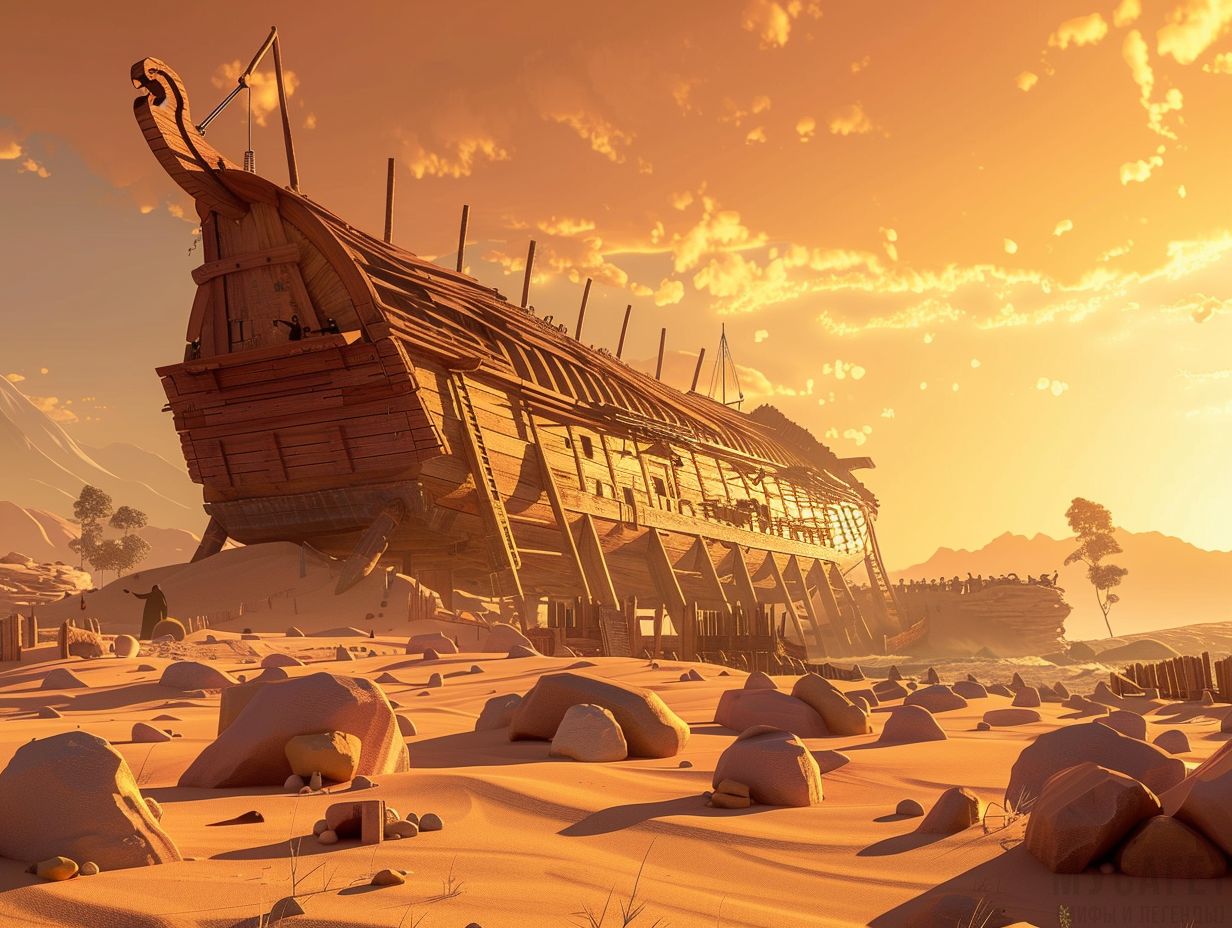
But there’s a catch | building a vessel as vast as the ark described in Genesis—capable of housing representatives of every animal—would require immense resources, time, and labor. Could a single family, no matter how determined, construct such a ship? Scholars doubt it, suggesting that if Noah existed, he likely adapted an existing craft rather than built one from scratch. This Sumerian Noah, then, might have been a practical survivor, not a divinely inspired shipwright.
A Tale Beyond the Timber
Theories about Noah’s identity—whether a biblical saint, a Sumerian merchant, or a blend of both—remain speculative. Researchers lack the hard evidence needed to settle the debate, and opinions diverge widely. Was Noah a historical figure whose story grew into myth, or a symbolic character born from humanity’s need to explain survival against overwhelming odds? Perhaps the search for a physical ark or a definitive Noah misses the deeper point of his tale.
At its core, Noah’s story is one of faith, resilience, and redemption. For believers, he embodies the idea that a righteous person, guided by divine favor, can achieve the impossible—saving life itself from destruction. Whether his ark ever rested on Ararat or floated through Mesopotamian waters, Noah’s legacy endures not in wood or clay, but in the enduring power of his narrative. The quest to find him may never yield a final answer, but it continues to inspire wonder, debate, and reflection on what it means to be human in the face of catastrophe.