

Survival is an active rejection of comfort. In the center of South Sudan the landscape dissolves into a liquid graveyard where the Nile forgets its boundaries. This is the Sudd. It is a shifting geography of mud and reed that defies the logic of fixed borders.
Most humans view a swamp as a temporary obstacle or a site for industrial drainage. For the Nilotic people the swamp is the only honest reality. They do not live on the land. They live within the pulse of a floating metropolis that can expand to the size of Greece during the rainy season. This is a territory where the air is a thick soup of heat and malarial vibration. There is no wine or olives here. There is only the relentless pressure of a biological machine that seeks to reclaim every inch of human effort.
The Nilotic groups represent a genetic masterpiece of adaptation. They are tall and slender figures moving through a world that would swallow a shorter or heavier frame. They are the inhabitants of the upper and middle Nile basin across Sudan and Ethiopia. While the rest of the world builds stone foundations and permanent walls the Nilotic understand that stability is a lie. Their existence is a hymn to the temporary. They build their huts from the very mud and dung that surrounds them. When the water rises or the islands drift they move. They do not complain about the loss of a fixed address because they understand that the earth is not a static object. It is a living shifting organism that demands constant negotiation.
Architecture of Sudd
The infrastructure of the Sudd is built on the hummock. These are elevated patches of earth that serve as the foundation for entire villages. Life on a hummock is a precarious balance. A village might sit on an island of grass and turf that stretches thirty kilometers in length only to have that island break apart or drift for months. At any moment the ground beneath a child can transition from solid earth to an underwater trap. The Nilotic do not use paved roads. Their highways are the channels cut through the reeds by the movement of hippopotami and the stroke of hand carved boats. To step onto the ground is to risk disappearing into the black sludge of the underwater world.
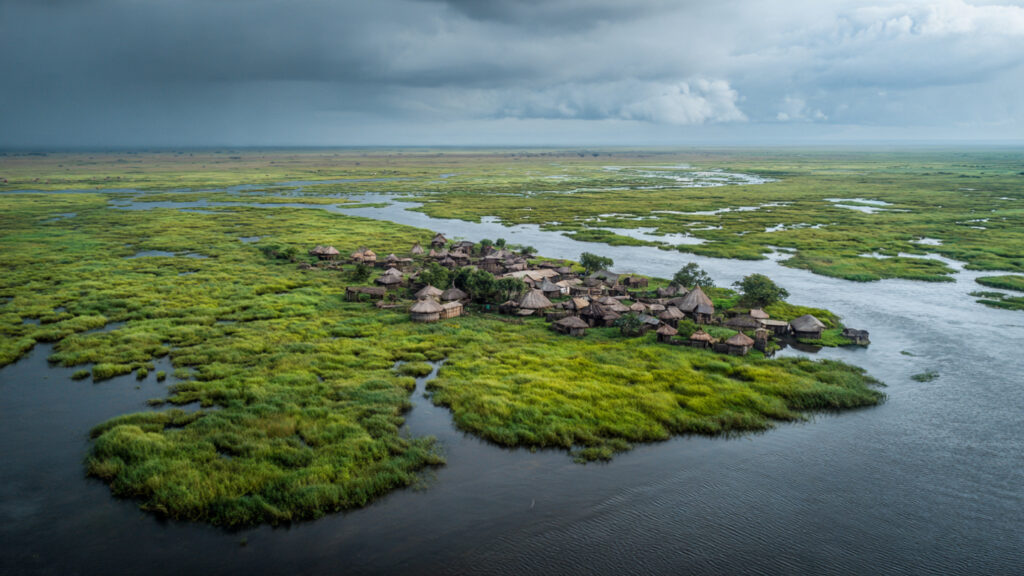
The ecology of the swamp is a paradise for every predator except the human. Over four hundred species of birds and one hundred species of animals thrive in this humidity. It is a treasure trove of biodiversity that functions as a slaughterhouse for the unwary. Crocodiles and hippos are not distant wildlife sightings. They are the neighbors who share the morning fog. A simple walk for water can involve tracking a path for kilometers through a maze of bloodsucking insects and parasites. For a Nilotic person a snake in the rafters is not a crisis. It is a minor domestic detail. They look at the unfriendly elements and proceed with a cold confidence that makes the modern urbanite appear fragile.
The Biological Engine of Global Warming
Modern discourse focuses on industrial carbon while ignoring the massive biological furnaces of the planet. The Sudd is a primary source of methane. It is a landscape where bacteria operate on a scale that dwarfs human industry. These swamps emit greenhouse gases in volumes that make the internal combustion engine look like a toy. Methane produced here has a warming effect twenty five times greater than carbon dioxide. The Nilotic people live in the mouth of this natural furnace. They are the witnesses to a planetary cycle that has occurred regularly for eons.
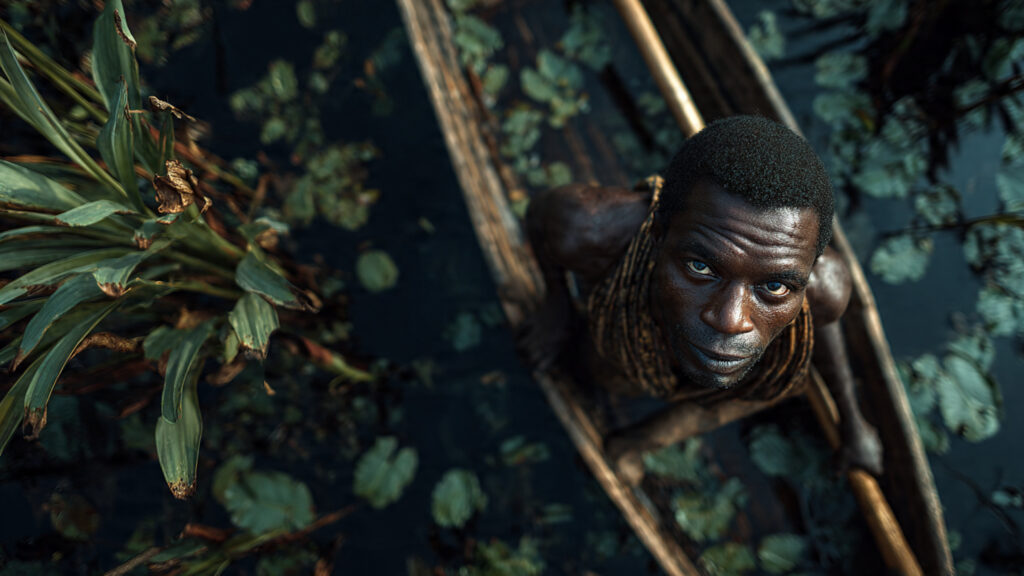
Human attempts to compare their output to the scale of nature are naive. The Sudd is the evidence. It is a methane engine that manages the climate of the continent through sheer biological mass.
Sanctity of the Herd
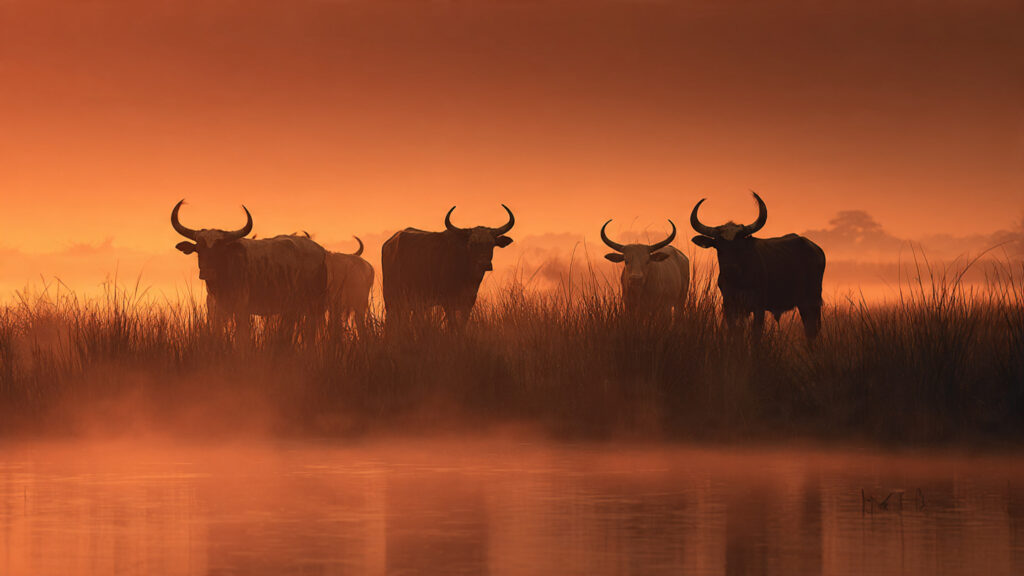
Cattle breeding in the Sudd is not an economic activity. It is a social and spiritual anchor. For the Nilotic a cow is a life partner and a measure of existence. In a world where the land can literally float away the cattle provide a sense of continuity. A man defines his status by the size of his herd. Marriage is not a contract of sentiment but an exchange of livestock. The animals provide milk and a connection to the ancestors. Even in the harshest floods the cattle are protected and moved to higher ground. This reverent attitude toward the cow creates a bridge between the human and the animal world that the industrial mind cannot comprehend. The cattle are the mobile wealth of a people who refuse to be tethered to the soil.
The diet of the Nilotic is a reflection of the swamp’s abundance and its danger. Fishing in the Sudd is a high stakes engagement. The marbled lungfish and other local species grow to immense sizes. Catching one often requires the collective strength of several men. The fish is dried on the roofs of huts under a sun that acts as a natural oven.
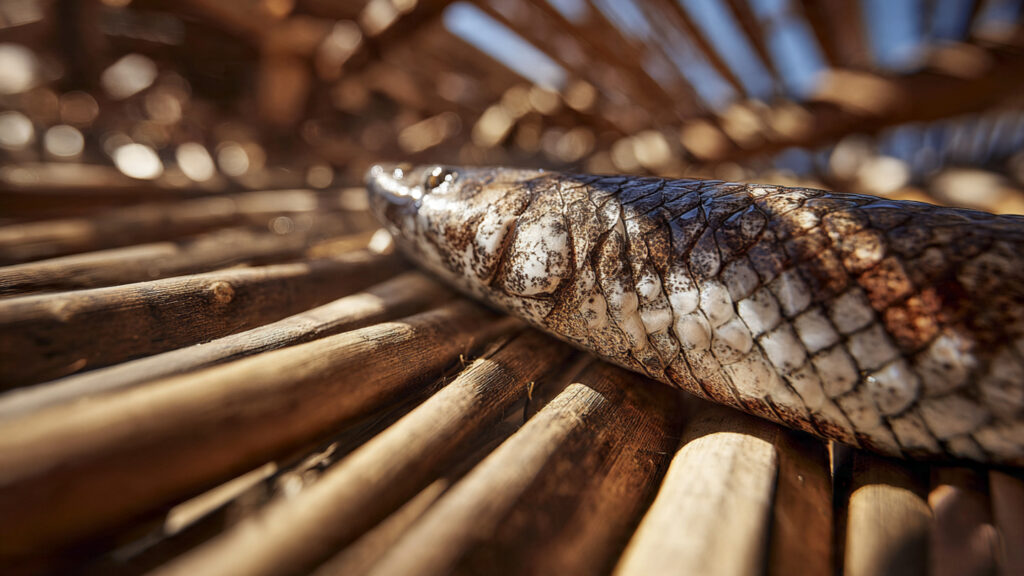
Hunting an antelope involves tracking prey through mud for days. It is not a trip to a supermarket. It is a primal confrontation with a landscape that offers nothing for free. A successful hunt is a feast that justifies the weeks of physical exhaustion and the constant threat of tropical fever.
Failure of the Jonglei Canal
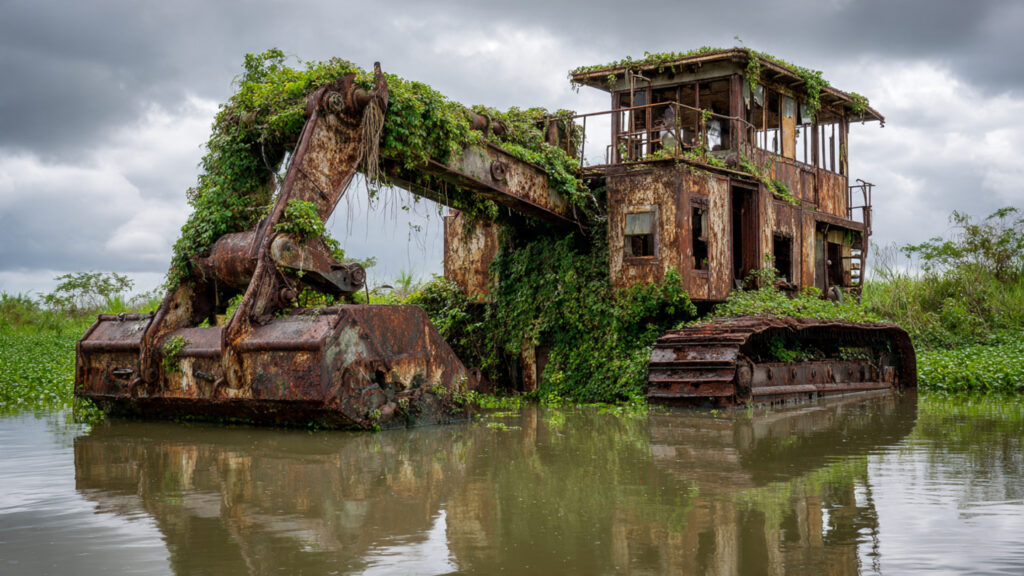
In the nineteen sixties the governments of Egypt and Sudan attempted to tame the Sudd with the Jonglei Canal. The plan was to divert the water to arid regions and turn the swamp into a massive agricultural zone. It was a project born of the mid century obsession with engineering nature into submission. The Nilotic people viewed the canal as an existential threat. To drain the swamp is to destroy the Nilotic soul. Construction was eventually halted by the civil war in Sudan leaving the massive excavators to rust in the mud. Today the project remains frozen. Biologists and the Nilotic people stand as an unlikely alliance against the resurrection of the canal. The swamp remains undefeated.
The resilience of the Nilotic is not the product of a desire for heroism. It is a quiet continuous struggle. They survive in a place where a single mosquito bite can induce a week of hallucination and fire. They thrive in a territory that is a nightmare for the modern medical establishment. Their philosophy is simple because complexity is a luxury that the swamp does not permit. They do not seek a better life elsewhere because they do not recognize the concept of a better life. They recognize only the home they have carved from the mud. The Sudd is a reminder that human meaning is not found in the absence of hardship but in the mastery of it.
The silence of the Nilotic is the silence of a people who have already seen the end of the world and decided to stay. They are a symbol of a human spirit that cannot be managed or sanitized by global planning. While the rest of the world worries about mobile signals and traffic congestion the Nilotic are navigating floating islands and negotiating with crocodiles. They are happy not because their lives are easy but because their lives are real. They are the sandpipers who praise their own swamp because they know that every other landscape is a lie. The residue of suspicion remains for anyone who thinks they can civilize the Sudd. The swamp is the final word.