



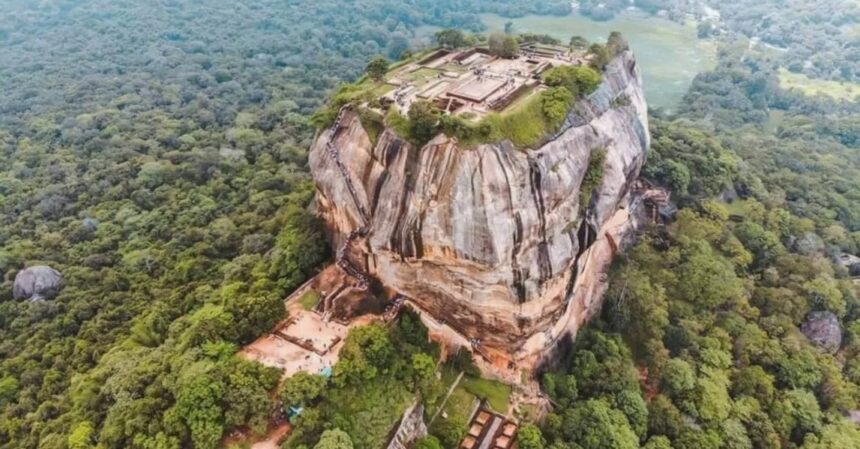
Sigiriya is real: a UNESCO World Heritage rock fortress in Sri Lanka, built by a fifth-century king, and one of the most extraordinary surviving works of ancient urban planning and monumental sculpture in South Asia. Its famous lion paws don’t need a hidden reptilian species to be fascinating.
What they need is accurate art historical context.
The History of Sigiriya
King Kashyapa I ruled from Sigiriya between 477 and 495 CE, according to the Culavamsa, an ancient Sri Lankan chronicle. He built his fortified palace atop a roughly 180-meter granite column, decorating its sides with the celebrated Sigiriya frescoes depicting celestial maidens. Archaeological work at the site began in the 1890s under H.C.P. Bell, a credentialed archaeologist, and continued more comprehensively under Sri Lanka’s Cultural Triangle Project starting in 1982. This is well established South Asian archaeology and history, drawn from chronicles and excavation records, not speculation.
The Lion Gate’s Recorded History
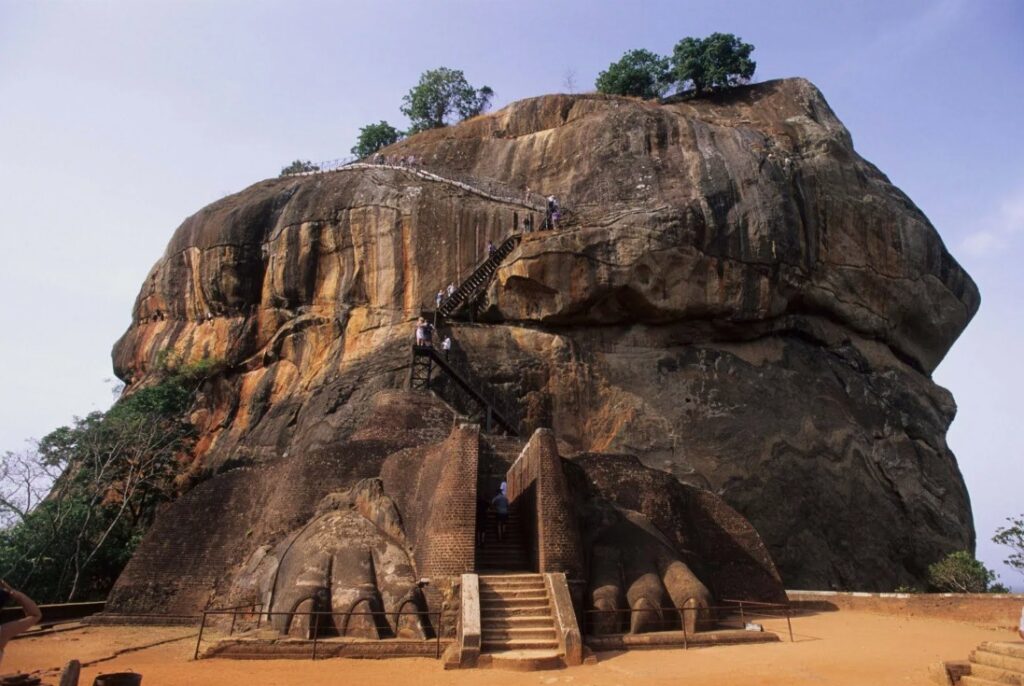
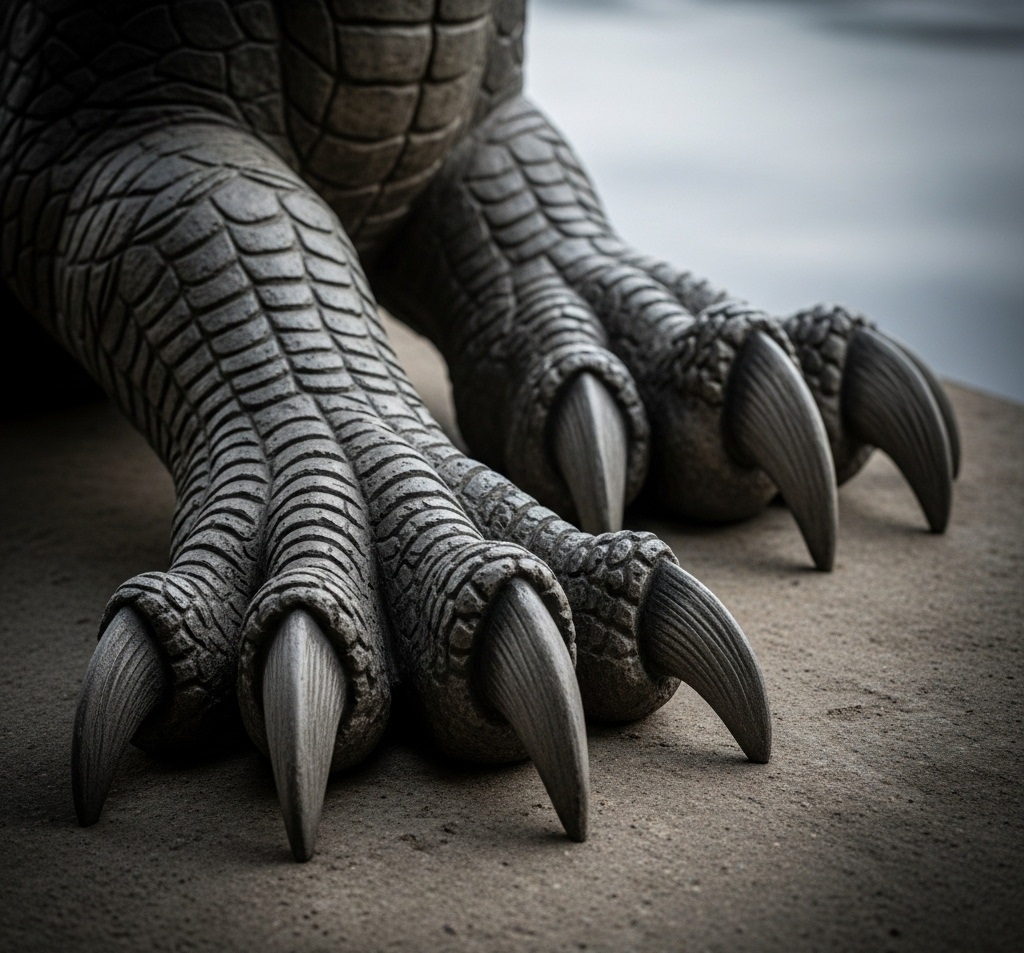
Halfway up the rock, Kashyapa’s builders constructed an enormous gateway in the form of a lion, giving the site its name, Sinhagiri, the Lion Rock. Visitors originally climbed a staircase leading through the lion’s mouth to reach the summit. Only the massive paws survive today. The head collapsed at some point in the centuries after the site’s abandonment, and no surviving depiction shows precisely what it originally looked like in full detail, a real gap in the historical record that archaeologists and historians openly and readily acknowledge, rather than a suppressed secret being withheld from the public.
The claws on the surviving paws are prominent and extended rather than resembling a naturalistic retracted feline paw, a directly observable feature of the physical sculpture that anyone visiting the site today can see for themselves. What this reflects is a well established pattern in South and Southeast Asian monumental guardian sculpture generally: the simha, or mythic lion figure common across Buddhist and Hindu architectural traditions, was rarely intended as a strict zoological portrait of an actual lion. These guardian figures were routinely stylized and composited, blending features associated with strength, ferocity, and protective power from multiple sources rather than depicting a single accurately rendered species. One detailed visitor description of the Sigiriya paws has even noted they resemble an eagle’s talons as much as a lion’s, which supports exactly this pattern of deliberate mythic stylization rather than an argument for a hidden, differently-evolved creature. Comparable stylization appears across the region, in Chinese guardian lion statues, Khmer temple guardians, and other Sri Lankan sinha figures, none of which are read by art historians as evidence of literal alternate species.
The Mirror Wall Poems
Reconstructing anything about the lost lion head relies on evidence the site itself provides directly. Sigiriya’s famous Mirror Wall, a highly polished plaster surface running along part of the ascent, is covered in extensive graffiti left by visitors between roughly the 6th and 13th centuries CE, mostly short poems responding to the site’s beauty and the famous frescoes. Among this body of ancient visitor commentary, some poems describe the lion figure as it appeared to visitors during those centuries, providing impressionistic textual evidence for its former grandeur, rather than the detailed physical description a surviving carving would offer. This is a remarkable historical resource, an extensive body of ordinary visitors’ own written reactions to a monument, preserved for over a thousand years, one of the more unusual and personal archaeological records surviving from the ancient world.
Why Composite Guardian Figures Are the Norm, Not the Exception
Deliberately composite, non-naturalistic guardian sculpture is remarkably common across world art history, and that broader context makes the Sigiriya paws considerably less mysterious rather than more. Egyptian sphinxes combine human and lion features. Mesopotamian lamassu combine human, bull, and bird elements. Chinese and Japanese guardian lion-dogs, komainu and shishi, bear only a loose resemblance to actual lions, animals that were never native to East Asia and were known to most sculptors only through secondhand descriptions or earlier artistic traditions rather than direct observation. This extensively documented global pattern reflects a consistent, ordinary artistic choice: guardian figures were designed to convey symbolic power, protection, and awe rather than zoological accuracy, and sculptors across many independent traditions arrived at broadly similar solutions, blending features from multiple powerful animals, precisely because the goal was never naturalistic portraiture in the first place.
Ravana and the Ramayana Tradition
The connection to the Ramayana is real, worth exploring on its own mythological terms. Ravana, the demon king of Lanka in this foundational Hindu epic, is described across various tellings as possessing extraordinary abilities, immense stature, shapeshifting, and other superhuman traits reflecting his complex, non-purely-human origins within the epic’s own cosmology. Different regional and textual versions of the Ramayana describe his ancestry somewhat differently, and this diversity of tradition is itself a rich feature of how the epic has been told and retold across South and Southeast Asia for over two millennia, not a discrepancy to be resolved with a single literal biological explanation.

The Naga Tradition
The Nagas are richly developed figures across Hindu and Buddhist mythology and iconography, typically depicted as serpentine beings, sometimes with human upper bodies, associated with water, the underworld, and hidden knowledge or treasure. This is extensive religious and artistic tradition spanning South and Southeast Asia, worth appreciating fully on its own mythological and religious terms. Connecting a specific figure like Ravana’s maternal lineage to the Naga tradition is a recorded feature of certain regional or later retellings of the epic, a piece of comparative mythology, not something requiring a literal biological reptilian ancestor to be meaningful or worth studying.
The Global Pattern of Serpent Symbolism
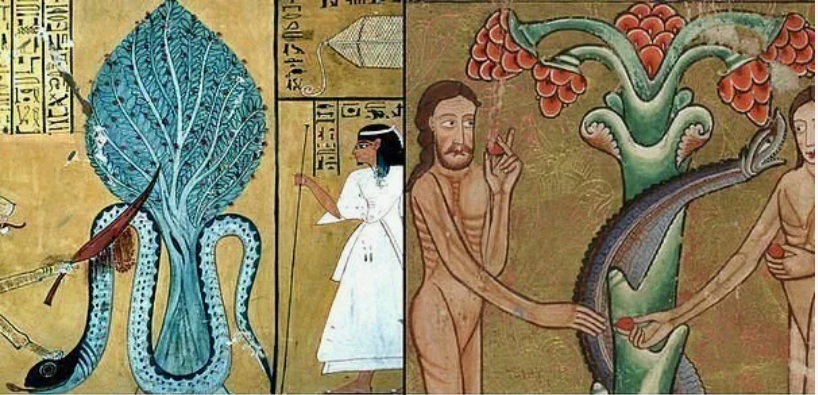
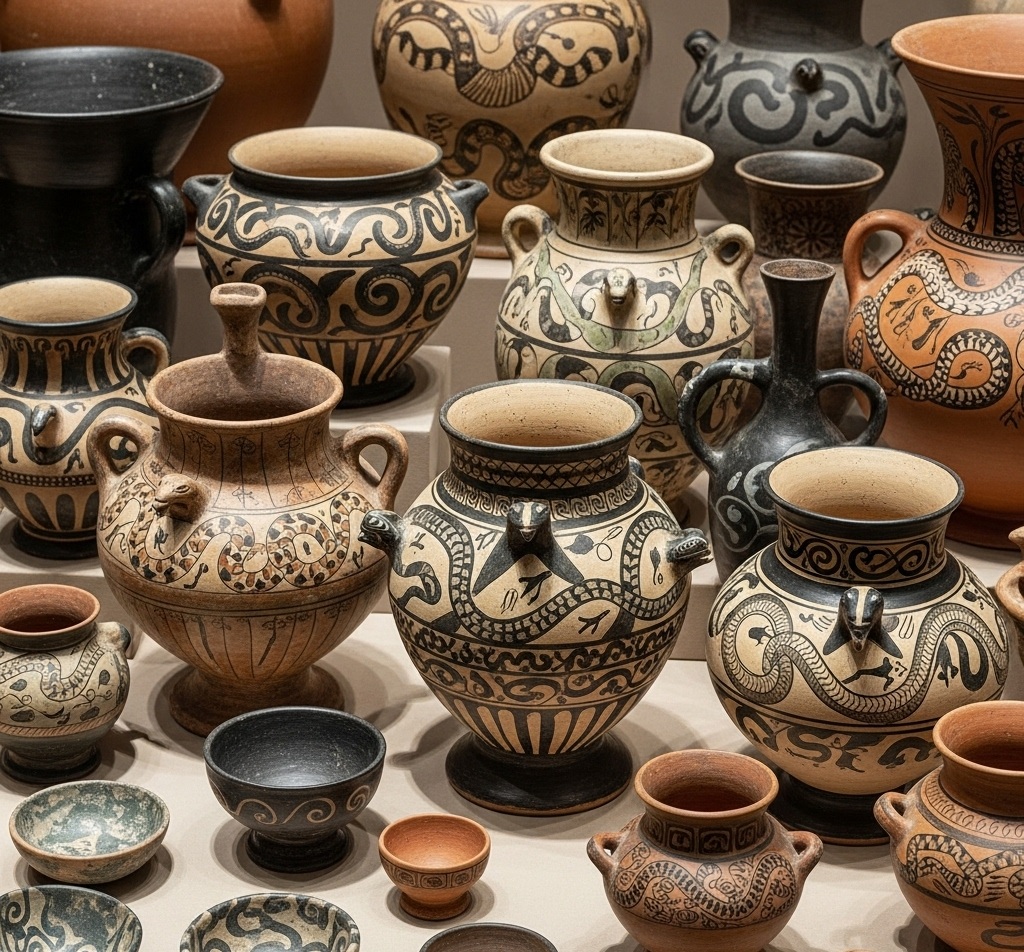
The serpent’s widespread appearance across unconnected mythological traditions worldwide, in Africa, South and Central Asia, Australia, Oceania, and the Americas, is well established by comparative mythologists and religious historians. Archaeological evidence, including cult vessels and ceramics bearing snake imagery from the Neolithic Hacılar culture in Asia Minor and from Tell Ramad in Syria, both dating to the 6th-5th millennia BCE, shows serpent symbolism connected to fertility and agricultural cycles reaching back into some of the earliest known settled human cultures.
This widely recurring cross-cultural pattern is best explained by comparative mythologists and religious historians as reflecting shared, universal human experiences, the serpent’s association with water and rain in agricultural societies dependent on both, its dramatic seasonal shedding of skin evoking renewal and transformation, and its practical danger to early human communities, rather than requiring independent contact with, or descent from, an actual non-human species. This is the same explanatory approach comparative mythologists apply to other widely recurring symbols and figures, and it doesn’t diminish the cultural and religious significance these serpent traditions carry within their own societies to explain their recurrence this way.
The Water Gardens
Another remarkable feature of Sigiriya often gets overshadowed by the lion paws: the site’s water gardens, among the oldest surviving landscaped gardens of their kind anywhere in the world. Archaeological surveys have documented a sophisticated system of pools, canals, and fountains at the base of the rock, engineered with a precision that still functions today, some of the fountains still operate during the rainy season using only gravity-fed water pressure from the original ancient hydraulic design, without any modern pumps or mechanical assistance. This engineering achievement, designed and built over 1,500 years ago, demonstrates a level of hydraulic sophistication that took Western Europe many centuries longer to develop independently, a verifiable accomplishment of ancient Sri Lankan engineering that needs no embellishment to be worth marveling at.
The Political History Behind the Fortress
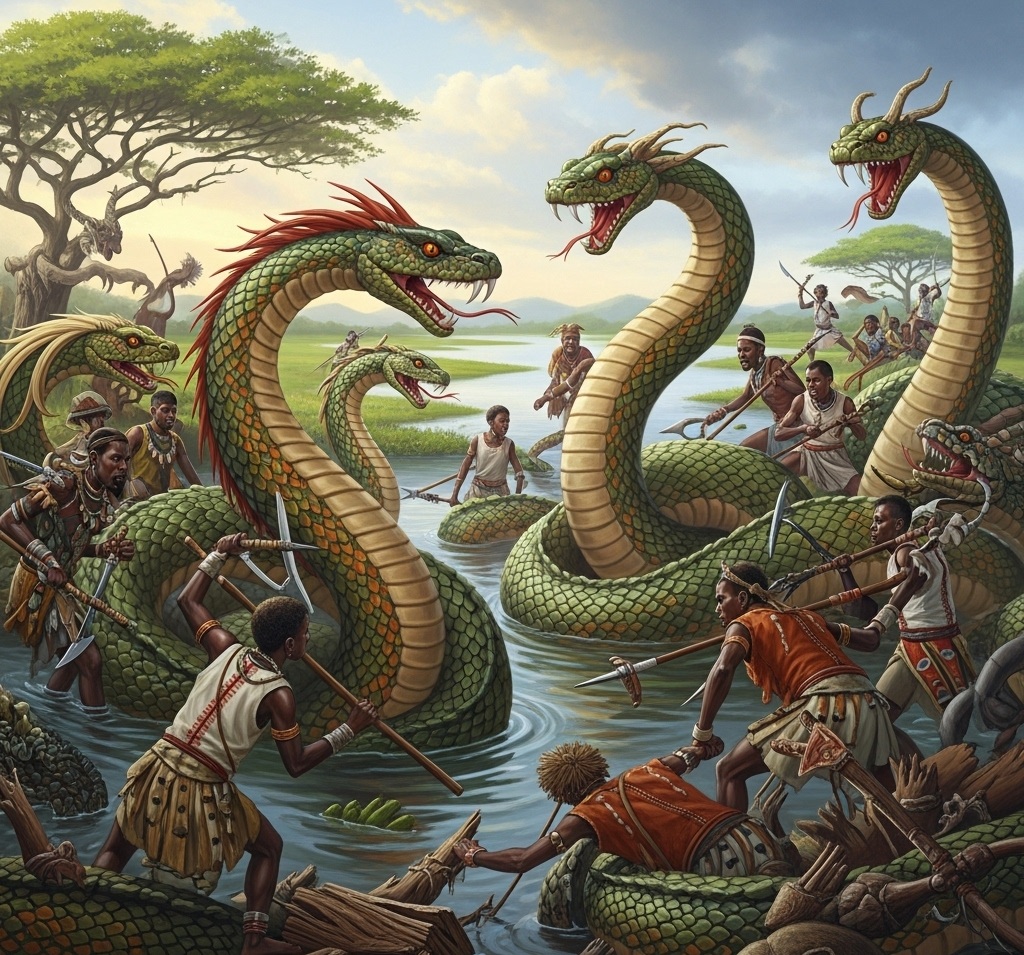
The dramatic human history behind why Sigiriya was built at all is compelling documented political history in its own right. According to the Culavamsa, Kashyapa seized the throne after the death of his father, King Dhatusena, allegedly by having him killed, displacing his half-brother Moggallana, the legitimate heir by some accounts, who fled to South India. Fearing retaliation, Kashyapa relocated his capital to the naturally defensible summit of Sigiriya rock, building his fortified palace atop the sheer granite column specifically for its defensive advantages. Moggallana did eventually return with an army in 495 CE, and Kashyapa was defeated, according to the chronicle taking his own life rather than face capture, after which the capital returned to Anuradhapura and Sigiriya was given over to Buddhist monks, who used the site’s caves and boulder gardens for generations afterward. This documented political drama, fratricide, exile, an eighteen-year fortified reign, and a final battle, gives the site’s construction a human motivation considerably more grounded than any invented parallel civilization.
Sigiriya Today
UNESCO inscribed Sigiriya as a World Heritage Site in 1982, recognizing it as an outstanding example of urban planning integrated with landscape design, an internationally recognized designation reflecting the consensus judgment of professional archaeologists, historians, and conservation experts who evaluated the site’s cultural and historical significance. It remains one of Sri Lanka’s most visited archaeological sites today, drawing visitors specifically for the extraordinary achievements documented above, the frescoes, the water gardens, the lion gate, and the site’s dramatic history, rather than requiring any invented mystery to justify the visit. Ongoing archaeological work continues at the site, with the eastern portion of the lower city still not fully excavated as of recent surveys, meaning real new findings about Sigiriya’s history may still be forthcoming through the careful, ordinary process of continued professional excavation.
A Monument That Doesn’t Need Embellishment
Visitors climbing Sigiriya today pass through the same gateway Kashyapa’s builders raised over fifteen hundred years ago, past the same frescoes that inspired medieval visitors to leave their own poems on the Mirror Wall, and up toward a summit palace built by a king whose documented reign lasted just eighteen years before ending in defeat. That’s a complete, satisfying story on its own honest terms, art, engineering, ambition, and a human downfall, all of it verifiable, none of it requiring an invention to make it worth the climb.
Sigiriya’s actual, recorded history is remarkable without needing an invented reptilian civilization attached to it: a fifth-century king built a fortified palace on top of a sheer granite column, decorated it with frescoes still celebrated for their artistry fifteen centuries later, engineered a working hydraulic garden system that partially functions to this day, and commissioned a monumental lion gateway whose surviving paws demonstrate sophisticated stone carving skill. The mythological connections to Ravana and the Naga tradition are worth exploring in full as the rich, meaningful religious and literary heritage they actually are, and the global pattern of serpent symbolism in human religious history is worth appreciating as exactly what comparative mythology shows it to be: a cross-cultural human pattern reflecting shared experience, not evidence of a parallel civilization hidden beneath the visible one. A usurper king’s fortified exile, a brother’s return, and one of the ancient world’s most sophisticated surviving hydraulic gardens is dramatic enough on its own terms.