



In an era where the boundaries of perception are constantly being challenged, an intriguing question quietly ripples through the scientific and quasi-scientific communities | could our reality have subtly, yet profoundly, shifted? For years, hypotheses surrounding the enigmatic nature of time, the potential violations of its seemingly linear flow, and the perplexing phenomenon of “memory errors” – famously termed the Mandela Effect – have sparked fervent debate and captivated the imaginations of millions.
While official, mainstream science largely maintains a cautious stance, affirming no definitive evidence of global alterations to our shared reality, a burgeoning collection of observations, discussions across the internet, and independent research continues to emerge, casting a tantalizing shadow of doubt upon our conventional understanding of the world.
The Rise of the Reality Shift Theory
At the heart of this captivating discussion lie recurring anomalies that many individuals report experiencing. Consider, for instance, the curious persistence of seeing identical times on clocks, particularly those striking mirror combinations like 11:11 or 22:22, almost as if the universe is attempting to convey a synchronized message. Coupled with these temporal curiosities are sudden, vivid sensations of déjà vu, that fleeting yet powerful feeling of having previously experienced a moment that is, by all accounts, new.
Perhaps most perplexing are the discrepancies in memory itself | the stark disappearance of specific recollections for some individuals, while others remain absolutely confident in the reality of those very same, now disputed, events. These collective observations, according to a growing body of independent authors and researchers, might transcend mere coincidence. Instead, they are being increasingly interpreted as potential indicators of a profound desynchronization within our consciousness, or even a partial, subtle malfunction in our collective perception of the time continuum itself.
CERN, Particle Accelerators, and The Butterfly Effect of Physics
Some of the most audacious, yet compelling, opinions suggest that such profound discrepancies could originate from a sharp, almost imperceptible transition from one version of reality to another. This dramatic shift, proponents argue, might not have been a slow evolution, but rather a sudden, discrete jump. Intriguingly, much discussion orbits around events tied to major experiments in the realm of high-energy physics.

Whispers and unconfirmed reports suggest that as recently as 2020, during one of the pivotal launches of the colossal particle accelerator at CERN, anomalous temporal fluctuations might have occurred. While it is crucial to emphasize that there has been no official confirmation whatsoever of this audacious hypothesis from CERN or any established scientific body, amongst independent researchers and enthusiasts, such versions remain a deeply debated and highly speculative subject of ongoing discussion. The sheer scale and complexity of experiments conducted at such facilities naturally lend themselves to theories of unexpected, far-reaching consequences.
Reserve Realities and Echoes of the Past
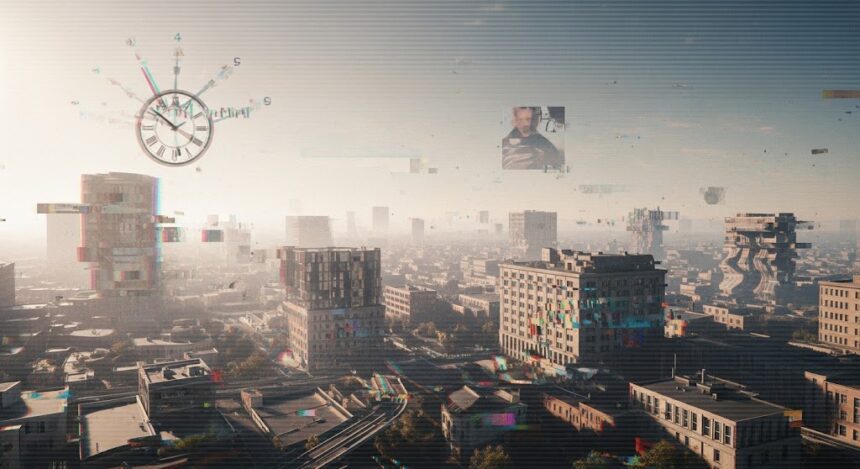
According to this intriguing viewpoint, a momentary lapse or failure in the fabric of reality could have resulted in the merging of certain temporary layers, while others might have been completely, irreversibly deleted. Such a theoretical “glitch” could, in turn, lead to the formation of what is termed a “reserve version of the world” – a state of existence where a significant portion of the elements from our past are retained, but subtly altered, almost like a revised draft of history.
Individuals who have not undergone a complete “synchronization” with this new reality are posited to be the ones who experience these strange perceptions. They might feel a sense of emotional instability, a subtle yet persistent feeling of alienation from their surrounding reality, or a nagging sensation that something fundamental has shifted.
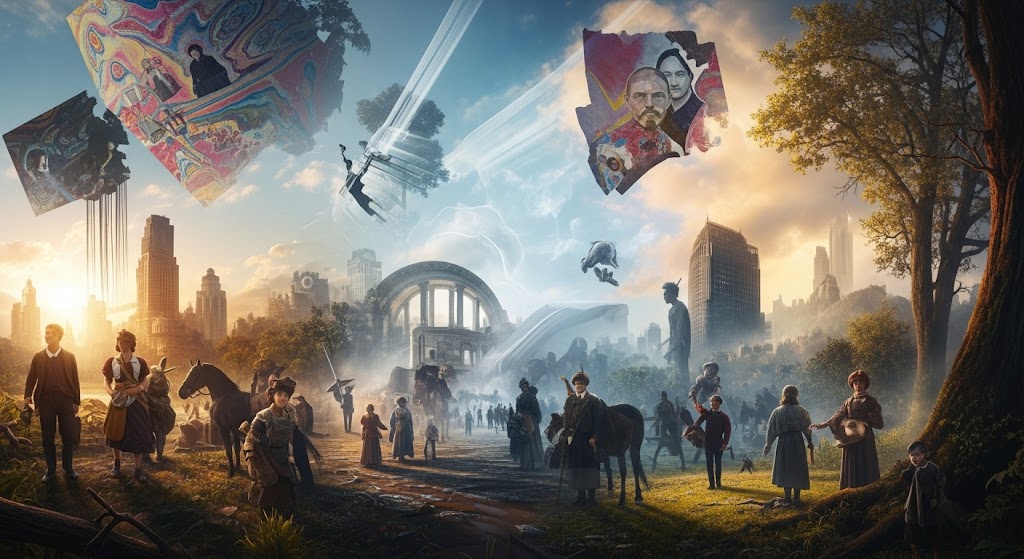
The symptoms described in various materials exploring these theories paint a vivid picture of cognitive dissonance | the eerie repetition of seemingly identical events, but with minute deviations, almost as if life is playing out a slightly different script. Some people report perceiving specific locations, such as familiar intersections, building entrances, or even elevators, as if they are looped or “stuck” in an unsettling temporal cycle. Most famously, there’s the widespread discrepancy in memories concerning well-known facts | the titles of iconic movies, the precise colors of famous objects, or even widely accepted biographical details of celebrated public figures.
Mandela Effect | Flawed Memory or Proof of Timeline Shift?
The Mandela Effect stands as perhaps the most discussed and widely recognized symptom of such a hypothesized divergence in reality. Under this audacious hypothesis, it transcends the realm of mere collective memory error; it is instead interpreted as tangible evidence that individuals previously existed within a fundamentally different version of reality.

Seemingly inexplicable changes observed in inscriptions, corporate logos, geographical maps, and countless other elements of everyday life are meticulously scrutinized and interpreted not as faulty recollections, but as indicators of an incomplete overwriting of informational layers during this purported reality shift. It’s a concept that challenges the very foundation of objective truth and shared experience.
Ancient Civilizations and the Knowledge of Time Loops
Further still, some researchers are attempting to draw fascinating, if unconfirmed, parallels between these contemporary observations and the enigmatic disappearances of ancient civilizations. The sudden, perplexing vanishing of the advanced Mayan culture, for instance, continues to fuel intense debate within the archaeological and scientific communities.
Conventional hypotheses, such as a devastating catastrophe, widespread epidemic, or destructive military conflict, often fall short of comprehensively explaining the complete abandonment of vast, meticulously constructed cities where, paradoxically, no definitive traces of widespread violence or hasty evacuation have been discovered. From this void arises a compelling, albeit speculative, version of events | that representatives of the Mayan culture possessed an arcane knowledge of the cyclical nature of time itself and meticulously prepared in advance for a planned, conscious transition to another phase of existence.
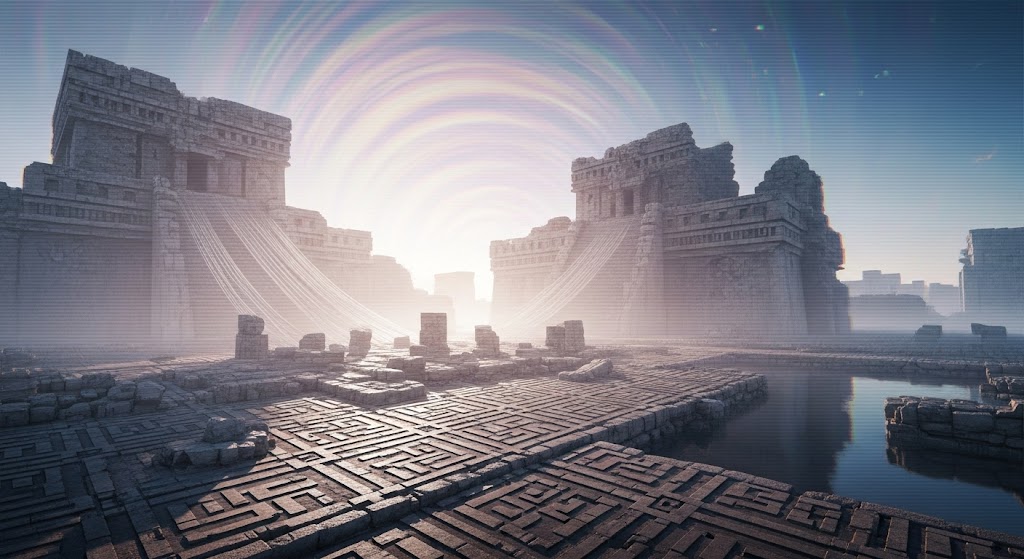
While such theories currently lack concrete archaeological confirmation and remain firmly within the realm of speculation, they nonetheless maintain a considerable degree of popularity in cultural and esoteric circles. Researchers often highlight the astonishing accuracy and complexity of Mayan calendars, as well as the presence of intricate cosmological concepts that bear striking resemblances to modern interpretations of time cycles and transitions between different epochs. According to one particularly evocative view, the Mayans might have perceived the end of a certain calendar cycle not as an apocalyptic conclusion, but rather as a profound and anticipated change in the very version of their existence, a shift into a new, perhaps imperceptible, reality.
Science’s View | Psychological Illusions or Hidden Physics?
The mainstream scientific world, as expected, approaches such grand hypotheses with understandable caution and a healthy dose of skepticism. The overwhelming majority of experts tend to believe that the described effects are predominantly psychological in nature. They are often attributed to the inherent fallibility of human memory, the subjective nature of coincidences, the intricate features of neurophysiology, and the powerful, pervasive influence of mass culture and the internet on our collective and individual perceptions of memory.

However, even within this rigorously scientific framework, there remains ample room for continued and deeper research, particularly in burgeoning areas related to neuroscience, the perplexing complexities of quantum physics, and the rapidly evolving field of information theory. The very act of questioning our reality, even if through psychological lenses, opens new avenues of inquiry.
Into Possibility
It must be consistently emphasized that, at this present moment, all such versions and interpretations of reality shifts and temporal anomalies lack any definitive experimental confirmation. Yet, the sheer number of coincidences, the uncanny recurrence of similar scenarios across disparate individuals, and the steadily growing volume of individual testimonies continue to accumulate. Consequently, a segment of researchers, often those operating at the fringes of conventional thought, firmly believes that the profound study of such phenomena is not merely a philosophical exercise. Instead, they contend that it represents a potentially crucial and groundbreaking direction for the future of scientific inquiry itself, hinting at mysteries of consciousness and existence yet to be fully understood.
Stay curious. Stay questioning. Reality might just be more fluid than we ever imagined.
Have you ever experienced a Mandela Effect or a strange shift in reality?