


On July 17, 2025, a magnitude 7.3 earthquake rattled the coast of Alaska, sending shockwaves through the region and sparking a flurry of speculation about its cause. While the epicenter, located over 20 kilometers beneath the ocean floor, thankfully spared the region from a tsunami, the event has reignited discussions about the Sun’s influence on Earth’s geological activity.
At the same time, NASA’s Parker Solar Probe has delivered jaw-dropping images from the Sun’s corona, revealing new details about solar wind and its far-reaching effects. Could these celestial and terrestrial events be linked?
The Alaska Earthquake | A Wake-Up Call from the Earth
A Powerful Quake with No Tsunami
At approximately 10:47 PM local time on July 16, 2025, a magnitude 7.3 earthquake struck 54 miles south of Sand Point in Alaska’s Aleutians East Borough. With its epicenter at a depth of 20 kilometers, the quake was significant but not shallow enough to trigger a devastating tsunami, despite initial warnings and sirens that sent residents scrambling to higher ground. The event caused minor structural damage, rattled nerves, and dominated headlines, with some tabloids sensationalizing it as a harbinger of apocalyptic doom.

While the immediate impacts were limited, the quake’s timing and location have fueled speculation about a deeper cause. Seismologists attribute the event to tectonic activity along the Pacific Plate, but a growing number of researchers and amateur observers are turning their eyes skyward, wondering if the Sun’s increasingly erratic behavior could play a role.
Why Alaska? A Tectonic Hotspot
Alaska sits atop a volatile boundary where the Pacific Plate subducts beneath the North American Plate, making it one of the most seismically active regions in the world. The 1964 Good Friday Earthquake, a magnitude 9.2 monster, remains a stark reminder of the region’s vulnerability. The July 2025 quake, while less severe, underscores the constant tectonic churn in this part of the world. But could there be more to the story? To answer that, we need to look beyond Earth’s crust to the star at the center of our solar system.

The Sun’s Strange Behavior | A Cosmic Culprit?
Shadow Flares and Solar Ripples
On July 15, 2025, just one day before the Alaska quake, amateur astronomer David Wilson from Inverness, Scotland, observed something peculiar while studying sunspot 4136 through his modest telescope. He noticed what he described as “ripples” emanating from the sunspot, like waves from a pebble dropped in a pond. Uncertain whether these were real shock waves or atmospheric distortions, Wilson reached out to professional astronomers for clarity.
The response was surprising | these ripples were not an artifact but a real phenomenon known as “shadow flares.” These micro-flares, visible within sunspots, are accompanied by shock waves that ripple across the Sun’s surface. Typically, such phenomena require advanced telescopes with meter-long mirrors and specialized filters to observe. Yet Wilson spotted them with budget equipment, suggesting that these solar events have grown more pronounced.
The Science Behind Solar Shock Waves
Shadow flares and their accompanying shock waves originate in the Sun’s chromosphere, a layer above the photosphere where sunspots form. Research conducted by eleven institutes, including NASA, in 2019 revealed that sharp temperature differences between these layers create cavities of rarefied plasma. These cavities act like acoustic resonators, similar to the body of a guitar, amplifying vibrations that manifest as shock waves across the Sun’s surface. These waves, once thought to be subtle, are now being observed with unprecedented clarity, hinting at a significant escalation in solar activity.

Could these solar vibrations influence Earth? The idea isn’t as far-fetched as it sounds. Acoustic resonance, a phenomenon where vibrations in one system trigger responses in another, is well-documented. Just as a powerful voice can shatter glass, solar shock waves might subtly affect Earth’s crust, particularly in tectonically sensitive regions like Alaska.
NASA’s Parker Solar Probe | Peering into the Sun’s Heart
A Historic Plunge into the Solar Corona
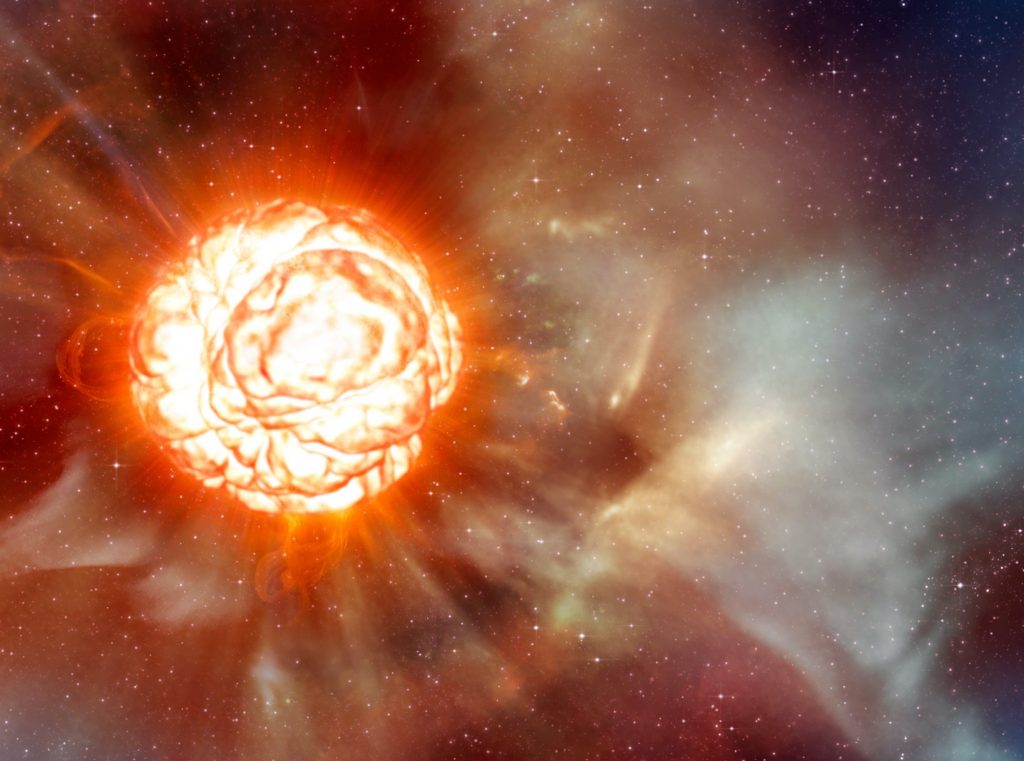
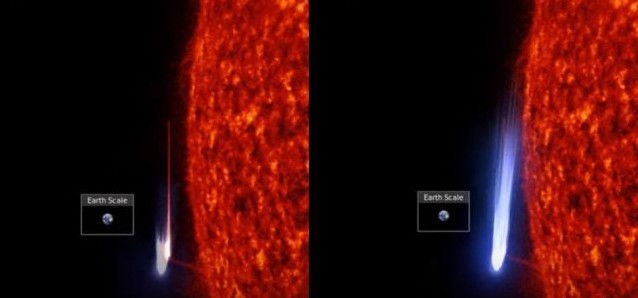
While Earth grappled with the Alaska quake, NASA’s Parker Solar Probe was making history of its own. On December 24, 2024, the probe made its closest-ever approach to the Sun, skimming just 3.8 million miles from its surface—deep within the solar corona, the Sun’s outer atmosphere. Traveling at a blistering 430,000 miles per hour, the fastest human-made object ever, the probe captured high-resolution images and data that have left scientists in awe.

Equipped with the Wide-Field Imager for Solar Probe (WISPR), the probe documented the chaotic dance of coronal mass ejections (CMEs) and solar wind, offering an unprecedented glimpse into the Sun’s “space weather kitchen”. These images reveal CMEs colliding, twisting magnetic fields, and the origins of solar wind—a stream of charged particles that races across the solar system at speeds exceeding 1 million miles per hour.
Digesting the Solar Wind Mystery
The solar wind, first theorized by Eugene Parker in 1958, is a constant flow of charged particles from the Sun that shapes the heliosphere, the bubble-like region encompassing our solar system. The Parker Solar Probe’s data is helping scientists pinpoint the origins of this wind, particularly the “slow” solar wind, which may stem from magnetic reconnection events or streamers—large loops of plasma connecting active solar regions.
The probe’s images also capture the heliospheric current sheet, a boundary where the Sun’s magnetic field flips from north to south. This sheet, along with CMEs, drives space weather events that can disrupt Earth’s magnetic field, satellites, and power grids. Understanding these phenomena is crucial for predicting and mitigating their impacts on our technology-dependent world.

Could Solar Activity Trigger Earthquakes?
The Resonance Hypothesis
The timing of the Alaska earthquake, just one day after Wilson’s observation of solar shock waves, has sparked intriguing speculation. Could the Sun’s acoustic resonances, amplified by larger plasma cavities in the chromosphere, influence Earth’s tectonic plates? The concept hinges on the idea that solar vibrations could induce subtle vibrations in Earth’s crust, particularly in regions already primed for seismic activity.
While no definitive evidence links solar activity directly to earthquakes, the resonance hypothesis isn’t entirely baseless. Studies have long explored correlations between solar cycles and geological events. For instance, a 2018 study in Geophysical Research Letters suggested that solar wind variations might influence atmospheric pressure, potentially exerting minute stresses on fault lines. The Alaska quake’s proximity to Wilson’s observation adds fuel to this debate, though scientists caution that correlation doesn’t equal causation.
The Role of Space Weather
Beyond earthquakes, the solar wind and CMEs have well-documented effects on Earth’s atmosphere and technology. When CMEs collide, they can accelerate charged particles, mix magnetic fields, and alter their trajectories, making them harder to predict. These events can trigger geomagnetic storms, which produce stunning auroras but also pose risks to satellites, astronauts, and power grids.
For example, a powerful G4-level geomagnetic storm in May 2025, triggered by a CME, disrupted communications and military systems. The Parker Solar Probe’s data is helping scientists refine space weather forecasts, which could one day provide early warnings for both technological and geological impacts.
The Broader Implications | A Restless Sun and a Vulnerable Earth
A Star Growing Stranger
The Sun is currently in the declining phase of its 11-year solar cycle, yet its activity remains unusually intense. Observations from the Parker Solar Probe and other missions, like the Solar Orbiter, suggest that solar phenomena like shadow flares and CMEs are becoming more pronounced. This raises questions about whether the Sun’s behavior is entering a new phase, potentially amplifying its effects on Earth.
Protecting Our Planet
The implications of a more active Sun are profound. Beyond the risk of geomagnetic storms, a “supercharged” solar wind could, in extreme cases, strip away planetary atmospheres, as seen in studies of Sun-like stars like 61 Cygni and Epsilon Eridani. While Earth’s magnetic field offers robust protection, prolonged exposure to intense solar activity could weaken it over time, increasing our vulnerability.

On the ground, the resonance hypothesis suggests that seismic monitoring agencies might benefit from incorporating solar data into their models. If solar shock waves can indeed influence fault lines, early detection of these phenomena could provide critical warnings for earthquake-prone regions like Alaska, Japan, or Indonesia.
What’s Next for Solar and Seismic Research?
The Parker Solar Probe’s Ongoing Mission
The Parker Solar Probe will continue its daring dives into the Sun’s corona, with its next close approach scheduled for September 15, 2025. Each orbit brings new data, inching scientists closer to unraveling the mysteries of solar wind and space weather. As Adam Szabo, a mission scientist at NASA’s Goddard Space Flight Center, noted, “We don’t have a final consensus yet, but we have a whole lot of new intriguing data”.
Bridging the Sun-Earth Divide
To test the resonance hypothesis, researchers will need to combine solar observations with seismic data, looking for patterns that link solar shock waves to earthquakes. This interdisciplinary approach could involve NASA, the U.S. Geological Survey, and international partners like the European Space Agency. Amateur astronomers like David Wilson could also play a role, as their observations highlight the growing accessibility of solar phenomena.
A Cosmic Dance of Fire and Earth
The M7.3 earthquake in Alaska and the Parker Solar Probe’s stunning images from the Sun’s corona may seem worlds apart, but they share a common thread | the intricate interplay between our star and our planet. While the resonance hypothesis remains speculative, the Sun’s escalating activity—captured in vivid detail by NASA’s probe—demands our attention. From shadow flares to coronal mass ejections, the Sun is revealing its secrets, and Earth may be feeling the reverberations. As we await more data from the Parker Solar Probe and monitor seismic activity worldwide, one thing is clear | the cosmic dance between the Sun and Earth is far from over.