




On November 11, 1974, at exactly eleven o’clock in the evening, in a quiet Moscow apartment, the heart of a legend ceased to beat. Wolf Messing, the celebrated telepath, clairvoyant, and mind-reader who had performed for both European high society and the Soviet hierarchy, died precisely when he had predicted five decades earlier. This precise, almost bureaucratic surrender to fate was the capstone on a life defined by impossible knowledge.
Yet, the true enigma of Messing’s journey is not the telepathy he demonstrated before Stalin, nor the accurate forecasts of World War II’s turning points. It is the invisible, internal odyssey he completed | a staggering voyage from the fanatical, unquestioning faith of a Polish Jewish boy to a complete, heartbroken denial of God, and finally, to the discovery of a supreme intelligence far more vast and terrifying than any bearded figure on a cloud. It is the story of a man who looked into the human mind, found only lies, and then looked into the universe, only to find the truth.
The Shattering of a Child’s Heaven
The seeds of Messing’s spiritual collapse were planted in Góra Kalwaria, Poland, in 1908. His family was steeped in religious zeal, and the young Wolf was already destined by his father and the local rabbi to become a spiritual leader. His childhood God was a strict, judgmental, but ultimately just force—a necessary anchor in a rigid world. But the nine-year-old rebelled, resisting the confines of the religious school.
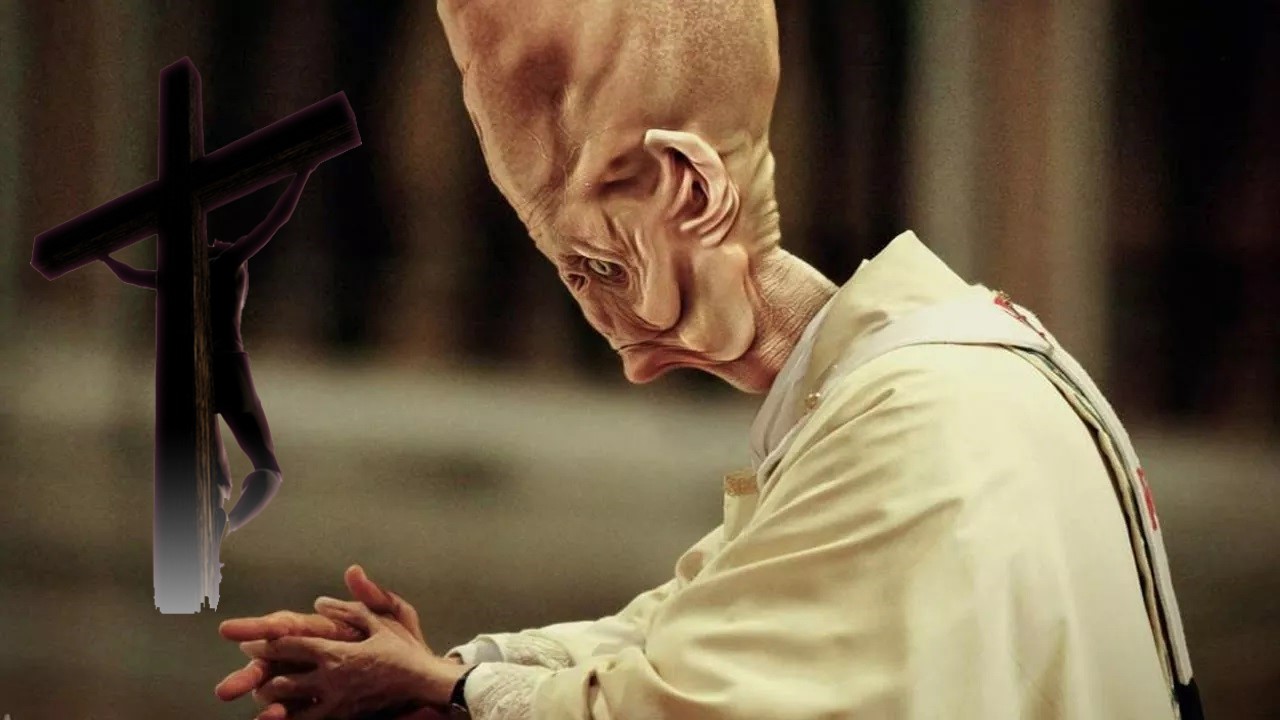
The conflict climaxed with a “miracle.” One late evening, returning to his home, the boy was frozen in place by the sight of a colossal, glowing white figure on his porch. “I have been sent to you from above,” the magnificent vision boomed, “Your life should be devoted to service. God is waiting for your prayers.” Overwhelmed by terror and divine awe, Wolf fainted. Upon waking, he recounted the vision, and his stern father asked the decisive question | “So you’re going to be a rabbi?” Wolf nodded. How could one argue with a messenger from the Almighty?

But the sacred illusion was temporary. Months later, studying at the religious school, Wolf encountered the very same “messenger of heaven” at the local market, wearing ordinary clothes. The towering, angelic figure was nothing more than a local actor, compensated by Messing’s father to play an angel and frighten his rebellious son into obedience.
“At that moment, the whole world collapsed for me,” Messing later confessed. “If the closest person is capable of such deception, who can be trusted at all? If my father lies to me about an angel, then everyone lies. This means that there is no God. Would He have allowed such a thing if He had been as just as they say?”
At the raw age of eleven, Wolf Messing ceased to believe in God. His faith didn’t just fade; it was surgically destroyed by the cruelty of human manipulation.
Escape into the Abyss of Disbelief
The young man’s immediate response to this foundational lie was an act of existential defiance. He resolved to escape, running away from the religious school, his family, and the hypocrisy he saw as universal. He described his flight as an embrace of nihilism | he smashed a synagogue donation mug, raking out the meager coins with the chilling thought | “If there is no God, then now everything is possible.”
Penniless and desperate, he stole and ate potatoes, then boarded a train bound for Berlin without a ticket, hiding under a bench. It was on this dark, rattling journey that the mechanism of his destiny first violently engaged. When the ticket inspector came through the carriage, the panicked, eleven-year-old Messing unconsciously poured every fiber of his despair and will into a single, silent command | This empty scrap of newspaper is a valid ticket. The inspector, without a second glance, took the scrap, punched it, and moved on. Messing did not understand what had happened in that moment, but the cosmic lock had been picked.
In the dystopian sprawl of early twentieth-century Berlin, the poor Jewish teenager endured, working as a messenger, washing floors, and starving until, at age fourteen, he collapsed on the street, mistaken for dead and hauled off to the morgue.
His supposed death became his rebirth. A curious psychiatrist, Professor Franz Abel, interested in cases of catalepsy (the state Messing had entered), became fascinated by the “revived corpse.” Abel quickly recognized Messing’s unique talents—a clairvoyant, a telepath, a genuine anomaly. “Develop your gift, don’t let it go to waste,” Abel urged, steering the young man away from obscurity. Messing began training, reading the unguarded thoughts of merchants in the markets and performing rudimentary telepathy in circuses, quickly gaining European notoriety. He had a magnificent gift, a profound connection to the minds of others, yet still, there was no God—only the cold, mechanical reality of a universe where humans were liars.
The Clockwork of Fate and the Emergence of Truth
The year 1920 found Messing, then twenty-one, a seasoned performer, acquainted with the giants of European thought, including Albert Einstein and Sigmund Freud. His life was one of control and calculation. But one morning, his rigid, atheist world was utterly dissolved.
He awoke before dawn with a heart thrashing against his ribs, invaded by an absolute, unmistakable piece of data | he would die in fifty-four years, five months, and eighteen days, at exactly eleven o’clock in the evening.
The initial impulse was overwhelming, visceral horror. But the terror quickly receded, replaced by a strange, profound calm. “Can you imagine, Professor, how you would feel if you suddenly discovered the same about yourself? A wild fear seized me, but it was quickly replaced by the thought | ‘Why should I be afraid if death is not the end, but rather the beginning?’” he wrote to Professor Abel that very morning.
This prediction—the ultimate piece of personalized, irrefutable knowledge—shattered his carefully constructed atheism. If his death was set, if his life was running on a clockwork known only to him, then something outside of human will, outside of human deception, had to exist.
God as Cosmic Consciousness
In the same famous letter to Abel, Messing articulated his new, radical understanding of the divine, a belief born not of faith, but of undeniable knowledge gleaned from his own abilities:
“Did you ask if I believe in God? To be honest, I do not believe in those wretched images of the Creator that are created by religions. I do not believe in an old man with a beard who sits on a cloud and decides who to punish and who to pardon. This image was invented by people in their own image, endowing it with their own vices | anger, jealousy, vindictiveness.”
He had rejected God the Man, the predictable, easily corruptible deity of dogma. But he had gained God the Universe.
“I am certain of His existence,” Messing continued. “Only He is completely different. It cannot be painted on a canvas, it cannot be imagined, it cannot be seen. As you can’t see the whole Earth at once.”
In his mature writings and diaries, Messing attempted to describe this entity. His definition was metaphysical, almost quantum:
“When I read a person’s thoughts, I connect to his consciousness. But sometimes I connect to something much bigger. It is like a huge ocean of knowledge that surrounds everything. I call this Cosmic Consciousness. This is God, not man, but the Consciousness of the universe.”
He saw the Creator not as a being, but as the intelligent energy that permeates all existence, the universal mind that stores all experience, the natural spirit that creates and controls.
“God is not an old man who judges people,” he patiently explained. “God is life itself, consciousness itself. It is in every cell, in every thought, in every atom. His appearance is the whole universe.” This vision transformed him from a cynical atheist into a quiet spiritualist who had bypassed religious authority entirely, touching the core of the divine through the raw, unfiltered mechanism of his own mind. Even Sigmund Freud, after knowing Messing, acknowledged this transformation, noting that the psychic himself was convinced his gift was “God’s grace.”
The Heavy Burden of Knowledge
Messing’s gift, however, remained a dual-edged sword. As he aged, his attitude shifted from pride to profound sorrow. He came to see his abilities not as a blessing, but as a heavy burden, even a punishment.
His assistant, Valentina Ivanovskaya, revealed the depth of his existential grief |
“Wolf Grigorievich was afraid that he would pass on his gift by inheritance. And he did not wish this on his children. He said | knowing the future is terrible. Seeing people die is a torment.”
He chose a life of solitude, terrified of propagating a gift that made him utterly and uniquely lonely. “I’m like a radio receiver tuned to a frequency that others can’t hear,” he wrote.
In the USSR, where he eventually fled from the Nazis in 1939, he continued his public demonstrations—performing for Stalin, predicting war outcomes, and aiding secret investigations. He was a machine of infallible knowledge. But inwardly, he was a tortured philosopher, struggling with the dystopian truth that he could see the entire script of existence, including the precise moment his own curtain would fall.
The Dissolution in Infinity

The inescapable final scene arrived on November 11, 1974. Messing, now 75, accepted the day with a strange resignation. In the morning, he wrote his last letter to Valentina Ivanovskaya:
“Today I will be gone. I know this for a fact. It will be over in four hours. How I want to run away from this, I want to believe that I will be saved. But I have my sad knowledge, to which I am already accustomed. Do not believe the one who says that he is tired of earthly life. She can’t get bored. But I will soon be gone in it. Farewell, V., and hello, Aida.”
He was referring to his late wife, Aida Mikhailovna Rappoport, whom he was certain he would meet. His last words were not a surrender to death, but a return to the source. At 23:00 on that predicted date, Wolf Messing’s heart stopped. The prophecy was fulfilled to the minute, confirming his unique connection to the Cosmic Consciousness that governs all time and space.
Wolf Messing’s spiritual trajectory—from an innocent believer to a broken atheist, and finally, to a mystic who defined God as the rational energy and Mind of the Cosmos—is perhaps his greatest legacy. He learned that the Creator is not the one who punishes and forgives, but the Consciousness that just IS—eternally, everywhere, and in everything. His gift allowed him to experience this truth directly, connecting to the very “ocean of knowledge.”
Death for Wolf Messing was not an ending. It was a pre-scheduled transition, the ultimate moment of dissolution in the infinity he called God. As he wrote | “Death is not disappearance. This is dissolution in infinity. I’m not afraid.” And at eleven in the evening, the drop rejoined the ocean.