




The concept of a hollow Earth has captivated the imaginations of explorers, scientists, and mystics for centuries. From ancient legends to modern satellite imagery, the idea that a hidden world thrives beneath our feet, guarded by secret passages at the North Pole and South Pole, continues to spark curiosity and debate.
Could advanced underground civilizations exist in the inner Earth, shielded from the surface world by advanced technology or natural barriers? Who guards the passages to the hollow part of the planet at the poles, and do they even exist?
The Hollow Earth Hypothesis | A Historical Perspective
The notion of a hollow Earth is not a modern invention. Ancient cultures across the globe spoke of subterranean realms inhabited by advanced beings. From the mythical Agartha to the serpent-like Nagas of Indian lore, these stories suggest that the inner Earth is more than just molten rock—it’s a thriving ecosystem with its own civilizations.
Ancient Legends and Modern Theories
Legends of underground civilizations are woven into the fabric of human history. The Tibetan sages spoke of Agartha, a subterranean paradise lit by a central sun, where enlightened beings reside. Similarly, the Hindu myths describe the Nagas, a race of serpent-like beings living in cities like Patala and Bhogavati, hidden beneath the Himalayas. These stories aren’t merely folklore; they’ve inspired explorers and scientists to seek tangible evidence of an inner Earth.

In the 18th century, mathematician Leonard Euler proposed that the Earth’s rotation dynamics suggested a hollow interior with vast cavities between the core and mantle. His calculations, echoed by astronomer Edmund Halley, challenged the conventional view of a solid Earth. By the 19th century, scientists began noting anomalies, such as melted structures at the Arctic ocean floor, hinting at a catastrophic event that could have reshaped the planet’s surface and driven survivors underground.
The North Pole and South Pole | Gateways to the Underworld?
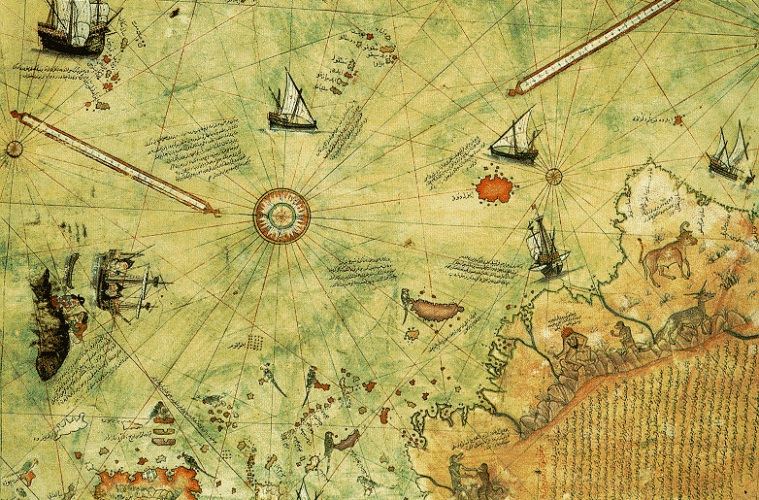
The polar regions have long been central to the hollow Earth theory. Ancient maps, like the 1513 Piri Reis map, depict Antarctica without ice, revealing coastlines that align with modern sonar readings. This suggests that someone, perhaps an advanced civilization, saw the continent in its ice-free state millions of years ago. Could these maps point to entrances at the North Pole and South Pole leading to the inner Earth?
In 1968, the ESSA-7 satellite captured an image of the North Pole showing a massive circular hole in the ocean. This anomaly defied known laws of physics—ocean water should have filled such a void, creating a whirlpool. Some theorize that underground civilizations possess technology capable of controlling oceanic forces, maintaining these passages. However, subsequent satellite images failed to replicate the finding, leading skeptics to dismiss it as a photographic defect.
The Quest for the Inner Earth | Historical Expeditions
The 20th century saw serious attempts to locate entrances to the hollow Earth, driven by both scientific curiosity and geopolitical ambitions. These expeditions, often shrouded in secrecy, add fuel to the mystery.
Nazi Germany’s Obsession with the Hollow Earth
In the 1930s, Nazi Germany launched expeditions to find passages to the inner Earth, inspired by ancient texts mentioning Atlantis, Hyperborea, and Lemuria. German researchers scoured the Vatican’s forbidden books and traveled to Tibet, seeking maps of a hollow Earth. Their goal was twofold | to ally with advanced underground civilizations or to repurpose subterranean cavities for strategic bases, such as in Neuschwabenland, Antarctica.

Despite deploying submarines to the South Pole, the harsh Antarctic climate and World War II’s demands halted their efforts. The documentation from these missions reportedly fell into American hands, sparking further intrigue.
Soviet Ambitions and Lenin’s Vision
Concurrently, Soviet researchers explored the hollow Earth hypothesis. Vladimir Lenin himself, perhaps half-jokingly, spoke of aiding underground inhabitants in adopting socialism. The Soviets believed that an alliance with an advanced inner Earth civilization could propel them to global dominance through superior technology. Like the Germans, they studied ancient texts but found no concrete evidence of polar entrances.
Operation Highjump | A Clash with the Unknown
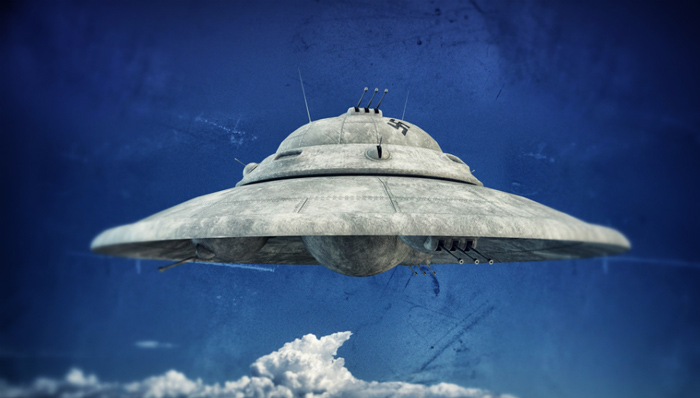
In 1946, the United States launched Operation Highjump, led by Admiral Richard Byrd, to explore Antarctica. The mission, officially a scientific endeavor, ended in disaster. According to reports, disk-shaped objects emerged from the water, wielding red rays that damaged ships and injured personnel. Byrd later claimed these were advanced vehicles from an unknown civilization, possibly from the inner Earth. Critics dismissed his account, but his diary, revealed posthumously, described a lush valley and a flying saucer base in Antarctica, fueling speculation about Agartha.
Scientific Evidence and Anomalies Supporting the Hollow Earth
While mainstream science dismisses the hollow Earth as pseudoscience, certain discoveries challenge conventional geology and keep the theory alive.
The Fifth Layer of the Earth
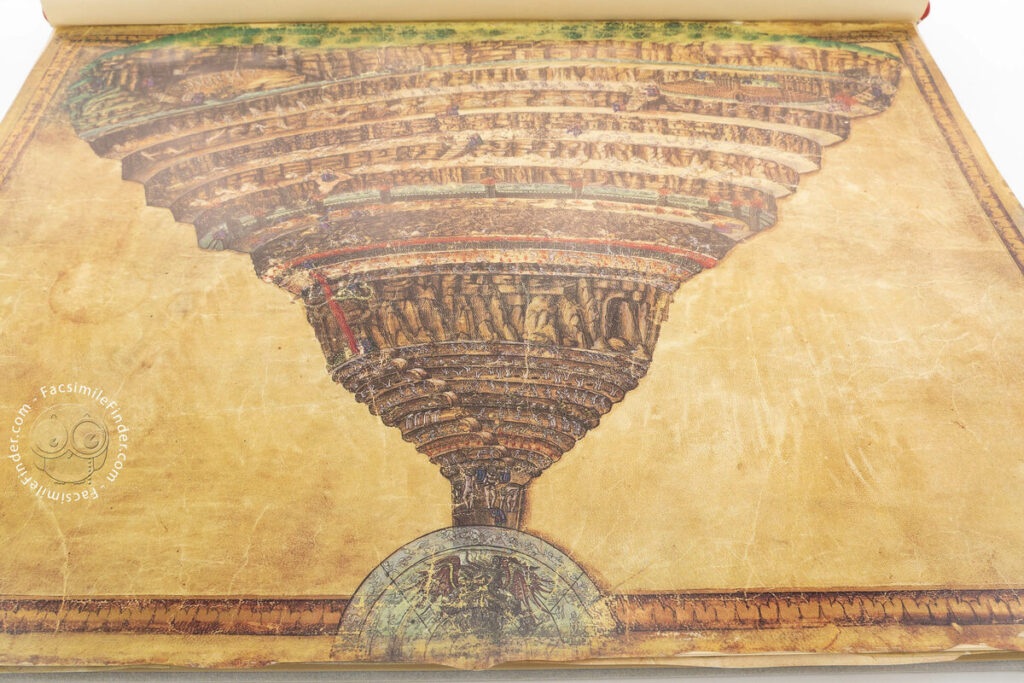
In 2021, researchers at the Australian National University confirmed the existence of a fifth layer in the Earth’s core, dubbed the “innermost inner core.” This discovery, published in the Journal of Geophysical Research, revealed a boundary 650 kilometers from the planet’s center, suggesting a more complex structure than previously thought. While not direct evidence of a hollow Earth, it raises questions about what lies beneath the surface and whether textbooks need rewriting.
NASA’s Mysterious Signals
In 1995, NASA reportedly detected intelligent radio signals from the Earth’s interior, described as complex mathematical codes. A senior official, speaking anonymously to Canada’s Weekly World News, claimed these signals originated from a highly advanced civilization. The content, while not malicious, was deemed too controversial for public release. This incident lends credence to the idea that inner Earth people possess superior intelligence and technology.
Geological and Geographical Clues
The Earth’s growth over time, as continents drift apart, suggests an internal mechanism generating matter. Volcanic activity, which should deplete internal pressure, continues unabated, hinting at a dynamic process within the planet. Some researchers propose a central sun or energy source sustaining underground civilizations, as described in ancient texts.
Seismic data also reveals uneven magma flows, stronger at the equator and weaker at the poles, suggesting a thin layer of magma between two rotating shells. This aligns with Leonard Euler’s calculations and supports the idea of a hollow interior.
The Inner Earth People | Who Are They?

Theories about the inhabitants of the inner Earth range from ancient human survivors to extraterrestrial beings. Here’s a closer look at the most prominent narratives.
Agartha and the Central Sun
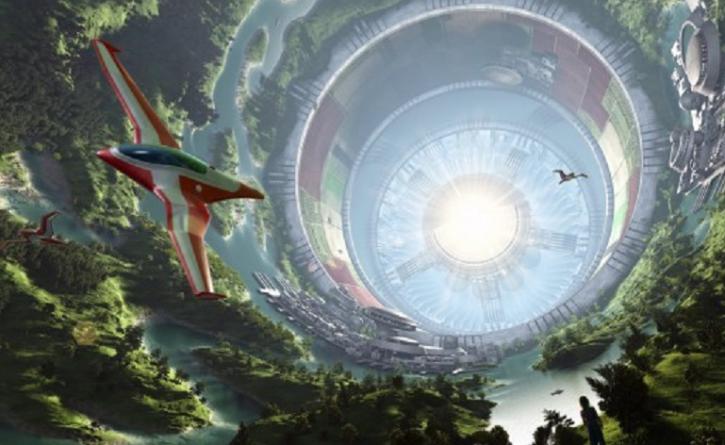
The Agartha legend, popularized by Norwegian sailor Olaf Jansen, describes a subterranean world lit by a central sun, inhabited by 12-foot-tall beings. These inner Earth people reportedly fled surface catastrophes, such as the Atlantean-Lemurian war, preserving their advanced technology in underground cities like Telos (under Mount Shasta) and Posid (in Brazil).
The Nagas and Serpent Lore
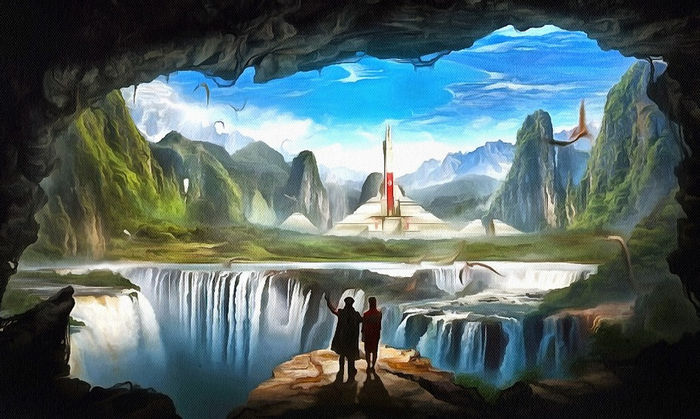
In Indian mythology, the Nagas are a reptilian race with advanced technology, living in cities like Patala. They’re said to conduct genetic experiments on surface humans and guard their underwater entrances fiercely. The Sheshni Well in Benares, India, is rumored to be a portal to their realm.
The Elder Race and Mutated Beings
Richard Shaver’s 1945 account in Amazing Stories introduced the Elder Race, extraterrestrial beings who fled solar radiation by building underground complexes. After abandoning Earth, they left behind mutated creatures—both benevolent and malevolent—that Shaver claimed to have encountered. While dismissed as fiction, his story resonates with other hollow Earth narratives.
The Role of Secret Societies
The hollow Earth theory intersects with conspiracy theories involving secret societies like the Illuminati, Knights Templar, and Thule Gesellschaft. These groups, particularly the Nazis’ Thule Society, believed in a connection between Agartha and their ideological goals. Modern globalists, linked to organizations like the Council on Foreign Relations and Bilderberg Group, are accused of concealing knowledge about the inner Earth to maintain power.

NASA and the Cover-Up
Some claim NASA suppresses evidence of the hollow Earth, such as the 2017 image of Antarctic ruins posted on its website. These ruins, resembling an ancient city, challenge the official timeline of Antarctica’s ice cover. Critics argue that NASA, alongside programs like Operation Klammer, hides contact with inner Earth civilizations or extraterrestrials to prevent public panic.
Secrets Beneath may come to Light
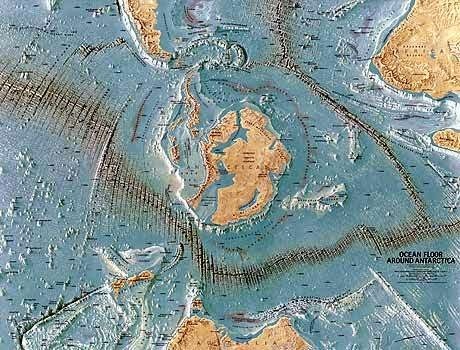
As Antarctica’s ice melts—potentially losing two-thirds of its glaciers by 2060—the secrets beneath may come to light. Ancient maps, like those of Piri Reis and Heinrich C. Berann, suggest underwater passages converging at suspected hollow Earth entrances. If confirmed, these discoveries could rewrite history, revealing Antarctica as the cradle of humanity.
Challenges and Skepticism
Mainstream science remains skeptical, citing the lack of consistent satellite evidence and the improbability of ocean-defying polar holes. Yet, anomalies like Byrd’s accounts, NASA’s signals, and geological findings keep the debate alive. The hollow Earth theory thrives on the edge of possibility, where truth may indeed be stranger than fiction, as Mark Twain once said.
The allure of the hollow Earth lies in its unanswered questions. Are there underground civilizations guarding polar entrances? Do advanced beings watch us from below, intervening only when necessary? Until researchers venture into the polar regions with open minds, the truth remains buried beneath ice and mystery.