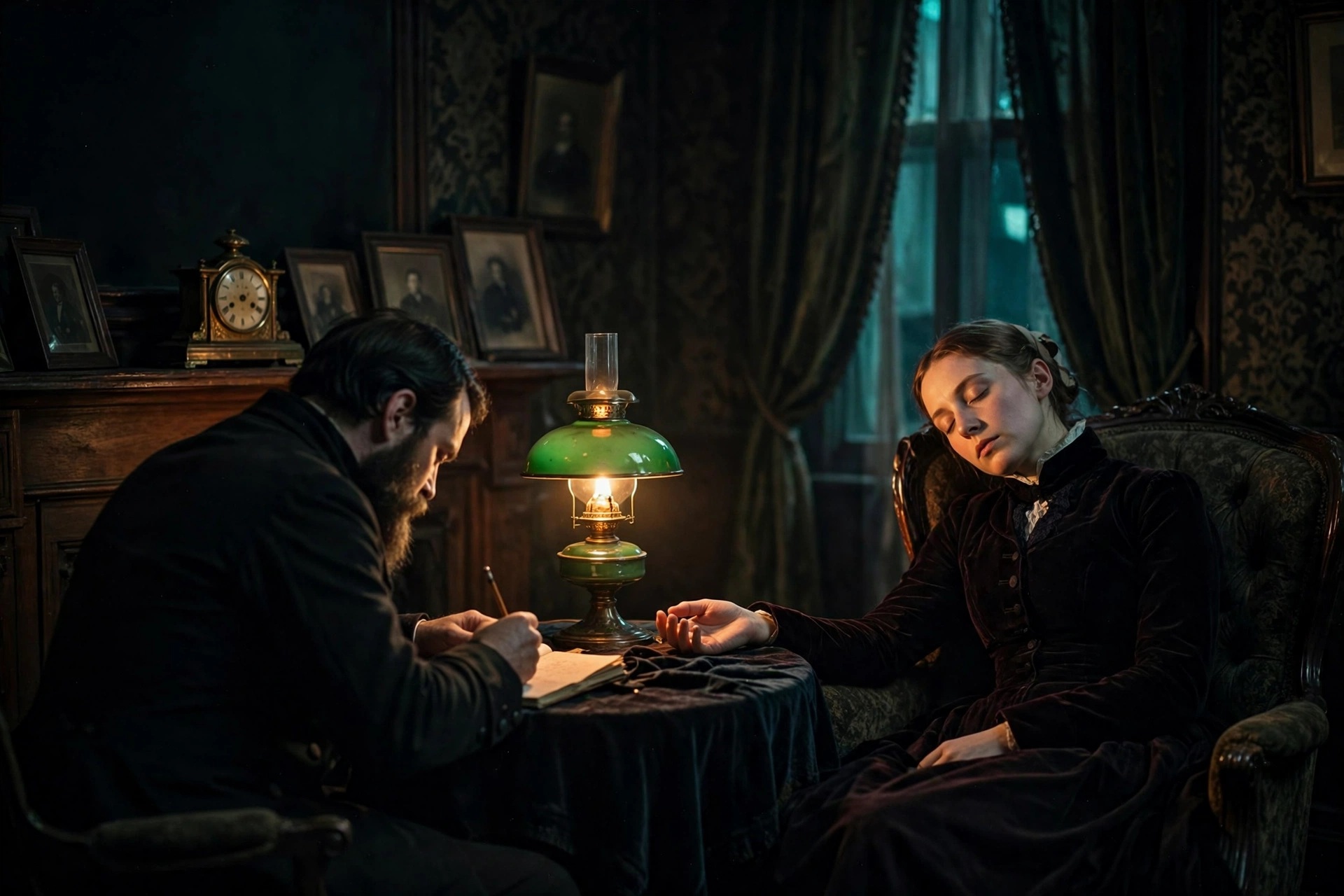
In 1885, a Harvard professor still grieving for his infant son went to meet a young Boston woman his mother-in-law had come back from visiting with a startling report. Leonora Piper was in her late twenties, a shopkeeper’s wife with two small daughters. When she sat back in her chair and closed her eyes, her breathing changed, her voice dropped, and someone else seemed to speak.
The professor was William James, the founder of American psychology. He left that first sitting unsettled and went back again and again. Over the next thirty years Mrs. Piper would become the most closely watched medium in history, followed by private detectives, shipped across the Atlantic, lodged with her investigators so they could read her letters and check her servants, and tested by believers and skeptics alike. She was never caught in a trick. She was also, more than once, introduced to people who had never existed, and welcomed them warmly.
The Ledger | Thirty Years of Testing
She gives family names and details he cannot trace to any ordinary source. He judges her honest and her trances unfaked.
Nothing suspicious is found. No accomplice, no letters of inquiry, no one gathering facts about sitters.
“Not a single name or person was given correctly.” At the first sitting, Myers was named after he and Darwin had talked on the stairs outside her open door.
Oliver Lodge is convinced. A critic notes she may simply have seen the locket her control later described.
G.P. greets 29 of the 30 by name and recognises no stranger. Pellew’s own family rejects the impersonation.
The control accepts her and talks about her.
Five days later she says the interview misreported her and that she does not know.
Bessie arrives, accepts Hall as her uncle and sends messages.
He finds things he cannot explain and writes that he remains uncertain and awaits more facts.
The controls are a phase of Mrs. Piper’s own consciousness, not visiting spirits.
Sources: the Proceedings of the Society for Psychical Research, Hall and Tanner’s Studies in Spiritism (1910), and the press reports of 1901. Leanings are this archive’s reading of each result, not the investigators’ own.
A Shopkeeper’s Wife in Beacon Hill
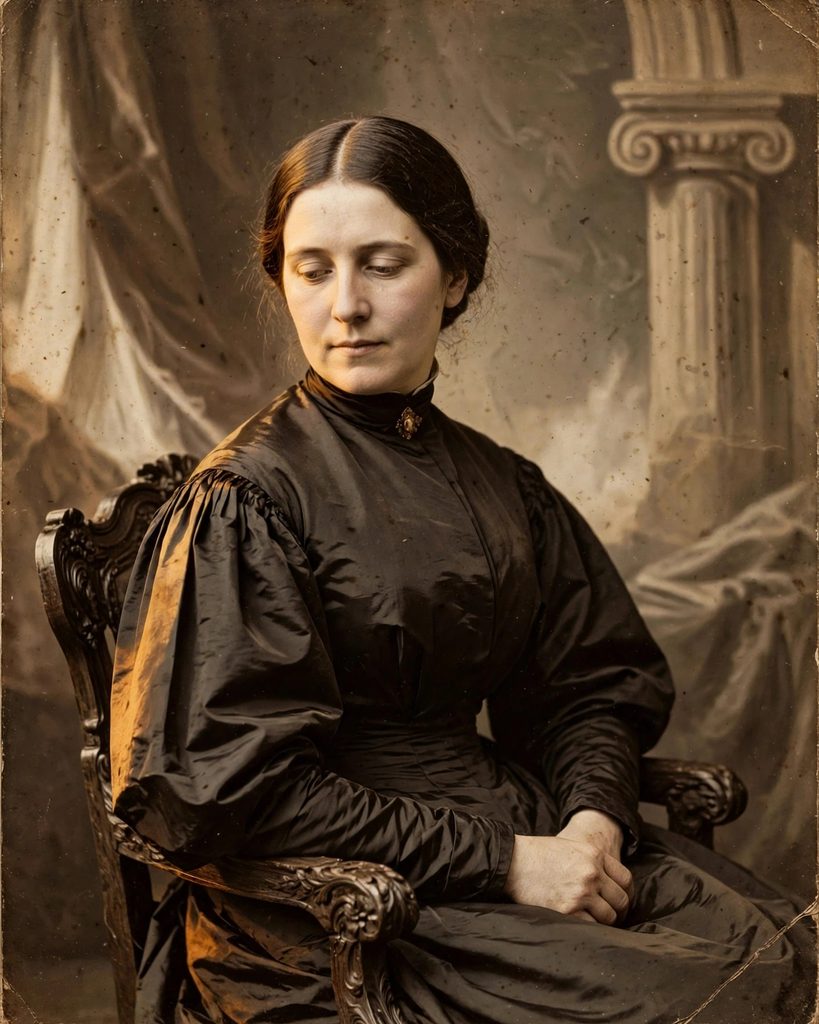
Leonora Evelina Simonds was born in 1857 and grew up in Nashua, New Hampshire. She married William Piper, a Boston shopkeeper, and settled with him on Beacon Hill. In the mid-1880s she began to fall into trances, and in that state a voice calling itself Phinuit, a French doctor, gave advice and messages to anyone who came to sit with her. At first she charged a dollar a sitting.
Boston had no shortage of mediums. What set Mrs. Piper apart was that she did not darken the room, produce lights or move furniture. There were no raps and no ectoplasm, none of the stage machinery that had undone the Fox sisters or would later catch Eusapia Palladino. There was only a woman in a chair, and information she did not seem to have any way of knowing.
The White Crow
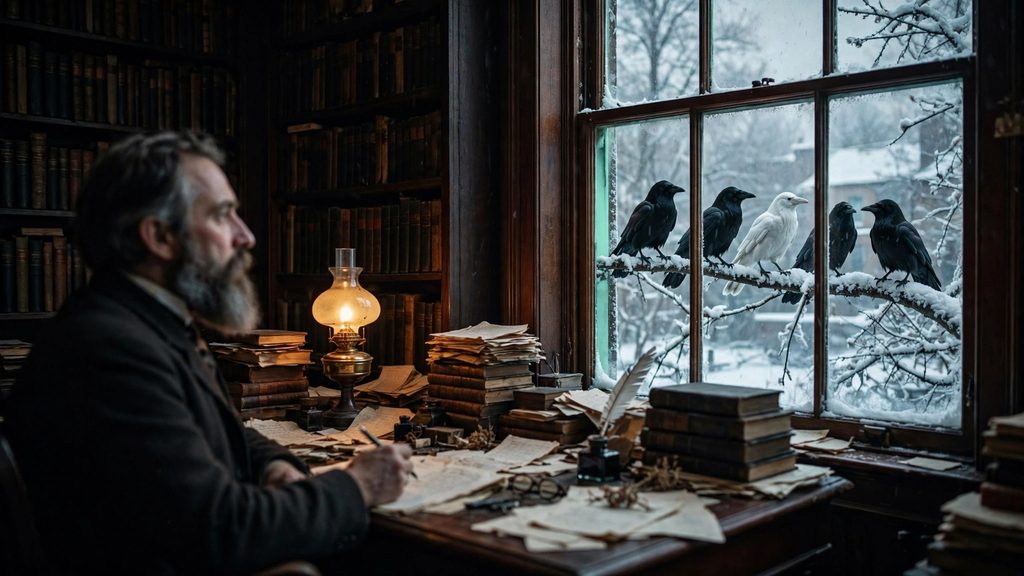
James held a dozen sittings of his own. Names of his wife’s relatives came through, along with small family details he could not trace to any ordinary source. He judged her honest and her trances unfaked, and he never wavered on that point.
He also never accepted that the dead were speaking. Phinuit could barely speak French, and nothing could be found about the doctor he claimed to have been. James leaned instead toward a living explanation he could not account for either, some form of telepathy or unknown access to other minds. As president of the Society for Psychical Research in the mid-1890s, he put his position in a line that has outlived nearly everything else written about her. To overturn the law that all crows are black, he said, “it is enough if you prove one single crow to be white.” Then he named his: “My own white crow is Mrs. Piper.”
The Detective Who Became a Believer
James handed the case to Richard Hodgson, a young Australian who had already made his name by exposing the Theosophist Madame Blavatsky. Hodgson began sitting with Mrs. Piper in 1887 and did not stop until his death eighteen years later. He had the Pipers shadowed by private detectives to see whether anyone was gathering facts about her sitters. He brought strangers under false names. He took notes at about three sittings a week.
Hodgson arrived a skeptic. The turning point came in 1892, when a new voice displaced Phinuit, claiming to be George Pellew, a young writer Hodgson had known slightly, who had died that year. Over the following years Hodgson brought around a hundred and fifty sitters to the control known as G.P., thirty of whom had known Pellew in life. According to Hodgson’s report, G.P. greeted twenty-nine of the thirty by name, missing only a woman he had known as a child, and claimed to recognise no one he had not met.
It is the most striking result in the record, and it rests on Hodgson’s own notes. Pellew’s family did not accept it. One cousin called the impersonation beneath contempt. Hodgson, by then a convinced spiritualist, died suddenly in December 1905. Within days a new control was speaking through Mrs. Piper in his name.
Ninety-Eight Sittings in England
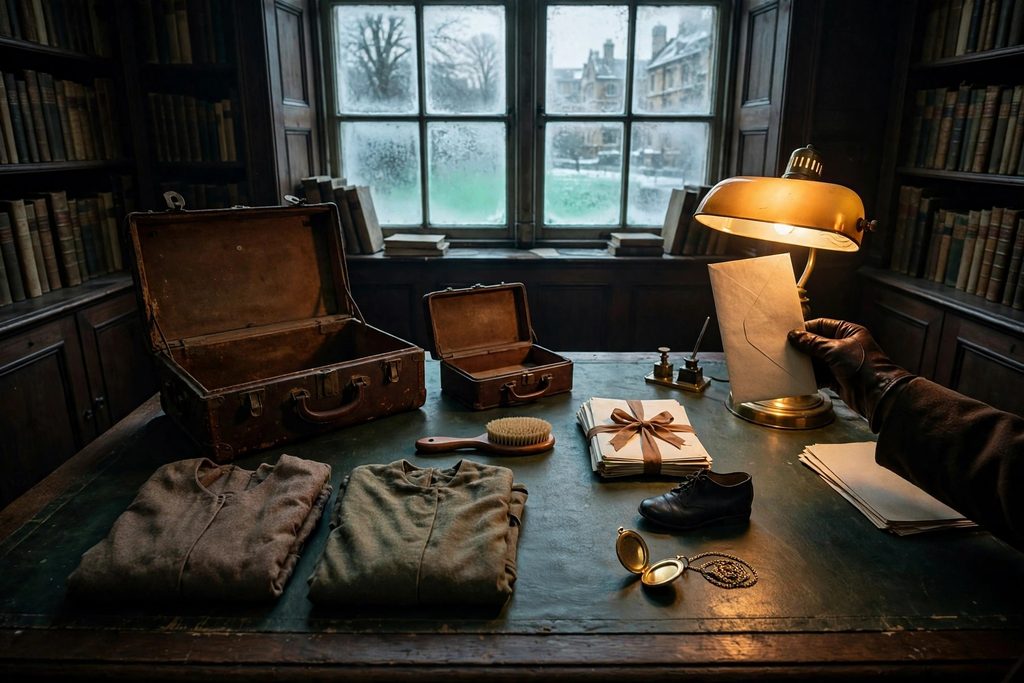
In November 1889 the Society for Psychical Research brought Mrs. Piper and her daughters to England, where nobody knew her and she knew nobody. For three months she lived in the homes of her investigators, first with the physicist Oliver Lodge in Liverpool, then with Frederic Myers in Cambridge, then near Walter Leaf in London. Her luggage was searched. Her letters, about three a week, were read. The servants were checked for any link to her. Sitters were introduced under false names, and family photographs were put away, though Lodge admitted the last precaution partly failed.
Lodge came away convinced, and Myers wrote that her conduct had never given any ground for supposing her capable of fraud. Not every sitter agreed. George Darwin, the astronomer and son of Charles Darwin, attended two sittings anonymously and reported that “not a single name or person was given correctly.” At his first sitting, Myers’s own name came up shortly after Myers and Darwin had talked on the stairs outside the room where she sat alone with the door open. At Lodge’s house, a critic later pointed out, she could simply have seen the locket her control went on to describe.
The Niece Who Never Lived
The tests that cut deepest came from people who did not want the answer the believers wanted.
In 1898 the magician Joseph Rinn asked the control about a woman named Esther Horton. She had never existed. The control accepted her and talked about her anyway.
In 1909 the psychologist G. Stanley Hall, president of Clark University, held six sittings with his assistant Amy Tanner. Hall asked the control speaking as Hodgson to bring through his niece, Bessie Beals. There was no Bessie Beals. Bessie came anyway, accepted Hall as her uncle and passed on messages. Hall and Tanner published their sittings in 1910 as Studies in Spiritism and concluded that the controls were personalities of Mrs. Piper’s own unconscious, shaped by whatever the sitter offered.
Defenders answered that Hall was hostile from the start. He had called spiritism “the ruck and muck of modern culture,” and he held only six sittings with a woman who was by then tired and unwell. They also argued that suggestibility in trance was already well known and did not erase the hits that came at the first attempt, under precautions. Both points can be true at once. A control that welcomes a niece who was never born is not reliably speaking for the dead, whatever else it may be doing.
What the Controls Were
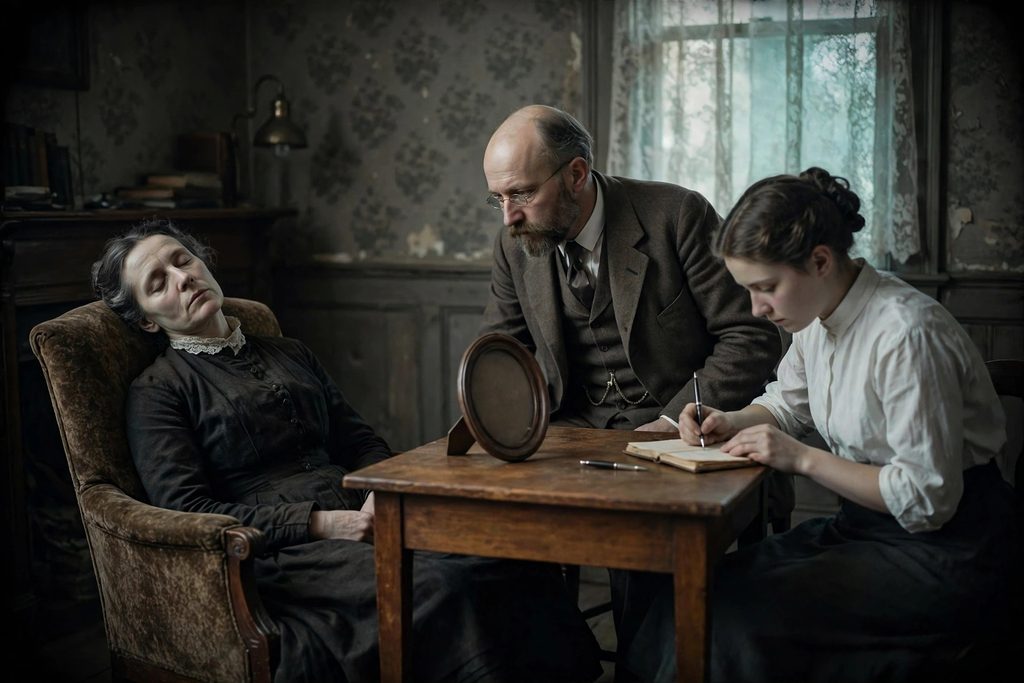
Over the years Mrs. Piper’s trance personalities multiplied. After Phinuit and G.P. came the Imperator group, a band of lofty spirits borrowed from an English medium, and later controls claiming to be Myers and Hodgson. One later critic described Imperator as doing nothing but waffle.
In October 1901 Mrs. Piper told the New York Herald that she did not believe the spirits of the dead had spoken through her, and that telepathy or her own subconscious seemed more likely. Five days later she told a Boston paper that she had been misreported, and that she simply did not know. In May 1911, at a sitting, the Imperator group announced that her trance work was over. She lived quietly until her death in 1950.
The most thorough verdict came from inside the Society itself. In 1915 Eleanor Sidgwick, one of its leading figures, published a 657-page study of the trance records. She concluded that the controls were a phase of Mrs. Piper’s own consciousness, not visiting spirits, while accepting that some of the information came by means she could not explain.
How a Medium Could Know
Skeptics have offered several routes by which a sitter’s details could reach a medium without anything paranormal, and the record shows some of them at work.
Fishing and cold reading. Phinuit asked many questions, guessed widely and built on whatever sitters agreed with. Later critics, among them the writer Martin Gardner, who called her a clever charlatan, argued that most of her successes came this way.
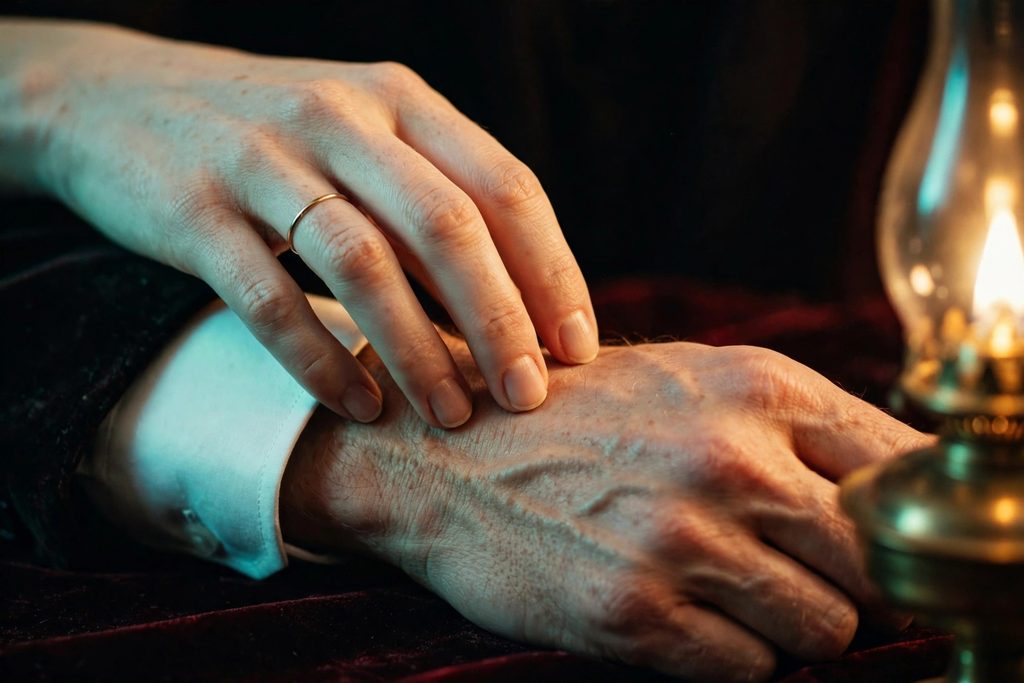
Muscle reading. Some controls held sitters’ hands, which can carry the small involuntary signals behind the moving Ouija planchette.
Leakage. Names spoken on stairs, a locket in view, a family album, a sitter who returns many times and talks between sittings. Hodgson sat with her for nearly two decades. A control that has heard a story told across hundreds of sittings will know it well.
What none of these routes fully explains is the best of the early material, names and details given at a first anonymous sitting, sometimes in England among strangers, with her mail read and her rooms checked. Investigators of the first rank watched her for thirty years and never found the trick they were looking for. The investigators were also, as D.D. Home’s case shows, people who could be fooled without ever catching anyone.
The Verdict | Disputed
Leonora Piper was never caught cheating, and the men who tried hardest to catch her came away believing she was honest. That much of the record holds. The claim that the dead spoke through her does not. Her first control could not speak the language of the country he claimed, her later ones were untraceable or disowned by the families of the dead, and all of them accepted invented relatives with the same warmth as the ones who had lived. Even the Society for Psychical Research, after a quarter of a century of study, concluded that her controls came from inside her own mind.
What remains is the part that has never been settled, the run of first-attempt hits that ordinary leakage struggles to cover. Investigators of equal standing read the same pages and reached opposite conclusions. The file is stamped Disputed. She remains, as James called her, a white crow that no one has managed to prove black, and that no one has proved to be anything else either.
Her story runs straight into the strangest experiment the Society ever attempted, the messages that began arriving in pieces through several mediums after Myers died. That is the next file. Every stamp in the archive is gathered in the Verdict Index.