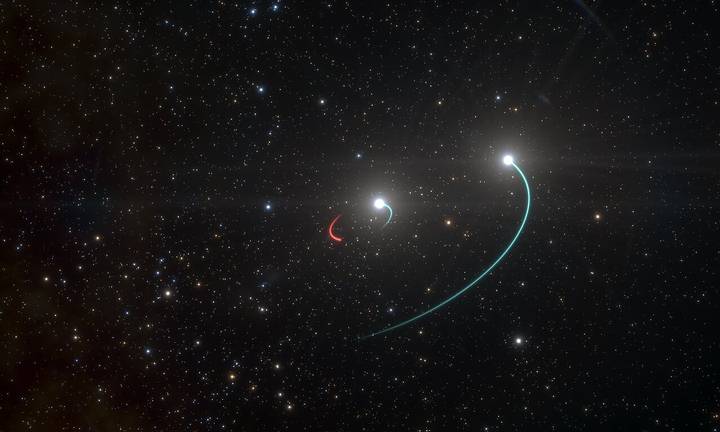





The orbital mechanics of the solar system usually suggest a clockwork predictability that comforts the collective psyche of the modern era. In January 2026, that comfort has begun to erode under the weight of a resurgent narrative that finds its roots in the intersection of high physics and occult speculation. The catalyst for this specific anxiety involves the arrival and subsequent trajectory of the interstellar object designated 3i Atlas. While the scientific community monitors the object for its chemical composition and velocity, a different conversation has taken hold in the corners of the digital landscape.
The discussion centers on the Lucifer Project, an idea that refuses to stay buried despite decades of academic refutation. This concept suggests that the ongoing exploration of Jupiter and Saturn serves a purpose far removed from simple cartography. It posits that the gas giants are being groomed for a transformation into a secondary sun, an act of cosmic engineering that would rewrite the architecture of the local heavens.
The timing of this revival is not accidental. It coincides with several high profile missions to the outer planets and a renewed interest in the radioisotope energy sources that power these long range probes. To the casual observer, a plutonium 238 generator is a necessary tool for survival in the cold dark of the outer system. To the proponent of the Lucifer theory, these generators represent a series of fuses intended to ignite a chain reaction within the hydrogen rich atmospheres of the giants. The presence of 3i Atlas, a foreign guest moving through the gravity wells of the outer worlds, adds a layer of kinetic uncertainty to the mix. It serves as a visual reminder that the solar system is not a closed circuit. It is an open theater where foreign elements can trigger shifts in the local equilibrium.
Historical Roots and the Blueprint of Arthur C Clarke
The genealogy of the Lucifer Project does not begin in a secret laboratory or a leaked government file. It begins in the medium of science fiction, specifically within the narratives of Arthur C. Clarke. In his work regarding the year 2010, the transformation of Jupiter into a star named Lucifer was presented as a gift from an advanced alien intelligence. The fictional process involved the compression of the planet’s mass until thermonuclear fusion was achieved. This story was intended to explore the potential for life on the moons of the giants, specifically Europa, by providing a localized heat source. Over time, the distinction between this fictional grandeur and real world space programs began to blur. The name Lucifer, meaning the light bringer, provided a perfect symbolic anchor for those who view space agencies as extensions of an esoteric or occult agenda.

The transition of this idea from the page to the realm of conspiracy occurred during the late 20th century. As the Voyager and Pioneer probes sent back the first detailed images of the gas giants, the scale of these worlds became a source of both wonder and dread. The realization that Jupiter is a failed star, composed primarily of the same elements as the sun, created a fertile ground for the idea of a second sun. This was the moment the fictional blueprint became a perceived plan. The argument shifted from what might happen in a novel to what was allegedly being prepared in the hangars of the Jet Propulsion Laboratory. Every mission launched toward the outer system was scrutinized for its payload and its potential to act as a catalyst for this grand transformation.
The Plutonium Fuse and the Galileo Precedent
The core of the Lucifer Project theory relies on the presence of radioactive material aboard deep space probes. Because the sun’s light is too weak beyond the asteroid belt to power traditional solar panels, agencies use Radioisotope Thermoelectric Generators. These devices contain pellets of plutonium 238, which generate heat through natural decay. In 2003, the Galileo spacecraft was deliberately sent into the atmosphere of Jupiter at the conclusion of its mission. The official reason involved planetary protection, ensuring that the probe would not crash into and contaminate Europa. However, the destruction of Galileo became the primary piece of evidence for the proponents of the Project Lucifer myth.

The narrative suggested that the atmospheric entry of Galileo, carrying its remaining plutonium, was a deliberate attempt to start a thermonuclear reaction. When the planet failed to ignite, the theory did not die. It merely adapted. The failure was characterized as a miscalculation in the required mass of the fuse or a test run for a future attempt. This pattern repeated in 2017 with the Cassini mission to Saturn. The spacecraft was plunged into the ringed giant under similar justifications, and again, the event was watched by a subset of the population expecting a second sun to flare into existence. These events demonstrate the persistence of the myth. It is a story that feeds on its own lack of results, characterizing every non event as a step toward a final, hidden objective.
Physical Reality and the Insufficiency of Mass
The primary obstacle to the Lucifer Project involves the cold mathematics of astrophysics. Jupiter is often called a failed star, but the scale of its failure is monumental. To achieve the pressures and temperatures necessary for self sustaining hydrogen fusion, an object requires a specific amount of mass. Jupiter is roughly eighty times too light to become even the smallest type of star, a red dwarf. Even if every radioactive generator ever created by human hands were dropped into the Jovian core at once, the impact would be equivalent to a grain of sand hitting an ocean. The energy released would be swallowed by the massive gravity and turbulent atmosphere of the planet without causing a ripple in its fundamental physical state.

Thermonuclear fusion is not a process that can be triggered by a small spark in an unsuitable environment. It requires the sustained gravitational pressure of a massive body. The gas giants are composed of hydrogen and helium, but they lack the density to ignite. The scientific community has repeatedly published data showing that the radioisotope sources used in space missions are designed for power generation, not for explosive yields. The amount of plutonium 238 on a probe is measured in kilograms, while the mass of Jupiter is measured in octillions of kilograms. The discrepancy is so vast that the idea of one influencing the other is a rejection of basic physical law. Yet, the belief persists because it addresses a deeper, more archetypal fear than simple physics can reach.
The Occult Architecture of the Light Bringer

The survival of the Lucifer Project as a modern myth is tied to the symbolic weight of its name and the planets it targets. In various esoteric traditions, Jupiter and Saturn represent the pillars of the celestial hierarchy. Jupiter is the expander, the king, the bringer of order and light. Saturn is the limiter, the keeper of time, the architect of the material world. To transform these bodies is to change the spiritual resonance of the solar system. The name Lucifer carries a heavy load of cultural and religious baggage, representing both the fall of the morning star and the promise of forbidden knowledge. By naming the hypothetical second sun Lucifer, the narrative connects space exploration to an ancient struggle for dominance over the light.

The Lucifer Project is a manifestation of a collective psychological state that views the technological advancement of the state with profound suspicion. It is a reaction to the perceived hubris of the modern age, where human beings dare to reach out and touch the bodies of the gods. The gas giants are the modern equivalents of the peaks of Olympus. To send probes to these worlds is seen by some as an act of trespass. The myth of Project Lucifer provides a framework for this unease, turning a scientific mission into an occult ritual. It suggests that the leaders of the world are not just seeking data, but are attempting to ascend to a level of power that belongs only to the divine.
The Interstellar Variable of 3i Atlas
The arrival of 3i Atlas in 2026 has provided the necessary current to jumpstart the old Lucifer narrative. Interstellar objects are rare guests, carrying with them the mysteries of distant stars. The trajectory of 3i Atlas, which brings it into proximity with the orbits of the gas giants, has been interpreted as a signal. In the world of pattern recognition and high stakes conspiracy, there are no coincidences. The object is seen by some as a potential catalyst or a synchronization event. If the human made fuses of the previous decades were insufficient, perhaps a foreign body of interstellar origin provides the missing ingredient for the transformation.

Speculation regarding 3i Atlas suggests that it may not be a simple rock or ice ball. The speed and angle of its entry into the system have led to fringe theories about its artificial nature. If the object is a probe or a derelict piece of technology from another star, its interaction with the gas giants could have unpredictable results. This adds a layer of cosmic dread to the current missions. The fear is no longer just about what the state is doing, but about what the state might be coordinating with. The 3i Atlas flyby becomes a moment of potential activation, a date on the calendar where the old fictional dreams of Arthur C. Clarke might finally manifest as a terrifying reality.
Digital Panopticons and the Propagation of the Myth
The modern information environment is designed to sustain and amplify stories like the Lucifer Project. The structure of the web encourages the formation of echo chambers where isolated pieces of data are woven into complex, unfalsifiable tapestries. A photograph of a bright spot on Jupiter, a minor adjustment in a probe’s trajectory, or a quote from an astronaut taken out of context all become fuel for the fire. The myth does not need facts to survive. It only needs a constant stream of high resolution imagery and technical jargon that can be reinterpreted by those seeking the hidden harmony.
The dogma of the 21st century is built on the idea that the truth is always hidden behind a veil of official denials. Every scientific explanation regarding the impossibility of Jovian ignition is seen as a confirmation that the plan is being protected. The more the experts speak, the more the believers listen for the cracks in the narrative. This creates a feedback loop where the myth grows more sophisticated with every mission. It is a digital folklore that uses the tools of the space age to tell a story as old as the stars themselves. The Lucifer Project is the perfect internet myth because it is large enough to encompass everything from ancient religion to modern nuclear physics.
The Resilience of the Second Sun Narrative

The resilience of the second sun narrative is tied to its ability to mirror our deepest anxieties about the future of human agency. Despite the overwhelming evidence that Jupiter and Saturn will remain gas giants for the foreseeable future, the idea of the second sun remains a potent image. It represents a total reset of the human condition. A world with two suns would have no night. It would be a world of total visibility, a permanent day that reflects the total surveillance of the digital age. This is the underlying horror of the Lucifer Project. It is the fear of a world where there is nowhere left to hide, where the light of the state reaches into every corner of the planet and every crevice of the mind.

The prospect of a second sun is the ultimate technological achievement and the ultimate spiritual disaster. It is the end of the mystery. As missions continue to push deeper into the outer system, the conversation around Project Lucifer will continue to evolve. It will adapt to the next interstellar object, the next radioactive generator, and the next fictional blueprint. The giants continue to spin in the dark, indifferent to the stories told about them. They remain objects of study for the scientist and objects of dread for the visionary. The residue of this myth is a reminder that as we reach for the stars, we carry our oldest fears with us. The light bringer is always watching from the edge of the system, waiting for the moment when the hidden becomes obvious.