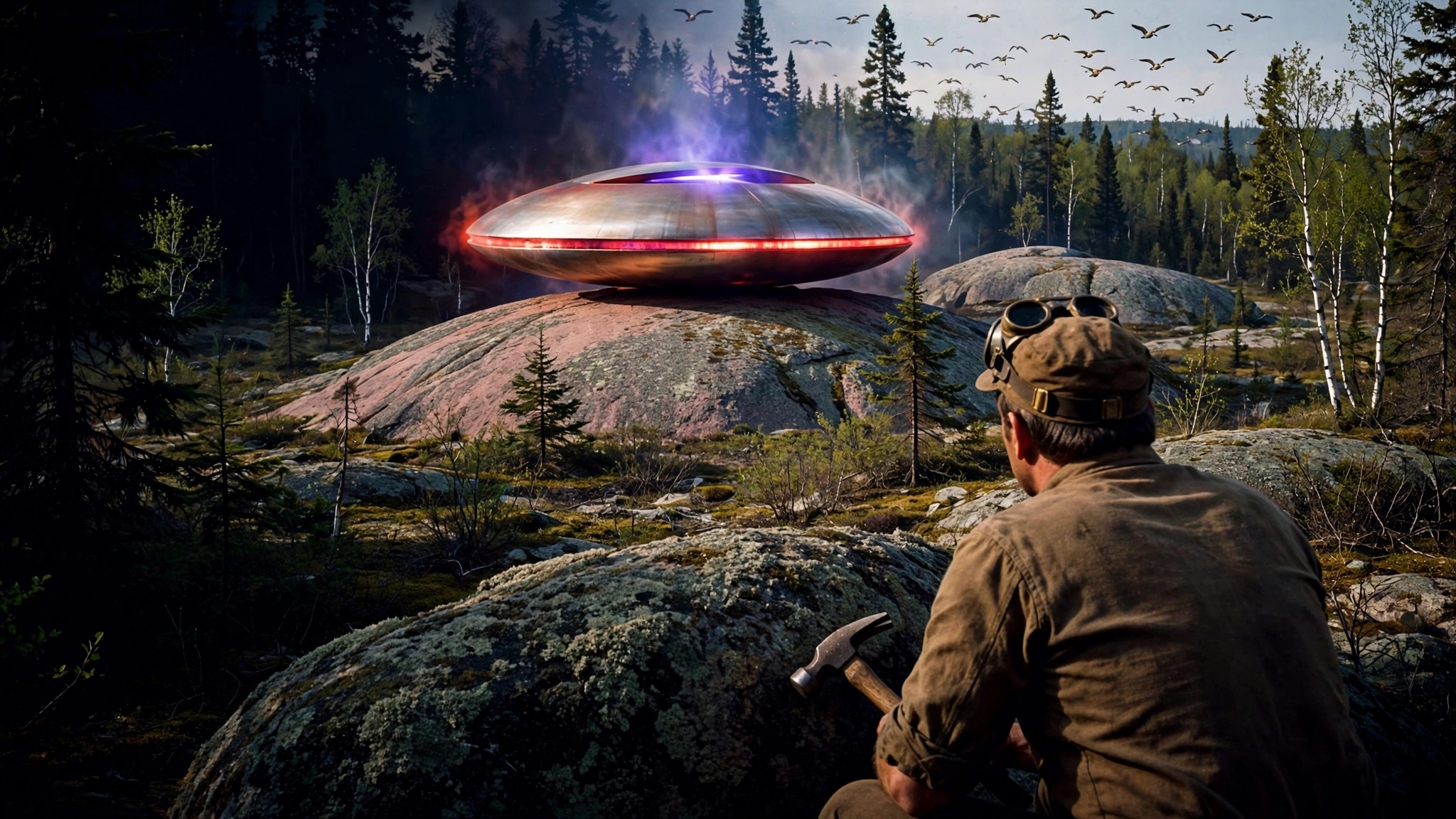
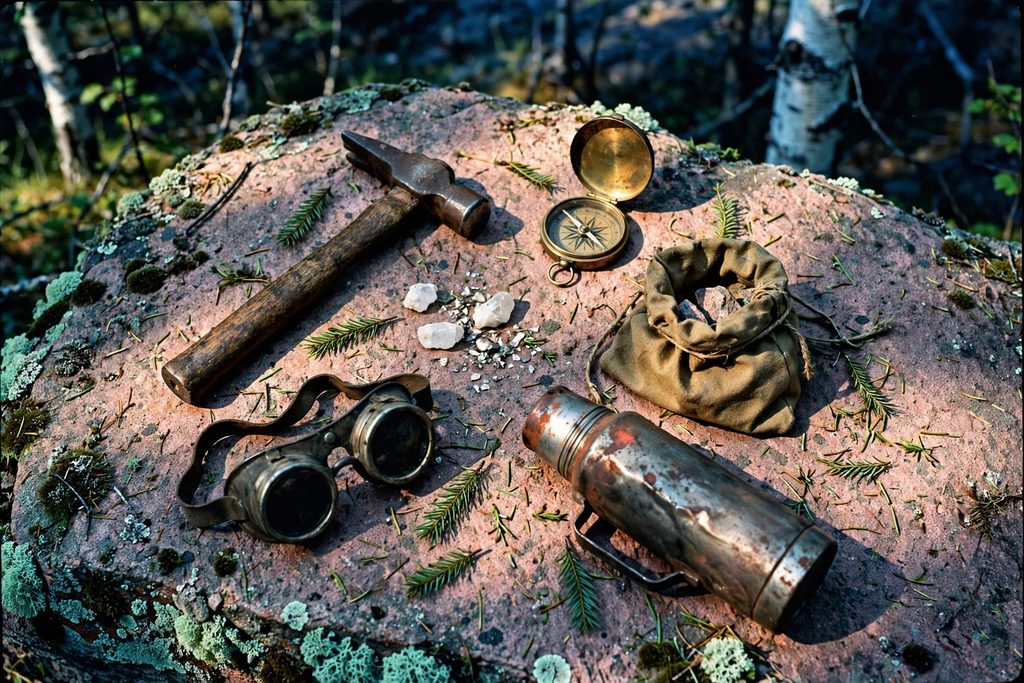
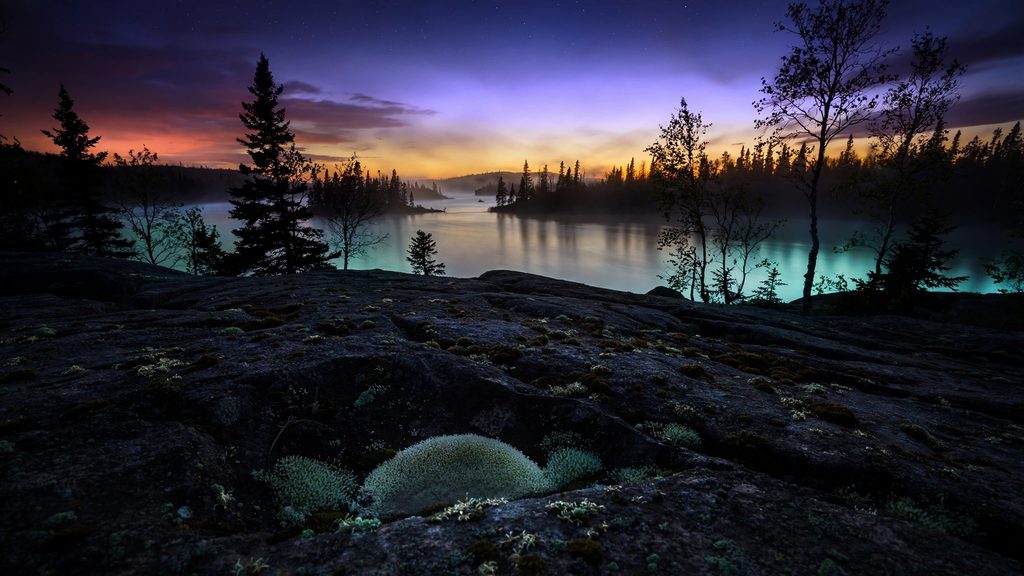
On the morning of Saturday 20 May 1967, a stocky man with a hammer, a compass and a pair of welder’s goggles left his motel at Falcon Lake before six and walked into the bush of Whiteshell Provincial Park, in the far east of Manitoba. The country there is the Canadian Shield, ancient pink and grey granite scraped bare by the ice, broken by spruce, birch, muskeg and cold lakes. He was looking for quartz veins, and with luck, silver.
Shortly after noon a flock of geese began to cackle in alarm. He looked up. Two glowing red objects were coming down out of the sky. One hovered and flew away. The other settled on a flat rock about fifty metres from where he stood, and over the next half hour, he said, he watched it, heard voices inside it, walked up and touched it. When it lifted off, a blast of hot gas from a grid of vents in its side set his shirt on fire and burned a pattern into his chest.
His name was Stefan Michalak. The burns were treated at a Winnipeg hospital that night. In the months that followed, the Royal Canadian Mounted Police, the Royal Canadian Air Force, the Department of National Defence and a scientist from the University of Colorado all came to look at his case, and some of them found radioactivity on the rock. It is still the most investigated UFO encounter in Canadian history, and the papers that the investigators left behind tell a story that pulls hard in two directions at once.
The Prospector
Michalak was fifty years old, a Polish-born industrial mechanic who lived in Winnipeg with his wife and children. On weekends he became an amateur geologist. The Whiteshell, about a hundred and fifty kilometres east of the city, was rich ground for a man with a prospector’s licence and a little patience, and he hoped to stake a claim near Falcon Lake. Those who employed him described him as a steady, reliable worker.
He had driven out on the Friday and checked into a motel. The next morning he set off on foot along the trails north of the Trans-Canada Highway, following the rock.
Noon at the Rock
The account that follows is Michalak’s own, as he gave it to the police, to the Air Force and to the Colorado investigator, and as he wrote it in a booklet later that year.
At about a quarter past twelve he was chipping at a quartz vein when the geese took fright. He saw two objects descending together, each shaped like a disc or a flattened cigar, perhaps twelve metres across, glowing red. One stopped in the air and then flew away. The other came down onto a rock outcrop about fifty metres away and settled there.
He watched it from behind his rock for about thirty minutes, sketching it. As it sat on the stone its glow faded from red to a sheen like heated stainless steel. A brilliant purple light poured from openings near its top, so bright that he put on his welding goggles to protect his eyes. Warm air came off it in waves. He smelt sulphur, and heard a whirring and a hiss, like air being drawn in.
Then a door opened in its side, and he heard voices. They sounded human, he said, muffled, like people talking behind a wall. He walked towards the craft and called out, first in English, then in several other languages. No one answered. He came close enough to put his head near the opening, and he saw a maze of lights flashing inside. Then panels slid across the doorway and it closed.
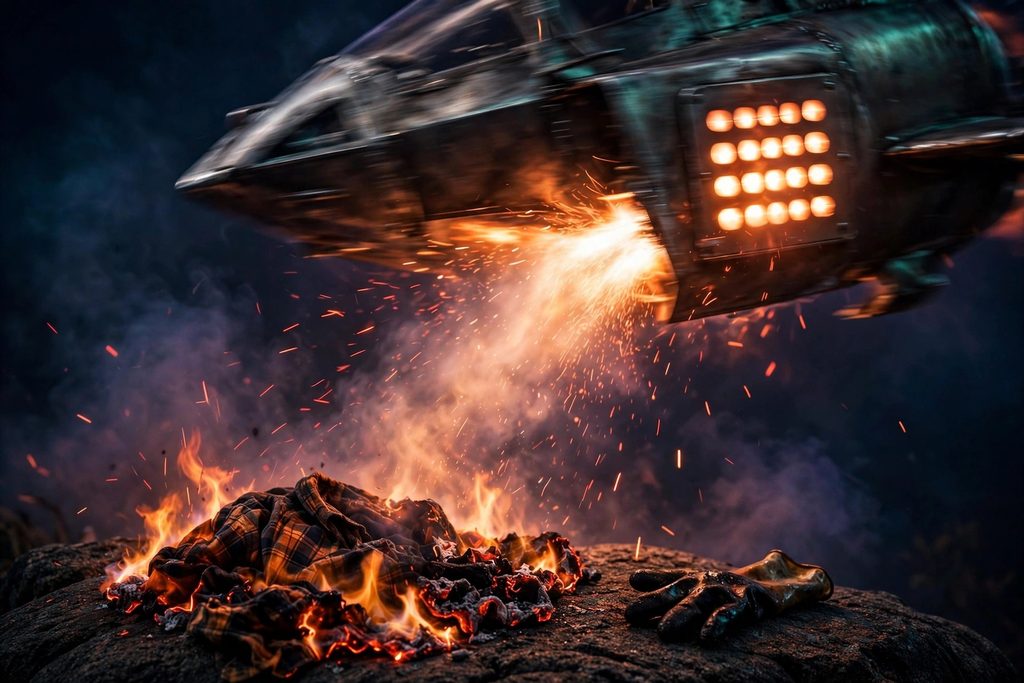
He reached out and touched the side of the craft with his gloved hand. The rubber of the glove melted. The craft shifted on its rock and began to turn, and as it turned a section of its side came round to face him. It was a vent, or an exhaust, in a pattern of small holes like a grid. A blast of scorching air hit him full in the chest. His shirt and undershirt caught fire, and he tore them off and threw them down as the craft rose and was gone, leaving a smell of burning and a circle where the moss had been stripped from the rock.
The Walk Out
Michalak said that he felt sick almost at once. He stamped out his burning clothes, gathered his things, and tried to walk back to the highway, vomiting as he went. The compass in his pocket, he said, would not settle.
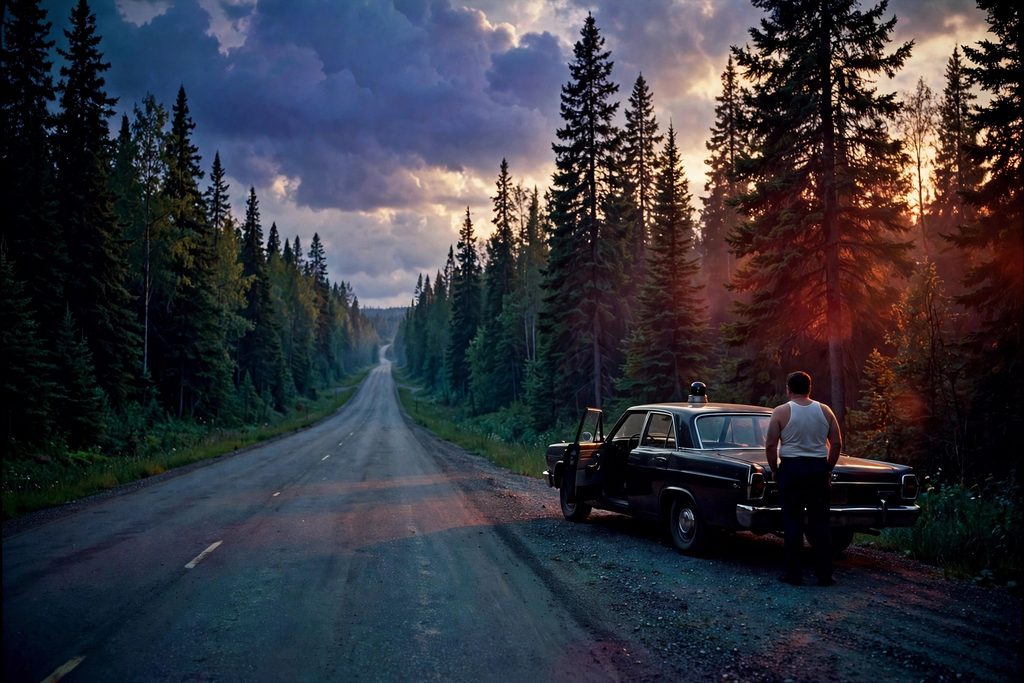
At about three in the afternoon he reached the Trans-Canada Highway and flagged down a passing patrol car. Constable G. A. Solotki of the Royal Canadian Mounted Police listened to a man who said he had been burned by two spaceships. Solotki saw that Michalak’s cap was burned, but not his head. He thought the marks on the man’s skin looked as if ash had been rubbed into them. He noticed no smell of alcohol, yet he wrote that Michalak seemed to have been drinking. He offered to help, and Michalak said no.
Michalak made his way back to Falcon Lake and took the bus to Winnipeg. That night he went to the Misericordia Hospital, where he was treated as an outpatient for first-degree burns to his upper chest and abdomen. Two days later the Winnipeg Tribune ran his story under the headline “I was burned by UFO”, and within days it was in newspapers across North America.
The Burns
The burns are the heart of the case, and they changed over time.
The hospital record described the marks as round and irregular, about the size of a silver dollar. On 23 May a researcher for the civilian Aerial Phenomena Research Organization, J. B. Thompson, photographed them. His photograph shows blotchy, uneven marks scattered across the skin. When two RCMP officers interviewed Michalak at his home that day, they compared one burn to an exceptionally severe sunburn. Michalak told them he had lost thirteen pounds in three days. He complained of headaches, nausea, a foul smell that seemed to come from inside his body, and later of blackouts and swelling.
In January 1968 the Tribune reported that the burns had come back. The new photographs showed something much more striking, a neat grid of marks across his chest, just like the vent he had described on the craft. Many later accounts reproduce that photograph as if it showed the original injuries. It does not. In August 1968 Michalak was examined at the Mayo Clinic in Minnesota. A psychiatrist there found no sign of serious mental illness, but described the recurring lesions as obviously factitial, a medical term for marks that a patient has made himself. The Colorado investigator thought the rash that followed the burns might have been caused by black fly bites, which are fierce in the Whiteshell in late May.
Yet one burn in the case was never explained. The undershirt that Michalak had torn off at the rock carried its own pattern of scorch marks on the back, and nobody who examined it could say how they got there.
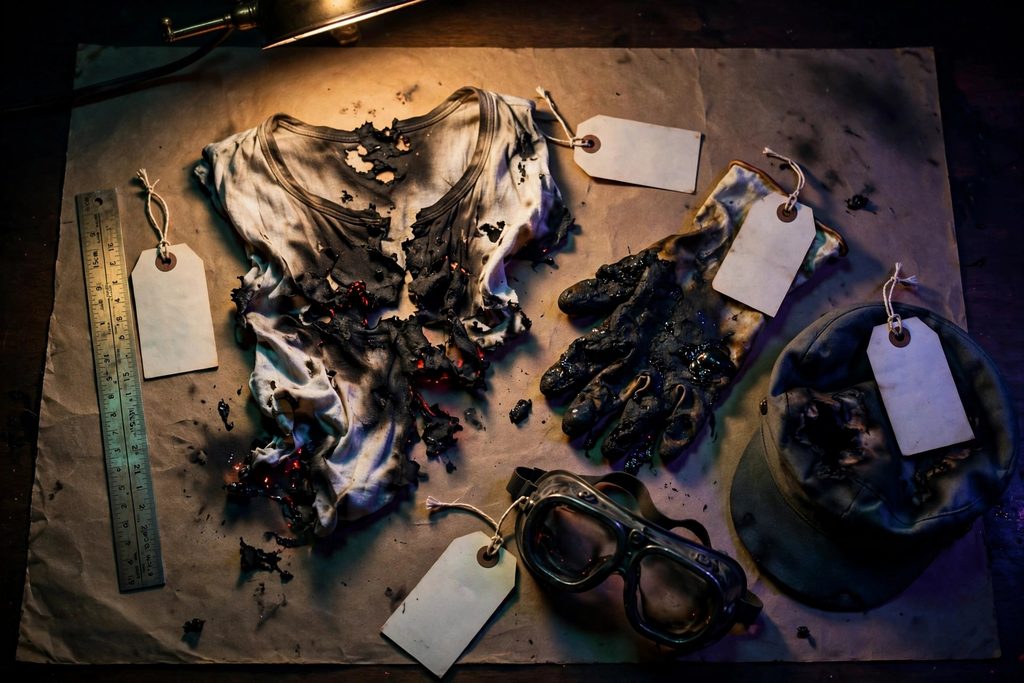
Round, irregular marks about the size of a silver dollar, scattered on the upper chest and abdomen.
A neat grid, like the vent he described. The Mayo Clinic later called these lesions self-inflicted.
A pattern of scorch marks on the back. Nobody who examined it could explain them.
Finding the Site
On 25 May the RCMP and the Air Force searched for the landing site from the air and on the ground. They found nothing. The next day staff at the Falcon Hotel told investigators that Michalak had drunk several beers there on the night before the encounter, which he had denied.
A month later, on 26 June, Michalak told the Air Force that he and a friend, Gerald Hart, had gone back and found the site, and that they had already collected things from it, including what was left of his burned shirt and samples of the soil. Then he stopped cooperating. The site lay on ground he wanted to claim for its minerals, and he was in no hurry to bring the government onto it.
A sample of the soil he handed over turned out to be highly radioactive. That changed the mood of the investigation at once. Officials searched his home and removed the rest of the soil, and Michalak agreed to lead them to the rock. There they found a semicircle where the moss had been scraped away. The Department of National Health and Welfare checked the site and detected radiation confined to a small area, in a crack in the rock. It was not dangerous. Chemists suggested that the pattern looked like contamination from radium, the element used in the luminous paint on watch dials.
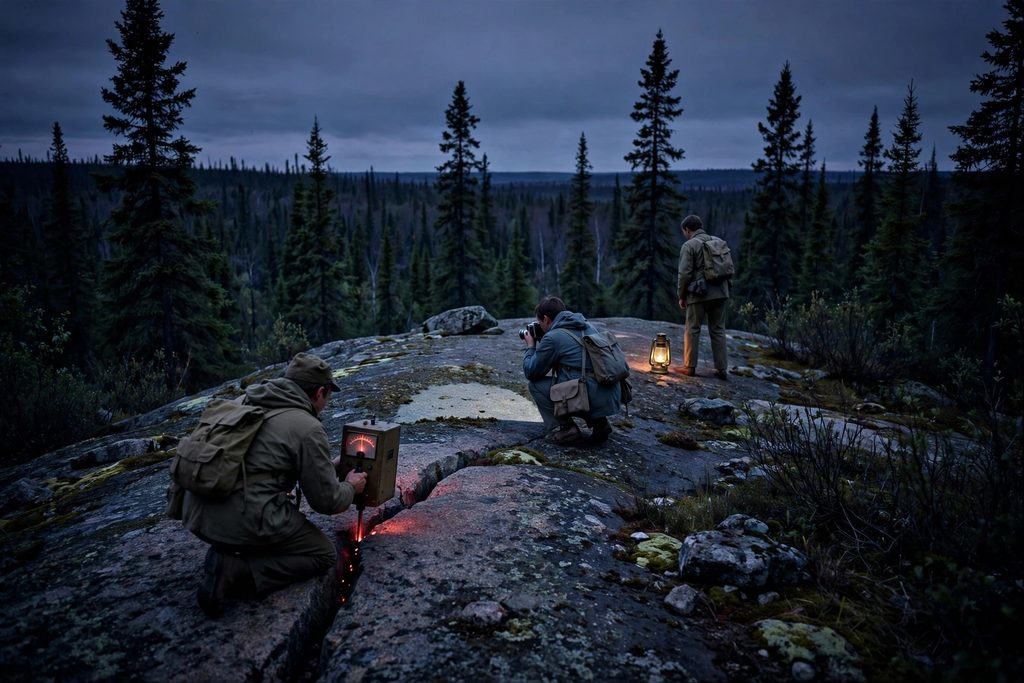
The Silver in the Crevice
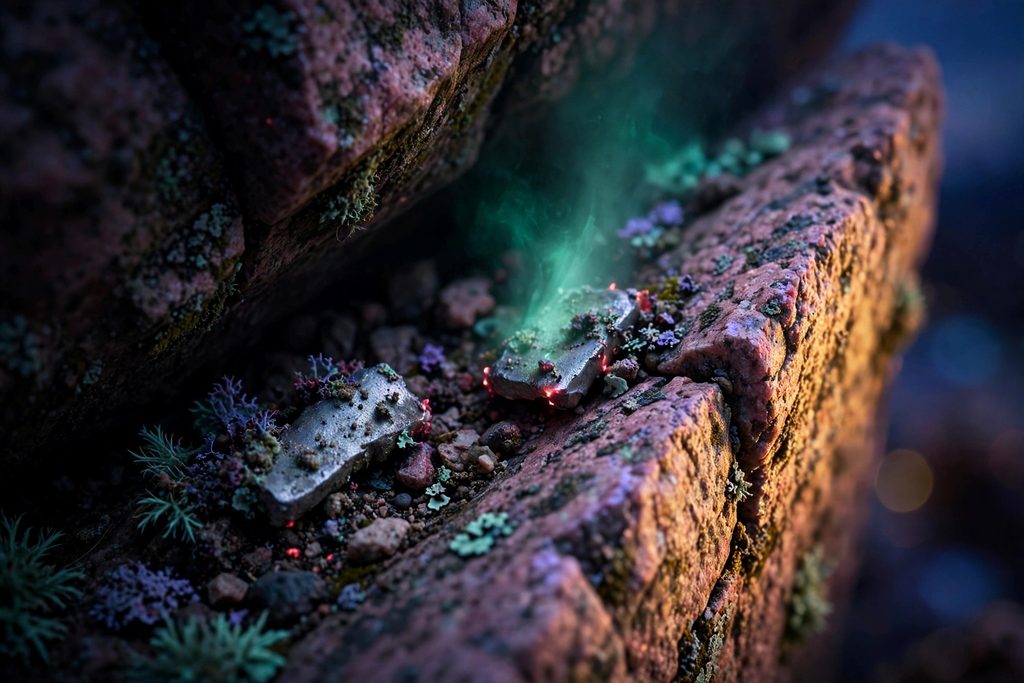
In 1968 Michalak and Hart returned once more and found two small bars of metal in a crevice near the site. Michalak gave a piece to the authorities. The astronomer Peter Millman of the National Research Council had it analysed. It was about ninety-five per cent silver and slightly radioactive, about as radioactive as a glow-in-the-dark watch. Millman suggested that it might have been dipped in pitchblende, a uranium ore, to give it the look of something strange. The Colorado investigator thought it improbable that the bars had lain in the crevice through all the earlier searches without anyone finding them.
The Man From Colorado
In 1967 the United States Air Force had paid the University of Colorado to carry out a scientific study of UFOs under the physicist Edward Condon. One of its investigators, the chemist Roy Craig, flew to Winnipeg, interviewed Michalak, and visited Falcon Lake. His report became Case 22 of the Condon Report in 1969, with Michalak referred to only as Mr. A.
Craig took Michalak seriously. He found him sincere, and noted that his employer thought him reliable. But Craig found many inconsistencies and incongruities. The site that Michalak led them to a month later did not match the direction of departure he had first described. The story of the compass seemed to grow during the interviews and did not fit his own readings. Details in the booklet he wrote later in Polish conflicted with what he had told investigators before. The weight loss could not be checked. Craig’s conclusion was dry and short. The case, he wrote, offered no probative information about unconventional craft.
Ottawa Keeps Its Report
In Canada, the case went to the top of the Department of National Defence. On 6 November 1967 the Minister of National Defence, Léo Cadieux, said that the report of the official investigation would not be made public. To many people that sounded like a cover-up, and in November 1968 Michalak himself accused the government of hiding what it knew.
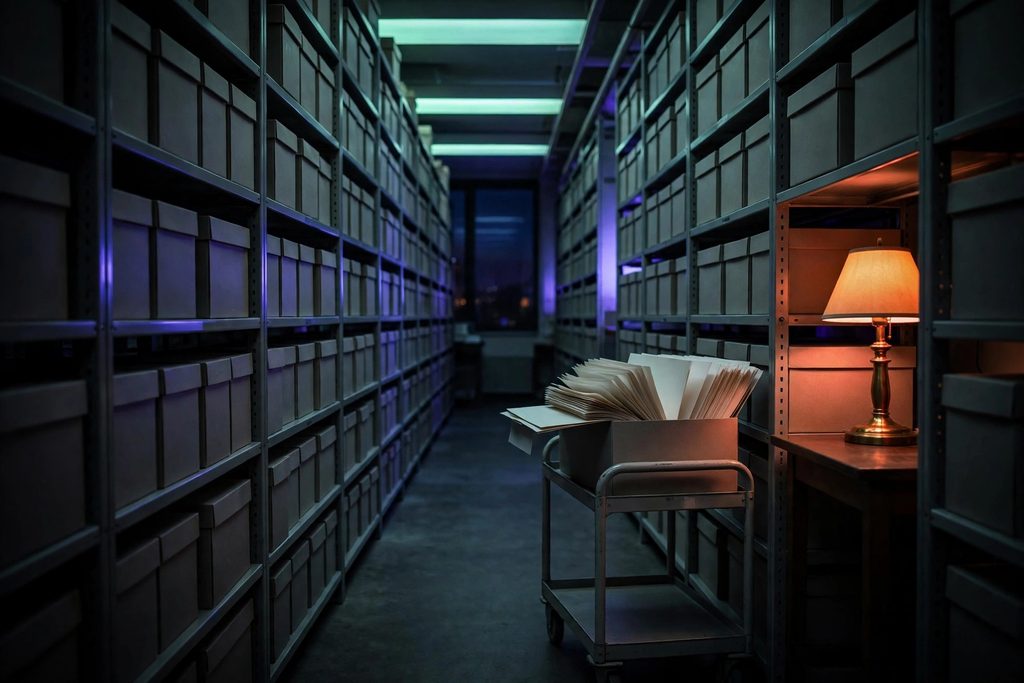
The files have since been released. The RCMP and Air Force papers are held today at Library and Archives Canada, together with the American investigation and records from the Mayo Clinic. Those who have studied them, believers and skeptics alike, agree on one thing. The final official conclusion was not that Michalak met a spacecraft, and it was not that he made it up. It was that the investigators could not say what had happened to him.
For a craft
- Burns treated at a Winnipeg hospital on the night of 20 May 1967.
- Scorched clothing, a melted glove and a burned cap handed to investigators.
- Radioactivity on a remote rock, found by government officials.
- A semicircle of moss stripped from the outcrop where he said the craft sat.
- A pattern of scorch marks on the undershirt that nobody explained.
- A sincere, reliable man in his employer’s view, who never changed the core of his story.
- The RCMP and the Air Force reached no definitive explanation.
Against a craft
- The site was found only after he went back with a friend and collected items from it.
- Hotel staff said he drank several beers the night before, which he denied.
- The departure direction, the compass and other details changed in the retelling.
- The famous grid of burns first appears in January 1968, not May 1967.
- A Mayo Clinic psychiatrist judged the later lesions self-inflicted.
- The radiation looked like radium paint, and was confined to one small crack.
- Silver bars found a year later appeared to have been dipped in uranium ore.
The Son’s Account
Stefan Michalak’s son Stan was a boy when his father came home burned, and he grew up inside the story. In 2017, for its fiftieth anniversary, he and the Winnipeg researcher Chris Rutkowski published When They Appeared, gathering the testimony and the government files. Stan has called it probably the most investigated UFO case in North America, and he has said that the sketch map his father drew a few days after the event matched the site when the investigators finally reached it.
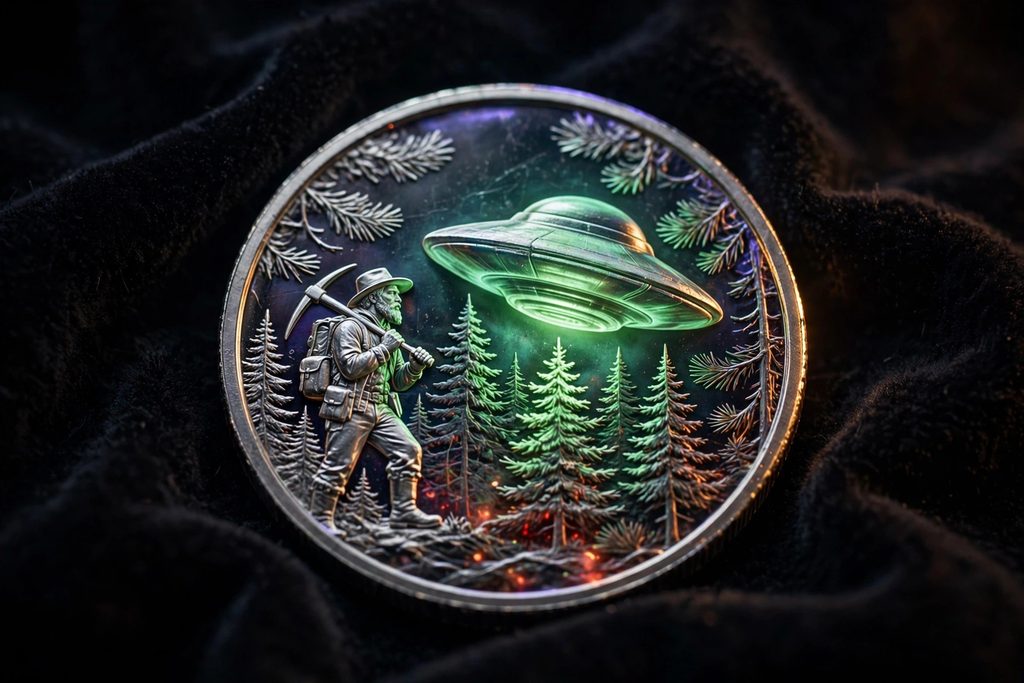
The case has become part of Manitoba’s identity. In 2018 the Royal Canadian Mint struck a silver twenty-dollar coin showing Michalak in front of the craft, with the craft printed in ink that glows in the dark. In 2019 his burned clothing and papers were given to the archives of the University of Manitoba. The landowners near the site run a tour to the rock, and the Winnipeg band The Weakerthans and the songwriter Jim Bryson named an album after the Falcon Lake Incident.
What Happened at the Rock
Five answers have been offered, and none of them fits every piece of the record.
The first is Michalak’s own, that a craft of unknown origin landed and burned him. It accounts for the burns that the hospital treated that night, the scorched clothing and the radioactive spot on a remote rock, and for a man who never changed his central story for the rest of his life. It does not account for the shifting details, the changing burns or the radioactivity that looked like paint.
The second is a hoax, perhaps to keep other prospectors off his claim. The skeptic Aaron Sakulich has argued that Michalak burned himself in an accident, possibly while drunk, and built the UFO story around it. If that was the aim, it backfired, because the publicity brought crowds of searchers into the Whiteshell.
The third is medical. The retired US Army colonel John B. Alexander, writing in the Journal of Scientific Exploration, argued that the long-lasting skin lesions were an allergic reaction, and drew attention to the contradictions in Michalak’s testimony. The fourth is a secret aircraft, an experimental machine from the United States or Canada that Michalak blundered into, a theory with no papers behind it. The fifth, and perhaps the most honest, is that something happened to Stefan Michalak at the rock that day, and that what he and others added afterwards has buried it too deep to recover.
The Verdict | Disputed
Something happened to Stefan Michalak near Falcon Lake on 20 May 1967, and the record still cannot say what. On one side stand a man who walked out of the bush with burns that a hospital treated that same night, clothes scorched through, an undershirt marked in a pattern nobody could explain, and a rock where government checks found radioactivity in a crack. The official investigators never reached a final explanation.
On the other side stand the gaps. The site was found only after Michalak had gone back and gathered things from it. His story grew details in the retelling, hotel staff reported his drinking the night before, the famous grid of burns appeared only months later, and a Mayo Clinic psychiatrist thought the later lesions self-inflicted. The radioactivity looked like luminous paint, and the silver looked dipped in ore. With serious evidence on both sides and careful investigators split, the case stays Disputed, and the rock in the Whiteshell keeps its answer.
- Claim tested
- On 20 May 1967 a craft of unknown origin landed near Falcon Lake, Manitoba, and burned the prospector Stefan Michalak.
- Oldest record
- Rung 1 · Records made that day
Constable G. A. Solotki’s RCMP report of the afternoon of 20 May 1967, and the Misericordia Hospital record of first-degree burns that night. - The record supports
- Burns treated the same night, scorched clothing, a melted glove, a stripped patch of moss on the outcrop, radioactivity at the site found by government officials, and an unexplained scorch pattern on the undershirt.
- It does not support
- That the cause was a craft. The site was found only after Michalak had collected items there, his account changed, he was reported drinking the night before, the grid burns appeared in 1968 and were judged self-inflicted, and the radioactivity resembled radium paint and uranium ore.
- Explanations weighed
- An unknown craft, a hoax to protect a mineral claim, an accident while drinking, an allergic reaction, and a secret experimental aircraft.
- What would change it
- A source of the radioactivity traced to the site before Michalak’s return visits, or evidence of how the first burns were made. Either would move the stamp, toward Unresolved or toward Debunked.
Close encounters that left marks on the ground and on the witnesses fill other files too. Travis Walton vanished for five days in an Arizona forest in 1975, Betty and Barney Hill lost two hours on a New Hampshire road in 1961, and sixty children saw something land at the Ariel School in Zimbabwe in 1994. The Air Force study that weighed this case is traced through Project Blue Book and the missing Condon Report chapter. The rock at Falcon Lake has its own pin on the Atlas of Mysteries, and its ruling sits with all the others in our Verdict Index, beside the Archive Standard that every ruling has to meet.
Quick Answers About the Falcon Lake Incident
What happened at Falcon Lake in 1967?
On 20 May 1967 Stefan Michalak, a Winnipeg mechanic prospecting in Whiteshell Provincial Park, Manitoba, said that a glowing craft landed near him. He said he touched it and that a blast of hot gas from a grid of vents set his shirt on fire. He was treated for first-degree burns that night.
Was radiation found at the Falcon Lake site?
Yes. Soil Michalak collected was highly radioactive, and government checks found radiation confined to a small crack in the rock. It was not dangerous. Chemists suggested contamination from radium paint, and silver pieces found in 1968 appeared to have been treated with uranium ore.
Were Michalak’s burns in a grid pattern?
Not at first. His hospital record and the photographs taken three days later show round, irregular marks. The famous grid of burns appears in photographs from January 1968, when his lesions returned. A Mayo Clinic psychiatrist later described those lesions as self-inflicted.
What did the Condon Report say about Falcon Lake?
The Colorado investigator Roy Craig found Michalak sincere but listed many inconsistencies. His report, Case 22, concluded that the case did not offer probative information about unconventional craft.
Did the Canadian government explain the Falcon Lake incident?
No. The Defence Minister refused to release the report in 1967, and the files now at Library and Archives Canada show that the RCMP and Air Force reached no definitive explanation.
Can you visit the Falcon Lake landing site?
Yes, with a guide. The site lies on private land near Falcon Beach in Whiteshell Provincial Park, and the landowners run tours to the rock.