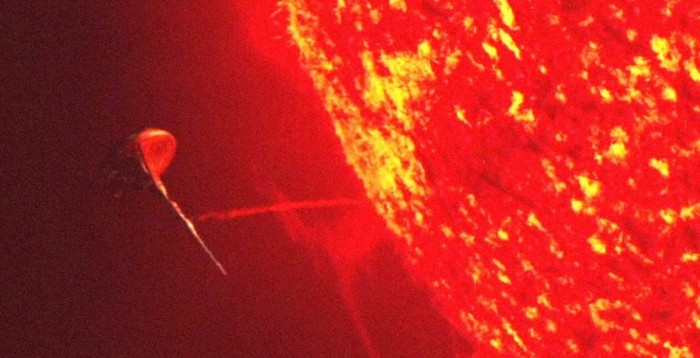

The idea that Earth might be a “prison planet” has captivated the imaginations of philosophers, spiritualists, and conspiracy theorists for centuries. From ancient teachings to modern astronomical discoveries, the concept suggests that humanity is confined—physically, spiritually, or both—within a controlled system.
Recent findings by astronomers, coupled with historical and philosophical perspectives, have reignited discussions about whether Earth is a cosmic penitentiary, complete with a mysterious dome, an artificial moon, and a network of ancient satellites.
The Prison Planet Hypothesis | A Timeless Concept
Origins in Ancient Wisdom
The notion of Earth as a prison planet isn’t new. As early as the fifth century AD, Buddha Shakyamuni spoke of a world where beings are trapped in a cycle of suffering and reincarnation. His teachings, delivered to the people along the Ganges, hinted at a cosmic system that binds souls to Earth. Fast forward to modern times, and the concept has evolved, drawing parallels with fictional narratives like Westworld, where beings are controlled within a constructed reality. Are humans biorobots subject to extraterrestrial experiments, or is Earth a labor camp overseen by a robotic overlord akin to Skynet from The Terminator? These questions remain speculative, but they underscore a persistent human curiosity about our place in the universe.

The Modern Interpretation
Today, the prison planet theory posits that Earth is enclosed by an invisible barrier—a force field or dome—that prevents souls from escaping after death. This dome, described by some as electromagnetic and by others as a manifestation of unknown cosmic forces, is said to trap souls, sending them to a “central server” for sorting and reincarnation. While this idea sounds like science fiction, it has been reported by individuals who claim to have encountered it during astral travel, near-death experiences, or altered states of consciousness. These accounts describe an invisible ceiling that consciousness cannot breach, fueling speculation about its purpose and origin.

Astronomical Discoveries | Evidence of a Cosmic Net?
The Vanishing Stars Mystery
In July 2025, astronomer Beatriz Villarroel and her team published a groundbreaking study that sent shockwaves through conspiracy communities. By comparing modern star maps with astronomical photographic plates dating back 150 years, they discovered that thousands of stars appeared to have vanished from the night sky. These “missing stars” weren’t dimmed or obscured—they were simply gone, as if plucked from the cosmic canvas. Villarroel’s research focused on what she termed “transients,” fleeting objects in space that appear and disappear without explanation.
Initially, Villarroel considered that these transients might be artifacts of old photographic plates. However, the sheer volume of anomalies—up to 5,000 flashes per day in some regions—ruled out simple errors. When cross-referenced with data from multiple observatories, the transients remained consistent, suggesting they were real phenomena. The most compelling hypothesis? A network of objects in geostationary orbit, rotating synchronously with Earth, creating periodic glares visible from the ground.
A Prehistoric Starlink?
Villarroel’s findings led to speculation about a network of artificial satellites predating human space exploration. Unlike asteroids, which would produce random glares due to their irregular shapes, these objects appear geometrically precise, reflecting light at specific angles. Their concentration over the equator, where modern geostationary satellites are most densely positioned, adds intrigue. Could these be remnants of an ancient communication system, akin to a prehistoric Starlink, or something more sinister—a mechanism to maintain the prison planet’s dome?

Conspiracy theorists argue that these objects form a “power shield” that traps souls, preventing them from escaping Earth’s cycle of reincarnation. While Villarroel herself doesn’t endorse the prison planet theory, her data provides fodder for those who see these transients as evidence of a cosmic control system.
The Moon | A Cosmic Overseer?
Anomalies of the Moon
The Moon has long been a focal point for those questioning Earth’s role in the cosmos. Its peculiarities are striking | it’s 400 times smaller than the Sun yet 400 times closer to Earth, creating the illusion of equal size during total eclipses—a coincidence astronomers call “the most incredible in the universe.” The Moon’s orbit mimics the Sun’s movements, rising and setting at the same horizon points during opposite solstices, a phenomenon that seems tailored for human observation.
Scientific analysis reveals further anomalies. Carbon dating suggests the Moon is older than Earth—5.3 billion years compared to Earth’s 4.6 billion. The lunar soil’s chemical composition doesn’t match its rocks, and the soil itself is a billion years older than the Moon. Lunar rocks are magnetized despite the Moon lacking a magnetic field, and its surface contains an unusually high concentration of titanium—80% in some areas, far exceeding Earth’s reserves. Seismic activity, reddish glows, and craters formed without volcanic activity or meteorite impacts add to the mystery.
A Constructed Spacecraft?
These oddities have led some to propose that the Moon is not a natural body but a constructed spacecraft, placed in orbit to stabilize Earth and monitor its inhabitants. Without the Moon’s precise size, mass, and distance, Earth’s axis would wobble, rendering the planet uninhabitable. Scientists agree that the Moon’s gravitational influence maintains Earth’s seasons and liquid water, making it an “incubator” for life. But who—or what—placed it there?

The theory that the Moon serves as a shield against meteorites is widely accepted, but some take it further, suggesting it’s a control station for the prison planet. Independent observers have reported unexplained lights and movements on the lunar surface for centuries, phenomena NASA has largely ignored. Could the Moon be a base for overseers, ensuring humanity remains confined?
Philosophical Insights | Plato and the Soul Trap
Plato’s Teachings on Reincarnation
The prison planet hypothesis finds philosophical grounding in the works of Plato, particularly his dialogue Phaedo (On the Soul). As an initiate bound by a vow of silence, Plato veiled his teachings in metaphor, hinting at the immortality of the soul and its cyclical return to Earth through reincarnation. In Phaedo, he argues that souls have the opportunity to choose their path after death | return to the “Original Source” or remain trapped in the material world. This choice, however, requires spiritual preparation and knowledge of the truth.
Plato’s concept of a “soul trap” aligns with modern theories of a cosmic net or dome. He suggests that an unprepared soul, lacking wisdom, is automatically drawn back into mortal life, unable to escape the cycle. The white light at the end of the tunnel, often reported in near-death experiences, is seen by some as a trap that erases memories and recycles souls into new bodies.
Escaping the Cycle
According to Plato, the key to breaking free lies in education and spiritual development. By cultivating wisdom and rejecting material weaknesses, individuals can resist the pull of the soul trap and choose a path to freedom. This idea resonates with modern conspiracy theories, which claim that entities—reptilians, Anunnaki, or other overlords—feed on human fear and suffering, maintaining the prison system. Simon Parkes, an expert on extraterrestrial phenomena, describes an artificial net designed to recycle souls, preventing them from reaching their cosmic origins.
Humanity’s Behavior | Evidence of Imprisonment?
A Self-Destructive Species
Proponents of the prison planet theory point to humanity’s behavior as evidence of confinement. Wars, violence, and division have defined human history, from the Crusades to modern conflicts. The staggering death toll—estimated at one billion from wars and atrocities—suggests a species driven by self-destruction, akin to prisoners fighting within a confined space. The “divide and conquer” strategy, seen in prison gang dynamics, mirrors global conflicts fueled by ideology, race, and religion.
Controlled by Higher Powers
Throughout history, figures like Alexander the Great, Genghis Khan, and modern dictators have orchestrated mass suffering, often in the name of a “higher power.” Conspiracy theorists argue that these leaders, whether knowingly or not, serve the entities controlling the prison planet, perpetuating fear and chaos to feed the system. The parallels between historical violence and prison gang warfare raise questions about whether humanity’s actions are entirely its own.

The Cosmic Implications
A Prison for Souls or a Testing Ground?
The prison planet hypothesis challenges our understanding of existence. Is Earth a spiritual prison, designed to trap immortal souls in a cycle of reincarnation? Or is it a testing ground, where beings are placed to evolve and overcome material limitations? The astronomical evidence—vanishing stars, geostationary objects, and lunar anomalies—suggests that our planet may be under cosmic surveillance. The philosophical insights of Plato and the experiences of those who have glimpsed the “dome” reinforce the idea that humanity’s freedom is constrained.
The Path Forward
If Earth is indeed a prison planet, the path to liberation lies in awareness and resistance. By questioning the narratives fed to us, seeking spiritual knowledge, and rejecting fear-based control, we may find a way to break free from the cycle. Whether the truth lies in ancient wisdom, modern science, or a blend of both, the prison planet hypothesis invites us to look beyond the visible and question the nature of our reality.
Part of a Larger Cosmic Picture?
The idea that Earth is a prison planet, enclosed by a cosmic dome and overseen by an artificial moon, bridges ancient philosophy and cutting-edge astronomy. Beatriz Villarroel’s discovery of transient objects in geostationary orbit, combined with the Moon’s inexplicable properties and Plato’s teachings on the soul, paints a compelling picture of a controlled world. While the truth remains elusive, the evidence suggests that humanity may be part of a larger cosmic experiment—one that challenges us to seek knowledge, question authority, and strive for liberation.