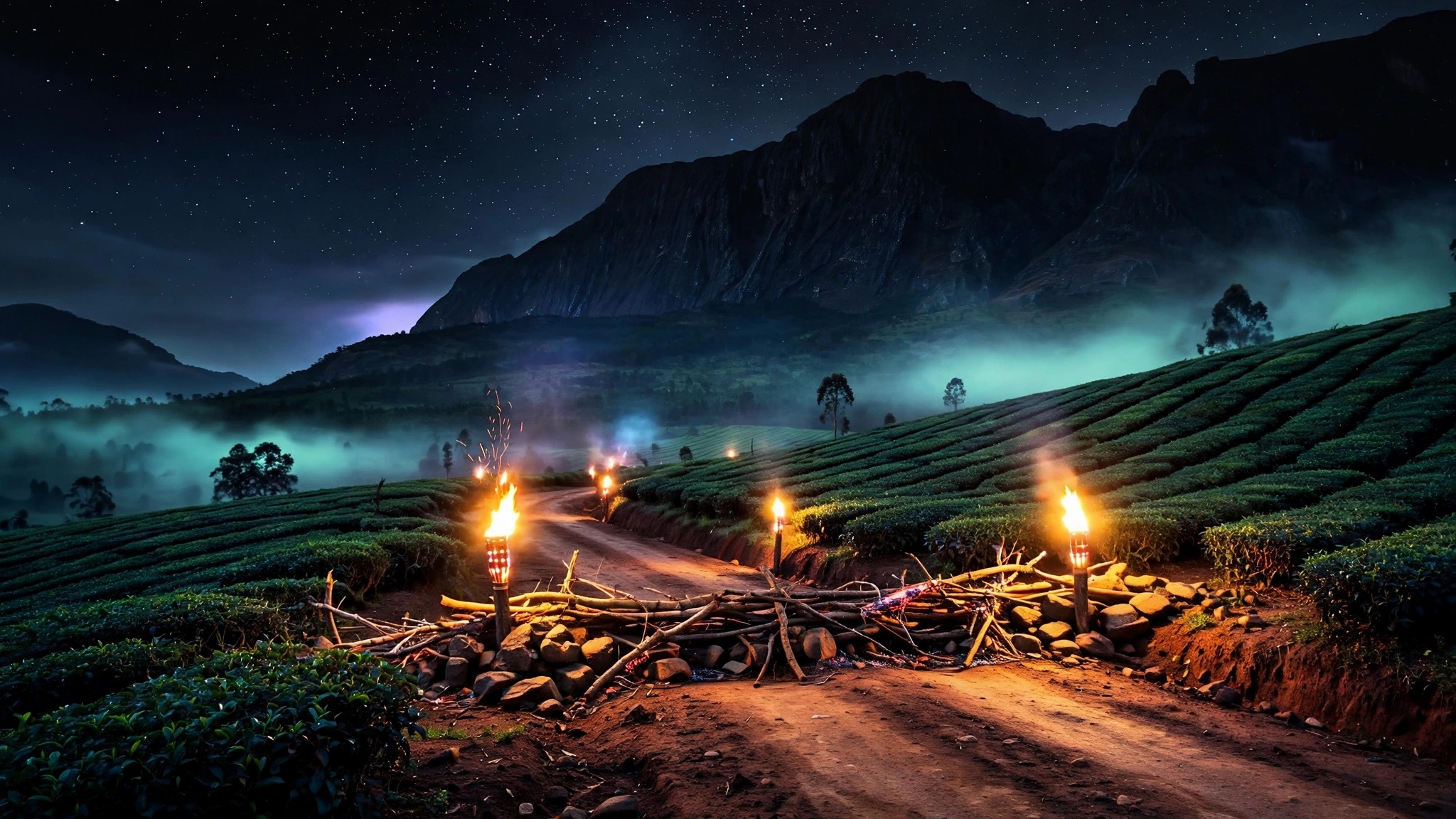
In the autumn of 2017, in the green hills of southern Malawi, people began barricading the roads at night. Men with machetes and torches stopped cars and questioned anyone they did not know. They were hunting the Malawi vampire, a blood-sucker who, the rumours said, came in the dark to drain sleepers through needles and tubes. Within weeks at least five people accused of vampirism had been killed by mobs. The United Nations pulled staff out of two districts. The President promised to deal with it.
It was not the first time. Fifteen years earlier, in a season of hunger, Malawi had been gripped by the same terror, and its President had gone before the nation to say that no government would suck the blood of its own people. And for a hundred years before that, across East and Central Africa, people had whispered of men in uniform who took blood with strange machines and carried it away in the night.
No vampire has ever been caught. But the story of why so many people believed in them is one of the most remarkable in the history of rumour. It leads to famine and food aid, to fire engines and sleeping-sickness camps, to a historian with a tape recorder, and to a question that every panic asks in its own way. What is being taken from us, and who is taking it?
The Night of the Roadblocks
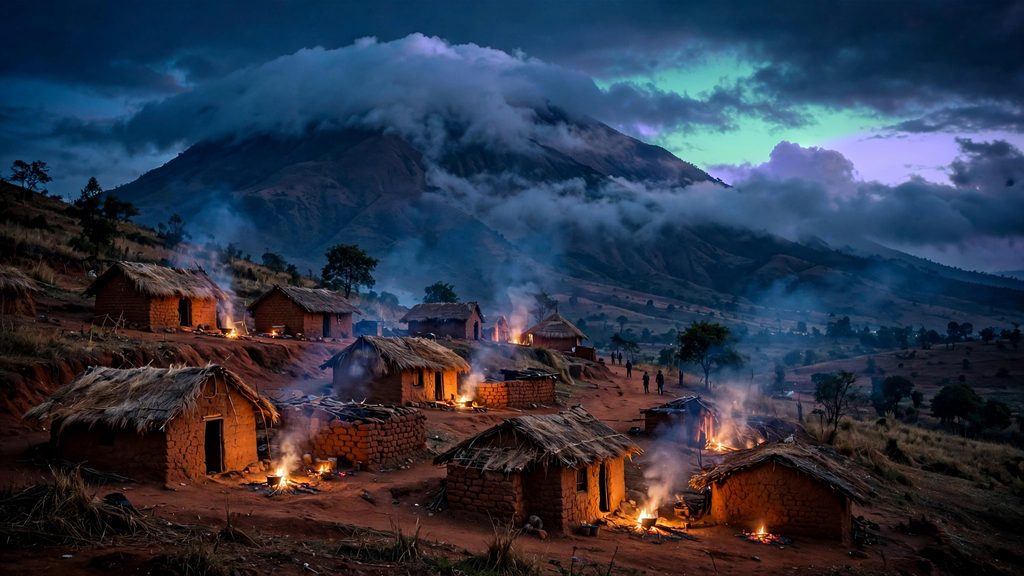
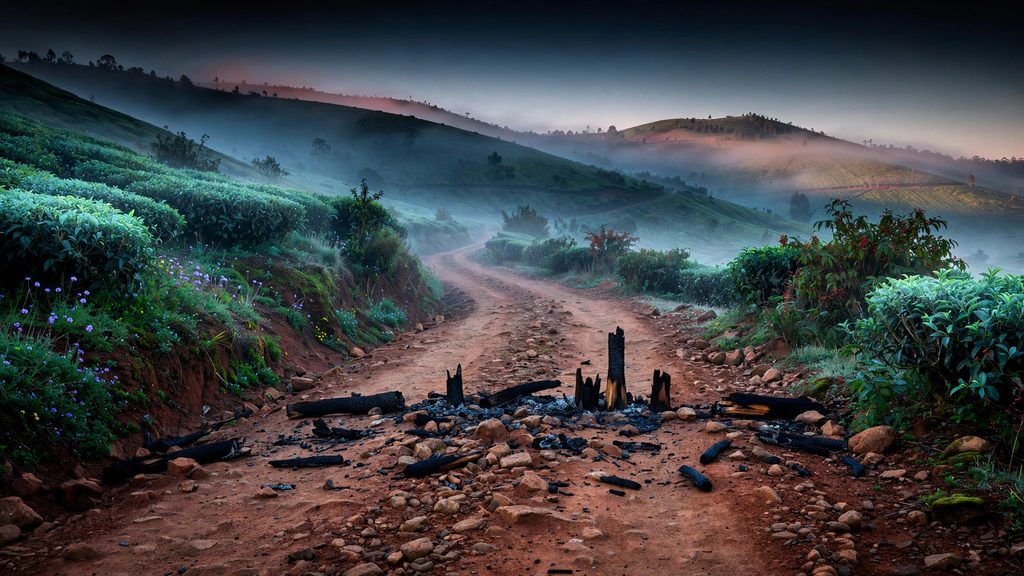
The rumours of 2017 seem to have crossed the border from Mozambique. In the districts of Phalombe and Mulanje, among the tea estates under the granite bulk of Mount Mulanje, word spread from mid-September that blood-suckers were moving through the villages. Locally they were called amampopa, the blood-suckers. Vigilante groups set up roadblocks. Travellers, the mentally ill and anyone found out after dark were dragged from cars and beaten. By early October at least five people were dead.
The UN Department of Safety and Security reported the roadblocks as a threat and recommended a temporary suspension of UN activities in the two districts. Florence Rolle, the acting UN Resident Coordinator, said some staff had been relocated. The United States pulled its Peace Corps volunteers from the region. Some aid groups suspended their programmes. President Peter Mutharika called the reports distressing and agonizing, and at first said that if people were using witchcraft to suck blood, he would deal with them.
The panic did not stay in the hills. It reached Blantyre, the country’s commercial city, where two men were killed by mobs. A Belgian couple were dragged from their four-wheel drive and beaten. Elsewhere the police fired tear gas through a five-hour standoff to rescue a businessman whose home had been surrounded by about two thousand people. He gave the panic its bitterest summary. If you have a nice car, he said, you are a bloodsucker.
Within a few months at least nine people had died and more than two hundred and fifty had been arrested for spreading the rumours or joining the violence. Mutharika now said there was no evidence of blood-suckers and called the stories a lie meant to destabilise the region. A lecturer at the Catholic University of Malawi put it more simply. It was the rich against the poor. No vampire was ever found.

The President and the Vampires
In 2002 the same fear had swept the south, with a darker twist. Malawi was coming out of a famine. In February the President, Bakili Muluzi, had declared a state of national disaster. The national grain reserve had been sold off, donors were slow, and in the district of Kasungu alone more than a hundred people had starved by March. Food aid was arriving at last in white trucks, and the aid agencies spoke of a supply pipeline.
Late in the year a rumour began in Thyolo, a tea-growing district south of Blantyre. It said that the government was trading the blood of its people to the donors in exchange for maize. People described intruders who drilled holes in the walls of their huts, sprayed a gas that made the sleepers helpless, and drew blood with a needle, leaving only a pin-prick. One woman said she had beaten a drum to wake the village and the attackers fled, but the smoke had taken her voice for three days.
The mobs came quickly. In Thyolo a man accused of vampirism was beaten to death, and by January a second man had died the same way. Three visiting Catholic priests were attacked and held overnight by villagers who did not recognise them. A camp of tents put up by an aid group drilling wells was torn down because people feared it was the vampires’ headquarters.
Muluzi took the extraordinary step of answering the rumour himself. In December he called it unfounded and malicious, blamed the opposition, and said that no government could go about sucking the blood of its own people. Fear, he warned, was keeping families from their fields in a year when they could least afford it. Then he went further, ordering the police to arrest anyone spreading the stories. A community radio journalist in Blantyre was arrested in January 2003 for broadcasting an interview with a man who said he had been attacked. By February at least forty people had been detained.
The rumour would not lie down. In early February a schoolboy said he had woken to a chemical smell and the prick of a needle, and that his attackers had escaped in three vehicles. Police sent him for a medical examination. A newspaper reported marks on his skin. The Minister of Home Affairs said it was a mosquito bite. The fear faded with the next harvest, as it always does, and returned years later, as it always has.
- 1910s to 1920s
Vampire rumours appear across colonial East and Central Africa.
- 1911
Nyasaland, now Malawi, passes a Witchcraft Act under British rule.
- 1930s to 1950s
Wazimamoto and banyama: firemen, rangers and medical workers cast as blood-takers.
- 2000
Luise White publishes Speaking with Vampires.
- Dec 2002
Malawi: rumours of blood traded for food aid. President Muluzi dismisses them.
- Sep to Oct 2017
Phalombe and Mulanje: roadblocks, at least five killed, UN staff withdrawn.
- 2017
More than two hundred arrests for rumours and violence.
- 2020
New lynchings over vampire rumours in northern Malawi.
The Firemen Who Drank Blood
The American historian Luise White spent years listening to these stories. For her book Speaking with Vampires, published in 2000, she carried out more than a hundred and thirty interviews and worked through archives in Kenya, Uganda and Zambia, gathering accounts that reached back to the 1910s and 1920s. In East Africa the vampires were called wazimamoto, the firemen. In Northern Rhodesia, now Zambia, they were banyama. Elsewhere they were mumiani, a word for the substance taken from victims and for those who took it.
What struck her was how modern these vampires were. They were not the undead of European folklore, rising from coffins. They were Africans employed by the colonial state, firemen, ambulance drivers, game rangers, policemen and hospital workers. They drove trucks and motorcars, used rubber tubes and needles, and worked at night. In Tanganyika, it was said, the servants of white settlers caught people, hung them upside down and cut their throats so the blood ran into great buckets. In Kampala, it was said, the police kept captives in pits and drained them.
The stories carried a strange logic of their own. During the Second World War a blood drive for the troops in Tanganyika failed because a fire engine was always parked by the airstrip where the blood was collected. The people who stayed away had heard about the firemen. One of White’s chapters carries a question as its title. Why is petrol red? Everyone knew that cars, pumps and engines ran on something, and the colonisers never quite explained what.
Rumours as History
White’s great insight was that these stories were not simply superstition. They were a way of talking about experiences that people had no other language for. Colonial medicine did take blood, in campaigns against sleeping sickness and other diseases, often without explanation and sometimes by force. In Northern Rhodesia in the 1930s, officials moved villages, cleared bush and destroyed game to fight the tsetse fly that carries the disease, and medical teams took blood from people who were rarely told what it was for. Colonial officials did arrive in vehicles, take people away and change their lives. A small African elite did work for the colonisers and was seen as transformed by them.
The vampire stories wrapped all of this in a single terrifying image. In the Bemba language the word for what the banyama took was not quite blood. It meant the fluids of life itself, the stuff that made a body strong. To lose it was to lose your labour, your health and your children, which is close to what colonial rule took from many people in plain economic terms.
She did not claim that vampires drank blood, or that the stories were literal accounts of secret blood programmes. She argued that rumours are themselves historical sources, revealing what people feared, how they understood power and what they believed was being taken from them. In the vampire, colonised people described extraction, of labour, land, bodies and lives, more vividly than any report could.

Wazimamoto
Swahili · East AfricaThe firemen. Colonial employees with hoses, trucks and needles.
Banyama
Northern Rhodesia · ZambiaGame rangers and officials said to capture people for their blood.
Mumiani
East AfricaA word for the substance taken from victims, and for those who took it.
Amampopa
MalawiBlood-suckers of the modern panics, imagined as officials or aid workers.
Impundulu
Xhosa and ZuluThe lightning bird, sent by a witch to feed on blood.
Adze
Ewe · West AfricaA firefly that becomes a blood-drinker of children.
Older Blood
Southern Africa had its own blood-drinkers long before the colonisers came. Among the Xhosa and Zulu, the impundulu, the lightning bird, is a creature of storms that can take the form of a handsome man and feed on blood, sent by a witch against her enemies. In West Africa, the Ewe tell of the adze, which travels as a firefly and drinks the blood of children. These are creatures of witchcraft, rooted in ideas of envy, hidden harm and the betrayal of neighbours.
The British knew how deep those fears ran. In 1911 the colonial government of Nyasaland, as Malawi was then called, passed a Witchcraft Act that made it an offence to accuse anyone of witchcraft. The law still stands in modern Malawi, and it puts the police in an awkward place every time a panic begins. They cannot act against vampires, because officially there is no such thing, but they must act against the crowds who believe in them.
The colonial vampire joined the old fears to new ones. The witch who harms in secret became the official who takes in secret. And in the panics of recent decades, the vampires have changed shape again, becoming aid workers, government ministers and foreigners with vehicles and medical kits.

Priests, Princesses and Census Takers
The visitor in the stories wears whatever costume the moment provides. In the 1980s, before a royal visit by Princess Anne, rumours ran ahead of her motorcade, and children were said to have fled from her limousine. The historian Megan Vaughan, writing in the London Review of Books in 2003, noted that the blood-suckers were regularly said to go about disguised as Catholic priests, water engineers or medical workers, the very people who came to villages with equipment and good intentions.
In 2020 the fear moved north. In March vigilante mobs killed five people in rural districts of the north, and at Nkhata Bay, on the lakeshore, the police used tear gas to drive off a crowd that had turned on government statisticians collecting survey data. People said they were afraid to sleep alone in their houses, or to walk to their gardens. Later that year a BBC film crew looking into the trade in charms against blood-suckers had to be rescued by local police.
The pattern is hard to miss. Each wave picks out the people who arrive from somewhere else with clipboards, needles, tents or new cars, and asks what they are carrying away.
And Botswana?
Stories of a vampire crisis in Botswana circulate online, but no outbreak of vampire panic there appears in the news, government statements or scholarship. The great panics of recent times have been in Malawi and its neighbours, Mozambique and Zambia. Botswana’s name seems to have been carried into the story by retelling, as so often happens with rumours about Africa written far from it.
What the Malawi Vampire Is Saying
The vampire panics of Malawi are tragic, because the people killed are almost always innocent, often the poor, the confused or the passing traveller. They are also a warning. Rumours like these grow strongest where people feel that something is being taken from them by those with power, and where trust in the state and in outsiders has been broken.
That is why the vampire keeps coming back. Each time food is short, aid arrives in white trucks, or officials come with needles and forms, the old shape is waiting. Luise White showed that to understand the vampire, you have to listen to what the story is trying to say. In the hills of southern Malawi, it has been saying the same thing for a hundred years.
The Verdict | Documented
The panics happened, and the record of them is long. In Malawi, waves of vampire fear in 2002 and 2017 led to killings, mass arrests, a President’s public denial and, in 2017, the withdrawal of UN staff from Phalombe and Mulanje, with fresh violence in the north in 2020. Luise White traced the same rumours across East and Central Africa back to the 1910s and 1920s, showing that they cast colonial firemen, medical workers and officials as blood-takers, and argued that they carry memories of colonial extraction. No vampire panic in Botswana appears anywhere in the record.
What the archive cannot find is the vampire. Documented, then, for the panics and the long history of the rumour. No blood-sucking creature, and no secret trade in blood, has ever been shown to lie behind them.
- Claim tested
- Vampire panics have gripped southern Africa, driving mobs and governments to act.
- Oldest record
- Rung 2 · Reported at the time
Colonial-era accounts gathered by Luise White from the 1910s onwards, and news reports of the Malawi panics of 2002 and 2017. - The record supports
- Killings and arrests in Malawi, the withdrawal of UN staff in 2017, a President’s public denial in 2002, and a century of recorded rumours.
- It does not support
- Any blood-sucking creature, any secret trade in blood behind the panics, and any vampire crisis in Botswana.
- Explanations weighed
- Supernatural attackers, secret blood programmes, and rumours that carry memories of colonial extraction and present distrust.
- What would change it
- Evidence of an organised taking of blood behind the rumours, or a recorded panic in Botswana.
Fear has taken many shapes across the archive. The fallen angels said to have taught humanity forbidden knowledge appear in the Book of Enoch, and the shapeshifting rulers of modern legend in the reptilian overlords. A town that danced itself to exhaustion lives on in the Dancing Plague of 1518, a ghost carried by chain messages in Carmen Winstead, and a belief about blood itself in the bearers of Rh-negative blood. The hills of Phalombe are marked on the Atlas of Mysteries, and a hundred years of whispers were weighed against the tests set by the Archive Standard, with this ruling filed beside the others in the Verdict Index under Documented.
Quick Answers About the Malawi Vampire Panics
Was there a vampire crisis in Botswana?
No vampire panic in Botswana appears in news reports, government statements or scholarship. The major recent panics were in Malawi, with rumours linked to Mozambique and Zambia.
What happened in Malawi in 2017?
Rumours of blood-suckers spread through Phalombe and Mulanje districts from September 2017. Mobs set up roadblocks and killed at least five people by early October, the UN withdrew staff, and within a few months at least nine had died and more than 250 had been arrested.
What happened in Malawi in 2002?
In the wake of a famine, rumours claimed the government was trading people’s blood for food aid. Mobs beat suspected blood-suckers to death, President Bakili Muluzi dismissed the rumours, and dozens of people were arrested for spreading them.
Who is Luise White?
An American historian whose book Speaking with Vampires, published in 2000, studied colonial-era vampire rumours in East and Central Africa and argued that they are historical sources about colonial power.
What were the wazimamoto?
The firemen, the Swahili name for vampires in colonial East Africa, imagined as Africans employed by the colonial state who took blood with tubes and vehicles.
What is the impundulu?
The lightning bird of Xhosa and Zulu belief, a creature of storms that can take human form and feed on blood, sent by a witch.