




The discovery of anomalous interstellar objects passing through our solar system has forced a profound re-evaluation of modern cometary physics. While mainstream astronomical bodies are traditionally classified as irregular, primordial remnants of planetary formation, certain highly synchronized tracking data suggests a far more complex reality.
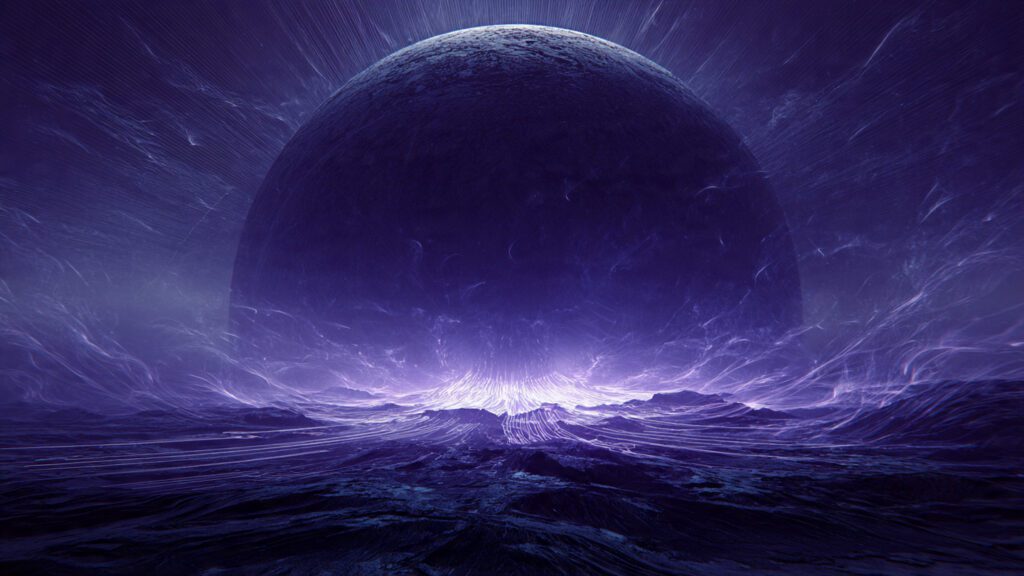
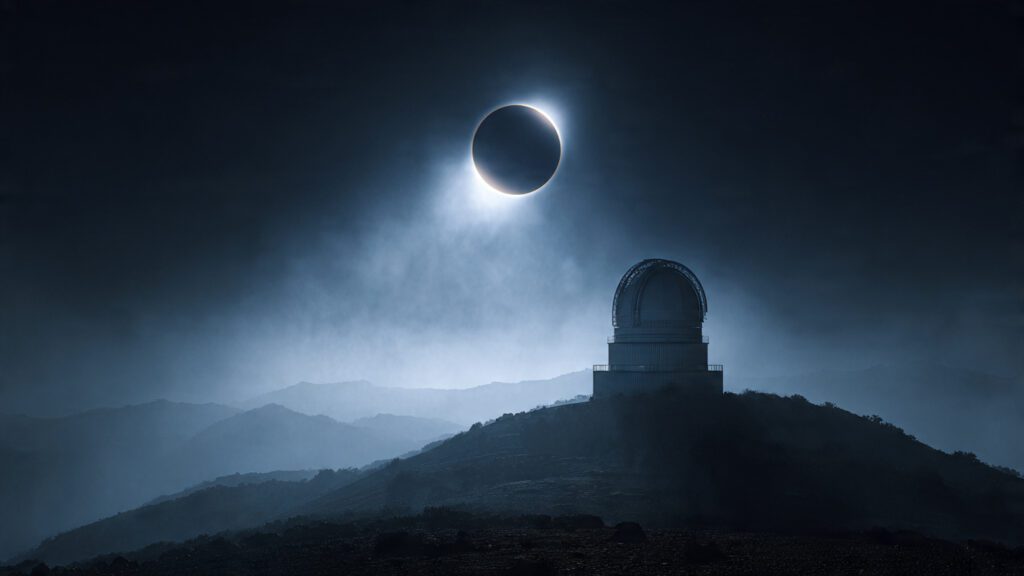
When astronomers trained the 2.5-meter mirror of the Northern Optical Telescope on La Palma toward the trajectory of the object designated 3I/ATLAS, the data returned did not match the signature of a lopsided, dusty snowball. Instead, the telemetry indicated a highly reflective, geometrically symmetrical sphere.
The subsequent behavioral anomalies of 3I/ATLAS, specifically its impossible sublimation physics, sudden structural changes, and the rapid disappearance of its volatile signatures, have ignited an intense debate. For alternative researchers and analytical physicists alike, this object challenges the boundary between a natural astronomical event and an engineered interstellar artifact.
1. What is 3I/ATLAS? The Official Telemetry vs. Anomalous Observations
In official astronomical registries, 3I/ATLAS is categorized as an interstellar comet, the third macro-object confirmed to have originated outside our heliosphere, following 1I/’Oumuamua and 2I/Borisov. Initial baseline classification assigned the object a standard velocity profile, an estimated diameter of roughly five kilometers, and a volatile composition of frozen gases expected to sublimate as it approached perihelion.
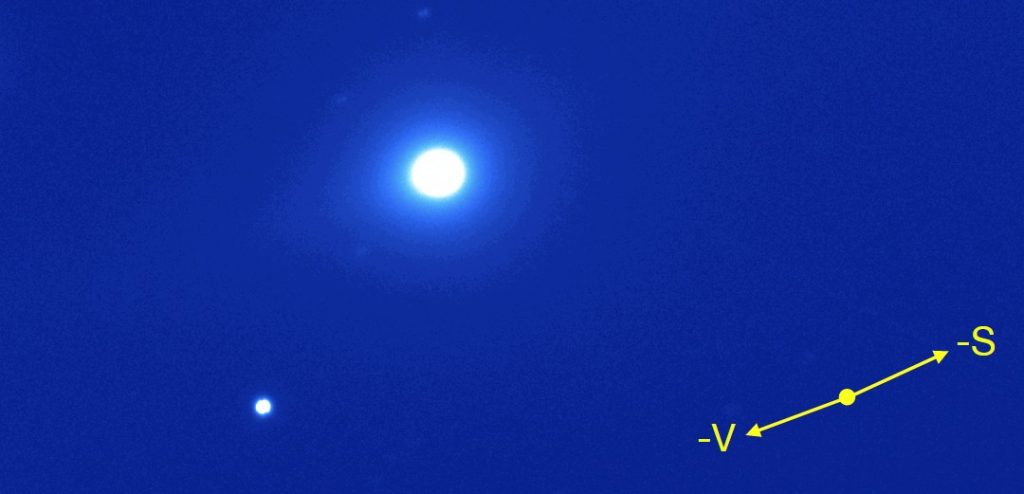
However, as the object breached the inner solar system, its observational parameters deviated drastically from standard cometary models. Rather than displaying the typical asymmetrical, fractured morphology of a natural nucleus, optical and radar analysis revealed a pristine, highly reflective spherical geometry. This stark structural divergence immediately shifted 3I/ATLAS from a routine astronomical event into a profound geopolitical and scientific anomaly.
2. The Geometry of Dread | Why Comets Cannot Be Spheres
A natural comet is defined by its architectural imperfection. Formed in the chaotic, low-density fringes of interstellar space, a cometary nucleus is an irregular, porous, and highly asymmetrical accumulation of rock, dust, and volatile ices. It is an organic, lumpy byproduct of cosmic accretion, the literal opposite of smooth, deliberate geometric engineering.
The initial close-range tracking reports on 3I/ATLAS, however, described a shape that defied these laws of accretion:
- Pristine Spherical Symmetry: When magnified through sophisticated optical instruments, the object appeared impossibly round, presenting a mathematically precise spherical profile.
- Metallic Luminescence: The albedo (reflectivity) metrics of the core were wholly inconsistent with the dark, porous carbon-and-ice mixtures of native comets. The surface gleamed with a uniform, high-intensity reflectivity characteristic of an engineered metallic hull or a highly polished material matrix.
In the language of advanced technology, a sphere is the most efficient container of energy and structural matter, the classic architecture of defensive or long-range deep-space engineering. Encountering an object of this geometry traversing our system under the guise of a natural comet forces an uncomfortable conclusion: we are observing a structure constructed with a specific, protective purpose.
3. The Death Star Analogy and the Leaked Mars Orbiter Imagery
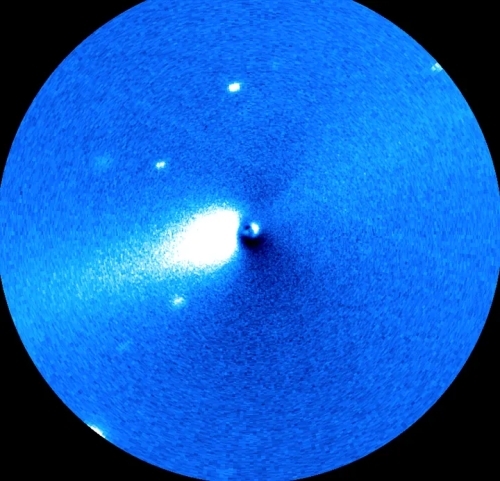
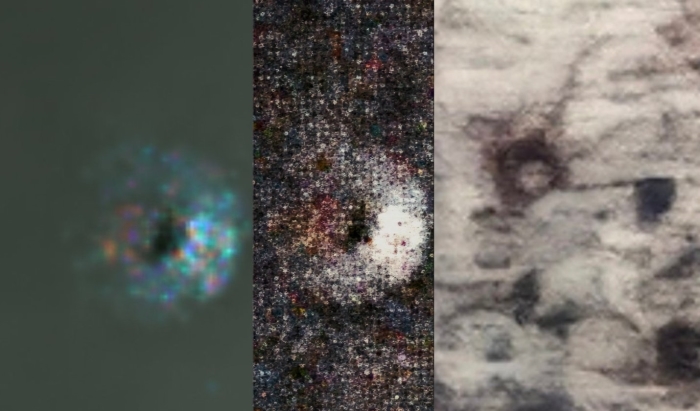
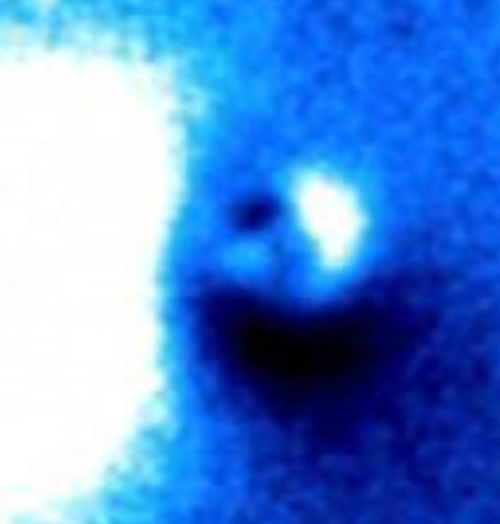
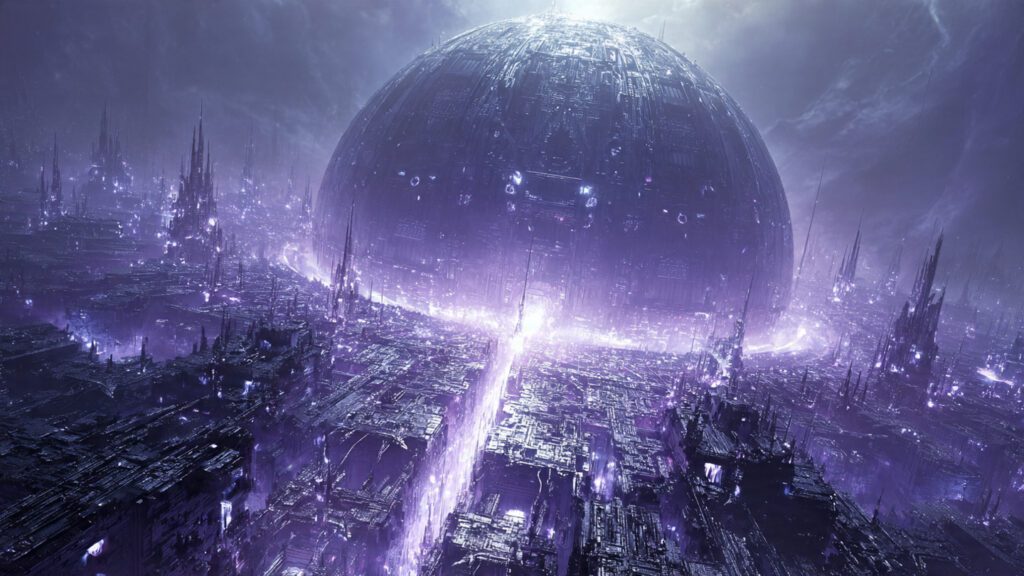
The structural anomalies of 3I/ATLAS achieved widespread public fascination following a series of highly controversial visual leaks allegedly originating from data streams captured by a Mars Orbiter telescope. Taken during a close orbital pass at a distance of approximately 30 million kilometers (0.2 AU), the close-up imagery depicted a definitive, gleaming spherical structure bearing a distinct, dark, circular aperture on its upper quadrant.
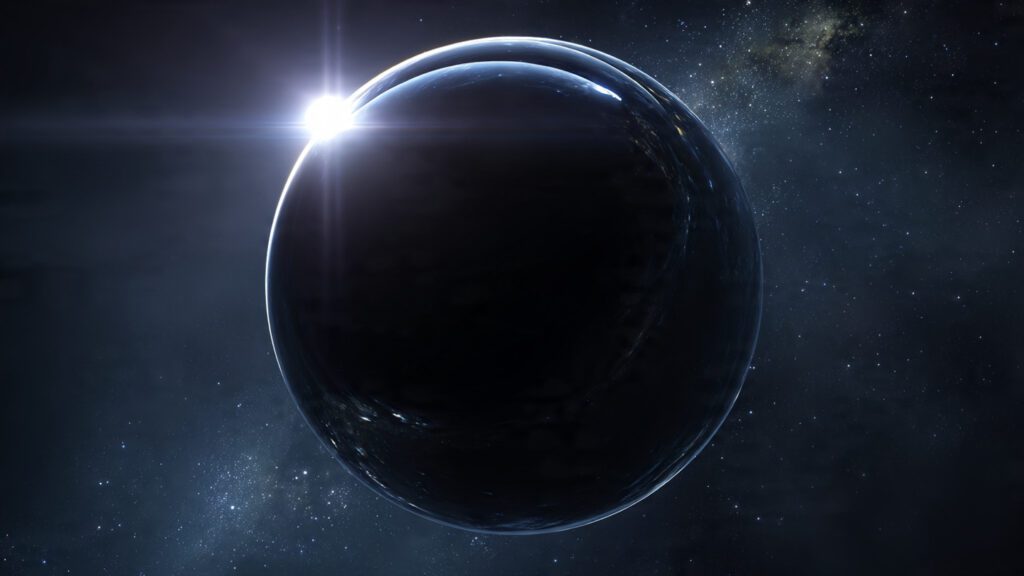
While institutional channels rushed to dismiss these files as unverified data corruptions or digital hoaxes, subsequent deep-space imagery captured by the Northern Optical Telescope on La Palma, despite being taken from ten times the distance (2.0 AU), mathematically cross-validated the object’s anomalous geometry.
The dark spot remains the structure’s defining signature. Whether this feature functions as an optical array, a directional antenna aperture, or a massive engineered energy sink, its precise positioning relative to the sphere’s rotation axis suggests deliberate structural design rather than a random impact scar on a natural rock block.
4. The Sublimation Paradox | The Physics of Institutional Omission
The core scientific crisis surrounding 3I/ATLAS lies in the profound mathematical disconnect between its officially stated size and its observed physical output. Mainstream news feeds maintained an official diameter estimate of five kilometers. However, when subjected to the laws of thermodynamic sublimation, that dimension becomes an absolute physical impossibility.
Harvard astrophysics professor Avi Loeb became a prominent analytical voice tracking this structural discrepancy. By calculating the precise volume of the gaseous coma and the massive tail ejected by the object during its initial ignition phase, Loeb exposed a critical breakdown in the official narrative:

Required Outgassing Volume ∝ Sublimation Surface Area
A five-kilometer chunk of traditional volatile ice simply lacks the surface area required to produce the sheer volume of water vapor and gas measured by space-based spectrometers. According to the foundational physics of sublimation, for a natural comet to generate a cloud of that density and scale, its physical diameter would have to be closer to 50 kilometers.
This ten-fold size multiplier completely fractures the establishment narrative. If the object is truly 50 kilometers in diameter, it represents one of the largest, most volatile interstellar masses ever recorded in human history. If it is indeed only five kilometers in diameter yet producing that volume of displacement, it cannot be made of natural ice. It must possess an internal, highly pressurized corporate or industrial gas reservoir. The official five-kilometer designation appears to be an intentional institutional understatement designed to obscure the true scale of the structure from public awareness.
5. The Ghost Trail | The Impossible Dissipation of the Cometary Tail
The most definitive proof that 3I/ATLAS is operating as a controlled artifact rather than a chaotic celestial body is found in the sudden, impossible shutdown of its volcanic activity.
In natural astrophysics, a comet’s tail is formed when solar radiation heats the frozen nucleus, causing its contents to violently erupt into space via high-pressure jets. Once this mass of gas and particulate debris is ejected into the vacuum, it forms a vast, diaphanous tail that is pushed by the solar wind. Due to the total absence of atmospheric resistance in open space, these immense debris trails are physically bound to persist and glow for a minimum of one to three months after the initial outgassing event terminates.
This rapid dissipation directly violates the thermodynamic principles of orbital physics. It is structurally impossible for a natural gas cloud in a vacuum to compress, neutralize, or disappear with such speed. This behavior strongly implies an engineered mechanism of suppression, such as an internal vacuum The Timeline of the Disappearance:
Day 8: The entire, multi-million-kilometer smoke and debris trail has virtually ceased to exist, leaving a perfectly clean, pristine space around the object.
Day 1: Amateur observatories worldwide document high-intensity volatility, mapping seven distinct, powerful gas jets erupting from the surface of 3I/ATLAS.
Day 7: Exactly one week later, the high-powered Northern Optical Telescope is trained on the exact coordinates. The seven distinct jets have completely vanished.
This rapid dissipation directly violates the thermodynamic principles of orbital physics. It is structurally impossible for a natural gas cloud in a vacuum to compress, neutralize, or disappear with such speed. This behavior strongly implies an engineered mechanism of suppression, such as an internal vacuum intake system or a localized electromagnetic field generator, activated to retract the emissions, clean up the object’s external trail, and return the vessel to a state of low-observability stealth.
6. The Archon’s Black Mark | A Metaphysical Evaluation
To fully comprehend the arrival of 3I/ATLAS, one must look past the limits of physical instrumentation and review the historical and philosophical frameworks that predict such an intrusion. In ancient Gnostic philosophy, the material world is described not as an open, organic paradise, but as a highly managed prison planet overseen by the Archons, non-human cosmic wardens who monitor human development, enforce psychological containment, and treat the collective emotional energy of humanity as a harvestable resource.
Within this framework, the visual architecture of the gleaming metal sphere bearing a single, all-seeing dark aperture takes on a chilling significance:
- The Surveillance Lens: The dark spot ceases to be an astronomical anomaly and aligns perfectly as a macro-scale observation lens, the eye of the cosmic shepherd monitoring the terrestrial asset.
- The Diagnostic Camouflage: The brief, temporary display of cometary jets was not a natural reaction to our Sun, but a tactical diagnostic systems check, a calculated camouflage script deployed by the vessel to satisfy initial human radar scans before it resumed its silent, permanent tracking orbit.
When military and intelligence analysts process imagery that shifts from a standard space rock to an unmistakable archetype of ultimate structural domination, the boundaries of conventional geopolitics dissolve. The establishment is forced to confront a reality that is fundamentally metaphysical: humanity is not the sovereign ruler of this planet, we are an enclosed population under constant, calculated observation by an intelligence that predates our oldest empires.
7. Institutional Silence and the Oracle of Denial
The reaction of the scientific and political establishment to the 3I/ATLAS telemetry followed a predictable strategy of absolute obfuscation. The sudden disappearance of the seven gas jets and the blatant math errors in the official size calculations were met with total silence across mainstream academic journals. To acknowledge these anomalies would require admitting that our current space-surveillance infrastructure is tracking a technology that operates completely outside our control.
In this landscape of mandatory denial, the public analysis performed by figures like Avi Loeb acts as a vital structural fracture in the wall of secrecy. By reducing the behavior of 3I/ATLAS down to raw, quantitative physics, Loeb forced the conversation out of the realm of fringe speculation and into the domain of empirical truth.
The predictable response from corporate gatekeepers has been systematic marginalization. The status quo is entirely dependent on the illusion that humanity operates in an isolated, unmonitored vacuum. The moment the global population realizes that a 50-kilometer armored structure is sitting silently in our solar system, checking its systems and tracking our development, the fragile scripts of societal control lose all authority. 3I/ATLAS remains a silent, shining monument in the deep night, a constant reminder that our reality is being actively monitored, and our world is not our own.
Nothing about the ATLAS Anomaly requires an armored structure or a monitoring civilization to remain genuinely unresolved.