

This piece was written during the May 2025 conclave, as events were still unfolding. The outcome is now known and is added below: Cardinal Robert Francis Prevost was elected pope, taking the name Leo XIV, not Peter the Roman. What follows is a spiritual reflection on the conclave tradition, corrected and updated with what actually happened.
In an awe-filled silence, deep within the heart of Vatican City, something ancient stirred. Cloaked in secrecy and sacred tradition, the cardinals of the Catholic Church secluded themselves inside the Sistine Chapel, the most iconic sacred space on earth, to elect a new Supreme Pontiff.
The conclave was held on May 7 and 8, 2025, following the death of Pope Francis on April 21, 2025. Of 135 eligible cardinal electors, 133 attended. Across the globe, speculation swirled with urgency: was this the election of Peter the Roman, the final pope foretold in prophecy, who would witness the fall of the Vatican and the end of the Roman Church as we know it?
A Sacred Lockdown | When the World Held Its Breath
The moment the doors close behind the cardinals, the world enters a moment suspended in time. This isn’t just political theatre. It is spiritual tradition, sacred ritual, and, for many believers, ancient prophecy unfolding in time.
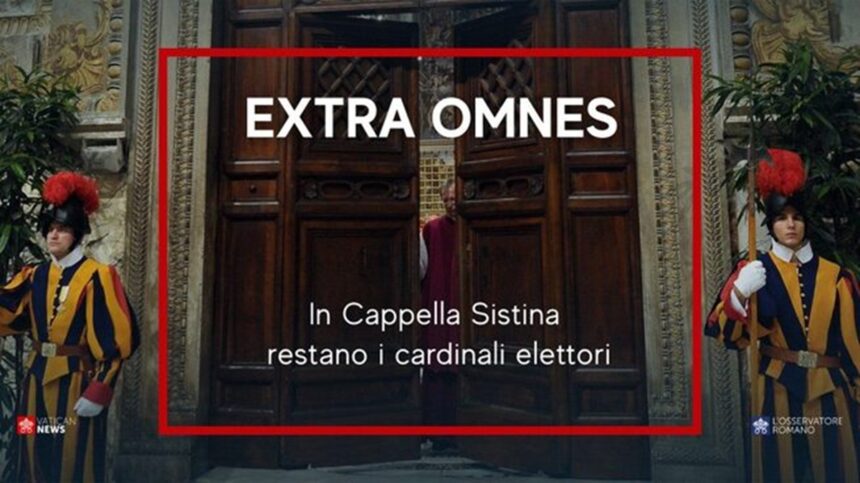
“Extra omnes,” everyone out, is the genuine phrase that seals the doors of the Sistine Chapel. From that point forward, no one may enter or exit. The red-robed princes of the Church are alone, locked away not just from the outside world, but called to abandon personal ambitions and surrender to the will of the Holy Spirit.
This is no mere tradition. It is a ritual of profound humility, an echo of the paradox Jesus taught: “He who wishes to be first among you must be the servant of all.” (Mark 10:44)
The Mystery of Peter | Why the Papacy Is a Paradox
Whoever is elected does not just inherit a title. He becomes servus servorum Dei, the servant of the servants of God. In a world intoxicated by power, this is a contradiction that bewilders media pundits and political analysts alike.
How can the most powerful religious leader on Earth be a servant?
This is the paradox of Peter. He was not chosen because he was perfect, but because he was humble, broken, forgiven. Peter, who once denied Christ three times, was the same man to whom Jesus said, “You are the rock, and on this rock I will build my Church, and the gates of hell shall not prevail against it.” (Matthew 16:18)
Peter the Roman and the Prophecy of the Popes
This needs accurate context. For those who study Catholic prophecy, the name “Peter the Roman” carries symbolic weight, drawn from the controversial Prophecy of the Popes, traditionally attributed to Saint Malachy, which names Peter the Roman as the final pontiff before the destruction of the city of seven hills. What deserves direct correction is the text’s authenticity: credentialed Church historians widely regard this document as a 16th-century forgery, first published in 1595, roughly 450 years after Malachy’s actual death, with no surviving trace of it in any record from Malachy’s own lifetime. The Church has never officially endorsed it, and Vatican historians have long treated it as pious legend rather than authentic prophecy.
What Actually Happened
This needs the definitive answer that could not have been known at the time of the original writing. On the fourth ballot, the conclave elected Cardinal Robert Francis Prevost, a 69-year-old Chicago-born Augustinian friar who had spent much of his career as a missionary and later bishop in Peru. White smoke rose from the Sistine Chapel chimney on the evening of May 8, 2025, and Prevost appeared on the balcony of St. Peter’s Basilica, choosing the name Leo XIV, becoming the 267th pope and the first American-born pontiff in the Church’s history.
He did not take the name Peter the Roman. The Church did not fall. Pope Leo XIV has since carried out an active, ordinary pontificate: holding his first general audience on May 21, 2025, meeting with the Roman Curia, conferring his first priestly ordinations, and publicly calling for peace in Ukraine and Gaza. Whatever one makes of the Malachy prophecy’s symbolic resonance, its literal fulfillment did not occur.
The Weight of the Cross | More Than a Leader, a Living Sacrifice
The papacy is not a crown of gold, but a cross of wood.
To ascend the throne of Peter is to carry the burden of a billion souls. It is to stand at the crossroads of history, where faith and doubt collide, where the Church is both persecuted and praised, fragmented and yet universal.
As Jesus told Peter before his own martyrdom: “Satan has asked to sift you like wheat. But I have prayed for you, Simon, that your faith may not fail. And when you have turned back, strengthen your brothers.” (Luke 22:31-32)
This is why the cardinals must not merely elect a man. They must discern the soul who can become a shepherd after God’s own heart. One who will lead not by command, but by prayer and the strength born of surrender.
In the Shadow of the Frescoes | A Church at the Crossroads
Under Michelangelo’s masterpiece, the ceiling that tells the story of creation and the Last Judgment, each cardinal kneels, voting in silence, their choice recorded in Latin.
They knew what was at stake. The Church stood on the threshold of a new era. Divided by scandals, wounded by secularism, challenged by war, consumerism, and indifference, she cries out not for power, but for renewal.
And so, the electors had to set aside self-interest. In choosing a pope, Vatican analysts noted at the time, they sought someone able to serve as a bridge between heaven and earth, a man tested by the difficulty of missionary life and shaped by decades of service.
The Fisherman’s Tears | Why Peter Still Matters
The strength of the Church has never come from marble basilicas or Vatican gold. It has always flowed from the tears of a forgiven fisherman.
Peter’s denial, and his return, reveals the soul of the Church: fallible, fragile, and yet fiercely faithful. His bitter weeping was not the end. It was the beginning. Unlike Judas, who despaired, Peter wept with contrition, and in those tears, Christ gave him the keys to the Kingdom.
Those keys, though tarnished by centuries of crisis and correction, still unlock the mystery of mercy. That is why Peter remains the rock. Not because he was strong, but because he knew he wasn’t, and trusted anyway.
The Conclave Process, Explained
The formal mechanics behind this ancient tradition carry genuine institutional weight beyond their spiritual symbolism, and deserve explaining. The conclave process is governed by John Paul II’s 1996 apostolic constitution Universi Dominici Gregis, later amended by Benedict XVI in 2013, binding Church law that specifies exactly how the election must proceed. Cardinal electors must be under age 80 at the time a pope dies or resigns, and voting requires a two-thirds majority to elect a new pontiff. In the 2025 conclave, Cardinal Pietro Parolin, as the most senior elector under 80 and the Cardinal Secretary of State, presided over proceedings. Jamming devices are installed throughout the Sistine Chapel specifically to prevent any external communication during the sequestration, a serious security measure. A 2026 book by Vatican correspondents Gerard O’Connell and Elisabetta Piqué later reported that a security breach did occur, a cardinal was found with an active cellphone signal during preparations for the first vote, though the phone was surrendered once discovered, and the individual involved has never been publicly named.
Who Is Pope Leo XIV?
Accurate biographical detail on the man now leading the Church is worth having. Robert Francis Prevost was born on Chicago’s South Side, and is also a citizen of Peru, where he spent decades of his life as a missionary and later as bishop of Chiclayo, a city of roughly half a million people. Pope Francis elevated Prevost to cardinal in 2023 and had him head the influential Vatican Dicastery for Bishops, the office responsible for vetting episcopal appointments worldwide, experience Vatican analysts have cited as central to his standing among fellow cardinals. He is the first pope from the Augustinian religious order, and colleagues who knew him for decades before his election have described him consistently as calm, dependable, and notably uninterested in personal advancement. on-record statements from Leo XIV since his election have emphasized building bridges and dialogue, and calling for peace across multiple ongoing global conflicts, an active pontificate now several years into what remains, for the Church, an ordinary and continuing chapter of its two-thousand-year history.
How This Conclave Compares to Recent History
This conclave is worth situating within its recent, comparable history. Pope Francis and Pope Benedict XVI were both revealed on the second day of their respective conclaves, exactly matching the pace of the 2025 election, while Pope John Paul II, the longest-reigning modern pope, was selected on the third day back in 1978. This relatively swift timeline, four ballots across two days, suggested to Vatican analysts a genuine, fairly rapid consolidation of support around Prevost, despite his absence from most pre-conclave betting markets and public speculation. Historians of the conclave process note that swift elections have generally, though not always, signaled a clearer consensus among cardinal electors than protracted ones, though each conclave carries its own distinct political and spiritual dynamics that resist easy generalization.
Why the Name “Leo XIV” Matters
A newly elected pope’s choice of name is never arbitrary, and the significance behind this one deserves explaining. Vatican historians note that the most recent Pope Leo, Leo XIII, reigned from 1878 to 1903 and is best remembered for his landmark 1891 encyclical Rerum Novarum, which addressed the rights and dignity of workers during the industrial era and remains a genuine, foundational document in Catholic social teaching. By choosing this name, Pope Leo XIV signaled, to Vatican analysts and Church historians alike, an intentional continuity with that particular tradition of social engagement, rather than any connection whatsoever to apocalyptic prophecy of any kind. Papal name choices have historically served exactly this kind of deliberate signaling function throughout the whole of Church history, a deliberate, symbolic act, considerably more grounded than speculation about ancient predictions, and one worth understanding on its own accurate terms.
White Smoke Rose, and the Answer Was Given
As the chimney atop the Sistine Chapel was readied, the world turned its eyes to the sky, wondering whether the smoke would be black or white, and whether the next pontiff’s name would echo history or signal something new.
Was he the last?
The answer is no. He is Pope Leo XIV, the 267th successor of Saint Peter, and the Church continues, as it has for two thousand years. One thing remains true regardless: the Church does not survive by strategy, media campaigns, or popularity polls. She survives, in the faith tradition reflected on here, because Christ prayed that Peter’s faith would not fail. And 2,000 years later, that prayer is still being lived out, one pope at a time, in a pontificate now unfolding in time, its long-term legacy still being written well beyond what any single conclave, or any single prophecy, could have foretold.