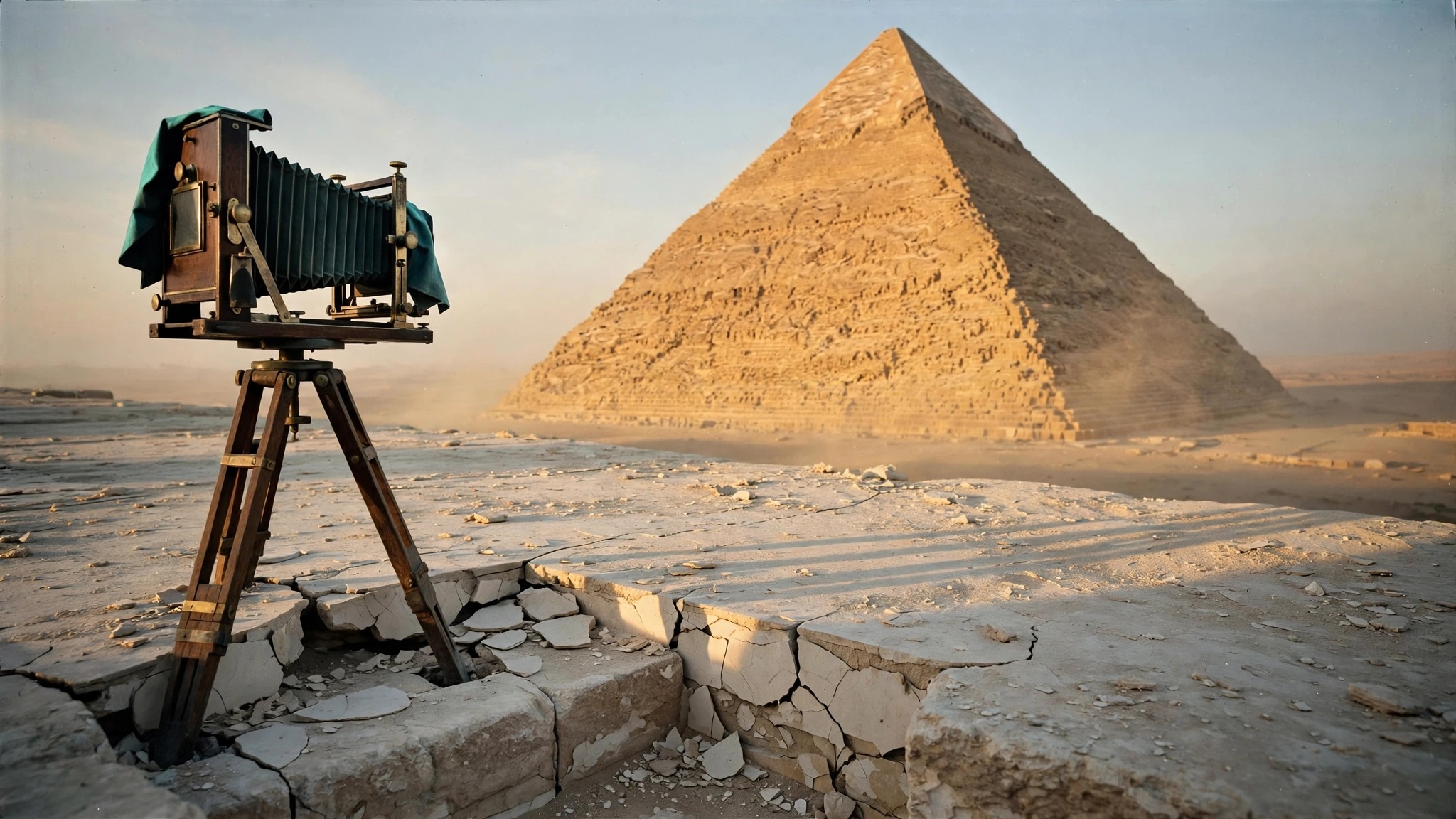
On a winter day in 1925, at the foot of the Great Pyramid, a photographer went looking for a good place to stand. Mohammedani Ibrahim worked for the Harvard and Boston expedition at Giza, and he was looking for a good vantage point on the east side of the pyramid. He set down his tripod. One leg settled onto something it should not have found there, a patch of white plaster where the bedrock ought to be.
Under the plaster was a staircase. Under the staircase was a shaft ninety feet deep, packed to the top with blocks of stone. And at the bottom, sealed for some 4,500 years, was a small room glittering with gold. It belonged to Hetepheres, the wife of the pharaoh Sneferu and the mother of Khufu, the king who built the Great Pyramid.
This week the story went round the internet again as if it had just happened. It did not. It happened in 1925, and it is one of the most carefully recorded excavations ever made in Egypt. It also ends with a question that nobody has answered in a hundred years. When the excavators finally raised the lid of the queen’s sealed coffin, there was nobody inside.
Two Years in One Small Room
- 2 Feb 1925The tripodLooking for a place to set up a camera east of the Great Pyramid, the expedition photographer Mohammedani Ibrahim notices that a tripod leg is resting on white plaster where there should be rock.
- Feb 1925The shaftUnder the plaster is a staircase of twelve steps and a shaft packed solid with limestone blocks. Workmen clear it for about two weeks.
- 7 Mar 1925“The burial is intact”The shaft is cleared to a wall of masonry 27 metres down. The diary of T. R. D. Greenlees records: “It is certain that the burial is intact.”
- 8 Mar 1925A glimpse of goldAlan Rowe, the deputy director, takes out a block and looks in. The floor glitters with gold leaf from fallen furniture.
- 12 Mar 1925Sealed againReisner, in Boston, telegraphs orders to stop. The tomb is closed and guarded. Stories begin to leak to the London press.
- 21 Jan 1926ReopenedReisner returns and the slow work begins. Dows Dunham records every object in place over 321 working days.
- 3 Mar 1927The empty coffinBefore invited guests, the lid of the sealed sarcophagus is raised. There is nothing inside.
- 21 May 1927The canopic chestA plastered niche in the wall is opened. Inside is an alabaster chest with four compartments. Her preserved organs are there. Her body is not.
- 1927 to 1950sRebuilding a queen’s furnitureFrom 1,701 pages of notes and 1,057 photographs, conservators reconstruct the decayed furniture piece by piece. It takes about a quarter of a century.
The Plaster That Should Have Been Rock
The American Egyptologist George Reisner had worked at Giza since 1902, when the head of Egypt’s antiquities service handed him a share of the plateau to dig before looters reached it. By 1925 his joint expedition for Harvard University and the Museum of Fine Arts in Boston was working through the cemetery east of the Great Pyramid, a crowded field of tombs for the family and court of Khufu. Reisner himself was in the United States that winter. The work went on under his staff.
The plaster under the photographer’s tripod was the cap of a staircase of twelve steps, cut down into the rock. The steps led to the mouth of a shaft. The shaft had been filled from top to bottom with limestone blocks, laid in on purpose. Nobody had built a monument above it, and nothing on the surface marked the spot. Whoever made this tomb had wanted it to disappear.
Seven and a half metres down, the workmen found a small niche in the wall of the shaft, sealed with plaster. Inside lay the skull of a bull, three of its legs wrapped in reed matting, two jars of wine and a few fragments of charcoal and basalt. It was the remains of an offering, made as the shaft was being filled. Then the shaft went on down, block after block. When a glimpse of the room below became possible, the Egyptologist Battiscombe Gunn used binoculars and mirrors to read a line of hieroglyphs on the objects inside. It gave a name, Sneferu. The burial belonged to his reign.
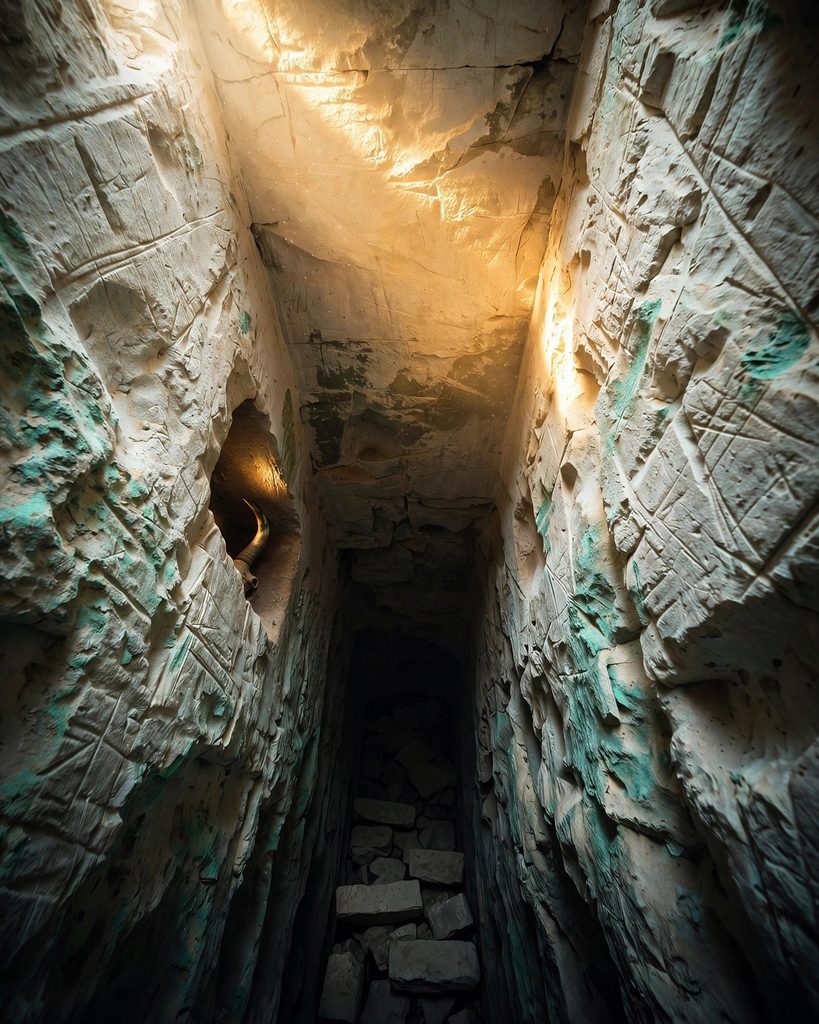
Ninety Feet Down
- 12
- Steps cut down to the mouth of the shaft, hidden under a cap of plaster.
- 7.5 m
- A sealed niche with the skull and legs of a bull and two wine jars, the remains of an offering.
- 27.4 m
- Depth of the chamber entrance. The whole shaft had been filled with masonry.
- 2.2 tons
- Weight of the alabaster sarcophagus that came out of it, still sealed, and empty.
On Saturday 7 March the shaft was cleared to a wall of masonry about 27 metres down. One of the excavators, T. R. D. Greenlees, wrote in the expedition diary, “It is certain that the burial is intact.” The next day the deputy director, Alan Rowe, took out a block and looked in. The floor of the chamber shone with gold leaf. Fallen beams and poles lay everywhere, and pottery had been smashed and scattered.
Three years earlier, Howard Carter had opened the tomb of Tutankhamun, and the world’s newspapers were still hungry for buried gold. Reisner telegraphed from Boston for the work to stop. On 12 March the tomb was closed and put under guard. Word of the find had already reached the London press, and Reisner kept the chamber shut for ten months while he planned how to empty it.
Dows Dunham’s Long Year
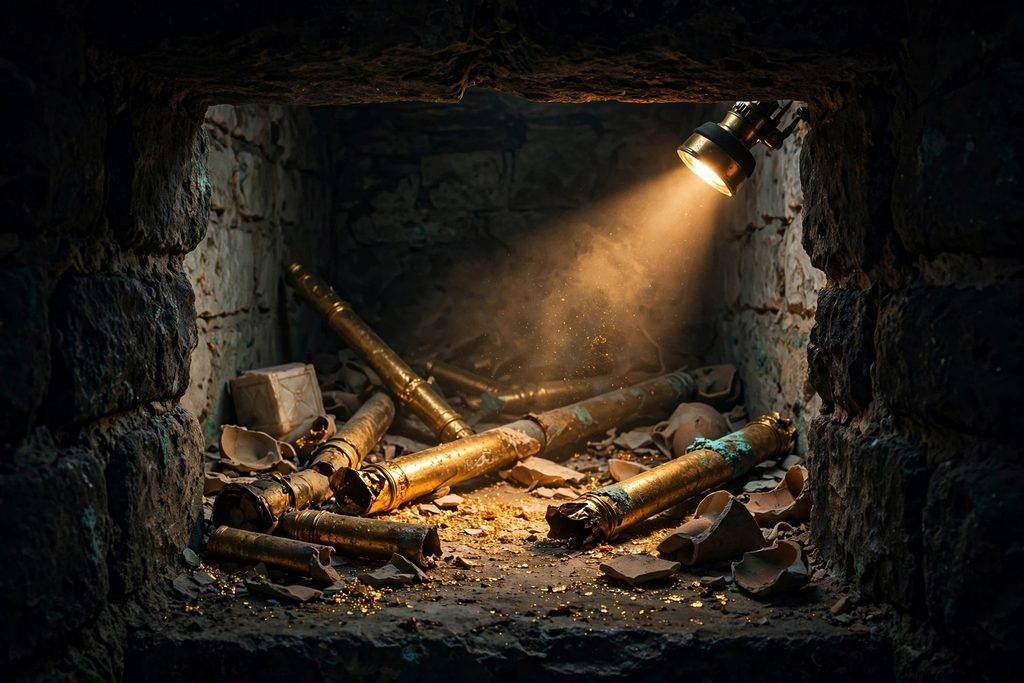
The chamber was reopened on 21 January 1926, with Reisner on site. What lay inside was a puzzle in gold. The wooden furniture had rotted away almost completely, leaving its thin gold casings and inlays collapsed in heaps on the floor, mixed with pottery, linen and stone. If the pieces were lifted carelessly, nobody would ever know what shape any of them had been.
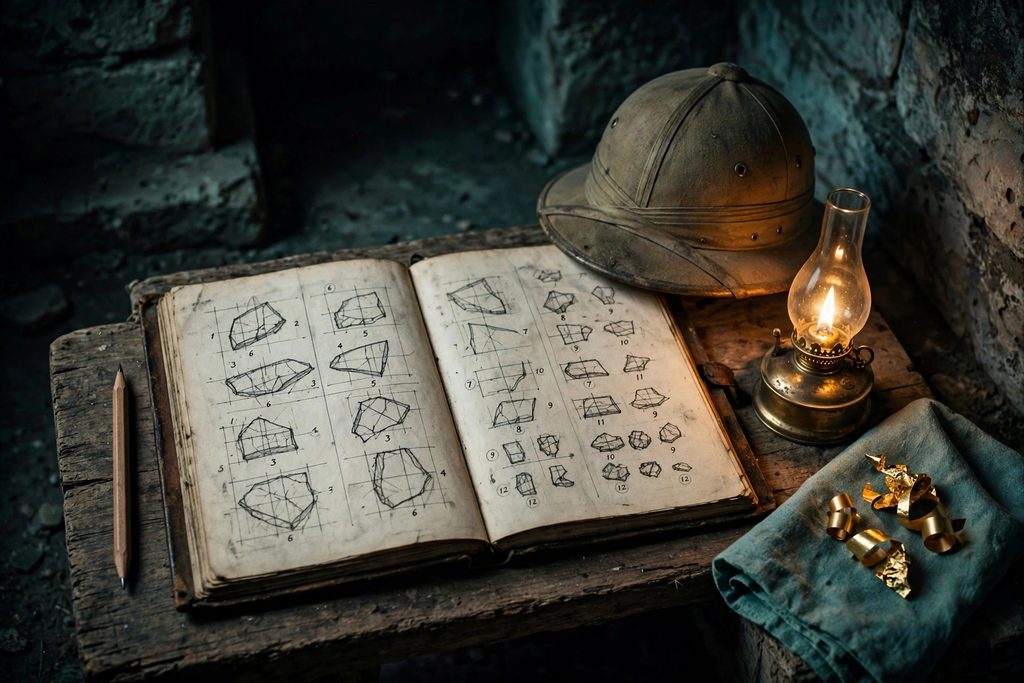
So the expedition did something no excavation in Egypt had done on that scale. The archaeologist Dows Dunham recorded every fragment where it lay before it was moved, layer by layer, for 321 working days. Once a falling stone glanced off his helmet. By the end the team had filled 1,701 pages with notes and plans and taken 1,057 photographs of one small room.
That record is the reason we can see the queen’s furniture today. Over the following quarter of a century, working from Dunham’s notes, conservators matched the gold casings to new wood and rebuilt the pieces one by one. Much of the work was done by William Arnold Stewart.
Everything a Queen Needed
The furniture told the excavators whose tomb this was. A carrying chair, the litter in which the queen was carried by bearers, bore her name and titles in gold hieroglyphs. She was Hetepheres, Mother of the King of Upper and Lower Egypt, Follower of Horus, God’s daughter of his body. By April 1925 Reisner had worked out who she was, the wife of Sneferu and the mother of Khufu. The canopy that once enclosed her bed carried Sneferu’s name. Seals on the burial named Khufu, the son who had paid for it.
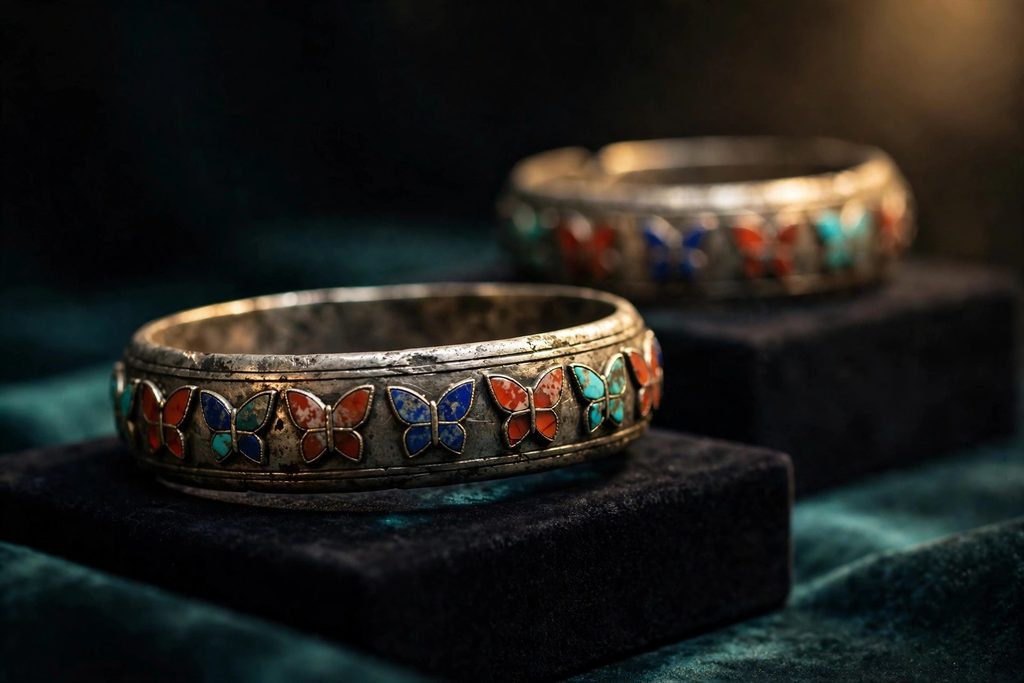
The finest small objects were the bracelets. Twenty silver bangles were found in their own gold-cased box, each one inlaid with butterflies of carnelian, lapis lazuli and turquoise. In the queen’s lifetime silver was rarer in Egypt than gold, and the bracelets were among the most precious things she owned. Today some of them are in Cairo and some in Boston, and the Museum of Fine Arts, Boston, holds full-size reproductions of the bed, canopy, armchair and carrying chair.
The Lid Is Raised
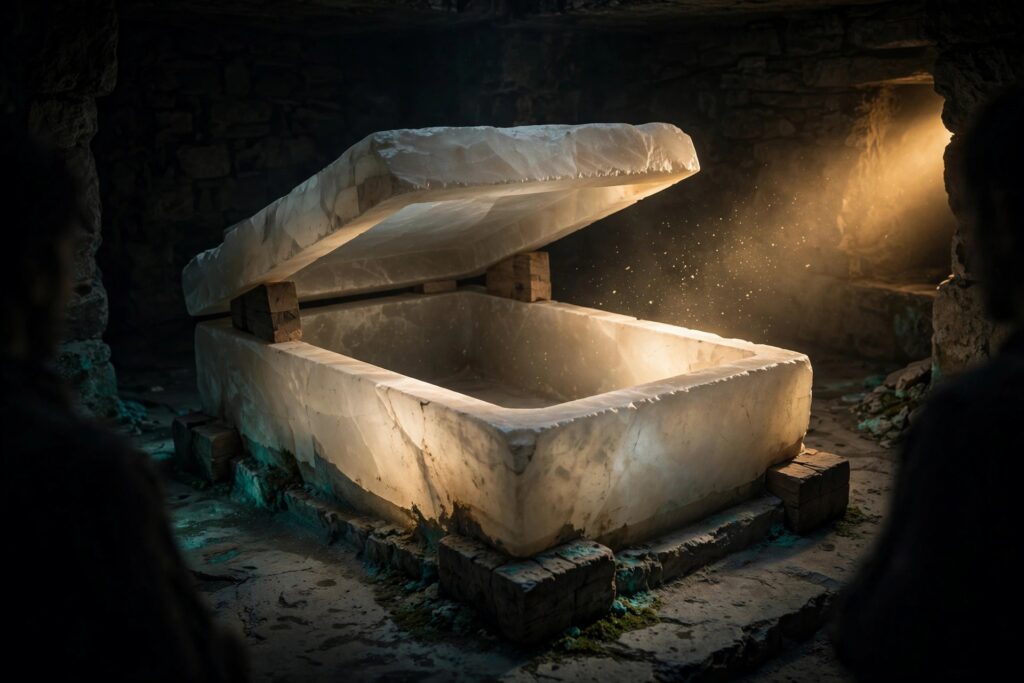
At the far end of the chamber stood the sarcophagus, a box of white alabaster weighing more than two tons. Its lid was in place. Nothing in the chamber suggested it had been opened since the day it was closed.
On 3 March 1927, Reisner invited a small gathering of guests down the shaft to watch it opened. The American painter Joseph Lindon Smith, a friend of the expedition, was among them and later described the moment. The lid was lifted. The sarcophagus was empty. There was no mummy, no wrapping, no jewellery, not even dust. By Smith’s account, Reisner turned to the guests and told them that the queen was not receiving visitors.
Two months later the team opened a plastered niche in the chamber wall. Inside was an alabaster chest divided into four compartments. In them, in a weak solution of natron, the salt the Egyptians used to dry and preserve the dead, were the remains of the queen’s internal organs. It is among the oldest evidence of how Egyptian embalmers treated a royal body. Her organs had been carefully preserved and buried. Her body had not been.
Where Is the Queen?
She was first buried near her husband Sneferu at Dahshur. Robbers broke in, took the body for its gold and fled. Officials hid the loss and Khufu reburied the empty coffin at Giza in secret.
This shaft was her original grave, dug in haste because she died before her pyramid was ready. Later her body was moved to the small pyramid G1-a next to it, and these goods were left behind.
She was buried in G1-a first. After a robbery, what was left was moved to a new, hidden shaft.
Some argue she could only have been buried at Giza, and that the order of the burials is still uncertain.
Reisner told the most dramatic story. In his telling, Hetepheres was first buried near her husband at Dahshur, about 25 kilometres to the south. Not long after the funeral, thieves broke into her tomb, tore the body open for its gold and fled before they could take the rest. The officials responsible were too frightened to tell the king. They reported only that the tomb had been disturbed, and Khufu ordered his mother reburied in safety beside his own pyramid, never knowing the coffin he buried was empty.
It is a good story, and it explains the sealed, empty sarcophagus. But it goes well beyond anything the excavators found. No robbed tomb of Hetepheres has ever been found at Dahshur, and later scholars have doubted that a secret burial could be made in the middle of the busiest building site in Egypt.
In 1985 the archaeologist Mark Lehner offered another reading. He argued that this shaft was her first tomb, dug in a hurry because she died before her pyramid was ready. Later, when one of the small pyramids beside the Great Pyramid was finished, her body was moved into it, and these goods were left behind. Others, among them Zahi Hawass, have suggested the order ran the other way, with a first burial in that small pyramid, a robbery, and a new hidden shaft for what remained. The small pyramid was robbed long ago, so no trace of her body survives there to settle it.

A Tripod in the News Again
In November 2026 the discovery went round again as fresh news, with headlines about a photographer’s tripod revealing a hidden tomb of Khufu’s mother. The tripod and the tomb are both on record. What the new versions leave out is the date. The find is more than a century old, and it was published in the Bulletin of the Museum of Fine Arts in Boston within a few years.
This is how old stories become new mysteries. A true event loses its date, gains a few details, and returns as a discovery. The way to test it is to go back to the oldest record. Here that record is unusually rich. Harvard’s Giza Project has put the expedition diaries, plans and photographs online, and anyone can read the excavators’ own words for the days the shaft was cleared and the coffin was opened.
Hetepheres is not the only empty coffin in Egypt to puzzle its finders. The giant granite boxes of the Serapeum of Saqqara and the sarcophagi of the Osiris Shaft at Giza have their own files. And the pyramid her son built is the subject of another, on the painted marks Richard Vyse found inside it in 1837. Sneferu and Khufu sit side by side in the Timeline of the Pharaohs.
The Verdict | Documented
Everything in the story people are sharing this week took place. A photographer’s tripod found the plaster. The shaft led to the hidden tomb of Hetepheres, mother of Khufu. The burial was intact, the sarcophagus was sealed, and when it was opened it was empty. Each step is recorded in the diaries, plans and photographs made at the time, and the objects themselves carry her name.
So the file is stamped Documented, with one correction. The discovery was made in 1925, not this year. What the records do not say is where the queen went. Robbers at Dahshur, a body moved to a nearby pyramid, or a burial we have not yet understood, the answer is still missing. Somewhere between a sealed coffin and an intact chest of organs, a queen of Egypt disappeared, and nobody wrote down how.
- Claim tested
- A photographer’s tripod uncovered the hidden tomb of Queen Hetepheres, mother of Khufu, beside the Great Pyramid, and her sealed sarcophagus turned out to be empty.
- Oldest record
- Rung 1 · Made at the time
The diaries, plans and photographs of the Harvard and Boston expedition, February 1925 to 1927, and George Reisner’s report in the Boston museum’s Bulletin. - The record supports
- The excavation diaries, 1,701 pages of notes, 1,057 photographs, the objects themselves with her name and titles, and the empty sarcophagus, all recorded as they were found.
- It does not support
- That the find is new. It was made in 1925, though it still circulates online as fresh news. Nor any record of where her body went.
- Explanations weighed
- A robbery at Dahshur and a reburial at Giza, a first burial here with the body moved to the pyramid G1-a, a robbery of G1-a with the remains moved here, and a burial at Giza from the start.
- What would change it
- Nothing short of showing the expedition records were wrong. Finding her body, or a robbed first tomb, would answer the open question and add to this file without changing the stamp.
The other Egyptian case files are gathered in Ancient Egypt | The Case Files. Every verdict in the archive is listed in the Verdict Index, and the rules behind the stamps are set out in the Archive Standard. The tomb is pinned in the Atlas of Mysteries, a few steps east of the Great Pyramid.
Quick Answers About the Tomb of Hetepheres
### Who was Hetepheres?
Hetepheres I was a queen of Egypt’s Fourth Dynasty, around 2600 BCE. She was the wife of the pharaoh Sneferu and the mother of Khufu, who built the Great Pyramid of Giza.
### How was her tomb found?
In February 1925 the photographer of the Harvard and Boston expedition, Mohammedani Ibrahim, noticed that a leg of his tripod rested on plaster east of the Great Pyramid. The plaster hid a staircase and a shaft about 27 metres deep leading to her burial chamber.
### Was the body of Hetepheres ever found?
No. Her alabaster sarcophagus was opened on 3 March 1927 and found empty, though it was still sealed. Her preserved organs were found in a canopic chest in a niche in the same chamber. Where her body went is still debated.
### What was found in the tomb?
Gold-cased furniture, including a bed, a canopy, an armchair and a carrying chair, a box of silver bracelets, alabaster jars, pottery, the sealed sarcophagus and a canopic chest.
### Where are the treasures of Hetepheres now?
The originals went to the Egyptian Museum in Cairo, with some smaller pieces in the Museum of Fine Arts, Boston, which also holds full-size reproductions of the furniture.
### Is the tripod story new?
No. It happened in 1925. Articles in 2026 have presented it as a new discovery, but the excavation was recorded at the time and published soon after.