



We live in a world defined by the tyranny of convenience. Every smart device, every frictionless transaction, every moment saved is a brick laid in an invisible structure of systemic control. But what if this structure is not a benign evolution of technology, but a deliberate, meticulously planned dystopian architecture designed to erase autonomy and usher in a new era of programmable existence?
The shadows lengthen when we examine the convergence of three critical technologies | the erosion of physical identity, the absolute centralization of finance, and the introduction of autonomous, weaponized enforcement. Rumors among researchers and those who track global financial policy suggest a chilling future | one where the very concept of you is reduced to a trackable, tradable, and ultimately controllable digital ledger. This is the control grid, and its foundations are being poured right now, demanding that we look past the convenience and confront the metaphysical stake in our digital surrender.
The Phantom Identity | From Phone to Skin
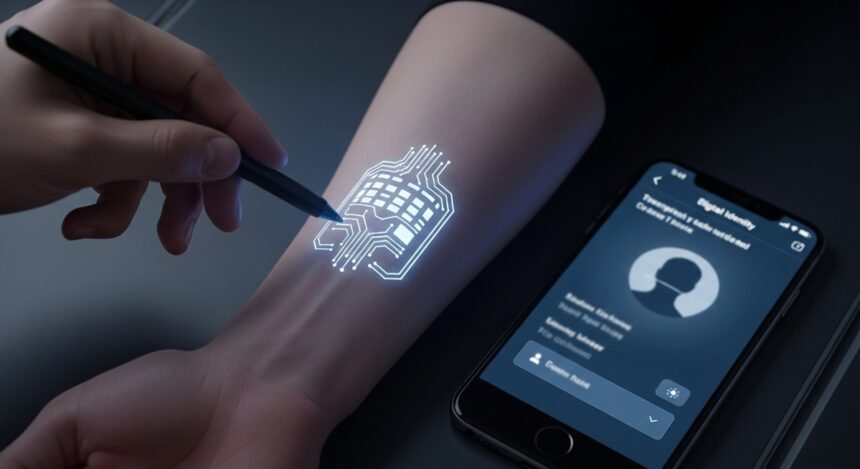
The first pillar of this emerging grid is the obsolescence of physical identity. For years, the smartphone has been our digital tether, an inconvenient but necessary extension of the self. Now, a more invasive, more permanent solution is being advanced, championed by figures like Bill Gates | the electronic tattoo.
This technology—a patch, a sensor, an invisible marker—is presented as the ultimate convenience, eliminating the need to carry your phone or physical documents. But the philosophical shift it represents is profound. Moving the digital identification system from a detachable device to the surface of the skin is the final step in merging the individual with the central ledger.
The underlying objective, according to critical observers like economist Catherine Austin Fitts, is not convenience, but full control. You cannot enforce a totalized system unless every citizen is seamlessly integrated and identifiable, at all times, without the possibility of separation. This electronic marker becomes the digital ID, a prerequisite for all future interactions—financial, social, and governmental. It is the ultimate personal barcode, a visible (or invisible) declaration of adherence to the system.
The Programmable Shackles of Digital Currency

The push for a global digital identity is inextricably linked to the radical transformation of money. The concept of Central Bank Digital Currencies (CBDCs) represents a fundamental shift from money as a medium of exchange to money as a tool of behavioral control.
While the direct implementation of CBDCs may face public resistance, the system is being built through parallel channels. Fitts and others warn that the market is being flooded with stablecoins and “privatized versions of CBDCs” that contain the same sinister core feature | programmability.
What does programmable money mean for the individual? It means the central authority—be it a central bank, a corporate entity, or an algorithmic network—can dictate how, where, when, and by whom money is spent.
The Mechanism of Obedience
Imagine a scenario where your digital funds are programmed to expire if not spent within a certain district, or where specific purchases—say, politically disapproved media or unapproved travel—are simply blocked by the code embedded within the currency itself. Your compliance is no longer enforced by law, but by financial physics.
This creates a fully digital financial transaction system where every economic action is recorded and permissioned. The decision to “subscribe” to such a system—whether through accepting a digital form of salary or opting into a national digital currency—becomes a voluntary surrender to the control grid. The ultimate warning is this | once you subscribe to the digital currency, you subscribe to the entire architecture of control connected to it. The price of convenience is the abdication of financial liberty.
The Iron Fist | Autonomous Enforcement and DNA Marking

The architecture of digital control requires an enforcement mechanism capable of operating outside the traditional, messy realm of human judgment. This mechanism is emerging in two terrifying forms | the weaponized robot and the electro-DNA marker.
The Robotic Hunter
The development of autonomous robotic platforms designed for surveillance and—crucially—hunting, moves the dystopian narrative from abstract policy to imminent physical threat. The Turkish company Roketsan’s robotic dog, combining mobility with laser-guided missiles and autonomous operation, is not a police tool for fighting “ethnic organized crime groups”—which, the article bitterly notes, are often inexplicably protected by corrupt state elements. Instead, these mechanical hunters are designed for a different quarry | the normal person deemed non-compliant.
This technological leap suggests a future where the police may not be needed for direct confrontation. If human law enforcement agents were to realize the “dirty game of the World Government” and refuse to comply—a scenario often considered unlikely by observers—they would simply be replaced by unsentient, unblinking machines programmed to enforce digital edicts.
The Viral Tag
Perhaps the most chilling development is the speculated integration of marking and weaponization. The concept of marking citizens with electro-DNA suggests a terrifying feedback loop | police units, possibly endowed with immunity, could use specialized electronic weapons that not only mark an individual with a unique identifier but potentially alter their DNA in the process.
The victim of such an attack is immediately stigmatized, marked in the system, and placed in a position where they must “prove that they are not a camel”—a symbol of endless, pointless bureaucratic struggle. The marker is instant, the effect is indelible, and the burden of proof is inverted, placing the individual in a perpetual state of digital and biological suspicion. This is the dystopian law of the twenty-first century | you are guilty until the ledger says otherwise.
The All-Seeing Algorithm | Beyond the Camera
Our surrender to the control grid is happening on multiple, often unnoticed, fronts. Even as citizens take basic precautions—taping over a laptop camera or avoiding public facial recognition—the surveillance apparatus has already moved beyond the visible spectrum.
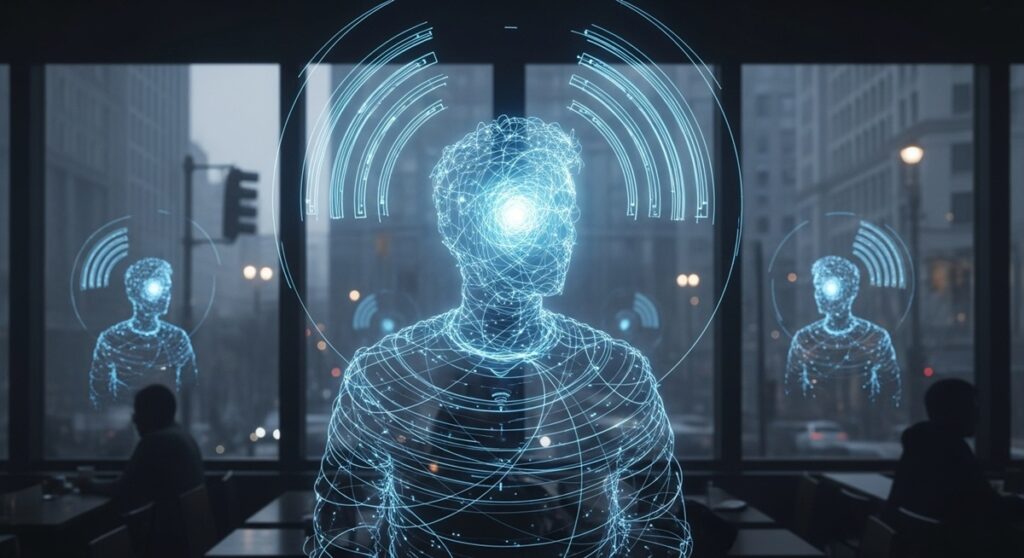
Recent experiments, such as those conducted by scientists at KIT with 197 participants, demonstrate that conventional WiFi routers can “see” people like a camera. By analyzing the interference patterns caused by human bodies moving through the wireless signals, the personality was almost 100% determined.
This means that taping up your camera is a purely symbolic act. If you regularly pass by a coffee shop or a commercial corridor with a basic Wi-Fi network, you are being identified and tracked without your knowledge. The invisible reality is that you can be seen through walls, your unique “wireless signature” acting as a biometric identifier. This renders the urban landscape a giant, passive surveillance field, making the electronic tattoo almost redundant for identification, but still necessary for permission to transact.
The Existential Price of Compliance
The conclusion is not one of abstract warning, but of existential dread. We are at a critical juncture where the choice is stark | autonomy or adhesion. Entering this system orchestrated by the “satanic elites” demands a perpetual state of high alert—a refusal to sign, to agree, or to fall into any digital trap that binds your identity to the programmable control system.

For those who understand the stakes, the price of agreement is deemed too high. The ultimate resistance is non-participation—to become a Non-commemorative ghost in the machine. Many are already prepared to relinquish all benefits of the system—passports, pensions, salaries—to live off what they have prepared, choosing to “starve” rather than compromise their spiritual and physical sovereignty.
While the degenerates running this system may act outside the law, choosing to resist remains an act of free will. It is a declaration against the demons of control and a statement of allegiance to a higher, unseen moral authority. The battleground is no longer defined by physical borders or ideological warfare; it is the boundary between the human soul and the Mark of the Machine. Our future hinges on our willingness to pay the ultimate price for our inherent, untamed humanity.