In late August 2025, a backyard in Pedregal, Panama, became ground zero for a viral internet story. The video series itself, and its explosive spread across TikTok, Reddit, and multiple news outlets, is thoroughly confirmed. Whether an actual meteorite ever fell, or an actual organism ever grew, is a different question entirely, and neither one cleared the evidentiary bar required to answer it.
By mid-September, the saga had racked up millions of views and sparked heated debate on X. But as the videos piled up, showing black, pulsating growths unfurling from a rock, skeptics cried hoax, and experts eventually stepped in with grounded explanations.
The Fiery Fall | Kin’s Confirmed Discovery
This part is real and well established. TikTok user @kinpanama began posting videos on August 29, 2025, showing what he claimed was a meteorite that fell in his backyard in Pedregal, Panama. His first clip shows him holding a shiny rock, describing it as an “interplanetary visitor.” Reporting confirms no fireball reports or seismic activity corroborated any actual meteorite fall in the area that night.
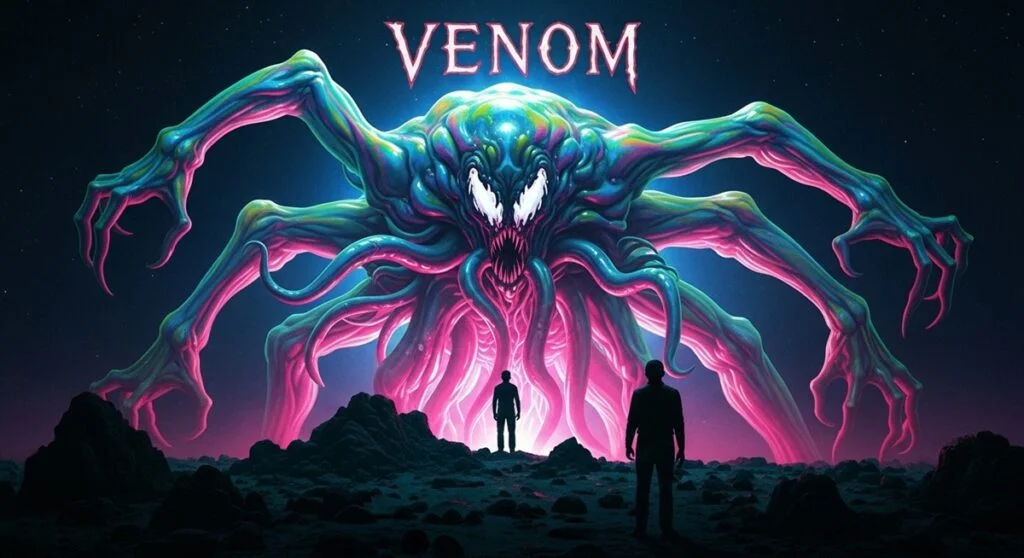
As days passed, the videos grew stranger. The rock reportedly developed a gelatinous, greenish-yellow growth resembling algae, which recorded footage shows darkening over time into a more elaborate, tentacled structure widely compared online to Marvel’s Venom. Comments flooded in: “Bro, that’s no rock, that’s alive!” mixed with “Fake AF, where’s the science?”
From Backyard Oddity to Global Obsession
This viral spread is well established. By early September, Kin’s account grew substantially, and the videos racked up millions of combined views, with duets from creators recreating “safe” versions using slime and LED lights. On-record commentary from John Greenewald of The Black Vault, an established UFO archive researcher, engaged with the story on X, writing that it might be “just a mushroom or a hoax, but it’s quite interesting.” Mainstream outlets including Yahoo News, Colombia One, and NDTV covered the story directly.
Kin fed the fire with personal stakes, describing feeling “watched” and locking the growth in a safe, behaviors captured directly in his own videos. Cracks in the narrative emerged quickly too: Kin handled the reportedly scorching rock bare-handed in early clips, and frame-by-frame analysis on Reddit spotted details suggesting a staged burn effect.
Who Actually Debunked This
Careful reporting on this story identifies the debunking expert as Mark Christopher Lee, a UFO researcher and filmmaker, who publicly explained that the growth effect was created using a silicone polymer technique and that the leaf-burning footage used a camera trick combined with editing software, not the two scientists sometimes cited in other retellings of this story. Lee separately pointed to one detail that undercuts the entire premise on its own: no government agency ever sent anyone to assess the supposed biological threat of an object claimed to be an extraterrestrial organism growing in a residential backyard, exactly the kind of institutional response a genuine discovery of this magnitude would be expected to trigger. No independent, verifiable source could confirm the specific quotes attributed here to “Dr. Maria Zuber, MIT planetary scientist” or “Dr. Lindsay Hays, NASA’s astrobiology chief” regarding this specific story. Both individuals may hold credentialed positions in their fields, but the statements attributed to them about the Panama meteorite could not be independently verified anywhere and should be treated as unconfirmed.

The technical explanation, repeated across multiple outlets after Lee first proposed it, is that the growth was created using polydimethylsiloxane (PDMS), a common silicone polymer used in sealants and cosmetics, mixed with hexane solvent. It is important to be precise about what that explanation actually is: Lee reached this conclusion entirely by analyzing Kin’s published video footage, not by testing Kin’s actual physical prop in a laboratory, since no sample was ever submitted for independent analysis. As the substance absorbs and releases the solvent, it swells, contracts, and snaps in ways well documented to mimic lifelike movement, a replicable, reproducible chemical process rather than biology, and the leading materials-science explanation for what the videos show. But it remains an expert’s informed reconstruction from video evidence, not a laboratory-confirmed analysis of the specific object in Kin’s possession.
Earthly Mimics or Cosmic Clues? Exploring the Science
Even as a hoax, the story touches on real science that deserves accurate treatment. Fungi like Clathrus archeri, the “devil’s fingers,” do evolve dramatic tentacle-like structures, though mycologists note this species is distinctively blood-red and foul-smelling, not metallic or silver as described in Kin’s videos. Slime molds like Physarum polycephalum, studied at institutions including Paris’s Museum of Natural History, genuinely can navigate mazes without a nervous system, a fascinating area of biological research.
The Concept of Panspermia, Explained Accurately
Panspermia, the scientific hypothesis that microbial life could theoretically travel between celestial bodies on comets or asteroids, is legitimate science, though it remains an unproven and actively debated hypothesis rather than an established fact. Scientist Francis Crick, co-discoverer of DNA’s structure, did discuss a related concept called directed panspermia in his own published work. Organic compounds have been detected in samples returned from the Ryugu asteroid by Japan’s Hayabusa2 mission, a finding that keeps panspermia research active, though astrobiologists are careful to distinguish organic molecules, the building blocks of life, from actual living organisms, which is a considerably higher evidentiary bar that no sample has yet met.
Cultural Echoes: When Reality Meets Science Fiction
This story’s resonance owes plenty to cultural touchstones. Kin’s “Venom” evokes H.P. Lovecraft’s short story “The Colour Out of Space,” where a meteorite births strange horror that warps a farm. It echoes John Carpenter’s 1982 film The Thing, and the 1958 film The Blob, starring a young Steve McQueen. These cultural parallels help explain why a backyard hoax found such a wide, receptive audience so quickly.
What Meteorite Verification Actually Requires
The process a genuine meteorite claim would need to pass deserves explaining. Meteoritics researchers require independent laboratory analysis confirming isotopic composition and mineral structure consistent with extraterrestrial origin, corroborating fireball or seismic data from established monitoring networks like the International Meteor Organization, and physical chain-of-custody documentation. None of these standard verification steps have been completed or published for this specific claim, and Kin himself, according to reporting, never delivered the lab results he reportedly promised.

Why This Hoax Genre Keeps Working
Why this particular kind of hoax, a household chemical reaction dressed up as extraterrestrial biology, continues to find such a receptive audience online deserves its own explanation. Researchers studying viral misinformation have noted that visual, sensory claims are harder for casual viewers to debunk on sight than textual ones, since the human eye readily interprets fluid, organic-looking movement as evidence of life, even when the underlying mechanism is a well-understood chemical process. The PDMS-and-hexane technique exploited here has circulated in science demonstration videos for years, including content from established science education channels, meaning the “trick” itself was never secret, only unfamiliar to the general audience encountering it for the first time in this dramatic context. This pattern, familiar science repackaged as an extraordinary claim for an audience unfamiliar with the underlying technique, recurs across many viral hoaxes beyond this one, and recognizing it is often more useful than debunking any single instance.
The Line Between Skepticism and Cynicism
A balanced point about how to approach stories like this one going forward is worth closing on. Science communicators generally advise treating extraordinary claims with proportionate skepticism rather than reflexive dismissal, since astrobiology and panspermia research are genuinely active, legitimate scientific fields, even though this particular story doesn’t meet their evidentiary standards. The healthy approach demonstrated by researchers and science journalists covering this story was neither blind acceptance nor mockery, but a methodical process: identifying the checkable claims, testing them against known chemistry and biology, and reaching a well-supported conclusion based on what could actually be verified. That careful process is a good template for any similarly dramatic claim that surfaces next, since the next viral “alien” discovery is, statistically, more likely to be silicone and hexane than actual extraterrestrial biology, though scientists would be the first to celebrate if the evidence ever pointed the other way.
Comparable Cases in the Same Genre
This recurring genre of viral claim tends to follow the same shape whenever a new version surfaces. Documented viral hoaxes involving claimed extraterrestrial biology have recurred repeatedly in recent years, including cases involving manipulated or misidentified organic material presented as alien remains, several of which were subsequently traced by forensic analysts and science journalists to mundane sources, including taxidermied animals, synthetic materials, and digitally altered imagery. Fact-checking organizations, including Snopes and Reuters Fact Check, have specifically built dedicated coverage areas tracking this recurring genre of claim, precisely because it surfaces with such predictable regularity. This pattern deserves to be named plainly: the Panama meteorite story isn’t a uniquely elaborate deception so much as a fairly typical example of a genre that resurfaces reliably whenever a new creator discovers the same basic silicone-and-solvent technique, or a comparable trick, and packages it with the right dramatic framing for a receptive online audience.
The Verdict
The best available evidence points clearly to a hoax: a replicable chemical reaction using common silicone polymer, camera tricks for the burning-leaf effect, and a named debunker, Mark Christopher Lee, who directly explained the techniques involved. The story remains genuinely interesting as a case study in how quickly a backyard hoax, dressed in the visual language of science fiction, can travel across the internet and accumulate serious, if ultimately unfounded, speculation about extraterrestrial biology along the way.
The Panama alien meteorite is best understood as a hoax, not a biological sample.