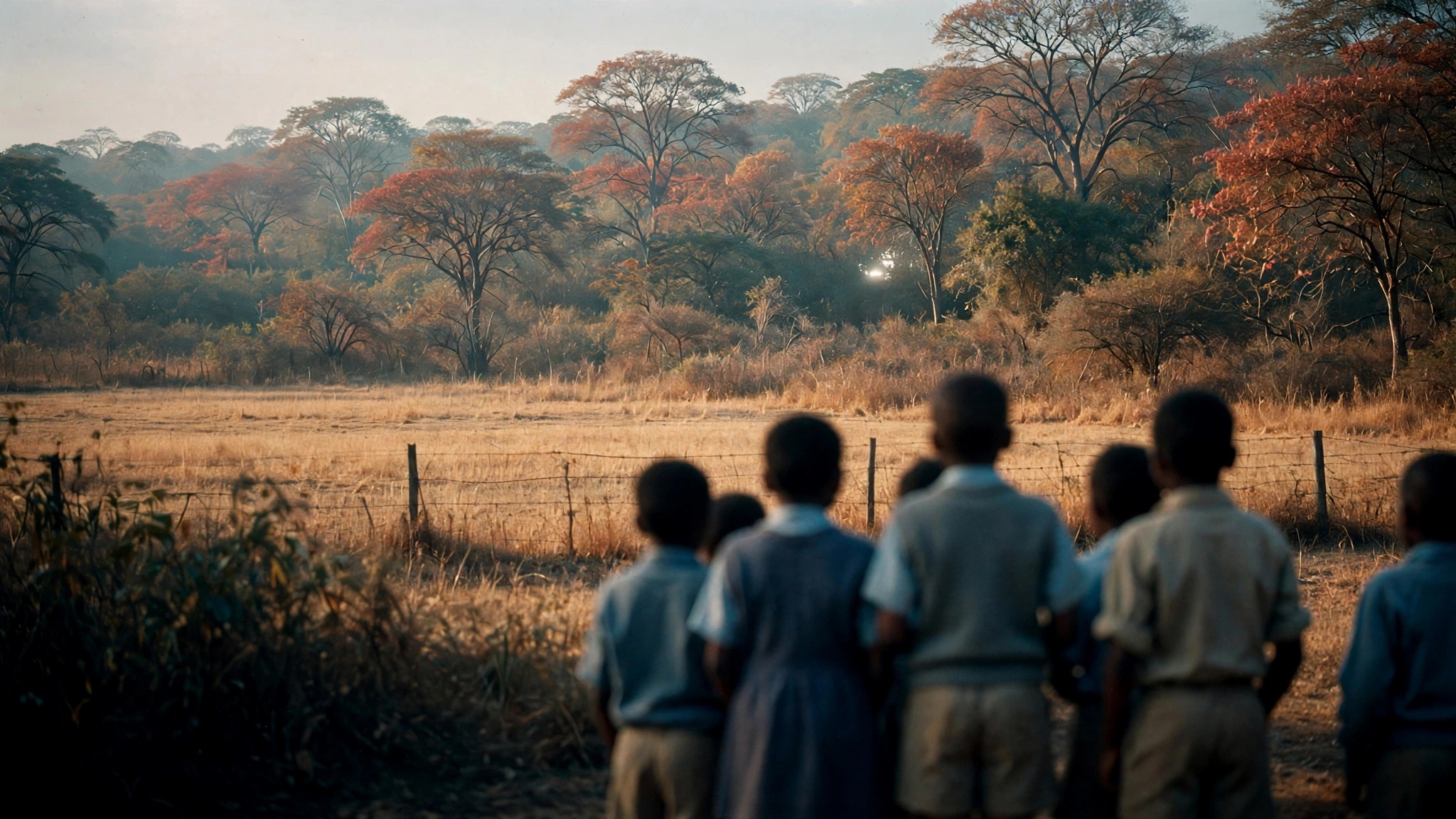
It was a Friday in the dry season, a little after ten in the morning. At Ariel School, a private primary school on the edge of Ruwa, about twenty kilometres south-east of Harare, the bell had rung for break and some two hundred and fifty children had spilled out onto the playing fields. Inside, the teachers were in a staff meeting. The only adult nearby was the woman who ran the tuck shop.
Beyond the school boundary, where the grass gave way to brush and small trees, some of the children saw something shining. Over the next quarter of an hour, by their accounts, it came down among the trees, and one or more figures in dark clothing came out of it. Some children screamed and ran. Some of the older ones stayed and watched. When it was over, sixty-two of them, aged between six and twelve, said they had seen it.
- The Timeline | The Week and the Thirty Years After
- Two Days Earlier, a Fire in the Sky
- Morning Break
- The Journalist and the Ufologist
- The Professor From Harvard
- What Was on Television
- Thirty Years Later
- The Locked Archive
- Five Ways to Read One Morning
- The Verdict | Unresolved
- Quick Answers About the Ariel School Encounter
Thirty years later, most of those children are in their forties. Almost none of them has changed the story. This file follows what was recorded in the days after, what was added later, and why one morning break in Zimbabwe is still open.
The Timeline | The Week and the Thirty Years After
Two Days Earlier, a Fire in the Sky
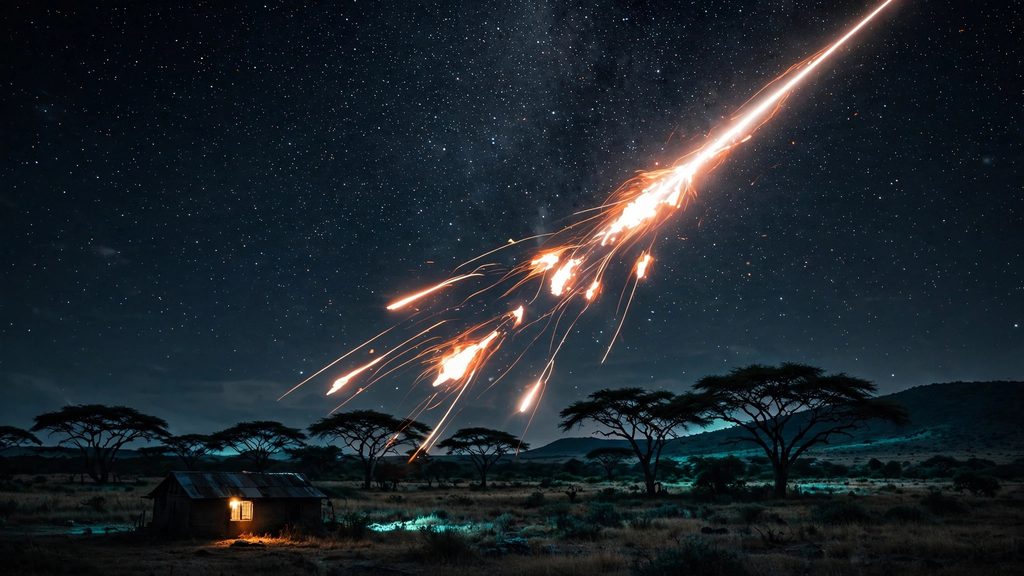
The story does not begin at the school. On the night of 14 September 1994, a brilliant fireball crossed the skies of southern Africa. People saw it from Zaire to Johannesburg. It was the body of a Russian rocket from the Kosmos 2290 launch, burning up as it fell back into the atmosphere.
Few people in Zimbabwe knew that yet. The national broadcaster’s radio service asked listeners to call in, and the calls poured in, from a single shooting star to a fleet of sixteen brightly lit spaceships. In London, the Daily Telegraph reported on the morning of 16 September that the African UFO had been a rocket. In Harare, a correction took about three weeks to appear.
So on the morning of 16 September, a country was talking about lights in the sky. That matters for every explanation of what happened next, and it is the first thing believers and skeptics both point to.
Morning Break
The children’s descriptions, gathered within days, share an outline. Something silver came down, or hovered, beyond the boundary of the school grounds, among the brush and trees where pupils were not allowed to go. One child described it later as glinting in the trees, like a round disc. Then there were figures, one or more of them, dressed in black, with large eyes. Some children ran back towards the classrooms. Others stayed to watch.
- One or more silver objects came down beyond the school’s boundary, among brush and small trees
- One or more figures, dressed in dark clothing, came out and moved near the craft
- The figures had large eyes, and many children were frightened and ran
- No adult from the staff was outside. Teachers were in a meeting
- The whole thing lasted a matter of minutes, up to about fifteen
- How many craft there were, from one to several
- How many figures, from one to four
- What the figures looked like, from ordinary-looking men to small beings with large eyes
- Whether any message was received. The telepathic warning appears mainly in Mack’s interviews, two months later
- What it was. Some children thought of the tokoloshe, a creature of Shona and Ndebele folklore
Beyond the outline, the accounts divide. There was one craft, or several. There was one figure, or four. They looked like ordinary men in dark suits, or like small beings unlike anything the children had seen. Some children, raised on the folklore of the Shona and Ndebele, thought of the tokoloshe, a small mischievous creature of local legend. Nearly two hundred children who were outside at the same time saw nothing at all.
None of that is unusual for a frightening event seen by many people at once. Witnesses to car crashes disagree about colours and numbers. What makes Ariel School unusual is how many children saw something, how young they were, and how firmly they have held to it since.
The Journalist and the Ufologist
The first outsider to arrive was Tim Leach, the BBC’s correspondent in Zimbabwe, who had been covering the fireball. On 19 September he went to the school and filmed interviews with pupils and staff, including the headmaster, Colin Mackie. Leach, who had covered wars, later said he could handle war zones, but could not handle this UFO thing.
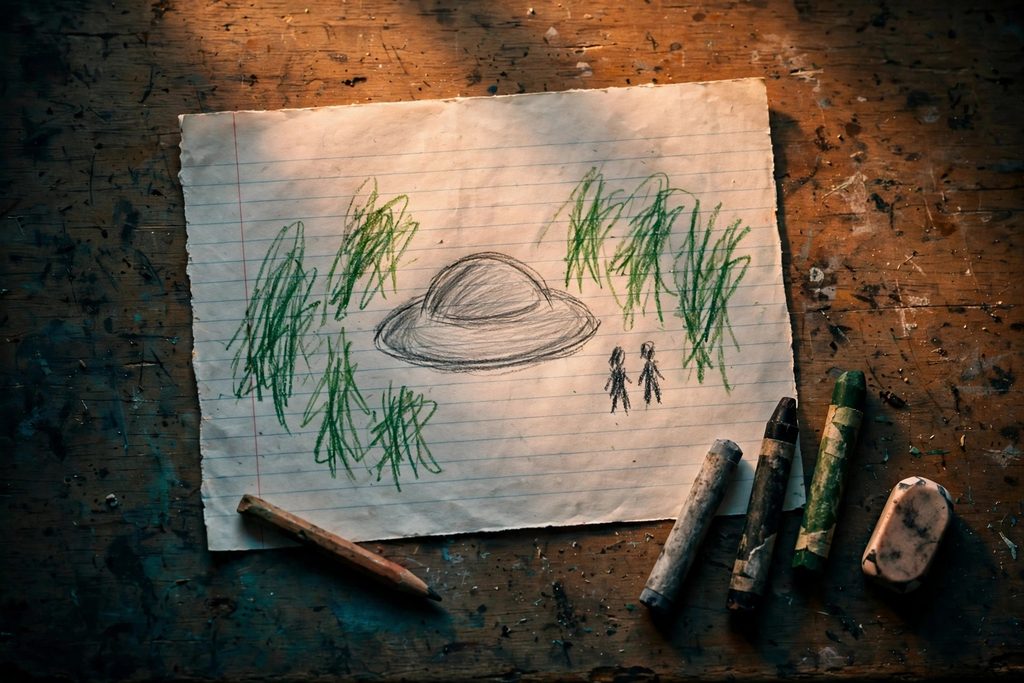
The next day came Cynthia Hind, a Harare writer who edited a newsletter called UFO Afrinews and represented the American organisation MUFON in Africa. Hind talked to the children in small groups of two to six, with other children able to listen, and asked them to draw what they had seen. She later circulated twenty-two drawings she judged the clearest. They show something like a classic flying saucer. Critics have pointed out that the rest of the drawings were far more varied, and that group interviews let children hear and absorb each other’s stories.
Hind also insisted that the children could not have been copying anything, because African children, she said, did not have television and the local media did not cover UFOs. Both claims would later be tested.
The Professor From Harvard
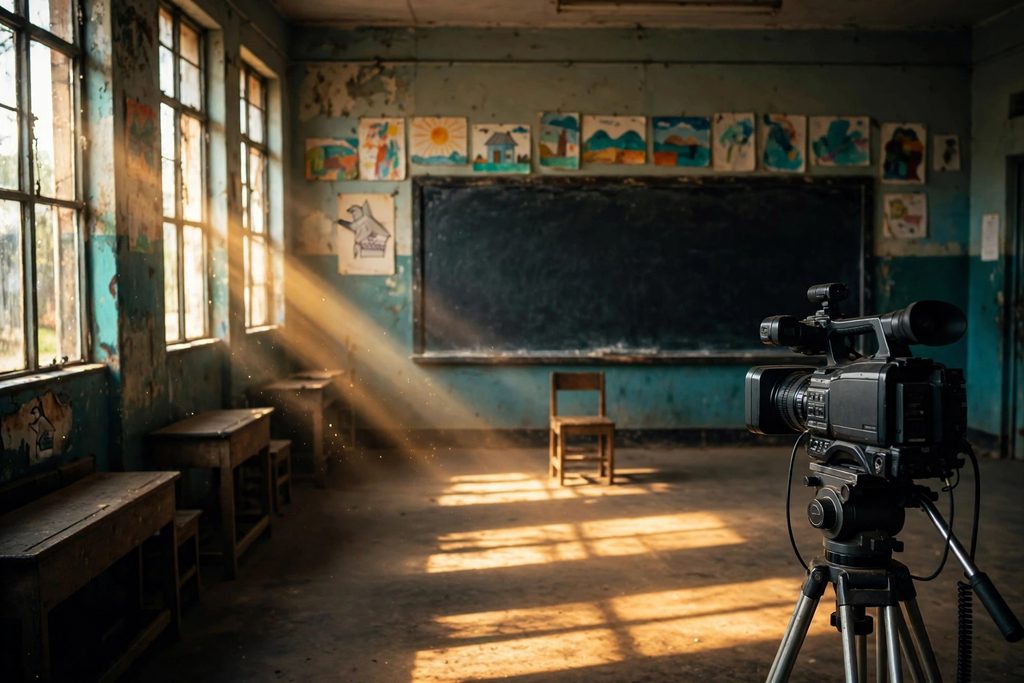
In November 1994, more than ten weeks after the sighting, John Mack arrived at Ruwa. Mack was a professor of psychiatry at Harvard and had won a Pulitzer Prize for a biography of T. E. Lawrence. Earlier that year he had published Abduction, a book arguing that people who reported being taken by aliens were describing something that happened to them. Harvard was in the middle of an inquiry into his work with those patients. It ended with him keeping his post.
With his colleague Dominique Callimanopulos, Mack interviewed twelve children on video. The interviews are the most famous record of the case. In them, several children describe not only a craft and its occupants but a message, received without words, warning that humans were harming the planet and that technology was going too far. Mack came away convinced. The children, he said, were clearly talking about a phenomenon that occurred in physical reality.
The difficulty is timing. The environmental message barely features in the first reports by Leach and Hind. It appears most strongly in interviews held two months later by a man known for his anti-nuclear and environmental convictions, after children had spent weeks talking among themselves, with their parents and with visitors. That does not mean Mack invented it. It means the message sits higher on the source ladder than the sighting itself.
What Was on Television
In 2026 the researcher Gideon Reid went back to Zimbabwe’s newspapers and television schedules for 1994 and published what he found in The Skeptic.
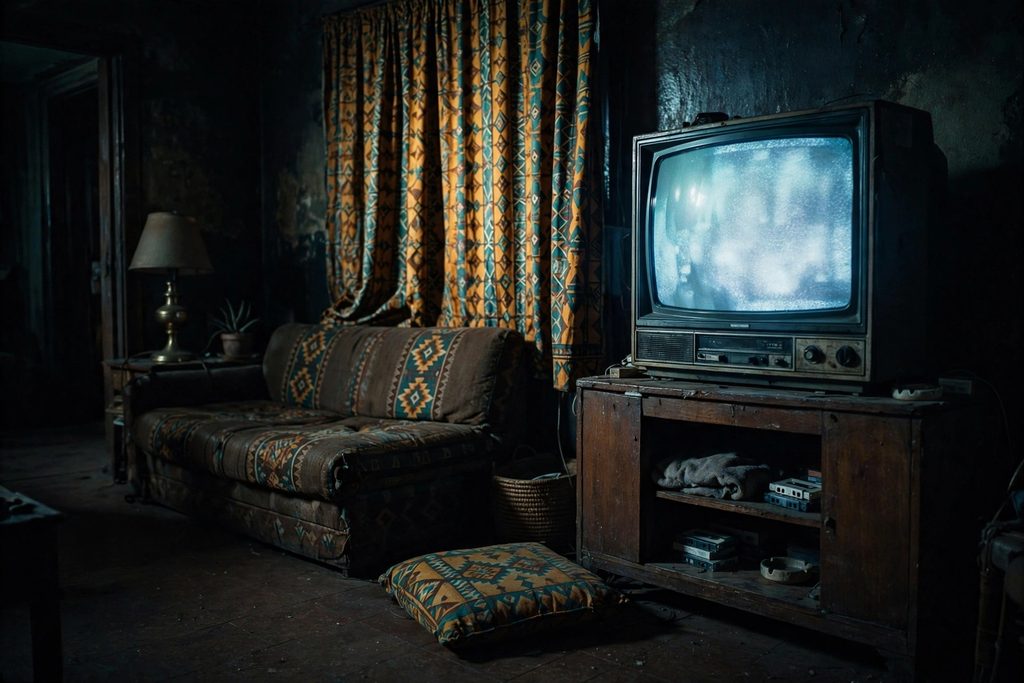
Zimbabwean television that year carried imported science fiction, from Star Trek to ALF, and a run of environmental programmes, among them Captain Planet. On 28 February 1994 it showed Intruders, an American miniseries about alien abductions whose psychologist hero was based on John Mack, and whose aliens had large black eyes and spoke by telepathy. In April, Mack appeared on The Oprah Winfrey Show. In July, a Harare newspaper ran a piece about him. And in April, Cynthia Hind herself had written about alien visitation in the same paper, mentioning a television film about UFOs.
Reid also compared the drawings with the screens of the time, and found saucers and orbs that resemble craft from films and series broadcast in Zimbabwe. None of this proves that a single child at Ariel School watched any of it. What it does show is that the claim the children had never been exposed to the idea of aliens does not hold.
Thirty Years Later
The children grew up. Many of them, Nickerson found, learned to stay quiet about the day. When they did talk, they told much the same story.
In 2014 one former pupil told a South African newspaper that she still feared the beings would come back. In 2016 Emily Trim, whose missionary father had taken the family home to Canada, exhibited paintings she described as the messages she had received. Several former pupils appeared in the 2020 film The Phenomenon. In 2022 the filmmaker Randall Nickerson released Ariel Phenomenon, the result of fifteen years of work, three trips to Zimbabwe and interviews with forty-three former pupils. None of them, he says, has recanted.
In 2023 one did, after a fashion. In the Netflix series Encounters, a former pupil said he had started the whole thing by telling classmates that a shiny rock was a UFO. His account contradicted an interview he gave in 2008, in which he described a light in the sky, and his classmates in the same series rejected it. A confession from one child cannot explain what sixty-two say they saw, but it is a reminder that the story was always told by children to each other first.
Grown witnesses who have never changed their story are strong evidence of sincerity. They are weaker evidence of what happened. Memory is rebuilt every time it is told, and a story told for thirty years, to journalists, filmmakers and each other, settles into its most often repeated form. The archive’s file on the Mandela effect follows how confidently whole groups can remember the same detail.

The Locked Archive
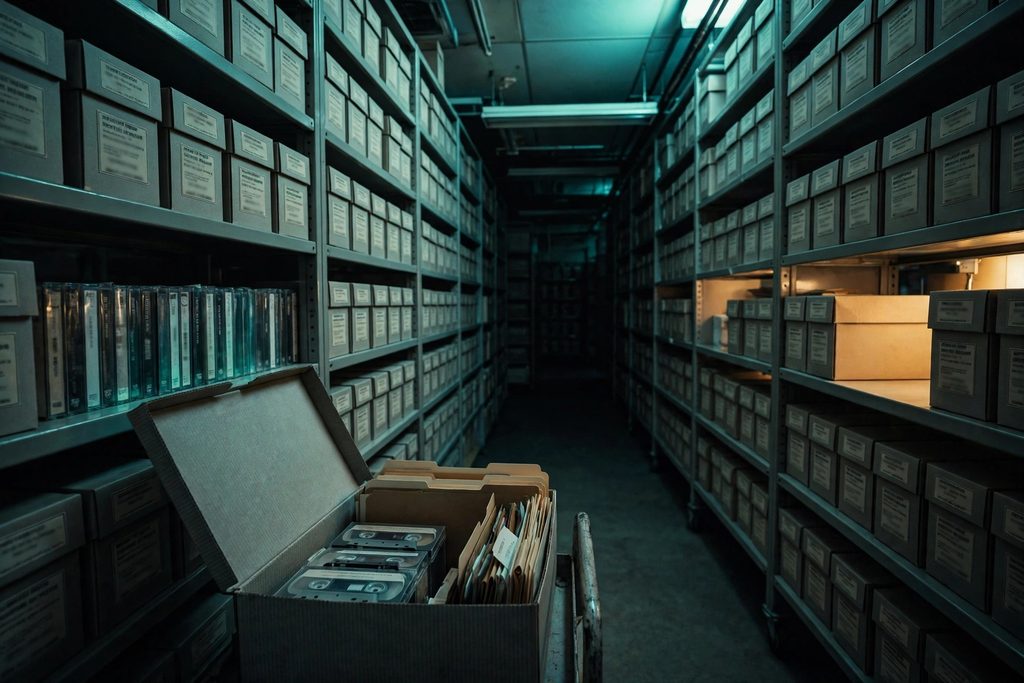
Mack died in London in 2004, killed by a drunk driver. His Ariel School tapes eventually went to the Archives of the Impossible at Rice University in Houston, a collection of material on unexplained experience.
Of the twelve children he interviewed, clips from only eight or nine have ever been seen in public. A biography of Mack mentions transcripts more than a hundred pages long. Reid’s requests to see the full interviews have been delayed or refused for a range of reasons. Until the whole of Mack’s record is open, part of the most important evidence in the case can only be judged from the parts chosen for films.
Five Ways to Read One Morning
The explanation most skeptics favour is mass sociogenic illness, the spread of a shared perception through a group under stress, the same process historians now see behind the dancing plague of 1518. A survey in the Malawi Medical Journal, quoted by the skeptic Brian Dunning, noted that the psychosocial environment plays a crucial role in mass hysteria in developing countries. A country buzzing with UFO reports, a playground without adults and a frightening glimpse of something in the trees would give such a process everything it needs.
What that explanation struggles with is the start. Something had to set the children off, and nobody has ever found it. The same gap haunts a strikingly similar case in Australia, where two hundred people at Westall High School in Melbourne reported a flying object in 1966.
The Verdict | Unresolved
The record of Ariel School is unusually good on one point and unusually weak on another. There is no doubt that something frightened a large group of children on 16 September 1994, that they described it within days, and that most of them still describe it the same way. There is no physical trace, no photograph, no adult witness and no identified cause.
The alien explanation has testimony and nothing else. The skeptical explanations have context, a burning rocket, a wave of rumour, television and contaminated interviews, but none of them can point to what the children saw. The famous telepathic message rests mostly on interviews held long after the fact. The file is stamped Unresolved, because the record runs out before the answer does.
- Claim tested
- On 16 September 1994, children at Ariel School near Ruwa, Zimbabwe, saw a craft land beside the school and beings come out of it.
- Oldest record
- Rung 2 · Days after
Tim Leach’s BBC interviews of 19 September 1994 and Cynthia Hind’s group interviews and drawings of 20 September, three and four days after the event. - The record supports
- Sixty-two children aged six to twelve reported seeing something outside the school during morning break, and many of them, as adults, still describe it in much the same way.
- It does not support
- Any physical trace, photograph or adult witness. The telepathic environmental message appears mainly in interviews held more than ten weeks later by an investigator with strong views on the subject.
- Explanations weighed
- A landing, mass sociogenic illness after a rocket re-entry two days earlier, the influence of television, a misread puppet show or dust devil, and a prank.
- What would change it
- Contemporary physical evidence from the site, or a clear source for the stimulus that morning, such as a vehicle, show or person placed at the school at the time.
Every stamp in the archive is gathered in the Verdict Index, and the rules behind it are in the Archive Standard. Ariel School is pinned on the Atlas.
Quick Answers About the Ariel School Encounter
What happened at Ariel School in 1994? On 16 September 1994, during morning break at Ariel School near Ruwa in Zimbabwe, sixty-two children aged six to twelve said they saw one or more silver craft come down near the school and figures in dark clothing come out of them.
Is the Ariel School encounter true? The children’s reports are on record, and most of them have stood by their accounts as adults. What they saw has never been established. There is no physical evidence, and skeptics favour mass sociogenic illness, while the case remains open.
What was the message the children received? In interviews with the Harvard psychiatrist John Mack two months later, several children said they received a wordless warning about harm to the planet and the dangers of technology. The message barely appears in the earliest reports.
Did a Russian rocket cause the sighting? A Russian rocket body re-entered the atmosphere over southern Africa two days earlier, on 14 September, and set off a wave of UFO reports. It was not in the sky during the school’s morning break, but it shaped the atmosphere in which the children’s story was told.
Did anyone confess to a hoax? In 2023 one former pupil said he started it by calling a shiny rock a UFO. His earlier interview and his classmates contradict him.
Where can I watch the Ariel School interviews? Extracts appear in the films The Phenomenon (2020) and Ariel Phenomenon (2022). John Mack’s full tapes are held by the Archives of the Impossible at Rice University and have not been released in full.
The Resonance Archives