Harry Price built his reputation exposing other people’s fraud. Through the 1920s, he became one of Britain’s best-known investigators of fake mediums, learning the physical tricks that could make a séance room appear to contain something supernatural. That reputation was part of what made his arrival at a crumbling Suffolk rectory in June 1929 so consequential.
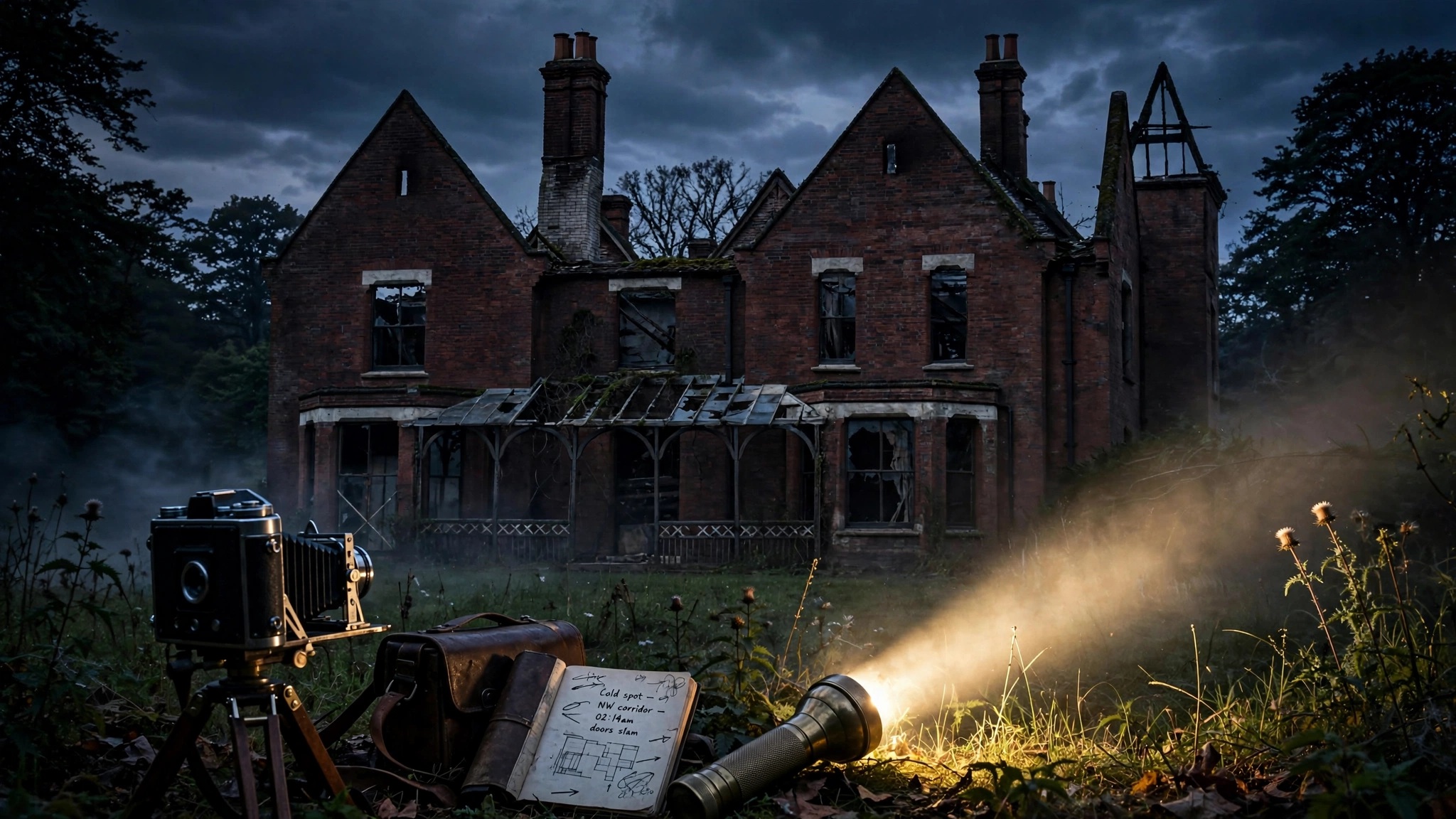
Borley Rectory already had a local reputation for footsteps, mysterious noises, moving objects, and a spectral nun. Price came to investigate it. He stayed interested for nearly two decades, eventually renting the building for a year, publishing two books about its phenomena, and helping turn it into the most famous haunted house in England.
Eight years after his death, three researchers published a devastating assessment of the case. Two had been his own colleagues.
A Rectory With a Reputation Before Price
The haunting of Borley Rectory did not begin with Harry Price, and that distinction matters. Reports of unexplained footsteps, moving objects, strange sounds, a phantom coach, and the appearance of a nun-like figure were already part of the property’s local mythology before Price arrived. In 1928, Reverend G. Eric Smith and his wife moved into the rectory and became sufficiently concerned by what they experienced that they contacted the Daily Mirror. The newspaper responded by announcing that one of Britain’s leading psychical researchers would investigate. On June 12, 1929, Price arrived at Borley for the first time.
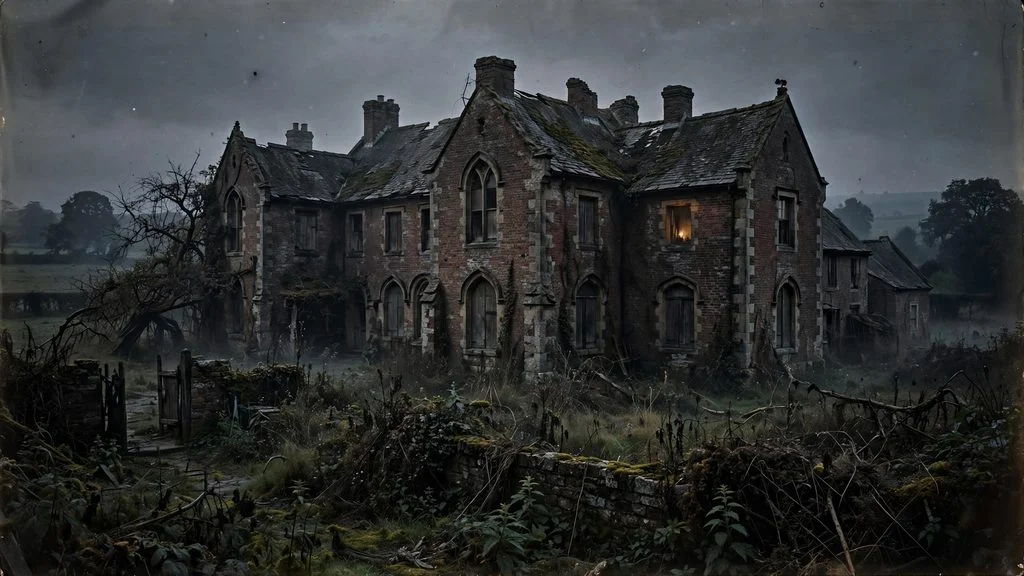
He was not an obvious candidate for a credulous investigation. Price had spent much of the previous decade making his name by exposing fraudulent mediums and investigating supposedly supernatural phenomena with a mixture of theatrical instinct and practical skepticism. His reputation included cases far outside conventional séances, including the notorious Isle of Man investigation involving the supposedly talking mongoose Gef. That history mattered because it gave Price something most ghost hunters lacked: a public identity built around catching people who faked the extraordinary. When he subsequently reported that Borley contained phenomena he could not satisfactorily explain, the conclusion carried considerably more weight than it would have coming from an investigator already committed to believing in ghosts.
A Year Inside Britain’s Most Haunted House
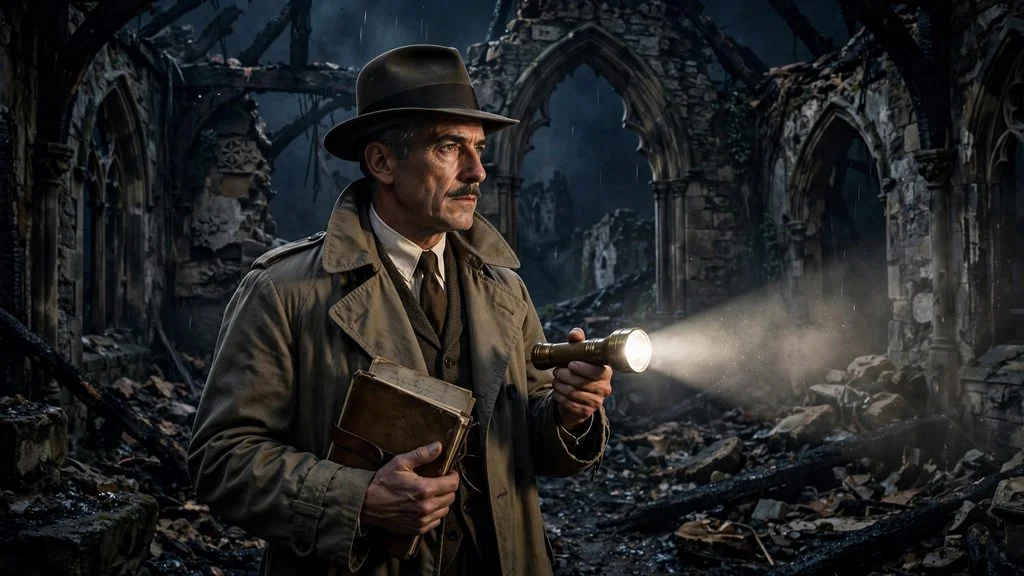
Price’s interest did not end with his first investigation. In May 1937, he took the extraordinary step of renting Borley Rectory for a full year, establishing what became one of the most ambitious attempts yet made to study a supposedly haunted building through sustained observation. He recruited observers, organized watches, collected reports, and documented incidents as they occurred. The experiment became the foundation of his 1940 book, The Most Haunted House in England: Ten Years’ Investigation of Borley Rectory, which transformed the case from a local ghost story into a national phenomenon and made Price Britain’s most recognizable ghost hunter.
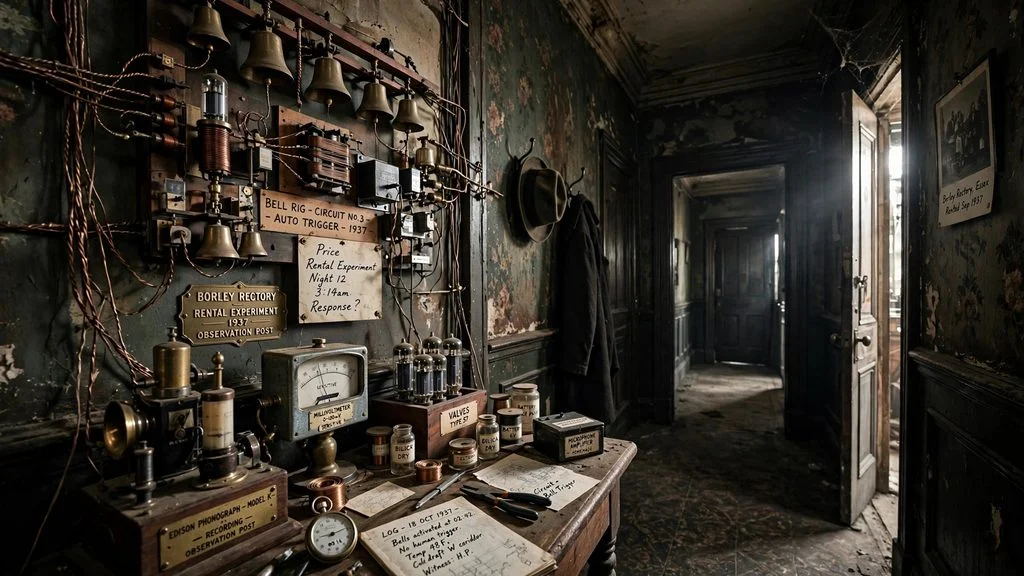
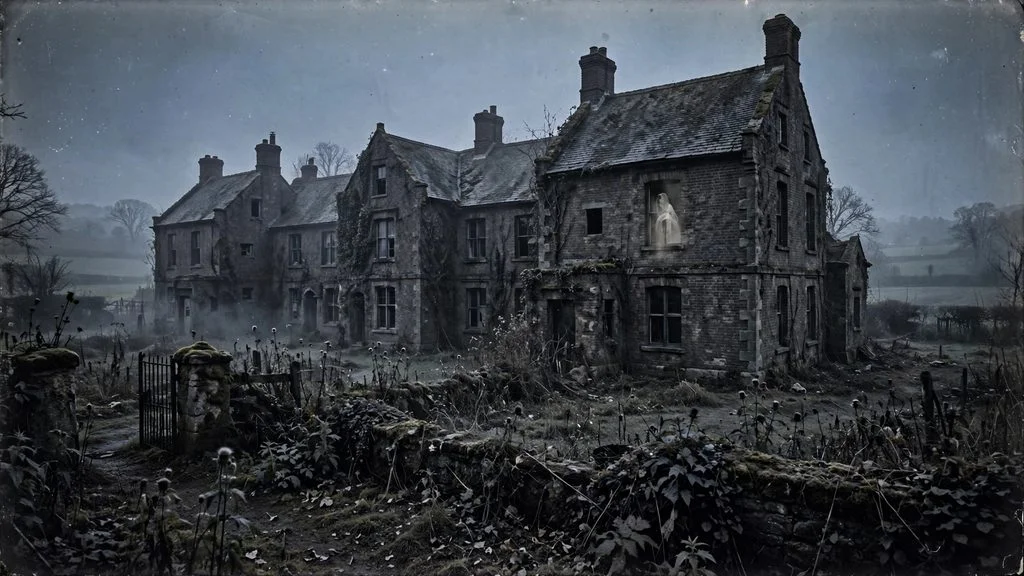
The house itself was already becoming part of the mythology Price was documenting. On February 27, 1939, its new owner, Captain W. H. Gregson, reportedly knocked over an oil lamp while moving into the building, and a fire destroyed the rectory. One witness claimed to have seen the familiar figure of the nun in an upstairs window as the flames spread. The insurance company investigating the fire rejected the idea that it had been accidental and concluded that the building had been deliberately set alight, meaning the claim could not be supported for insurance purposes. Price returned to the ruins in 1943, when his investigation produced another dramatic episode: bones discovered beneath the building that he believed belonged to a murdered young woman. Subsequent examination suggested that at least some of the remains were probably animal bones. Price nevertheless incorporated the episode into the continuing Borley narrative and later published the story in The End of Borley Rectory in 1946.
By then, the case had acquired a momentum of its own. Every new incident could be interpreted as another chapter in an already established haunting, while the accumulated mythology made it increasingly difficult to separate what had actually been observed from what had been reported, embellished, repeated, or retrospectively attributed to the house.
The Questions Began After Price Was Gone
Harry Price died on March 29, 1948. The serious challenge to his Borley work began soon afterward.
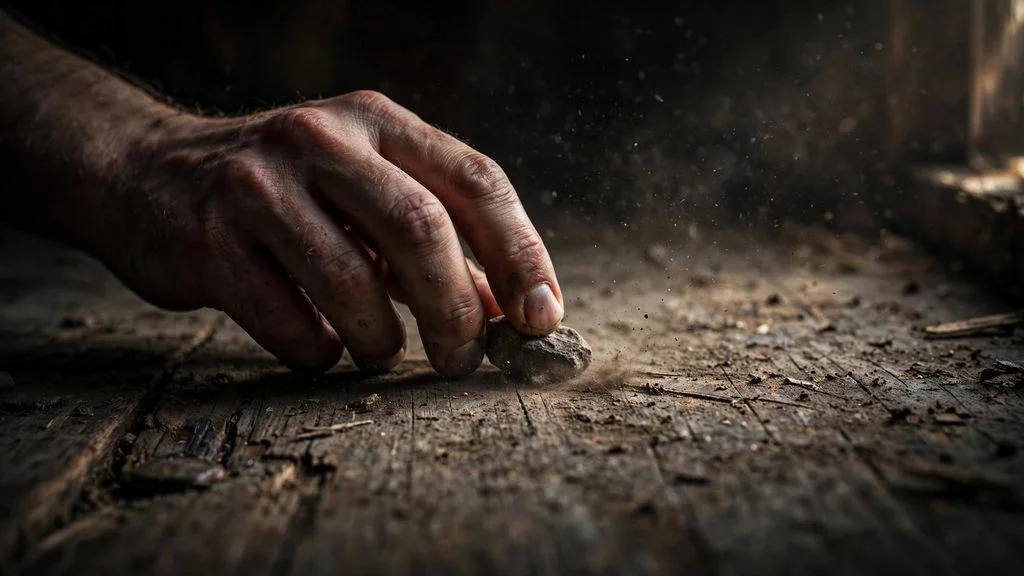
One of the early accusations came from Charles Sutton, a Daily Mail journalist who had accompanied Price during his first investigation in 1929. Sutton later alleged that Price himself had manufactured phenomena, including throwing pebbles to create noises that could subsequently be reported as unexplained. The accusation was significant not simply because of what it alleged, but because Sutton claimed to have witnessed it personally. Yet the allegation emerged years after the original events, leaving its own evidentiary questions about memory, motive, and timing.
A more consequential challenge came from someone much closer to the case. In May 1949, Mrs. Smith, the rector’s wife whose original appeal had helped bring Price to Borley in the first place, wrote to the Society for Psychical Research and to the Daily Mail disputing Price’s account and arguing that the rectory had not been genuinely haunted in the way his books suggested.
The case was becoming something more complicated than a simple argument between believers and skeptics. Some of the people who had been closest to Borley were now challenging the investigator who had made the house famous.
His Own Colleagues Turned His Files Against Him
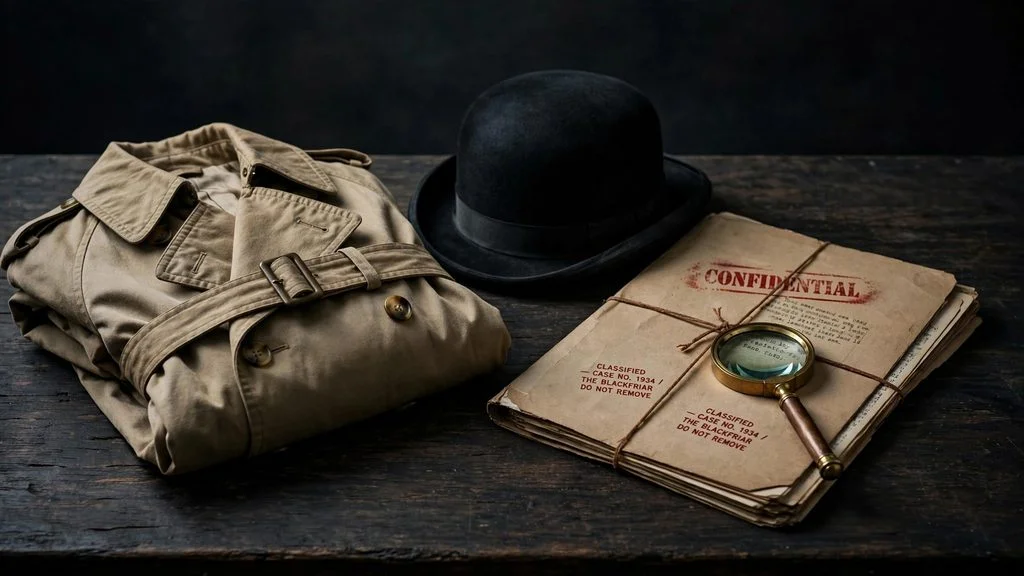
The most damaging assessment arrived in 1956, eight years after Price’s death, when the Society for Psychical Research published The Haunting of Borley Rectory: A Critical Survey of the Evidence. The report was written by Eric J. Dingwall, Kathleen “Mollie” Goldney, and Trevor H. Hall, researchers who were not outsiders attacking Price from a position of ignorance. Dingwall and Goldney had worked alongside him and had known his methods and his case material closely.
Their conclusion was severe. They accused Price of having “salted the mine,” using the language of mining fraud to describe the planting or encouragement of evidence intended to produce apparently supernatural phenomena. The report argued that the case had been compromised by unreliable witnesses, manufactured incidents, and Price’s own methods of investigation and presentation. Its judgment on Price’s wider research standards was equally damaging, describing his work as “wanting from the point of view of serious research” and criticizing what the authors regarded as his appetite for publicity.
The case against Borley did not depend entirely on proving that Price himself had personally fabricated every famous incident. That is one of the important distinctions the later literature sometimes loses. Some phenomena may have been manufactured by residents or visitors seeking attention. Some reports may have been misunderstood. Some may have grown through repetition. And some allegations implicated Price directly. The historical question is therefore not simply whether Harry Price “faked Borley,” but how much of the famous haunting can survive once the chain of testimony, observation, investigation, and presentation is examined critically.
There was independent evidence that at least some of the phenomena had been manufactured. Marianne Foyster, who lived at the rectory during the 1930s, later admitted involvement in creating some of the disturbances attributed to the haunting, including wall writing and bell-ringing incidents. That admission did not automatically explain every episode associated with Borley, but it established something crucial: at least some of the supposedly supernatural evidence had unquestionably been produced by human beings.
Later researchers continued the examination. Trevor Hall’s 1978 Search for Harry Price and Robert Wood’s 1992 The Widow of Borley added further arguments about the reliability of Price’s investigations and the people surrounding the case. The controversy did not disappear, but the evidentiary burden had changed. The question was no longer simply whether Borley had produced unexplained phenomena. It was whether the surviving evidence could support the extraordinary conclusions Price had drawn from it.
The Verdict Was Never Quite as Simple as “Fake”
Price did retain defenders. Researchers including Peter Underwood, Ivan Banks, and Robert Hastings continued to challenge aspects of the 1956 SPR assessment and argued that the skeptical verdict had itself gone too far. That matters because the historical record does not support the neatest possible version of the story, in which a single report proved that every event at Borley had been consciously fabricated by Price.
The later history is more interesting. A 1997 SPR review by Michael Coleman revisited the arguments surrounding the case and found that the defenses of Price had not successfully overturned the central criticisms of the 1956 investigation. Within serious psychical research, the balance of the evidence consequently moved decisively away from treating Borley as a demonstrated case of supernatural activity.
That is a much stronger conclusion than simply saying “Harry Price was exposed as a fraud.” The evidence does not require that claim in order to explain the collapse of Borley’s supernatural credentials. What it shows is a case saturated with unreliable testimony, acknowledged human fabrication, disputed investigative practices, and an investigator whose own methods became part of the evidence against him.
The Most Haunted House Outlived Its Investigator
Borley Rectory itself did not survive long enough to become a museum of its own legend. The ruins were eventually demolished, leaving little physical evidence for later generations to inspect. The stories survived instead: the nun, the phantom coach, the unexplained footsteps, the wall writings, the bells, the fire, the bones, and the investigator who claimed that Britain’s most haunted house really was haunted.
The number of incidents associated with the case has sometimes been given as more than 2,000, although the status of that figure depends heavily on how reports are counted and what qualifies as an incident. The story has continued to generate books and investigations long after the building disappeared, including modern histories that treat Borley not merely as a ghost case but as a window into the anxieties and cultural atmosphere of interwar Britain.
And that may be the most revealing part of the story.
Harry Price began his career with a simple premise: extraordinary claims should survive contact with investigation, and fraud should eventually reveal itself when somebody looks closely enough. Borley Rectory became the case that made his reputation as a ghost hunter. It was also the case in which his own investigative methods, his witnesses, his evidence, and eventually his credibility became the objects of scrutiny.
Eight years after his death, three researchers from the Society for Psychical Research went through the case and reached a conclusion that was devastating precisely because it did not come from people who had never known the investigator. Two of them had worked with Price. They had access to the world in which he had operated, and they used the evidence he had helped assemble to challenge the conclusions he had drawn from it.
The haunting may have survived culturally. Harry Price’s reputation did not survive it unchanged.
He spent his career teaching the public how a supernatural claim could be dismantled by careful investigation. In the end, Borley became the investigation that turned that method back on him.
Price spent his career sorting the real from the fake. The Verdict Index applies that same test to every file in the archive and counts the results.
Daniel Dunglas Home invites the identical scrutiny from a different era, a medium whose reputation for never being caught in fraud still leaves open the separate question of whether he himself was ever fooled.
The Society for Psychical Research faced a similar split more than twenty years later at the Enfield poltergeist, where its own members disagreed over how much of a haunting to believe.