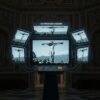


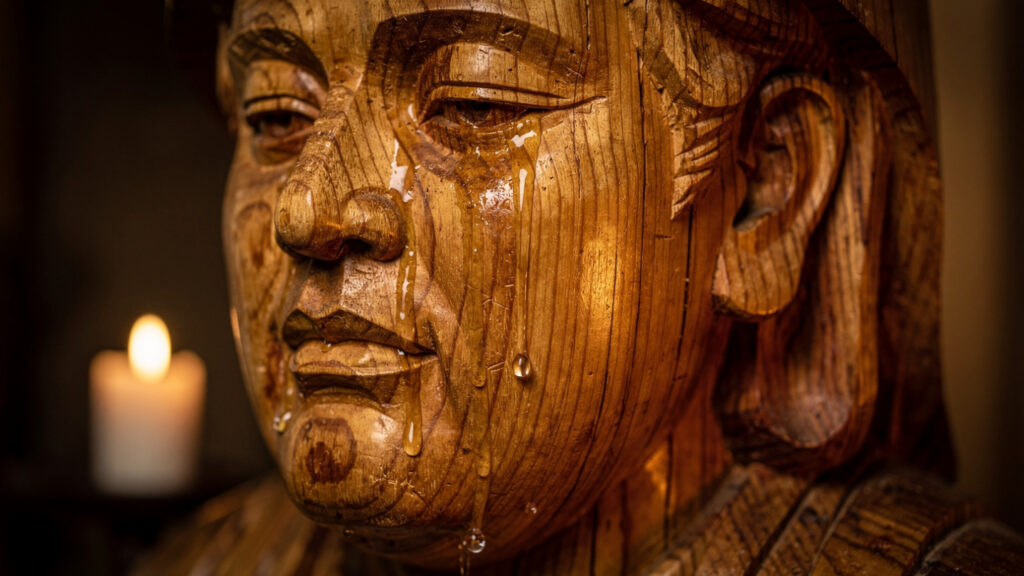
On November 30, 1981, forensic specialist Dr. Kaoru Sagisaka examined a sample taken from a wooden statue in Akita, Japan, and encountered the detail that would eventually make the entire case impossible to explain cleanly: the fluid associated with the statue had apparently changed blood type.
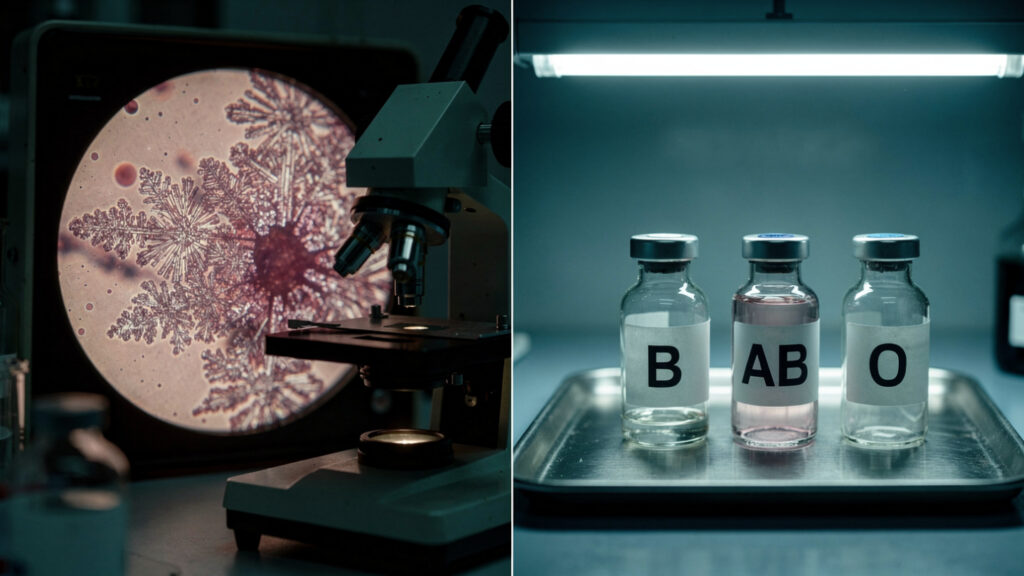
Earlier samples taken from the statue’s tears and perspiration had reportedly tested as Type AB in 1978. Blood associated with it had reportedly tested as Type B. The new sample Sagisaka examined in 1981 came back Type O. Sister Agnes Sasagawa, the nun at the center of the events, was herself Type B. Taken literally, the three results appear to describe three different biological sources where there should have been only one. To believers, that discrepancy became evidence that the phenomenon could not be explained by ordinary human physiology. To a forensic investigator, the same discrepancy raises a more immediate question: where did the samples come from, how were they preserved, and what happened to them between collection and analysis?
That distinction is the reason Akita remains interesting. The argument is not simply between people who believe in miracles and people who do not. It is between two systems for deciding what evidence means. One begins with an extraordinary religious event and asks whether science has failed to explain it. The other begins with a biological sample and asks whether the sample history is secure enough to support an extraordinary conclusion. Forty years later, those two approaches still converge on the same numbers without arriving at the same case.
What the Testing Actually Established
The laboratory story did not begin with anonymous believers searching for scientific legitimacy. Two named scientists were involved. Professor Eiji Okuhara of Akita University’s Department of Biochemistry witnessed the phenomenon and was involved in the earlier examination. Dr. Kaoru Sagisaka conducted the later analysis and, according to surviving accounts, was not himself a Christian. The significance of that matters because the case was not built entirely around testimony from Sister Agnes or the religious community surrounding her.
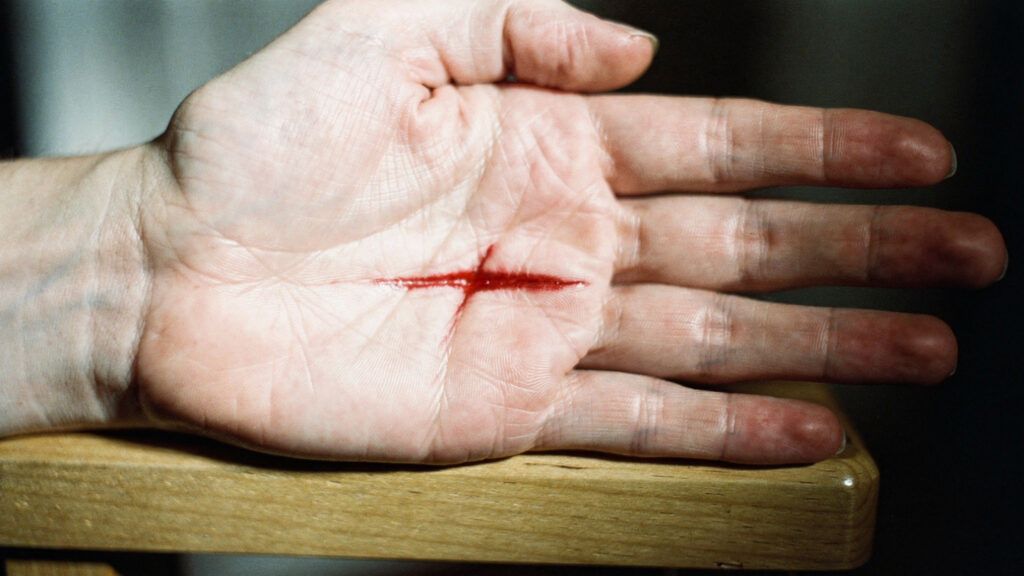
The samples were reported to contain material identified as human biological fluid, and the reported blood-group results are part of the documentary tradition surrounding Akita. But there is an important difference between that statement and the much stronger claim sometimes made online: that modern forensic science conclusively established that the statue repeatedly produced fresh human blood of three different blood types. The surviving record does not give us the kind of complete laboratory documentation that would allow an independent forensic reviewer today to reconstruct every stage of collection, preservation, transport and testing.
That missing chain of custody matters enormously. A blood group changing from AB to B to O would be extraordinary if the samples were demonstrably collected, sealed, preserved and analyzed under controlled conditions with their identities continuously documented. Without that documentation, however, the result cannot tell us by itself whether biology behaved impossibly or whether something happened to the samples before the tests were performed. Contamination, labeling problems, degradation or sample substitution do not have to be proven in order to remain legitimate possibilities. They only have to remain unexcluded.
Before There Was a Blood-Type Mystery, There Was Agnes Sasagawa
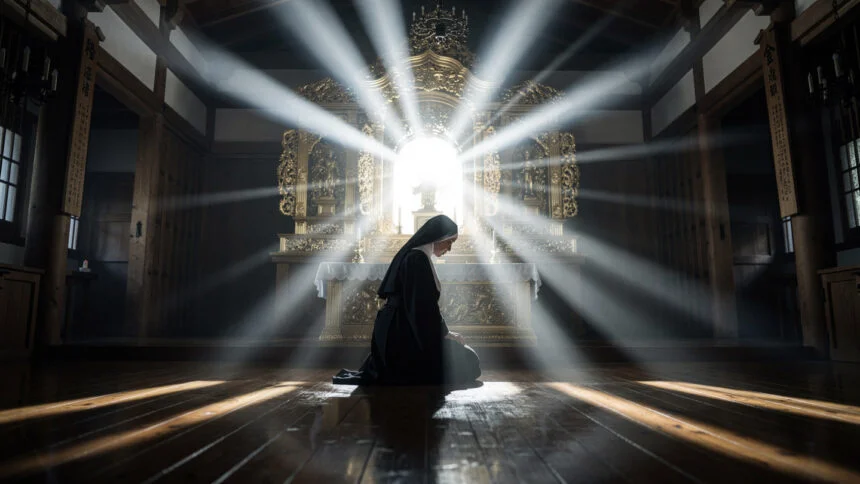
Whatever ultimately happened to the statue, Sister Agnes Sasagawa’s life was extraordinary before anyone began arguing about supernatural phenomena. Born Katsuko Sasagawa in Japan in 1931, she spent roughly a decade paralyzed after complications following surgery at nineteen. During that long period of illness, a Catholic nurse introduced her to Christianity. Sasagawa eventually converted despite resistance around her, including an intervention by a local Buddhist priest who urged her not to do so. She was baptized, took the name Agnes and entered religious life.
In March 1973, at the age of forty-two, she lost her hearing completely. She later moved to the convent at Yuzawadai near Akita, where the events surrounding the statue began that June. Her physical history is important because the Akita story is sometimes reduced to a catalogue of supernatural claims, obscuring the much more ordinary and human fact that the woman at its center had already lived through years of severe illness, disability, conversion and religious commitment before the statue became the focus of international attention.
It Wasn’t Supposedly Seen by One Person
The case also cannot be dismissed simply as one isolated vision experienced by one nun. Accounts of the statue’s reported phenomena span several years, from January 4, 1975 through September 15, 1981, and describe repeated witnesses. Some accounts place the number of people who observed the phenomena across the entire period at more than 500, including Christians, Buddhists and other visitors. On the final reported occasion, contemporary accounts describe a crowd of roughly 65 people, among them the mayor of the city.
There was even a television component. On December 7, 1979, a TV Tokyo crew reportedly recorded the phenomenon during a visit to the convent. A separate episode became part of the wider Akita tradition when Teresa Chun, a Korean woman suffering from terminal brain cancer, reported a dramatic recovery after praying before an image of the statue in 1981. Her physician, Dr. Tong-Woo-Kim of Seoul’s St. Paul Hospital, later reportedly attested to the recovery.
None of those events proves that a supernatural force was responsible. A large witness count does not transform an observation into a miracle, and a reported medical recovery does not establish supernatural causation. What the witnesses do establish is something more modest but still significant: Akita was not merely a private story that circulated because one nun claimed to have seen something strange. Enough people became involved that the events eventually demanded an institutional response.
The Church Did Not Issue the Verdict People Think It Did
This is where the Akita story is most frequently simplified beyond recognition. Bishop John Shojiro Ito issued a pastoral letter on April 22, 1984 authorizing devotion to the events within his diocese after years of investigation and consultation. That was a genuine ecclesiastical judgment, but it was a local one. It did not amount to a universal declaration from the Holy See that the statue had been scientifically proven to perform miracles.
Four years later, in June 1988, Cardinal Joseph Ratzinger, then Prefect of the Congregation for the Doctrine of the Faith, reportedly indicated verbally that he had no objection to the conclusions contained in Bishop Ito’s pastoral letter. That statement is important, but it is also routinely inflated into something it was not. The Holy See did not issue a formal declaration establishing Akita as a scientifically demonstrated supernatural event. The distinction between accepting a bishop’s judgment and issuing a definitive universal ruling matters.
There was skepticism inside the Japanese Church as well. Archbishop Peter Shirayanagi of Tokyo expressed doubts about the phenomena, meaning the institutional record never settled into the clean narrative of “the Church investigated the miracle and approved it.” The actual history is messier: local ecclesiastical approval, a later statement from a senior Vatican official indicating no objection, and continuing disagreement over what the underlying events meant.
That ambiguity is not a defect in the story. It is the story.
Then the Story Became Larger Than the Statue
As the decades passed, Akita accumulated another layer of interpretation. The reported messages associated with the statue were connected by later commentators to warnings about suffering, repentance, apostasy and punishment. Those themes became particularly prominent in Catholic discussions of the case, where Akita was sometimes presented alongside other Marian apparitions as part of a larger prophetic pattern.
That interpretive layer needs to be kept separate from the physical evidence. A message attributed to a supernatural source is one category of claim. A laboratory result is another. A bishop’s authorization of devotion is another. A reported medical recovery is another. They may all appear in the same narrative, but they do not become mutually validating simply because they concern the same statue.
The Last Strange Chapter
On October 6, 2019, when Sister Agnes was eighty-eight, she reportedly experienced another message associated with her guardian angel, calling for penitential prayer and sacrifice. The timing attracted attention because a controversial Amazon Synod gathering was taking place in Rome that same day, and some Catholic commentators subsequently interpreted the coincidence as significant. But that connection belongs to interpretation, not independently established evidence.
Sister Agnes continued to live quietly within the religious community. She died on August 15, 2024, at the age of ninety-three, on the Feast of the Assumption. Whatever one believes about the statue, her life had come full circle: a woman who had spent years disabled, converted to a faith against resistance, lost her hearing, entered religious life and then became the central witness to one of the twentieth century’s most persistent Catholic mysteries.
So What Do the Three Blood Types Actually Prove?
Less than either side of the argument usually claims.
If the reported results are accurate, then the samples associated with the statue produced an extraordinary sequence: AB, B and O. That is a genuine anomaly within the story. But the anomaly does not, by itself, establish supernatural causation. To reach that conclusion scientifically, investigators would need a complete evidentiary chain showing exactly what was collected, exactly when it was collected, how it was sealed and stored, how it was transported, what controls were used, which laboratory methods were employed, and whether independent laboratories could reproduce the results.
Conversely, the absence of that documentation does not prove that the phenomena were fabricated. It simply prevents the surviving record from carrying the weight that later believers and skeptics have tried to put on it. Science cannot turn incomplete provenance into certainty, but neither can skepticism turn an incomplete investigation into proof of fraud.
And that leaves Akita in an uncomfortable place. The witnesses cannot make a laboratory result supernatural. The blood types cannot make a religious event scientific. A bishop’s approval cannot establish a biological mechanism. And the absence of a documented mechanism cannot, by itself, establish that nothing unusual happened.
The most interesting thing about Akita is therefore not that a wooden statue supposedly wept blood.
It is that the case produced just enough evidence to keep the argument alive, but never enough evidence to force either side to surrender its method of understanding what happened.
Three blood types appeared in the historical record. The Church investigated without issuing the definitive verdict later retellings often claim. Hundreds of people reported seeing the phenomenon, yet witness testimony could never answer the laboratory question. And the laboratory results themselves were never documented with the evidentiary chain that would allow modern investigators to reconstruct exactly what those samples were and where they came from.
That is not proof of a miracle.
It is not proof of a hoax either.
It is an unresolved historical case in which faith asks what the evidence might mean, while forensic science asks whether the evidence is secure enough to mean anything extraordinary at all.