

Four dramatic claims were attached to 2026 as though they were pieces of the same approaching event: a mathematical “doomsday” date on November 13, a prophetic transformation at Easter, a secret discovery inside the Great Pyramid, and a government disclosure mechanism supposedly hidden inside a federal science policy. But 2026 has now given us something more useful than another prophecy: a chance to check the sources. One prediction has already passed without the promised transformation. One is a real archaeological announcement whose evidence and promised reveal remain pending. One policy is genuine but concerns public access to scientific research rather than extraterrestrial disclosure. And the famous November 13 date is real, but it does not come from the World3 model that is so often used to give the story a scientific pedigree.
That distinction matters because none of the four underlying subjects needs to be fabricated to produce a completely misleading story. World3 is real. The 1960 population paper is real. Chris Bledsoe is real, and his account has attracted serious investigative attention. The Great Pyramid has produced genuine hidden-void discoveries, and Zahi Hawass really did announce another corridor in 2025. The U.S. government really did change the rules governing public access to federally funded research. What does not survive source tracing is the claim that these separate events were ever parts of one coordinated 2026 timetable. The convergence appears only after the pieces have been stripped from their original contexts and placed beside one another.

The November 13, 2026 Date Is Real. World3 Didn’t Predict It.
The first claim contains a particularly revealing piece of source-mixing. The World3 model behind The Limits to Growth is real: developed by a team at MIT for the Club of Rome, it modeled interactions among population, industrial output, food, resources and pollution across multiple scenarios extending through 2100. But the authors explicitly cautioned that these were scenarios for exploring the behavior of a complex system, not calendars of inevitable future events. Later studies have compared World3 trajectories with observed data, and newer recalibrations remain surprisingly relevant to debates over resource use, pollution and the possibility of overshoot and decline. None of that, however, produces November 13, 2026 as a special date.
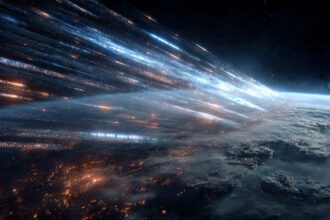
The November date comes from somewhere much more specific and much older. On November 4, 1960, Heinz von Foerster, Patricia M. Mora and Lawrence W. Amiot published a paper in Science titled Doomsday: Friday, 13 November, A.D. 2026. Their model extrapolated a historical pattern of accelerating population growth toward a mathematical singularity. Under the assumptions of that extrapolation, the population would approach infinity on that date. The paper was real, the equation was real, and the date was real. What was never real was the idea that the equation constituted a literal prophecy that eight billion human beings would suddenly vanish, explode, or otherwise encounter an apocalyptic event at midnight on a Friday in November.
The historical controversy makes the story more interesting, not less. Demographer Ansley J. Coale challenged the paper in Science in 1961, reporting that most demographers had regarded the work as a joke and criticizing its assumptions. Von Foerster and his colleagues responded, defending the mathematical point they were trying to make about population growth and the limitations of conventional demographic thinking. The exchange shows why it is too simplistic to describe the paper as either a serious prophecy or a meaningless prank. It was a provocative mathematical extrapolation wrapped in deliberately theatrical language, and the date itself coincided with von Foerster’s own birthday. The important fact for 2026 is simpler: the singularity belongs to the assumptions of a 1960 model, not to a modern World3 forecast or an independently established timetable for civilization.
And reality has already supplied the decisive test to the underlying demographic assumption. Human population growth did not continue indefinitely along the curve required by the equation. Growth rates slowed dramatically, fertility declined across much of the world, and modern demographic projections place the eventual global population peak far beyond the eight billion people living today rather than anywhere near mathematical infinity. The equation therefore remains a fascinating historical artifact in mathematical modeling, but November 13 is not a date at which the Earth is scheduled to run out of people, food, or time.

Easter 2026 Has Already Passed
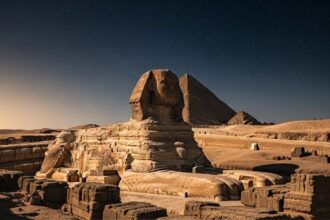
The second claim is much easier to audit because its date has already happened. Easter Sunday in 2026 fell on April 5. Chris Bledsoe is a real North Carolina businessman whose reported experiences beginning in 2007 became a prominent case in the modern UFO/contactee world. He has repeatedly described communications with a female or luminous entity he calls “the Lady,” and he has discussed a prophecy involving the star Regulus appearing on the horizon in front of the Sphinx around Easter 2026. In interviews, Bledsoe has described the predicted consequence in deliberately broad language: a “change” or “new knowledge.” He has also acknowledged uncertainty about the precise interpretation and, in some accounts, has mentioned other possible dates.
There is an important distinction between the case and the prophecy. Bledsoe’s experiences have attracted attention from people with intelligence, military and scientific backgrounds, and that fact is sometimes presented online as though it were institutional confirmation. It is not. Interest in a witness is not verification of the witness’s supernatural explanation, and an investigator’s inability to explain an account is not the same thing as establishing that the account’s claimed source is extraterrestrial or prophetic. The evidentiary status of Bledsoe’s personal experiences therefore remains separate from the truth of any particular prediction attached to them.
And the date itself has now become historical rather than predictive. Easter 2026 arrived. Regulus was in the sky. The Sphinx was still there. But there was no documented global disclosure event, confirmed revelation of a hidden Hall of Records, scientifically authenticated transmission from a non-human intelligence, or other independently verifiable transformation that can reasonably be identified as the fulfillment of the prophecy. That does not prove that Bledsoe experienced nothing unusual, and it does not prove that no future event could ever be interpreted through his story. It does establish something much narrower and much more important: the specific 2026 date did not produce the independently observable event that would have converted the prophecy into evidence.

The Great Pyramid Prediction Is Still Open, but the Evidence Has Not Arrived Yet
This is the one part of the story that deserves neither debunking nor premature celebration. In November 2025, Zahi Hawass announced at the Sharjah International Book Fair that a new archaeological discovery inside the Great Pyramid of Khufu would be revealed in 2026. He described a passage roughly 30 metres long, ending at a sealed door, detected using advanced scanning technologies. Contemporary reporting described the work as involving thermal imaging, three-dimensional mapping and muon radiography, with robotic technology being used to reach difficult areas. The announcement itself is unquestionably real.
But “Hawass announced a corridor” and “the Great Pyramid contains the Hall of Records” are two completely different statements. The first is documented. The second is an interpretation imposed by the mythology surrounding Giza. Hawass has repeatedly rejected extraterrestrial explanations for the pyramids and has framed the investigation within the archaeology and engineering of ancient Egypt. Contemporary reporting on his 2025 appearance quoted him rejecting claims involving extraterrestrial beings and supernatural forces, while describing the pyramid as the product of Old Kingdom engineering, quarrying, transportation and organized human labor.
There is another reason to keep the language restrained: the 30-metre announcement has not yet become a peer-reviewed archaeological discovery in the same sense as the previously published ScanPyramids findings. The Great Pyramid really has yielded hidden spaces through non-invasive imaging. The famous 2017 “Big Void” and the 2023 North Face Corridor are established examples of how muon radiography can reveal previously unknown internal structures. But the nature, contents and archaeological significance of Hawass’s newly announced passage remain matters for measurement, imaging, publication and physical investigation. As late as May 2026, Hawass was still publicly discussing the corridor and saying he believed Khufu’s actual burial chamber remained hidden beneath it, rather than announcing that it had been found. A sealed door is evidence of a sealed door. It is not evidence of what is behind it.

The “Disclosure Mandate” Is Actually Two Different Science Policies
The fourth thread is where bureaucratic language gets transformed most easily into conspiracy language. There really is a major federal policy story here, but it is not a hidden UAP disclosure mechanism. In August 2022, the White House Office of Science and Technology Policy issued its memorandum on ensuring free, immediate and equitable access to federally funded research. It directed agencies to move toward immediate public access to federally funded scholarly publications and scientific data rather than relying on the previous 12-month embargo model. Federal agencies subsequently developed their own implementation plans.
Then came a separate policy initiative in 2025. The Trump administration’s “Restoring Gold Standard Science” executive order called for federal research to emphasize reproducibility, transparency, falsifiability, peer review, communication of uncertainty and other scientific-integrity principles. The order also instructed agencies, subject to legal and national-security limitations, to make certain influential scientific information, including associated data and analyses, publicly available where practicable. That is a real transparency initiative. But it is not the same thing as the 2022 public-access policy, and neither document creates a timetable for releasing classified UAP files, announcing non-human intelligence, or disclosing extraterrestrial technology.
This distinction is crucial because “more government science becomes public” can easily be transformed into “the government must reveal everything.” Those are not equivalent propositions. The 2025 order itself explicitly preserves legal limitations, including provisions concerning national-security and sensitive information. The policy changes how scientific information is produced, evaluated, communicated and, in some circumstances, made available. It does not secretly convert academic publication rules into an alien-disclosure statute.

Four Real Sources. One Artificial Convergence.
Once the four claims are separated, the architecture of the story becomes visible. The first begins with a 1960 mathematical extrapolation about population growth and is later confused with World3. The second begins with a modern contactee’s personal testimony and a reported prophetic message whose most important 2026 date has already passed. The third begins with a real archaeological announcement inside the Great Pyramid, but its eventual significance remains unknown. The fourth begins with ordinary federal science-policy reforms concerning access, transparency and research standards. None requires the others. None was produced by the others. And, most importantly, none of the primary documents establishes that they were intended to converge in 2026.
This is the mechanism behind a great deal of modern “convergence” mythology. A date is selected first. Then material is collected around it: a mathematical equation, a prophecy, an archaeological discovery, a government memorandum. Similar words are treated as evidence of a common design. “Disclosure” begins to mean both publication of scientific papers and revelation of extraterrestrial secrets. A sealed archaeological passage becomes the physical location of an ancient archive. A mathematical singularity becomes a countdown. A personal prophecy becomes a government timetable. Once those substitutions have been made repeatedly enough, the separate sources appear to confirm one another even though the original documents never actually said what the composite story says they said.

What 2026 Has Actually Given Us
So far, the year has not produced the grand convergence these narratives promised. It has produced something much less cinematic and considerably more informative: tests. Easter came and went without an independently documented global transformation attributable to Bledsoe’s prophecy. The November 13 date remains in the future, but it belongs to a 1960 mathematical singularity whose underlying population-growth trajectory has long since diverged from reality, not to a World3 countdown. The Great Pyramid remains genuinely interesting because a new corridor has been announced and its significance remains unresolved. And federal science policy really has moved toward greater public access, transparency and methodological rigor, but nothing in the relevant documents turns that movement into a UAP disclosure mandate.
And there is an important asymmetry here. The fact that the Easter prediction failed to produce its promised event does not prove that Bledsoe’s entire life story is false. The fact that the Great Pyramid’s sealed door has not yet yielded a spectacular revelation does not mean there is nothing archaeologically important behind it. The fact that the 1960 doomsday equation fails as a literal forecast does not make mathematical modeling useless. The fact that an open-access policy has nothing to do with aliens does not make government transparency unimportant. Each story becomes more defensible when it is allowed to remain the story it actually is.

That is the real lesson of checking predictions after the calendar catches up with them. A prediction should not become more precise after the fact. A prophecy should not become unfalsifiable because its date passes. A scientific model should not inherit a date it never produced. An archaeological corridor should not become a lost civilization simply because nobody has opened the door yet. And a government policy about scientific publishing should not become an extraterrestrial disclosure order because both happen to contain the word “access.”

The four threads are real. The convergence is the part that isn’t. And that distinction is exactly where the story becomes worth reading. Reality does not need four unrelated mysteries to synchronize on one sacred calendar date to remain strange. The population model is historically fascinating. Bledsoe’s case remains unresolved as a matter of testimony. The Great Pyramid still contains genuine unknowns. Federal science is undergoing real changes in how information is published and evaluated. Those are four stories. The evidence never required them to become one.