There is no verified death certificate, police report, newspaper account, or contemporary news report documenting the death of a teenage girl named Carmen Winstead being pushed into a sewer in Indiana. The story is fiction: a horror chain letter that spread across the early social internet by presenting an invented murder as though it were a real local tragedy.
That conclusion is not based on the fact that the story sounds supernatural. It is based on something much simpler: the alleged event leaves no credible documentary trail, while the story itself has a recognizable history as an internet chain message. Snopes investigated the claim and concluded that no adolescent girl named Carmen Winstead, or the alternate name Jessica Smith used in some versions, was reported to have died in the alleged circumstances. The story then did exactly what successful chain letters are designed to do: it supplied a horrifying narrative, added apparently specific details, and threatened the reader with consequences if they refused to pass it on.
- Before Carmen Winstead, There Was the Chain Letter
- The Story Was Built to Look Like a Missing News Report
- The Sewer Death Was Fiction
- Then the “They Pushed Her” Message Appears
- The Curse Was the Distribution Mechanism
- The David Gregory Story Was Part of the Same Fiction
- Snopes Looked for the Crime and Found the Story
- Who Created Carmen Winstead?
- The Name Itself Became Unstable
- The Photograph Is Not Evidence of Carmen’s Existence
- Why It Survived the Death of MySpace
- This Is What Digital Folklore Looks Like
- There Was No Hidden Carmen Case
- The Real Mystery Is Why We Still Believe Stories Designed to Be Forwarded
Before Carmen Winstead, There Was the Chain Letter
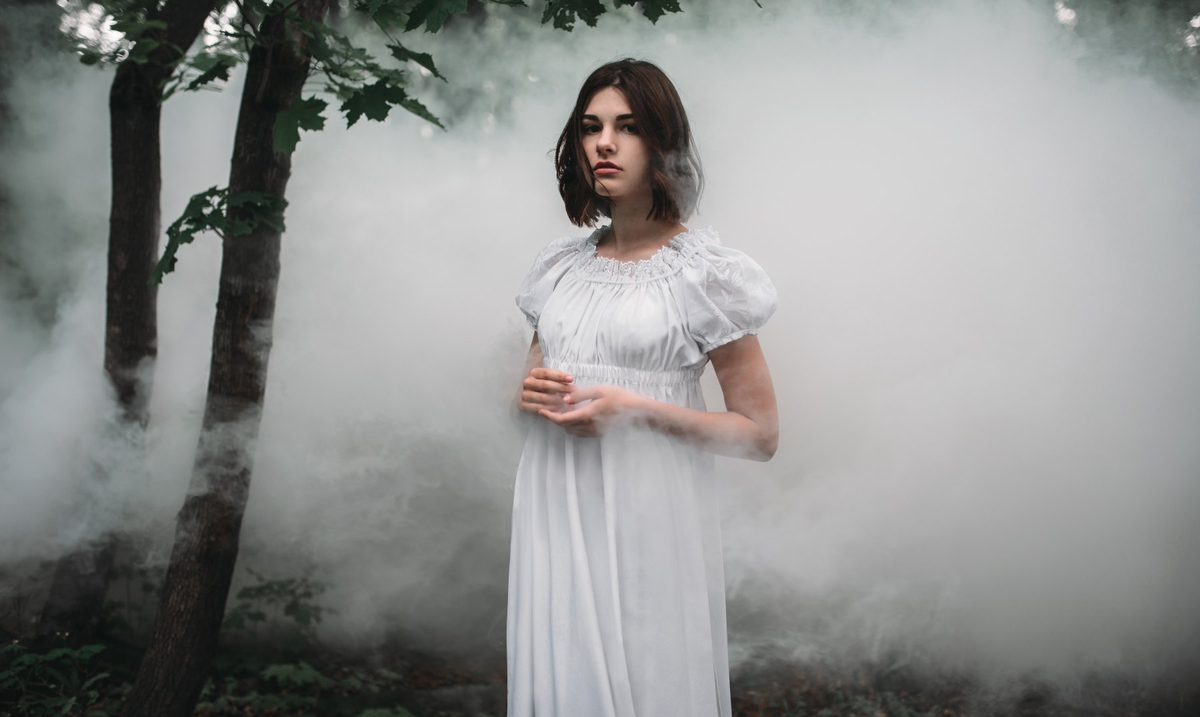
To understand why the story worked, it helps to remember what the internet looked like when Carmen Winstead began circulating. Facebook had not yet become the dominant social platform, MySpace was still one of the defining sites of online youth culture, and email forwards remained a routine way of passing jokes, rumors, warnings and urban legends between friends. The chain letter itself was much older than the web. For generations, such messages had promised luck to people who forwarded them and misfortune to people who broke the chain. The internet simply gave the old mechanism a faster distribution system.
Carmen Winstead was particularly effective because it did not initially present itself as a piece of fantasy. It looked like the kind of local crime story a reader might believe had happened somewhere else: a teenage girl, a school, a fire drill, five classmates, a sewer opening and a death supposedly covered up as an accident. The supernatural element came later in the chain message, after the fictional crime had already been presented in the language of a real event. That structure is crucial. The reader was not simply being asked to believe in a ghost. The reader was first being invited to believe in a murder.

The Story Was Built to Look Like a Missing News Report
The familiar version begins with Carmen as a teenage girl who has moved to Indiana with her family after her father loses his job. At school she struggles to fit in and eventually becomes associated with five girls who, according to the story, spread rumors about her. The details vary between versions, as they often do with internet folklore, but the basic setup remains remarkably stable: Carmen is an outsider, the girls mistreat her, and a seemingly ordinary school event provides the opportunity for something terrible to happen.
That specificity is part of the illusion. A completely generic ghost story would be easier to recognize as fiction. Give the protagonist a full name, an age, a state, a school setting and a supposedly precise sequence of events, and the narrative begins to resemble a piece of local journalism. But specificity is not provenance. A fictional writer can invent an address, a date, a school and a victim just as easily as a real reporter can record them.
The Sewer Death Was Fiction
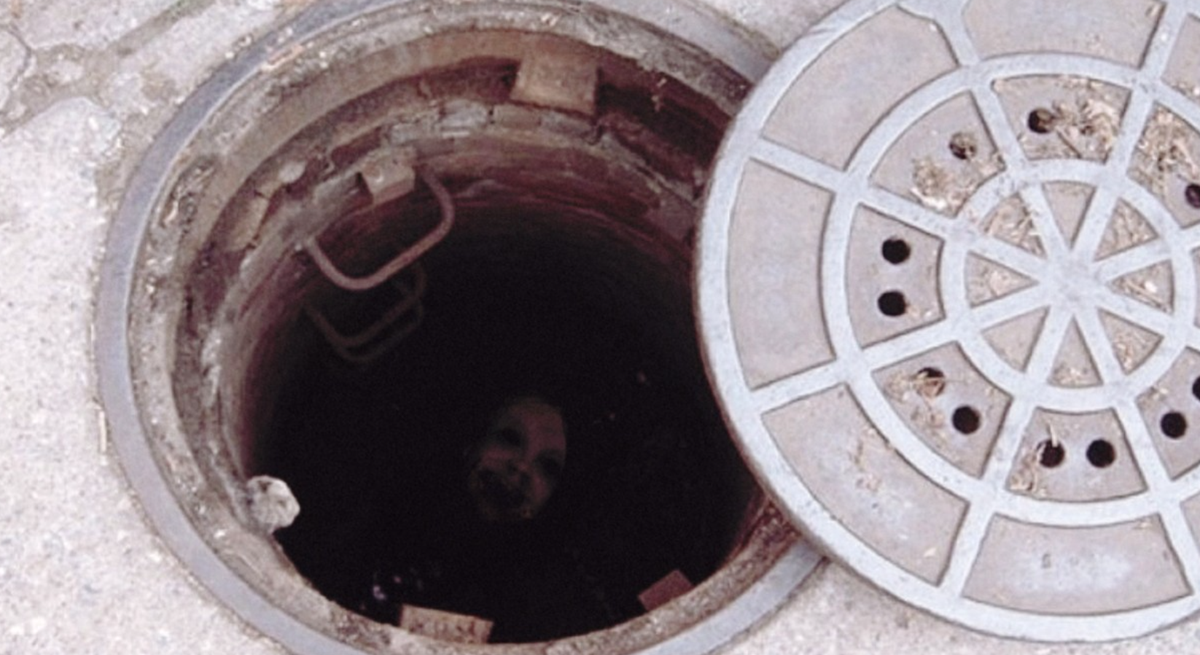
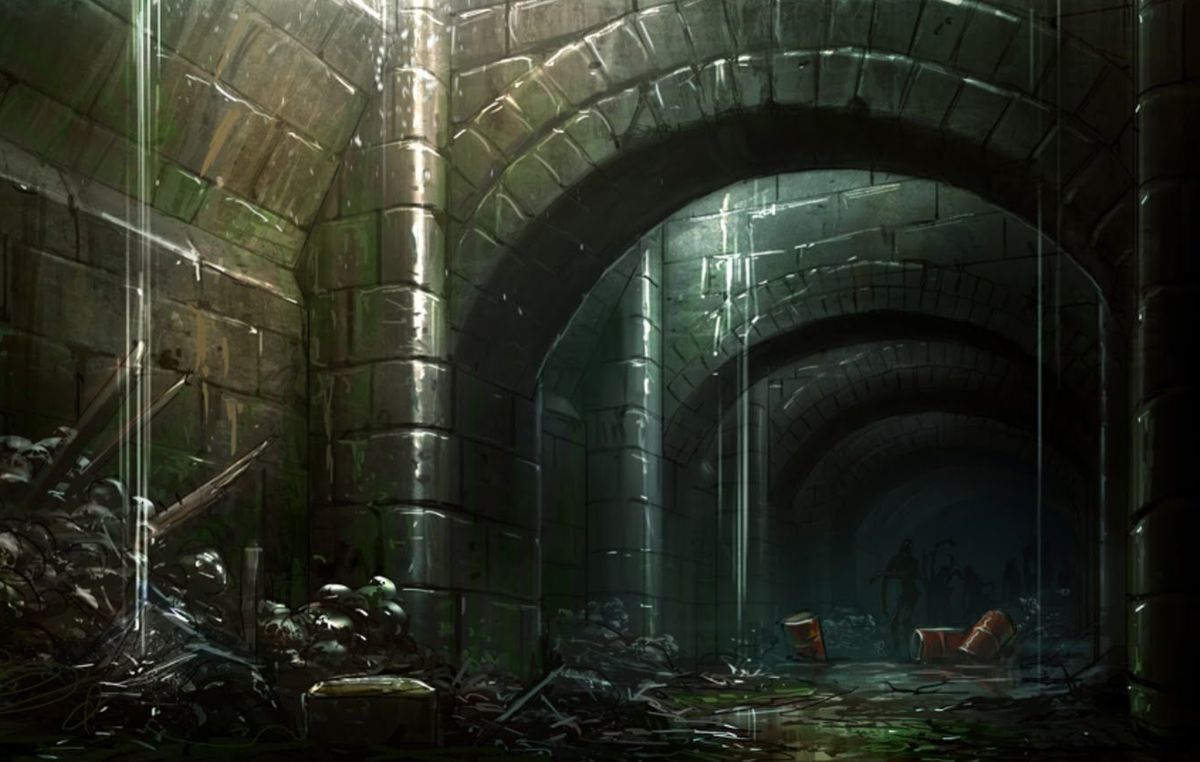
In the story, Carmen encounters the five girls during a fire drill. They decide to humiliate her by pushing her into an open sewer opening. The prank immediately becomes something much darker when Carmen fails to emerge. Police are called, her body is recovered, and the girls allegedly tell authorities that she fell accidentally.
None of this is a documented crime involving a real Carmen Winstead. It is the narrative foundation of the legend. The story’s power comes precisely from its attempt to make a supernatural tale feel like a suppressed true-crime case: there is a victim, alleged perpetrators, a cover story and a supposed official explanation that readers are encouraged to distrust.
Then the “They Pushed Her” Message Appears
After Carmen’s fictional death, the story changes genre. Messages allegedly begin circulating among students, announcing that Carmen did not fall accidentally. Someone pushed her. The anonymous warning becomes the bridge between the invented murder and the chain letter itself. Readers are no longer merely hearing a story about something that happened to someone else. They are being told that the story has somehow escaped the original community and reached them.
That is a remarkably effective horror device. The supposed cover-up creates a mystery, the anonymous message provides the revelation, and the reader is then placed inside the story as its newest recipient. The chain letter does not merely tell you what happened to Carmen. It tells you that you have now received the warning. The boundary between fiction and participation disappears.
The Curse Was the Distribution Mechanism
The supernatural portion of the legend escalates from there. The girls who supposedly killed Carmen begin suffering terrifying consequences, and the dead girl’s presence is said to manifest through drains, showers, darkness and other places associated with water or enclosed spaces. Versions differ in their details, but the underlying threat remains the same: Carmen is no longer simply the victim of the story. She has become the mechanism enforcing its circulation.
This is where the legend becomes a classic “ill-luck avoidance” chain story. You are told that somebody ignored the warning and suffered a grotesque fate. You are then given an instruction, repost the message, repeat the phrase, pass it to somebody else. The alleged death of the previous victim becomes the proof that the threat is real. In other words, the story manufactures its own evidence from inside the story.
That is why these messages can feel strangely difficult to ignore even when the reader knows they are probably nonsense. The cost of forwarding them is almost nothing. The imagined cost of refusing is deliberately enormous. A person who believes only slightly may still decide that clicking “share” is easier than testing whether the curse is real.

The David Gregory Story Was Part of the Same Fiction
One of the most effective additions to the chain was the supposed case of a teenage boy named David Gregory. In circulating versions, David reads the Carmen message and initially refuses to repost it. He then hears frightening sounds, becomes terrified, eventually shares the warning, or attempts to, and is later found dead in a sewer with injuries supposedly resembling Carmen’s. The details vary, but the function never does.
David Gregory was not a documented second victim whose death proved Carmen’s story. He was a fictional character inside the chain letter. His purpose was to give the threat a demonstration. Instead of merely saying “something bad will happen if you ignore this,” the message invented somebody to whom the bad thing had supposedly already happened.
Snopes Looked for the Crime and Found the Story
The most important external check is therefore not an examination of whether the ghost sounds plausible. It is a search for the alleged crime itself. Snopes investigated the Carmen Winstead claim and found no news report documenting such a death. Its conclusion was blunt: the tale was fiction and functioned as a typical chain letter. The site’s investigation also identified the mechanism that distinguished the story from older chain letters: instead of merely demanding that recipients email or mail the message onward, the Carmen version adapted the threat to social networking, particularly MySpace and later Facebook.
That is significant because a real teenage homicide in a school setting would not exist only as a frightening paragraph copied between accounts. There would ordinarily be some independent documentary footprint: local reporting, police records, school references, court records, obituaries, contemporaneous discussion or some combination of these. The absence of such a record is not, by itself, proof that every undocumented event in history is fictional. But here it is accompanied by something much stronger: the story’s own identifiable life as a chain-letter legend.
Who Created Carmen Winstead?
The internet has long attributed the original fictional character and story to Jessica Halonen, with accounts dating the creation of the story to around 2005 and its broader chain-letter circulation to 2006. That attribution appears repeatedly in online folklore archives and later documentation of the legend. But this is one place where precision matters: the surviving public evidence for the earliest creation history is considerably thinner than the evidence establishing that the chain letter itself was fictional.
So the strongest formulation is not that every surviving copy can be traced with absolute certainty to one original file written by Halonen. It is that the legend has a documented online attribution to Halonen and a widely recorded origin story placing its creation around 2005, followed by its circulation as a chain message in 2006. That is more defensible than turning a frequently repeated internet attribution into a fully documented publishing history.
The Name Itself Became Unstable
Another clue to the legend’s folkloric nature is the way its details mutate. Some versions use Carmen Winstead. Others use Jessica Smith. Ages shift. The exact wording changes. Some versions tell the story in the third person, others address the reader directly. Later retellings add descriptive details, images, audio and increasingly elaborate supernatural material that did not necessarily appear in the earliest circulating forms.
This is normal for internet folklore. Once a story enters a copying culture, nobody needs to preserve the original text perfectly. Every repost becomes an opportunity for modification. One person shortens it. Another adds a photograph. Somebody else records an audio version. A fourth person turns it into a video. Eventually the accumulated versions can look so elaborate that readers assume there must have been an equally elaborate original event behind them.

The Photograph Is Not Evidence of Carmen’s Existence
The same caution applies to images associated with the legend. A photograph attached to a horror story can be extraordinarily persuasive because photographs carry an automatic suggestion of documentary evidence. But an image does not authenticate the caption placed beneath it. Unless the original photograph can be independently identified, dated and connected to the alleged person and event, it is simply an image being used inside a story.
This matters particularly in the Carmen Winstead mythology because images associated with the character have circulated independently of the original chain message and have been repeatedly reposted, edited and repurposed. The existence of a recognizable “Carmen” image therefore tells us something about the history of the meme, not that a real teenage murder victim existed beneath the name.
Why It Survived the Death of MySpace
The most fascinating part of Carmen Winstead may be what happened after the platform that helped spread the story began to disappear from everyday culture. MySpace declined. Facebook became dominant. Then social-media sharing fragmented across YouTube, forums, TikTok and other platforms. Yet the legend survived because its basic structure was platform-independent. The story could be copied into a status update, pasted into a comment, narrated in a video, turned into an image, remixed as audio or rediscovered by an entirely new generation that had never encountered the original chain email.
Modern internet users sometimes encounter Carmen Winstead as though she were a newly discovered horror character. She is not. The apparent “rediscovery” is itself part of the legend’s history. A story that began in the chain-message culture of the mid-2000s has repeatedly been reformatted for newer internet cultures, proving that digital folklore does not necessarily disappear when its original platform does. It migrates.
This Is What Digital Folklore Looks Like
Folklorists have studied chain letters, rumors and what has variously been called “Xerox-lore,” a term folklorist Michael J. Preston coined in a 1974 essay published in Keystone Folklore, “network lore,” and related forms of contemporary folklore for decades. The technology changes, but the underlying mechanism is remarkably stable: a story provides an emotionally compelling premise, establishes enough concrete detail to imitate a real account, and then embeds instructions for its own transmission. Fear is not merely the subject of the message. Fear is the distribution system.
Carmen Winstead fits that pattern almost perfectly. The story gives the reader a named victim, a specific location, an apparently mundane school incident, an alleged cover-up, a supernatural explanation and a warning about what happens to people who refuse to participate. It also provides the reader with a decision that requires almost no effort: share it. That combination is much more important to understanding the legend than the question of whether a ghost could really crawl out of a sewer.
There Was No Hidden Carmen Case
There is no verified evidence that a teenage Carmen Winstead was murdered in the alleged sewer incident. No credible news report has surfaced establishing the event, and the supposed secondary victim, David Gregory, belongs to the same fictional narrative. The story’s supposed creator is identified in internet folklore documentation, while the chain message’s actual behavior, its spread through email, MySpace and later Facebook, is extensively visible in the history of the legend itself.
That makes one tempting interpretation unnecessary: there is no need to imagine a real murder that somehow escaped every newspaper, police archive and public record while surviving only through a copied horror message. The simpler explanation fits the evidence better. Someone wrote a frightening story. It acquired the architecture of a chain letter. People copied it. Each new copy made it look older and more established. Eventually the circulation itself became mistaken for corroboration.
The Real Mystery Is Why We Still Believe Stories Designed to Be Forwarded
Carmen Winstead never needed to exist for Carmen Winstead to become culturally real. The fictional girl acquired a name, a face, a death, a mythology and eventually a history of her own. Millions of screens became the haunted house through which the story traveled, and every frightened reader was given the same impossible bargain: believe me, or take the risk that I am real.
That is the part worth remembering. The story was never evidence of a murdered girl returning from a sewer. It was evidence of something more ordinary and, in its own way, more revealing: how easily a piece of fiction can disguise itself as a missing news report, how repetition can manufacture the illusion of history, and how a threat can turn the reader into the person responsible for spreading it.
Carmen Winstead did not die in that sewer. The story did not survive because the evidence was hidden. It survived because there was never any evidence to begin with, and the chain letter was designed to make its readers mistake circulation for proof.