



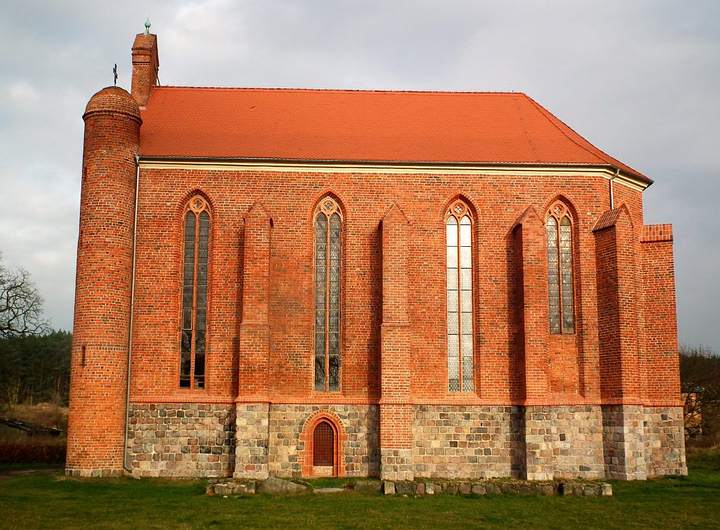
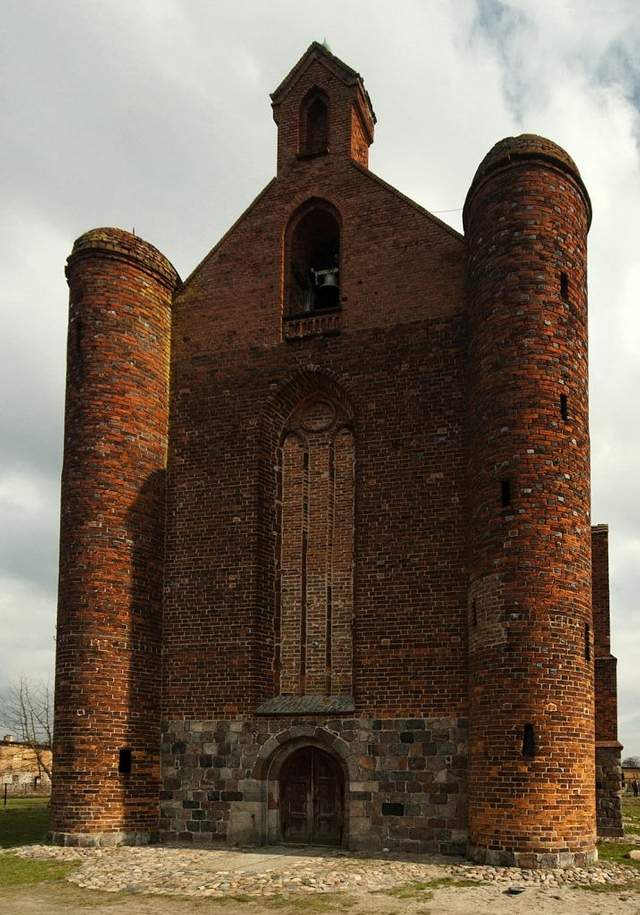
The red brick chapel at Chwarszczany was built to last.
Standing in the West Pomeranian Voivodeship of western Poland, the Chapel of St. Stanislaus was constructed in 1232 by Knights Templar who had returned from the Crusades and were consolidating the Order’s presence in the Pomeranian frontier territories. The construction appears in the architectural record as both a place of worship and a fortified defensive structure, the dual-purpose design that characterized Templar construction across Europe and the Levant: sacred space and military architecture unified in a single building whose walls were thick enough to withstand a siege.
The chapel has stood for nearly eight hundred years. Its builders have been dead for seven centuries. What the georadar found beneath the floor in recent surveys suggests that the building has been keeping secrets for the entire duration.
Przemysław Kołosowski, the archaeologist leading the current investigation, described the georadar findings in statements that the CNN report of the survey reproduced: Gothic crypts with the remains of Knights Templar detected beneath the chapel floor. In addition to the crypts, medieval documents and local oral tradition describe a well in the chapel’s vicinity that reportedly served as an entrance to a secret underground tunnel. Whether the tunnel exists, where it leads, and what it contains, are questions that the georadar survey has motivated without the subsequent excavation having yet answered.
Whatever is under the chapel at Chwarszczany has not been disturbed since the Knights Templar were burned at the stake and their Order dissolved in 1312.
The Templars in Poland and What They Were Protecting
The Knights Templar’s presence in the Pomeranian territories of western Poland is less discussed in the English-language literature than their more famous operations in Jerusalem, Paris, and London, but their known activities in this region reflect the same institutional pattern that characterized the Order’s broader European network: strategic acquisition of land, construction of fortified structures along important routes, accumulation of wealth and political influence, and the maintenance of secure transportation corridors between their eastern and western holdings.
The Order of the Poor Knights of Christ of the Temple of Solomon was founded in Jerusalem in 1118 or 1119 by nine French knights under Hugo de Payns following the First Crusade. Its original stated purpose, protecting Christian pilgrims traveling to Jerusalem, evolved rapidly into something considerably more sophisticated: a multinational military, financial, and logistical organization whose banking innovations, including the well known development of letters of credit that allowed pilgrims to deposit funds in one country and withdraw them in another without carrying gold across bandit-controlled territories, made the Templars the first recorded international banking system.
The Templar network’s financial architecture made it attractive to European monarchs as both a source of loans and a secure repository for valuables. Philip IV of France, whose well established indebtedness to the Order was the financial motivation behind his 1306 persecution campaign, owed the Templars sums that his royal treasury could not repay. The persecution and dissolution were not theological in their primary motivation. They were financial. Philip IV wanted the debt cancelled and the assets seized.
Whether the Templars, knowing that Philip IV’s campaign against them was gathering momentum, made arrangements to move their most valuable holdings beyond the reach of the French crown, is the question that the tradition of Templar hidden treasure is based on. Whether those arrangements included routes through the Pomeranian territories where the Chwarszczany chapel stands is the question that the chapel’s location makes worth asking.
The Dissolution and What Happened to the Assets
The recorded history of the Knights Templar’s dissolution is one of the most consequential institutional destructions in medieval European history, and its evidentiary record raises the hidden assets question directly.
On the night of October 13, 1307, Philip IV’s agents simultaneously arrested Templar knights across France in a coordinated operation whose planning required access to the Order’s membership records, which Philip had obtained through infiltration of the Order’s administrative apparatus. The arrested knights were subjected to well documented torture and induced to confess to charges including heresy, blasphemy, and the worship of a mysterious idol called Baphomet.
Whether the Baphomet charges reflected genuine Templar esoteric practices, deliberate fabrication by Philip IV’s torturers, or the distorted transmission of legitimate Templar theological traditions that orthodox Catholic doctrine could not accommodate, is the question that the medieval heresy trial record raises without fully resolving. The library’s Esoteric Power and Hidden Orders cluster’s treatment of suppressed knowledge traditions is the appropriate framework for examining the Baphomet question, which the current piece touches without developing.
The evidentiary problem that the dissolution created for historians and for treasure hunters alike is the recorded discrepancy between the Templar treasury’s known size and what Philip IV actually seized. The Order had been accumulating wealth for nearly two centuries through donations, banking operations, and the management of vast agricultural estates across Europe. The assets recovered in the 1307 raids were substantially less than contemporary estimates of the Order’s holdings suggested should have been present.
Whether the missing assets were moved in the weeks between the first rumors of Philip’s campaign and the October arrests, were hidden in the Order’s extensive network of underground structures across Europe, or represent a systematic overestimate of the Order’s actual wealth whose basis in contemporary documentation was itself inflated, is the question that every Templar treasure tradition from the Holy Grail to the Oak Island money pit is ultimately asking.
The Chwarszczany chapel’s location in a region of Templar activity distant from Philip IV’s reach in France, combined with its confirmed underground structures whose content the georadar has detected but excavation has not yet confirmed, places it in the category of physical locations where the missing assets question has a geographic basis rather than simply a legendary one.
Jacques de Molay and the Curse of the Last Grand Master
The final chapter of the Knights Templar’s institutional existence is one of the most specifically dramatic in medieval European history and one whose details connect to the library’s Prophecy and Cyclical Time cluster.
Jacques de Molay, the last Grand Master of the Knights Templar, was arrested in the October 1307 raids and held in prison for approximately seven years while the Church and Philip IV negotiated the Order’s formal dissolution. At the Council of Vienne in 1311-1312, Pope Clement V formally dissolved the Order under Philip IV’s pressure. De Molay was sentenced to life imprisonment rather than death.
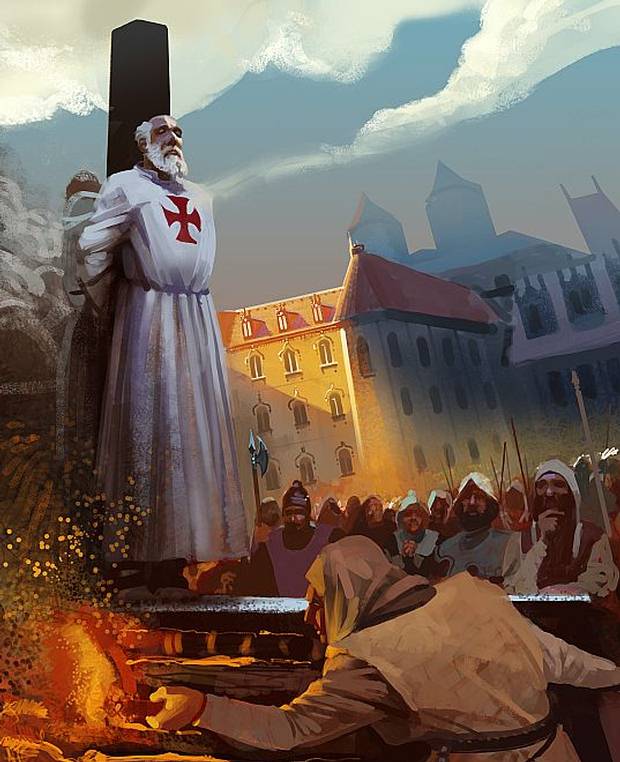
On March 18, 1314, de Molay and Geoffrey de Charny were brought before a public assembly outside Notre Dame Cathedral in Paris to hear their sentences formally confirmed. Instead of accepting the confirmation, de Molay retracted all confessions extracted under torture and proclaimed the innocence of the Order. This retraction converted his sentence from life imprisonment to death by burning as a relapsed heretic.
He was burned at the stake on an island in the Seine on the same day.
Tradition reports that de Molay, burning, summoned both Philip IV and Pope Clement V to appear before God within the year. Clement V died thirty-three days later of a painful illness. Philip IV died seven months later in a hunting accident.
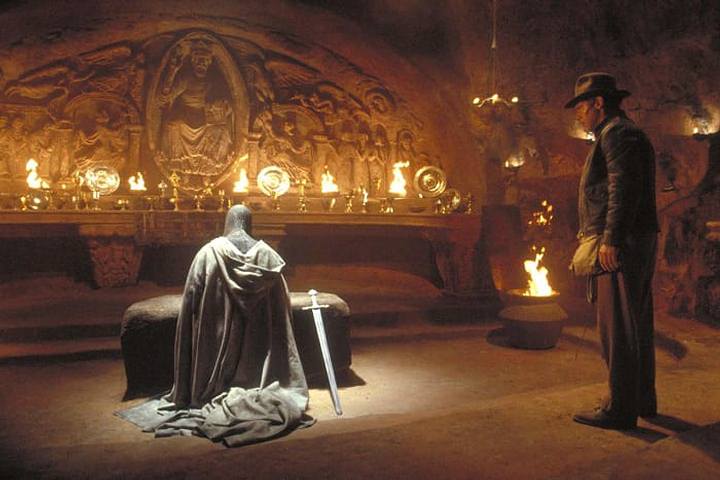
Whether these deaths reflect the efficacy of a dying man’s curse, coincidence, or the retrospective construction of a prophetic narrative from the striking proximity of three deaths in a single year, is the question that the timing makes permanently interesting. What is not disputed is that all three men, de Molay, Clement V, and Philip IV, were dead within a year of de Molay’s execution.
The inscription said to have appeared on the wall of the Templar prison in Paris after the arrests, Wash the shame of France, appears in the historical record as part of the tradition surrounding the Order’s suppression, though its attribution and the circumstances of its appearance are contested.
The Holy Grail Tradition and Its Templar Connection
The Holy Grail’s connection to the Knights Templar in the popular imagination derives from two known sources whose relationship to historical reality is complex.
The first is the medieval Grail literature itself. The earliest documented Grail narratives, Chrétien de Troyes’s unfinished Perceval of approximately 1190 and Wolfram von Eschenbach’s Parzival of approximately 1210, both postdate the Templar founding in 1118 and both contain elements whose relationship to known Templar iconography and theology has been discussed in the medieval literature scholarship. Wolfram’s description of the Grail as a stone whose properties include restoration of youth, nourishment of its guardians, and connection to a heavenly host has been examined in relation to Templar theological traditions without producing consensus on whether the literary connection reflects historical institutional reality.
The second source is the timing of the Grail literature’s peak production, approximately 1190-1250, which coincides with the height of Templar power and influence in both the Levant and Western Europe. Whether the Grail literature’s themes, the quest for a sacred object, the test of worthiness, the connection between chivalric virtue and access to divine presence, reflect Templar initiation traditions encoded in literary form, independent literary development of common medieval Christian themes, or something whose relationship the available evidence motivates speculating about without establishing, is the question that the temporal coincidence raises.
The Chwarszczany legend, recorded by local historian Marek Karolczak as a tradition that Templars sank the Holy Grail with gold coins in a nearby lake under cover of darkness, is the oral tradition connection between the chapel’s confirmed Templar construction and the broader Grail mythology. Karolczak’s own framing is honest about the legend’s evidentiary status: the lake mentioned in the stories dried up long ago and the treasure may have been stolen or lost forever in the swamp.
Whether the legend preserves genuine local memory of a Templar concealment operation, represents the standard pattern of Holy Grail treasure legends attaching themselves to Templar sites across Europe, or reflects both simultaneously, is the question that the confirmed crypts and the unexcavated tunnel together make more interesting than it would be without the physical evidence.
Myślibórz and the Regional Network
The confirmed Templar founding of Myślibórz in 1238, six years after the Chwarszczany chapel’s construction, and the known underground tunnel beneath the town, provide the regional context for understanding the Chwarszczany findings as part of a network rather than an isolated site.
Templar construction in the medieval period characteristically involved underground infrastructure: cisterns, escape routes, storage vaults, and communication tunnels connecting fortified structures in the same regional network. The known underground tunnel at Myślibórz, whose connection to the Chwarszczany chapel approximately two hours on horseback suggests a potential communication corridor between two nodes of the same regional Templar operation, is the physical evidence whose excavation would most directly address the question of what the regional network was built to protect.
Whether the Chwarszczany-Myślibórz corridor represents a standard defensive Templar infrastructure whose contents reflect normal operational supplies and burials, or a protected route for valuable objects moved through the Pomeranian territories during the Order’s final years, is the question that both sites’ confirmed underground features motivate examining.
The regional history of the Pomeranian territories in the early thirteenth century provides additional context: the area was a frontier zone between established Christian kingdoms and territories that German crusading orders including the Teutonic Knights were simultaneously attempting to convert by military force. Templar construction in this region served the same dual sacred-military function that characterized their Levantine operations, and the security concerns of a frontier military-religious order operating in contested territory would have motivated exactly the kind of underground infrastructure both sites’ surveys have detected.
What the Excavation Could Establish
The current state of the Chwarszczany investigation is the moment where the historical and legendary traditions intersect with the physical evidence whose examination could either confirm or rule out hypotheses.
The georadar findings establish that Gothic crypts exist beneath the chapel floor and that the underground passage whose historical sources describe has a physical basis consistent with radar anomalies. Whether the crypts contain only the Templar remains whose presence the radar suggests, or contain additional material whose nature the georadar survey did not characterize, is the question that excavation would address.
The content of the confirmed crypts would itself be significant regardless of any Holy Grail connection: Templar burial practices, the grave goods recovered from known Templar burials, and the identity evidence available from the skeletal remains, would contribute to the historical record of Templar activity in the Pomeranian region in ways whose significance for understanding the Order’s northern European operations extends well beyond the treasure tradition.
Whether the passage whose historical sources describe as connecting to the well leads to a chamber whose content reflects the Chwarszczany legend’s claims, or leads to a standard defensive escape route whose practical military function has no connection to the Grail mythology, is the question that eight hundred years of sealed underground space has been preserving.
The chapel was built in 1232. The Order was dissolved in 1312. Whatever is in the crypts beneath the red brick floor has been undisturbed for longer than most nations have existed.
The georadar has seen its outline. The excavation has not yet opened it.