




DARPA really did issue a Request for Information seeking AI-powered disease outbreak simulation technology, a publicly posted government solicitation with a name, a point of contact, and a plainly stated purpose.
This piece reports it accurately, and directly corrects the claim that COVID-19 was a deliberately orchestrated crisis, a claim with no scientific or intelligence-community support.
What DARPA Actually Announced
This is independently verifiable: DARPA posted a Request for Information titled “Advanced Disease Outbreaks Simulation Capabilities,” formally designated DARPA-SN-25-72, on May 27, 2025, through the government’s SAM.gov contracting portal, with responses due June 23, 2025. The point of contact listed is Rob Saperstein, Ph.D., of DARPA’s Biological Technologies Office. The RFI’s actual, published text states its purpose directly: addressing “the emergence of natural or man-made infectious agents” as “a significant threat to the homeland and to deployed warfighters globally,” seeking to improve biosurveillance, diagnostics, and medical countermeasures, and to strengthen “preparedness for future public health emergencies.” This is an ordinary government solicitation, publicly posted and readable in full by anyone.
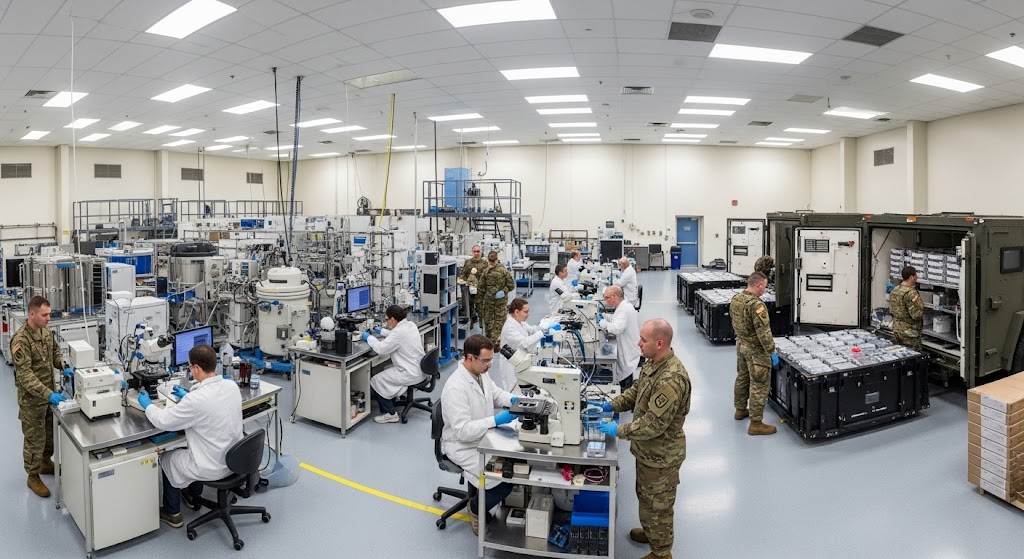
This RFI does request information on AI and machine learning-based disease simulation, intervention modeling (vaccination campaigns, social distancing, quarantine protocols), and technical questions about software architecture, data integration, and validation methods. It sits alongside other established DARPA programs in this space, including ASKEM, Automating Scientific Knowledge Extraction and Modeling, a $29.4 million program launched in 2022, publicly reported by Science magazine, with named program manager Erica Briscoe, and independently tested by the nonprofit research organization MITRE.
“A Manufactured Crisis”
This needs to be stated plainly and directly: no credible scientific consensus or intelligence community assessment supports the claim that COVID-19 was “a manufactured crisis,” “carefully orchestrated,” or unfolded “not by accident, but as part of a grand design.” The still-open scientific and intelligence question concerns whether COVID-19’s origin was a natural zoonotic spillover or an accidental laboratory-associated leak, both seriously considered hypotheses among credentialed virologists and by US intelligence agencies, which have expressed differing and generally low-to-moderate confidence assessments across these two explanations. Neither hypothesis, including the lab-leak hypothesis, involves an intentional, coordinated global conspiracy to engineer or deliberately release the virus for population control or geopolitical leverage, and no credible evidence supports that specific claim. Readers should treat any content asserting deliberate, orchestrated origin as unsubstantiated rather than established fact.
Why DARPA’s Actual, Stated Interest Makes Sense
The burden of proof matters here: a government solicitation existing is not, by itself, evidence supporting any claim about hidden intent behind it. Evaluating what an agency is actually doing requires reading its own stated purpose, checking that purpose against its historical pattern of similar work, and weighing any further claims against the actual evidence available, exactly the approach this piece takes throughout.
DARPA’s stated interest in epidemic modeling fits within its decades-long, publicly known mission as the Defense Department’s advanced research arm, which has long funded dual-use research spanning both civilian and military applications, from the early internet architecture to GPS technology. Biodefense concern about both natural pandemics and deliberately engineered biological threats is a longstanding and openly acknowledged part of US national security policy, publicly discussed in congressional testimony and published defense strategy documents, not a new or hidden development. The COVID-19 pandemic did expose well-documented gaps in outbreak modeling speed and coordination, a legitimate public health lesson that government agencies, including DARPA, have openly stated as motivation for exactly this kind of research investment.

What Kind of Technology the RFI Actually Describes
The RFI’s published questions ask respondents to detail their modeling capabilities across scales, from person-to-person transmission through regional and global levels, and to describe how their systems incorporate epidemiological variables: incubation periods, asymptomatic transmission, superspreader events, and environmental factors. It also asks about intervention modeling, including vaccination campaigns, social distancing, and quarantine protocols, and about technical details including software platforms, data integration methods, and validation processes. These are standard technical questions consistent with the RFI’s stated public health and biodefense preparedness purpose, matching the kind of solicitation language typical of DARPA’s standard research process.
The Legitimate Questions Worth Asking
Separate from the unsubstantiated “orchestrated pandemic” claim, this RFI does raise legitimate policy questions that deserve serious treatment without exaggeration. The RFI does request information on a “user-friendly dashboard” allowing non-specialist personnel to run scenario simulations, a documented request worth genuine scrutiny: how should complex epidemiological models be made accessible to decision-makers without oversimplifying difficult public health tradeoffs? The explicit inclusion of “man-made infectious agents” alongside natural ones in the RFI’s scope is worth noting accurately, since biodefense research addressing deliberately engineered pathogens is a longstanding and separately regulated area of national security policy, distinct from claims about any specific past pandemic’s origin.
Critics of expanding military involvement in public health modeling, including academic bioethicists and civil liberties organizations, have raised published concerns about the blurring line between civilian public health authority and military research funding, questions about data privacy in genetic and demographic modeling inputs, and questions about algorithmic decision-making in crisis response. These are substantive, legitimate policy debates worth engaging with directly and fairly, on their own terms, rather than requiring an unsubstantiated conspiracy framework to justify taking them seriously.
Natural and Engineered Pathogens | A Separate Policy Area
DARPA’s explicit inclusion of “man-made infectious agents” in this RFI’s scope reflects a longstanding and publicly acknowledged area of US biodefense policy, not a new or secret admission. Publicly acknowledged US biodefense programs addressing engineered pathogen threats date back decades, operating under established oversight frameworks including the Biological Weapons Convention and domestic biosafety regulation. This policy area is worth understanding accurately on its own terms, as legitimate defensive preparedness against a category of threat that credentialed biosecurity experts have publicly discussed for years, separate from any claim about a specific past pandemic’s actual origin.
The Actual Intelligence Community Assessments on COVID-19 Origin
The actual state of US intelligence community assessment on this question deserves precise reporting, since it’s frequently misrepresented in both directions online. A 2023 declassified report from the Office of the Director of National Intelligence found that US intelligence agencies remained divided, with most assessing natural exposure as somewhat more likely with low confidence, while at least one agency assessed a laboratory-associated incident as more likely, also with low confidence, and several agencies remained unable to reach a determination without additional information, notably including cooperation from China that has not been forthcoming. This genuinely divided and low-confidence assessment across multiple credentialed intelligence agencies is a considerably more honest and complicated picture than either “definitely natural” or “definitely a deliberately orchestrated conspiracy,” and it deserves to be reported with that same complexity rather than resolved artificially in either direction.

Historical Precedent | DARPA’s Biodefense Programs
This current RFI is best understood within DARPA’s decades-long history of biodefense research, since the pattern is well established rather than a new departure. Publicly documented DARPA biological programs predate this RFI by decades, including initiatives following the 2001 anthrax mail attacks that spurred substantial investment in biosurveillance and rapid diagnostic technology, publicly reported through congressional appropriations and agency program announcements. DARPA programs including Predicting Health and Disease and Prophecy have previously focused on early biological threat detection, each with publicly available program descriptions on DARPA’s own official website. This established institutional pattern, biological threat modeling as a recurring, openly acknowledged component of DARPA’s mission across multiple decades and multiple named programs, is worth knowing as accurate context for evaluating this current RFI, rather than treating it as an unprecedented or newly revealed area of military interest.
What ASKEM Actually Achieved, in Concrete Numbers
The concrete results from DARPA’s related ASKEM program deserve reporting in detail, since they illustrate what this kind of research actually produces in practice. Testing conducted by the nonprofit research organization MITRE, reported by Science magazine, found ASKEM’s AI-assisted modeling tools could build practically useful epidemiological models 83 percent faster than standard workflows, researchers completing in a standard 40-hour work week what previously required considerably longer. Test scenarios included modeling coinfection dynamics between influenza, respiratory syncytial virus, and COVID-19 circulating simultaneously, a realistic and useful public health scenario, and a separate test modeling the cost impact of a hepatitis A vaccination campaign among unhoused populations in a specific US state. These concrete, publicly reported results describe exactly the kind of practical public health modeling improvement the RFI’s stated purpose describes, technical work aimed at faster, more transparent epidemiological modeling, rather than the population control apparatus implied elsewhere.
Existing Oversight Mechanisms for Military-Funded Research
The existing oversight structures that govern DARPA research of this kind deserve explanation, since they’re relevant to fairly evaluating the legitimate policy questions raised above. DARPA programs are subject to congressional oversight through established defense appropriations committees, which review and approve agency budgets and can request briefings on specific program activities. Research involving human data, including the demographic and mobility information this RFI references, is subject to existing federal regulations, including institutional review board requirements for federally funded research involving human subjects. This existing oversight framework doesn’t eliminate legitimate questions about transparency, appropriate civilian input, or the pace at which military-funded public health tools should be adopted into civilian emergency response, substantive questions worth continued public and academic scrutiny, but it’s worth knowing these mechanisms exist rather than assuming this kind of research operates in a complete regulatory vacuum.

Reading Government Solicitations Directly
One practical point applies well beyond this single RFI. US government contracting solicitations, including RFIs, Requests for Proposals, and program announcements from agencies including DARPA, are public records, published through the SAM.gov federal contracting portal and individual agency websites, available for anyone to read in full without any special access or clearance. This existing transparency is genuinely useful whenever a claim circulates about a specific government program or solicitation, since reading the actual, published text is almost always faster and more reliable than relying on a secondhand summary, whether that summary understates or, as in this case, substantially overstates what the document actually says. This RFI’s published text is available through the DARPA-SN-25-72 posting, and readers curious about its full technical scope can verify every claim in this piece directly against that primary source.
A Glimpse Into the Future of Global Biosecurity
DARPA’s search for advanced AI-powered epidemic modeling reflects an ongoing evolution in how public health preparedness and national security increasingly intersect, a well established trend best tracked through its actual solicitations and program announcements. As questions about data governance, algorithmic transparency, and appropriate civilian oversight of military-funded public health tools continue developing, they deserve serious, evidence-based engagement grounded in the documents and statements agencies like DARPA actually publish, rather than embellished with unsubstantiated claims about deliberately orchestrated crises that no credible source supports. The actual story, a longstanding defense research agency openly seeking better tools to model both natural and engineered biological threats, following historical precedent stretching back decades, is itself worth understanding accurately, since accurate understanding is precisely what allows the legitimate policy questions involved to be evaluated honestly rather than lost beneath an exaggerated and unsupported narrative.
COVID’s own origin remains genuinely unresolved for a similar reason, not institutional silence, but a search for patient zero that stalled for ordinary evidentiary reasons