


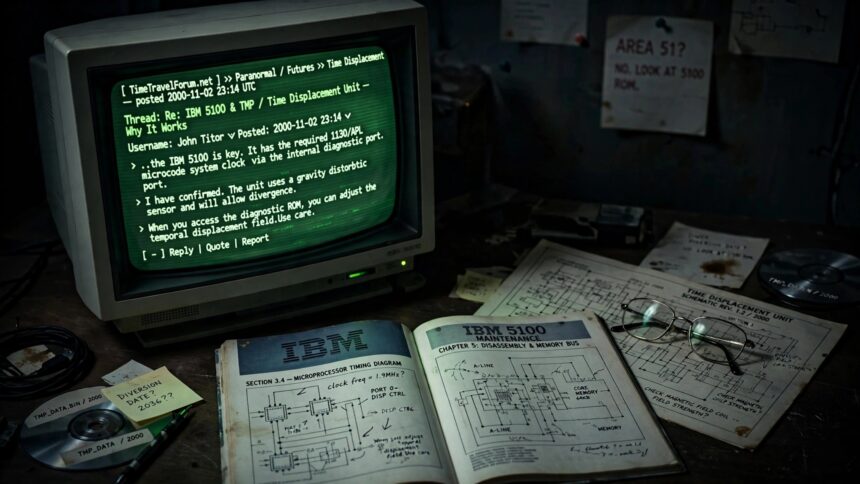
On November 2, 2000, an anonymous user appeared on the Time Travel Institute forums and began answering questions about time travel as though he were not speculating about the future but remembering it. He called himself TimeTravel_0. He said he was a soldier from the year 2036, temporarily in our time after traveling back to 1975 to retrieve an IBM 5100 computer. He described the machine he supposedly traveled in, the military unit he supposedly served with, the history of a United States that had supposedly fractured into civil war, and a world that would eventually be devastated by nuclear war.
Within months, the name changed. TimeTravel_0 became John Titor, and the anonymous poster became one of the most famous time travelers in the history of the early internet.
There is a reason the story has survived long after the dates in it expired. Titor did not merely say that the future would be strange. He supplied dates, technologies, wars, political upheaval, geographical changes and technical details that could be checked against the real world. Some of the obscure details were remarkably well informed. The major future events, however, never happened.
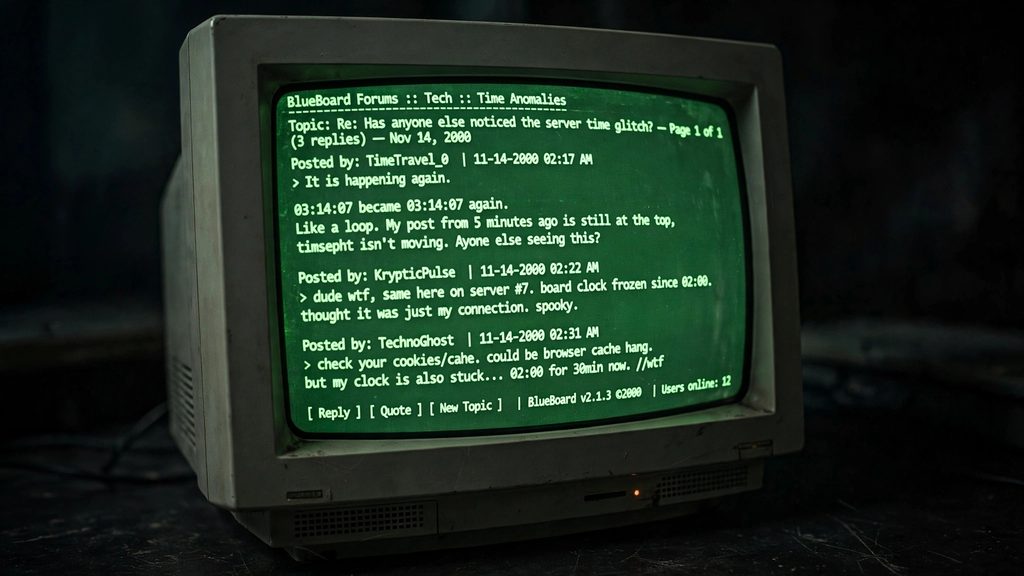
That leaves the Titor story in an unusual position. It is neither an ordinary ghost story nor a prediction so vague that it can be made to fit anything afterward. It is a documentary trail. The posts exist. The dates exist. The claims exist. The years he named have passed, and the record can be examined.
And once it is, the most interesting mystery is no longer whether John Titor came from 2036. It is who was sitting behind the keyboard in 2000.
Before John Titor, There Was TimeTravel_0
The chronology is more complicated than the familiar version of the story suggests.
The surviving Time Travel Institute archive places the beginning of the principal forum sequence on November 2, 2000, when a user called TimeTravel_0 entered a discussion about time travel paradoxes. The account initially did not introduce itself as John Titor. The name came later, in January 2001, when the same persona began posting on the Art Bell Post-2-Post board. The forum sequence continued until March 2001, with the final material appearing around March 24.
There is an earlier layer, but it deserves different treatment. Two faxes attributed to the Titor persona were reportedly sent to Art Bell’s radio program in 1998. Those faxes contain an early version of the story, including the disastrous Y2K scenario that had already failed by the time the 2000 forum campaign began. The existence and interpretation of those faxes belong to the broader Titor documentary tradition, but they should not simply be folded into the forum chronology as though all of the surviving material appeared simultaneously. The later scholarly discussion of Titor explicitly distinguishes the 1998 material from the 2000 to 2001 postings.
Then there was the October 14, 2000 IRC conversation, less than three weeks before the first Time Travel Institute posts. There, the person using TimeTravel_0 described himself as a 38-year-old man from Florida stationed at MacDill Air Force Base in Tampa. He said he had been sent back to 1975 to obtain an IBM computer.
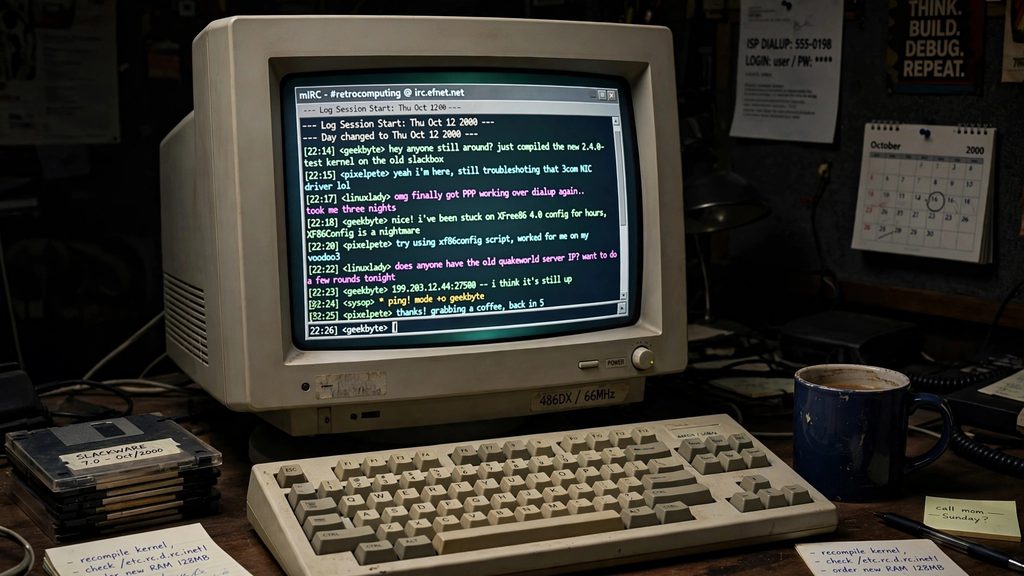
That conversation is where the story acquires its first extraordinary documentary wrinkle. In the IRC material, the machine is identified as an IBM 5110. The model is mentioned repeatedly. When TimeTravel_0 began posting on the Time Travel Institute forum in November, however, the machine became the IBM 5100, the earlier computer that had actually been introduced in 1975 and that fits the chronology of the supposed mission. The later posts consistently use 5100, and no surviving transition between the two names explains the change.
The distinction is not cosmetic. IBM’s 5100 and 5110 were different machines, released years apart, which makes the switch one of the more interesting internal details in the entire case, precisely because neither number is imaginary.
The Mission to Steal a Computer From 1975
Titor’s story was built around a remarkably mundane object. He claimed that his military unit in 2036 needed an IBM 5100 from 1975 because of a serious problem involving legacy computer code. The 5100, he said, possessed a capability that had not been adequately documented in the public material surrounding the machine, and his future government needed an original example of the hardware for work connected to the Unix Year 2038 problem.
The machine was real. So was the obscure capability. The IBM 5100 was an early portable computer introduced in 1975. Its architecture included hardware that allowed it to run software associated with IBM’s APL and BASIC environments in ways that were unusual for a machine of its period. Accounts based on the recollections of IBM engineer Bob Dubke describe the capability as something IBM deliberately did not emphasize publicly because of competitive concerns. The technical detail is therefore not a fictional invention that happens to resemble a real computer. The machine existed, and the relevant technical feature existed.
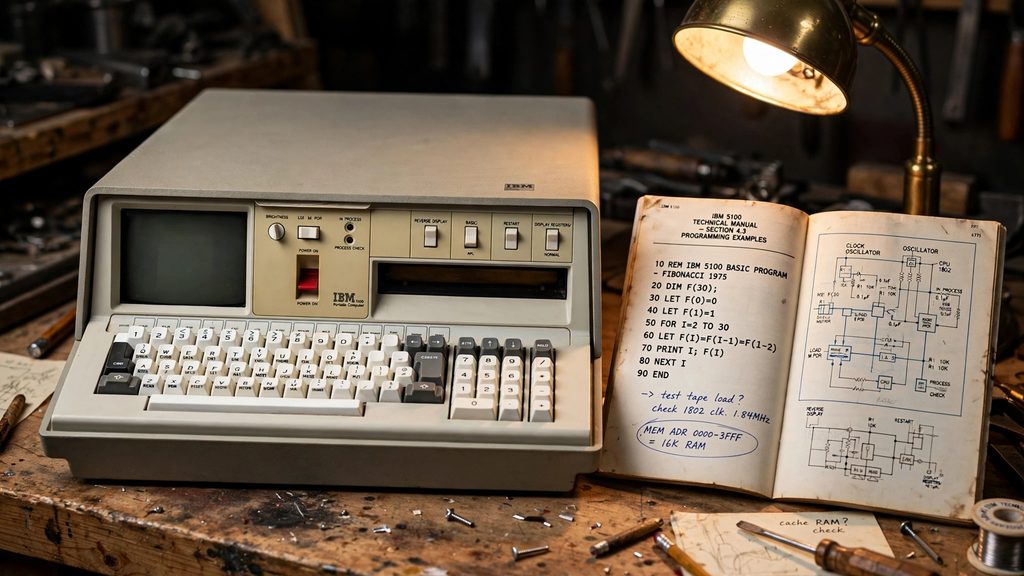
This became the most powerful piece of evidence in Titor’s favor, but it also collapses two different questions into one. The first is whether Titor knew something real about the IBM 5100, and the answer is yes. The second is whether knowing that obscure fact proves he was actually a visitor from 2036, and the answer does not follow from the first.
A knowledgeable computer enthusiast could potentially have known the information. A researcher could have obtained it through specialist documentation. Someone with access to IBM technical material could have known it. Someone who helped construct the Titor narrative could have researched it. And, of course, a genuine time traveler would also have been able to know it if the story were true.
The IBM detail narrows the mystery. It does not solve it. The Titor legend has often treated the IBM 5100 as though a correct technical statement were itself proof of time travel. It is not. What it establishes is something more interesting and more defensible: whoever wrote the material knew a surprisingly specific piece of computer history.
The Machine, the Corvette and the Man From 2036
The IBM computer was only the beginning. Titor described a time machine built around what he called a General Electric C204 time displacement unit. He supplied technical language involving two top-spin dual-positive singularities, a Tipler sinusoid, an electron injection manifold, cooling and X-ray venting, gravity sensors and four cesium clocks. In an early post he listed six basic components that he claimed were necessary for the system.
The language sounds scientific because it is assembled from real scientific vocabulary, but that does not make the proposed machine scientifically coherent. The same caution that applies to the IBM 5100 applies here too. A story can contain genuine technical terms without describing a physically demonstrated technology, and Titor’s posts mixed established concepts, speculative physics and invented terminology into a system that sounded sufficiently technical to reward readers who wanted to decode it.
He also supplied photographs and diagrams purporting to show the equipment. The device was supposedly mounted first in a 1967 Chevrolet Corvette convertible and later transferred to a 1987 four-wheel-drive vehicle. The story therefore acquired the visual quality that internet legends thrive on. There was supposedly an object. There were supposedly photographs. There was supposedly a manual. There was supposedly a military unit whose insignia could be reproduced.

The mythology was becoming physical, yet every physical component of the story remained dependent on the same anonymous source. There was no public appearance by John Titor. There was no independently authenticated machine. There was no verified military record establishing that a soldier by that name had existed. The surviving evidence was documentary in a very particular sense. It consisted of messages, images and objects attributed to the persona, rather than independently established evidence that the persona itself existed as described.
That difference would become increasingly important once the future arrived.
The Future Was Specific Enough to Fail
The most revealing part of the Titor story is not the science fiction. It is the calendar.
Titor described a United States moving toward civil conflict. In the version that became widely known, unrest surrounding the 2004 presidential election would intensify, the country would descend into a civil war that became unmistakable by 2008, and the United States would eventually fragment into several regions.
Then came the larger catastrophe. Titor said that a world war would occur in 2015 and that nearly three billion people would die. Nuclear weapons would be used. American cities would be struck. Washington, D.C. and Jacksonville were among the locations he named in accounts of the future, and Omaha, Nebraska would become the new American capital. He also made other future claims, including that the Olympic Games would not continue normally after 2004 because of global conflict.
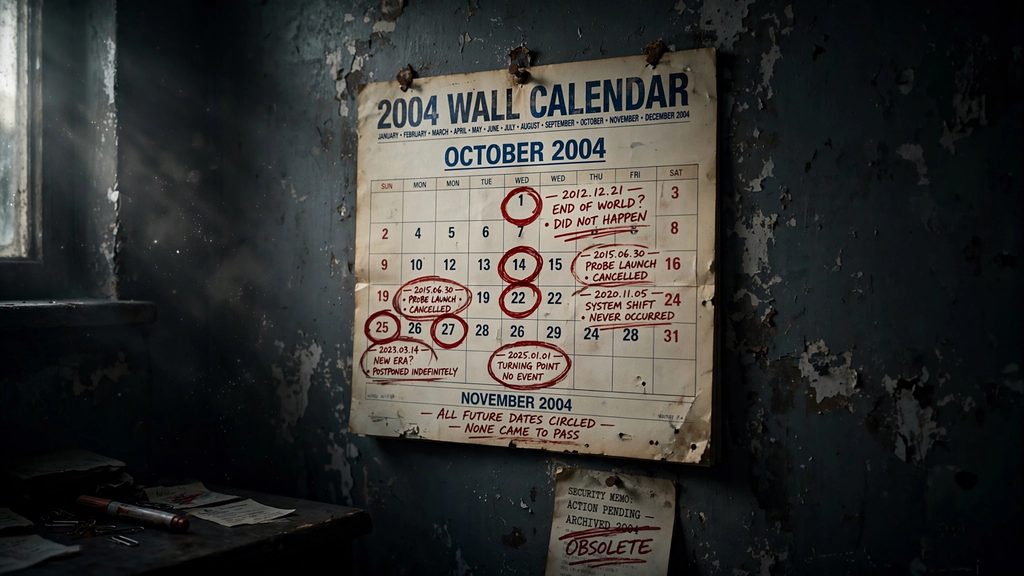
These statements are valuable for a very simple reason. They were dates. The years arrived. The events did not.
The United States did not enter the civil war Titor described in 2004, 2005 or 2008. The country did not divide into the political and military regions he described. The Olympics did not disappear after 2004. The 2006 Winter Olympics took place in Turin, the 2008 Summer Olympics took place in Beijing, and the Olympic cycle continued thereafter. There was no nuclear World War III in 2015 killing billions of people, and Omaha did not become the capital of the United States. The historical record does not require interpretation here. The predicted events simply did not occur.
The distinction between these failed predictions and later attempts to reinterpret them is important. Titor frequently invoked a many-worlds framework in which traveling backward in time could place the traveler on a different worldline. That gave the story a built-in explanation for divergence. If the predicted future failed to appear, the claim could be that the act of time travel itself had moved the traveler into a different branch of history.
As a fictional device, it is elegant. As a test of prediction, it creates a serious problem. A claim that can be revised after every failed prediction so that the failure itself becomes evidence of timeline divergence is difficult to falsify. Yet the story also contained explicit dates and concrete events that were presented as descriptions of the future from which Titor supposedly came. The result was an unusual tension inside the narrative. It was simultaneously specific enough to sound testable and flexible enough to survive a failed test.
The years eventually settled the matter for anyone willing to treat the claims as ordinary predictions.
The Y2K Problem Was Already a Problem for the Story
The Titor chronology contains an even stranger difficulty. The earliest attributed material from 1998 described Y2K as a catastrophe. According to the surviving account, people would die, governments would impose emergency measures and society would be thrown into severe disorder. But January 1, 2000 arrived before the main forum campaign began, and the predicted catastrophe did not occur.
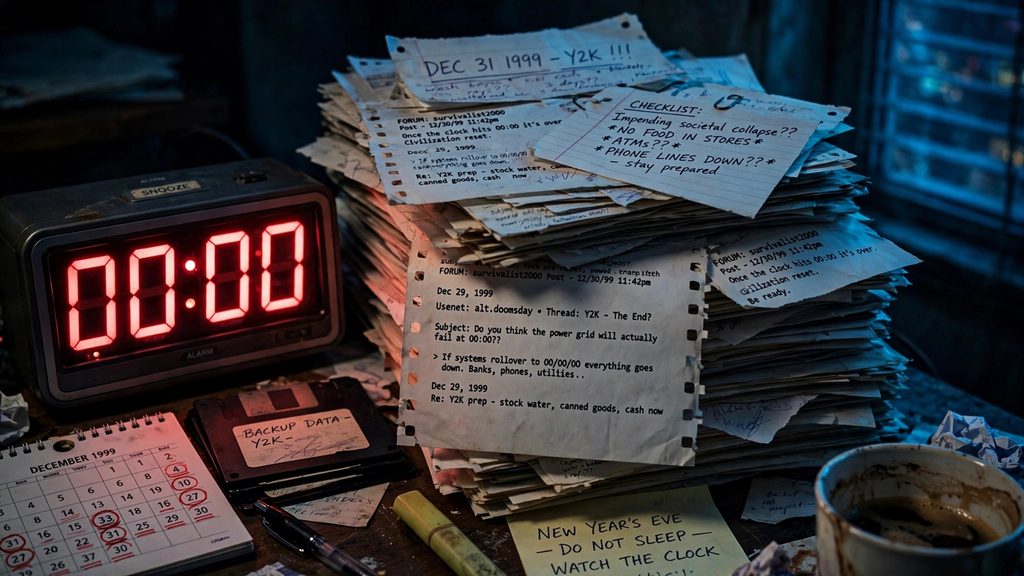
That meant the story had already crossed a major temporal boundary before TimeTravel_0 became a recognizable internet character. The later narrative changed accordingly. The Y2K disaster ceased to function as the central future event and the story shifted toward other predictions, especially the civil war and nuclear conflict. The adjustment is important because it shows the legend evolving across different stages rather than existing as one perfectly preserved prophecy from beginning to end. The Cambridge analysis of the Titor material specifically noted the problem created by the failed Y2K prediction and the subsequent emphasis on later events.
There is an irony here that almost writes the story by itself. The supposed traveler from 2036 arrived in our historical record carrying memories of a future that had already been disproved by the time some of the most famous posts were written. That does not prove who wrote the material, but it does change how the chronology should be read.
The IBM 5110 Problem Is Harder to Explain Away
If the failed predictions show what happened after the posts were written, the IBM 5110 discrepancy shows something inside the story as it was being written.
In October 2000, TimeTravel_0 identified the mission computer as the IBM 5110. In November, the public forum narrative settled on the IBM 5100. The 5100 is the machine that makes sense within the story because it was introduced in 1975, the year Titor said he had been sent to retrieve it. The 5110 came later.
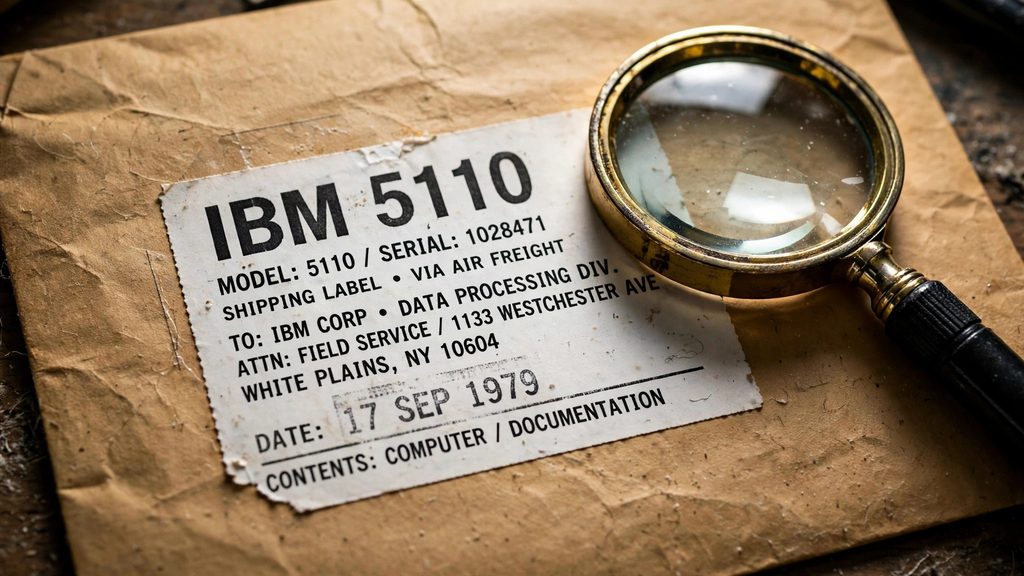
The discrepancy becomes even more curious because the later documentary record includes a physical label said to have been sent to correspondent Pamela Moore that bears the designation IBM 5110. Contemporary Titor researchers have treated that label as part of the case, although the provenance and interpretation of the physical evidence remain matters within the Titor research community rather than independently authenticated proof of the underlying story.
There are several possible explanations. It could have been a simple mistake, an intentional revision, or the product of different people contributing to different stages of the story. It could indicate that the person writing the material had researched IBM equipment without maintaining perfect control over the model numbers. Or it could be something stranger. The evidence does not tell us which.
That is precisely why the detail deserves to remain in the article. A good investigation does not turn an unexplained inconsistency into a conclusion merely because the conclusion feels satisfying. The mystery is the inconsistency.
Who Was John Titor?
This is where the story moves from failed prophecy into authorship investigation.
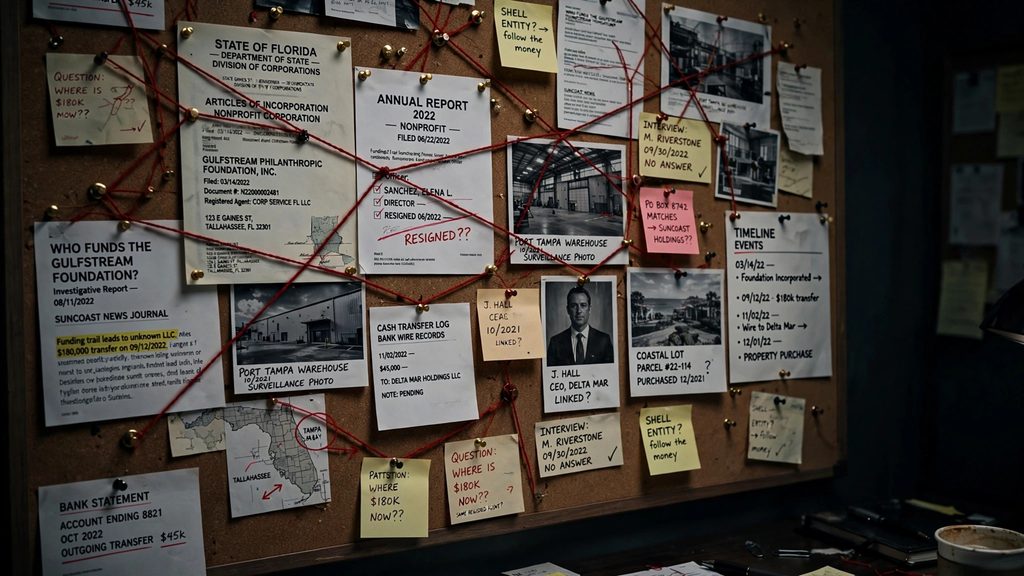
No person has publicly established himself as the original author of the Titor posts. Several investigations have nevertheless produced a trail leading toward Florida and toward people associated with the later commercialization of the character.
In 2003, the John Titor Foundation was formed as a Florida company, and a book titled John Titor: A Time Traveler’s Tale was subsequently published. Later investigations connected the foundation to Florida entertainment lawyer Larry Haber. An Italian television investigation involving private investigator Mike Lynch concluded that Haber and a computer-scientist brother were very likely responsible for the Titor story. Those conclusions were circumstantial, not a courtroom-established identification, and the people named have not publicly accepted responsibility for creating the persona.
That distinction should never be blurred. There is a difference between saying that an investigation identified a plausible author and saying that the author has been proven. The evidence supports the first statement. It does not support the second.
Then there is Joseph Matheny, who was associated with Ong’s Hat, one of the earliest elaborate internet alternate-reality projects, and who said in 2018 that he had worked as a consultant for the people behind the Titor story. His description was unusually direct. He characterized Titor as a literary experiment created by other people and said that he was a consultant rather than the owner of the project.
That statement is potentially significant because it comes from someone claiming proximity to the creation of the legend. But it is still a statement, and Matheny did not provide a publicly verifiable chain of evidence establishing every person involved. His account does not independently prove the Haber hypothesis, and the two pieces of evidence need to remain separate rather than being merged into a single solved identity.
The Titor story has come closer to an authorship explanation than most internet mysteries ever do. It has not reached certainty.
What the Evidence Actually Says
The temptation with John Titor is to choose one fact and let it swallow all the others.
The IBM 5100 was real, so perhaps the traveler was real. The predictions failed, so perhaps the IBM detail must have been fabricated. The Foundation existed, so perhaps the Habers must have written everything. Joseph Matheny described a literary experiment, so perhaps the case is solved.
None of those shortcuts is necessary. The surviving evidence supports a much more interesting picture. Someone using the identity TimeTravel_0 appeared in an early internet community devoted to time travel. That person knew or acquired unusually specific information about the IBM 5100. The person constructed an elaborate identity involving military service, a future civil conflict, advanced time-travel machinery and a mission extending back to 1975. The persona later became John Titor and accumulated a large audience. The story generated photographs, diagrams, technical explanations and a substantial mythology.
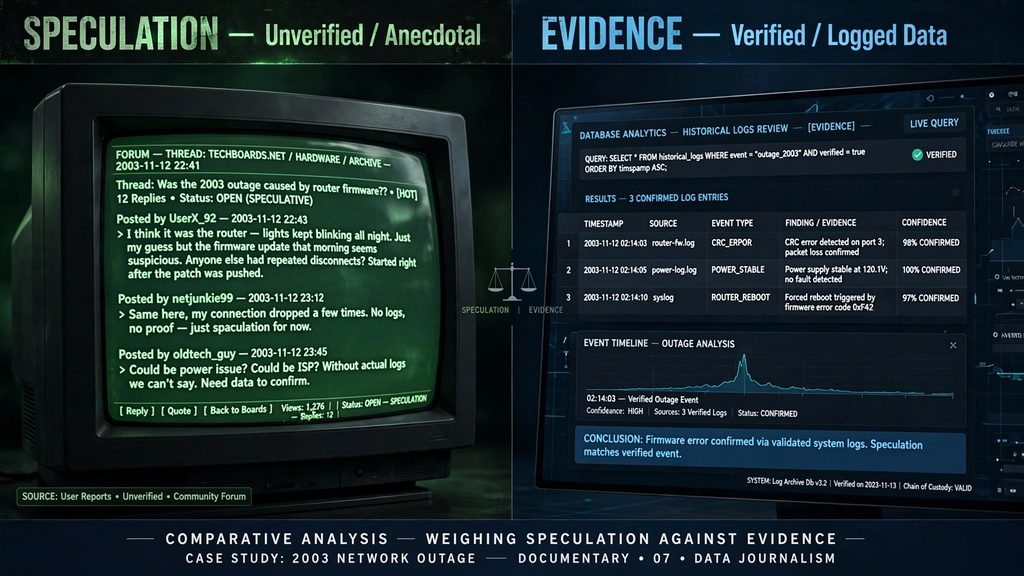
The same person or connected group also made predictions about specific future events. Those events did not occur. The story contained internal inconsistencies, including the change from IBM 5110 to IBM 5100. Investigators later found links between the Titor name, a commercial foundation and individuals associated with it, while another person with experience in elaborate internet fiction publicly described Titor as a literary experiment.
Taken together, these facts make the Titor legend extraordinary without requiring any extraordinary conclusion. The technical knowledge is real. The predictions failed. The authorship evidence is suggestive. The identity remains unconfirmed. That is the record.
Why John Titor Survived the Failure of His Own Future
The strangest thing about Titor may be that the story did not need the future to cooperate. In fact, the failure of the predictions became part of the legend.
A prophecy that comes true has a natural endpoint. Once the event happens, the story can be closed, analyzed and filed away. A prophecy that fails can remain alive indefinitely if its followers reinterpret the failure. In Titor’s case, the many-worlds explanation supplied a particularly effective mechanism because it transformed historical divergence into part of the story itself.
The future did not arrive because, by the story’s own logic, this was not exactly the future anymore. That argument cannot rescue the original predictions as ordinary forecasts, but it can preserve the mythology. And mythology does not require successful prediction. It requires narrative tension.
Titor had almost everything an early internet legend needed. There was an anonymous authority figure. There was a secret military mission. There was an obscure computer whose technical details could be independently checked. There were photographs. There were diagrams. There were dates. There was a catastrophic future. There was a mysterious disappearance. There were unresolved questions about identity. There were later investigators, suspected authors and competing explanations.
Most importantly, there was a story that could continually absorb new information without ever having to surrender its central mystery. That is why John Titor remains interesting even though 2004, 2008 and 2015 are now historical dates rather than approaching futures.
The future did not validate him. The internet preserved him.
The Record We Are Left With
John Titor is often remembered as the man who claimed to come from 2036. That is the least interesting part of the story. The more revealing John Titor is the anonymous author who understood that specificity creates credibility, that technical language creates texture, that obscure facts can function as authentication, and that a sufficiently elaborate narrative can make readers feel as though they are examining evidence rather than participating in a story.
Yet the evidence remains. An IBM 5100 really did possess unusual capabilities. TimeTravel_0 really did appear on the Time Travel Institute forum in November 2000. The October IRC record really does contain the earlier IBM 5110 designation. The persona really did become John Titor. The posts really did describe civil war, nuclear conflict and other future events. Those years really did pass without the events occurring. Investigators really did trace connections to people associated with the later Titor enterprise. Joseph Matheny really did publicly describe the project as a literary experiment.
What remains unproven is the part that would make the entire story supernatural. No authenticated evidence demonstrates that the writer came from 2036. No authenticated evidence establishes that a working time machine existed. No authenticated evidence identifies the original author beyond reasonable but unproven investigative hypotheses. And no amount of later reinterpretation can turn the failed 2004, 2008 and 2015 predictions into successful forecasts.
The years have already answered that part of the question. What they cannot answer is who wrote the messages. That is why John Titor endures, not because the future he described arrived, but because the record he left behind is detailed enough to investigate and incomplete enough to resist a final confession.
The time traveler disappeared. The posts did not.
And more than two decades later, the strangest thing about John Titor is no longer that he claimed to have come from the future. It is that someone in the year 2000 understood exactly how to make the future look as though it had already happened.
Related investigations
John Titor belongs to a larger family of modern prediction stories in which extraordinary claims become most revealing when their promised futures are compared with the historical record. On Monkey and Elf, the same question appears in a different form in Bruce Goldberg’s thousand-year forecast built from hypnotic encounters with supposed future time travelers and in the account of the supposed quantum physicist who appeared in a Boston hospital in 2010. The methods are radically different, but the historical question is the same: what remains when a prediction is specific enough to be checked and the promised future finally arrives?