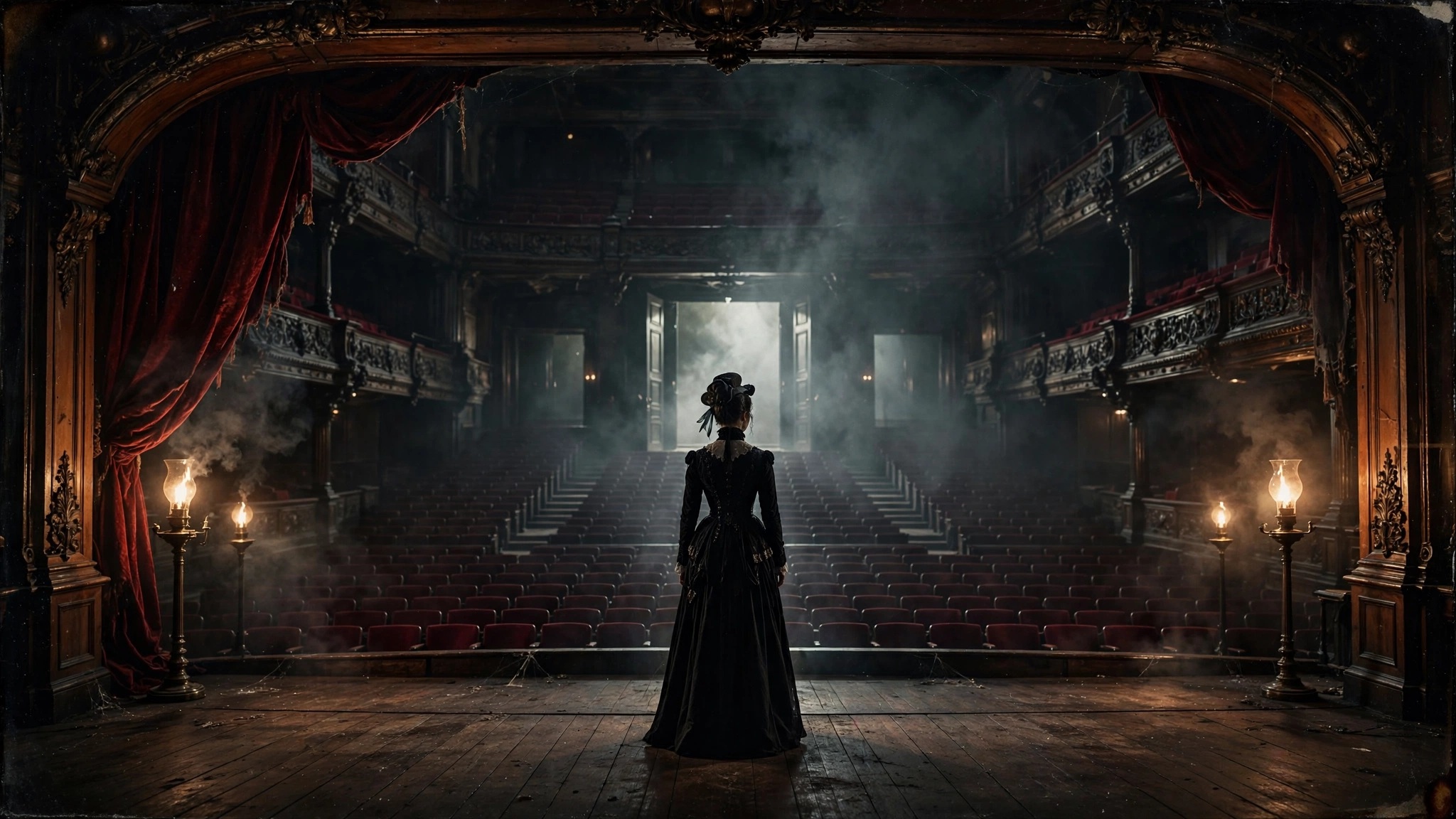
On October 21, 1888, the New York World published an interview with Margaret Fox in which she stated that the mysterious rappings that had launched Modern Spiritualism forty years earlier were not messages from the dead at all. She said she and her sister had produced them physically, by cracking their joints. That same evening, before an audience of more than 2,000 people at New York’s Academy of Music, Margaret demonstrated the technique onstage.
She had been paid $1,500 for the newspaper interview. The movement she was denouncing had already spread across the United States and Europe, acquired churches and newspapers, and inspired thousands of people to communicate with the dead through mediums who had nothing to do with the Fox family. The extraordinary part of the story is therefore not simply that a famous medium confessed to fraud. It is that the confession didn’t end the religion she had helped create.
The Night the Dead First Knocked
On the night of March 31, 1848, in a rented cottage on Hydesville Road in Wayne County, New York, two young sisters began reporting unexplained sounds. Margaretta “Maggie” Fox was about fourteen. Her younger sister Catherine, known as Kate, was about eleven. Their parents, John and Margaret Fox, had moved into the cottage during the winter while their permanent home was being completed, and the house already carried a local reputation for being haunted.
According to the family’s account, the girls heard mysterious rappings coming from the walls, furniture, and other parts of the house. Their mother began asking questions. The sounds appeared to answer. She reportedly asked how many children she had borne, and the raps gave the correct number. Neighbors were summoned. The phenomenon became a local spectacle. Someone devised a crude numerical code that allowed questions to be answered through sequences of knocks, eventually permitting the supposed spirit to communicate through the alphabet.
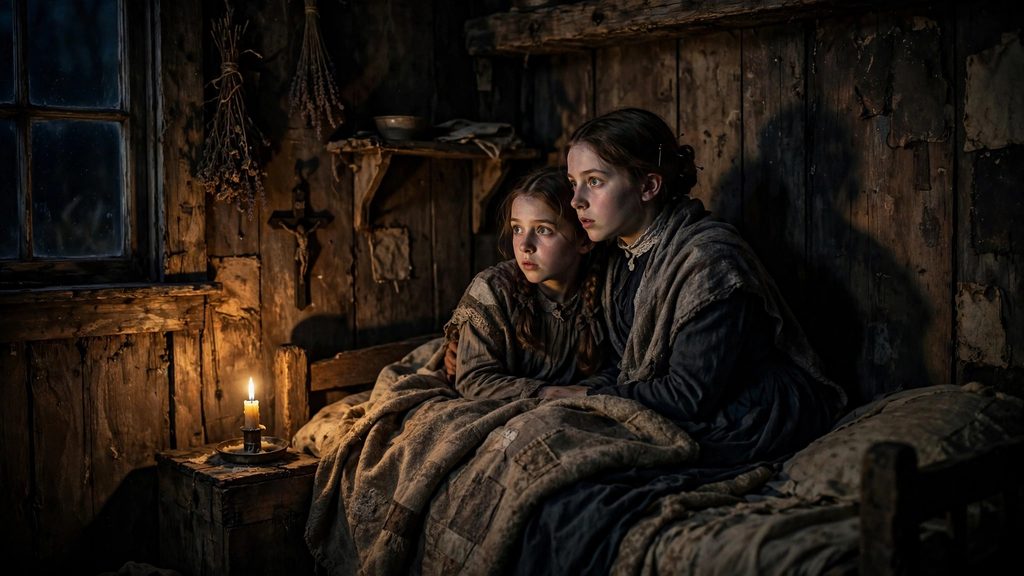
The explanation became increasingly elaborate. The family was told that the sounds came from the spirit of a peddler who had supposedly been murdered and buried beneath the house. Neighbors dug into the cellar looking for the body. Heavy spring rain flooded the excavation before the search could be completed. By then, however, the mystery had already escaped the cottage. Within weeks, the case was being documented in print. By May 1848, a local justice of the peace, E. E. Lewis, had visited Hydesville, interviewed witnesses and former occupants, and published a pamphlet describing the events.
The Fox sisters had become something more than two children hearing noises. They had become mediums.
From a Haunted Cottage to a Religious Movement
The family’s older daughter, Leah Fox, had not been present for the original Hydesville events. She nevertheless became crucial to what followed, helping manage the younger sisters as their reputation expanded. The sisters eventually moved to New York City, where they began holding séances for paying audiences. Their guests included prominent Americans. Newspaper editor Horace Greeley became one of their supporters.
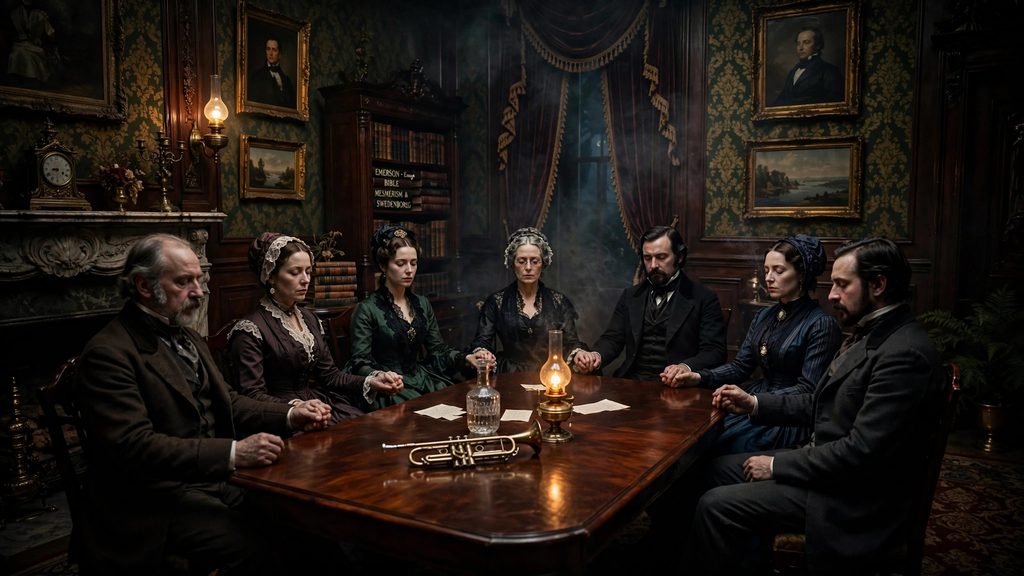
The original rappings were no longer merely a strange incident in a rural farmhouse. They had become evidence, for believers, that consciousness survived death and that the dead could communicate with the living. That idea proved enormously powerful. Modern Spiritualism developed its own mediums, publications, lecture circuits, organizations, and religious communities. The Fox sisters became its founding celebrities, but the movement rapidly became larger than the women whose names were attached to its origin.
That distinction would become crucial four decades later. Because by the time Margaret Fox publicly declared the entire phenomenon fraudulent, Spiritualism no longer needed the Fox sisters to survive.
The Confession
By 1888, Margaret’s life had deteriorated badly. She and Kate had both struggled with alcoholism. Margaret was estranged from her older sister Leah and experiencing severe financial difficulties. Then came the New York World. On October 21, the newspaper published Margaret’s account of the Hydesville phenomenon. She said that the rappings had been produced physically and that she and Kate had learned to create the sounds by manipulating and cracking their joints.
The explanation was almost absurdly ordinary compared with the supernatural machinery that had grown around it. The great messages from the dead had supposedly begun with two children discovering that their bodies could make convincing noises in the dark. But Margaret didn’t stop with the newspaper interview. That night, she went before an audience of more than 2,000 people at the New York Academy of Music. Kate stood beside her.
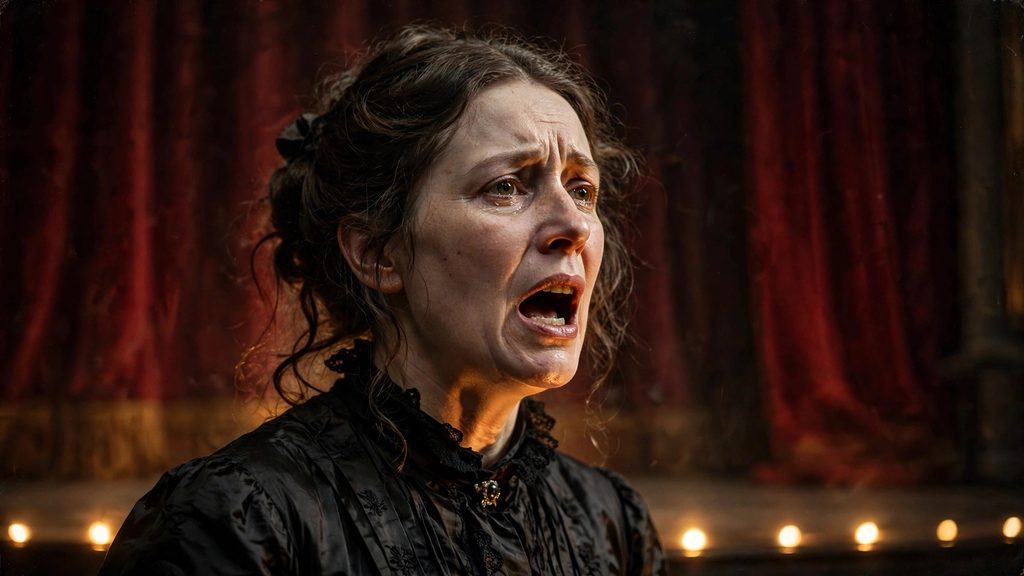
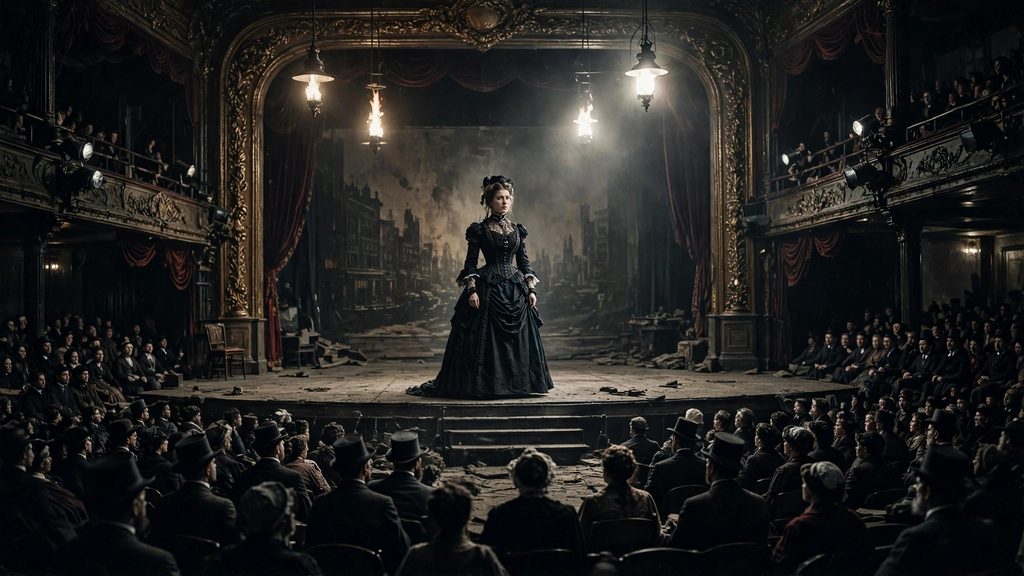
Margaret announced: “I am here tonight as one of the founders of Spiritualism, to denounce it as an absolute falsehood from beginning to end, as the flimsiest of superstitions, the most wicked blasphemy known to the world.” She then demonstrated the mechanism she said had produced the original rappings, using her body to recreate the sounds that had once been interpreted as communications from the dead.
The New York Herald reported that the audience responded with both cheers and hisses. For one extraordinary evening, the founder of a religious movement stood on a stage and attempted to demonstrate that its foundational miracle had never been a miracle at all. It should have ended the story. It didn’t.
The Founder Recants Her Confession
In 1889, Margaret Fox withdrew her confession. She later attributed it to financial pressure and circumstances surrounding the newspaper interview. Other accounts emphasized her alcoholism and the desperation of her situation. Whatever the explanation, the historical record was now split between two mutually contradictory statements from the same woman. In 1888, Margaret said the rappings were fraudulent and demonstrated how they were produced. In 1889, she said that confession was itself unreliable. And Kate never provided a definitive resolution that could cleanly settle the contradiction.
That creates an unusually difficult historical problem. The confession is not simply a rumor reported decades later. It was public, paid for, published in a major newspaper, and followed by a live demonstration. But the retraction was also public. So which Margaret should history believe? The woman who confessed? Or the woman who said the confession was false?
A century later, Janet Hodgson of the Enfield poltergeist would offer a similar partial confession, saying only about two percent of it was faked.
The Movement Survived Its Own Founding Scandal
The most revealing fact may be what happened next. Almost nothing happened to Spiritualism. By 1888, the movement had already existed for four decades. It had become institutionalized. Thousands of practitioners had entered the field as independent mediums. Churches and organizations had formed. Books had been published. Séances were being conducted far beyond Hydesville. The movement had acquired its own intellectual and religious life. It no longer depended entirely on whether Margaret and Kate Fox had been honest children in a darkened farmhouse.
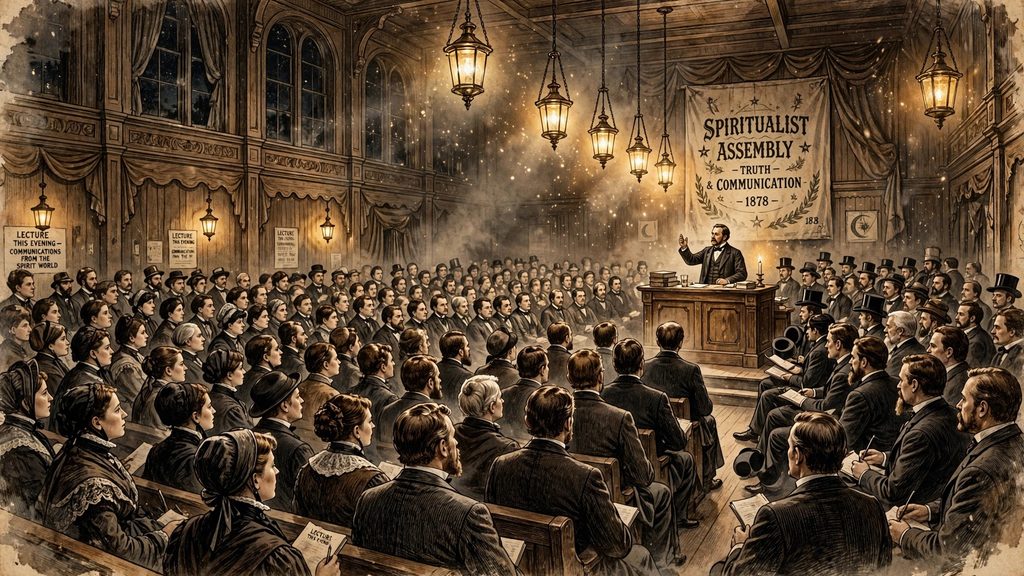
That is why the confession failed to accomplish what it might seem, in retrospect, that it should have accomplished. It attacked the foundation. The building remained standing. Margaret and Kate both died within a few years of each other, in difficult circumstances and largely separated from the movement whose origin story had made them famous. Kate died on July 1, 1892. Margaret died on March 8, 1893. The religion continued.
The Problem With Saying the Case Is “Solved”
Later investigators, including researchers associated with the Society for Psychical Research, founded in London in 1882 to investigate claims of this kind, did not simply treat Margaret’s confession as the final word. The reason is obvious. Her own subsequent retraction made the evidentiary record contradictory. One interpretation is straightforward: Margaret told the truth in 1888, demonstrated the method honestly, and later withdrew the confession because she needed money or because the consequences of abandoning the movement became unbearable.
The alternative interpretation is that the 1888 confession was compromised by financial desperation, personal circumstances, or the sensational incentives surrounding a newspaper willing to pay heavily for an exclusive story, and that the later retraction was closer to the truth. The historical record does not provide a clean mechanism for choosing between those explanations with absolute certainty. That doesn’t make all interpretations equally persuasive. It means the precise question of which statement Margaret was lying in remains unresolved.
And there is an important distinction between that narrow uncertainty and the much larger historical record. The fact that the confession was later retracted does not erase the existence of the confession. Nor does the confession, by itself, erase every subsequent claim made by every Spiritualist medium. Those are separate questions.
What the Record Actually Gives Us
Several points are remarkably secure. The Hydesville rappings began in March 1848. The events were investigated and described in writing almost immediately. The Fox sisters became internationally famous mediums. Their story became a foundational narrative for Modern Spiritualism. Margaret Fox publicly denounced Spiritualism in 1888, gave a detailed account of how she said the rappings had been produced, and demonstrated the technique before a large audience. She then recanted the confession the following year. The movement survived.
Those facts are enough to make the Fox sisters’ story historically extraordinary without adding anything supernatural to it. The unresolved question is narrower, but perhaps more fascinating: what happened inside Margaret Fox’s own mind between the confession and the retraction? Was the woman on the stage in 1888 finally telling the truth about what two children had done forty years earlier? Or was the desperate woman accepting $1,500 to destroy the reputation that had once made her famous?
There is no surviving piece of evidence capable of making that contradiction disappear completely. And perhaps that is the strangest legacy of Hydesville. Modern Spiritualism began with two children making mysterious sounds in a dark house. Forty years later, one of those children stood before thousands of people and said the dead had never been speaking. Then she took it back. And the dead, or at least the belief in them, kept speaking anyway.