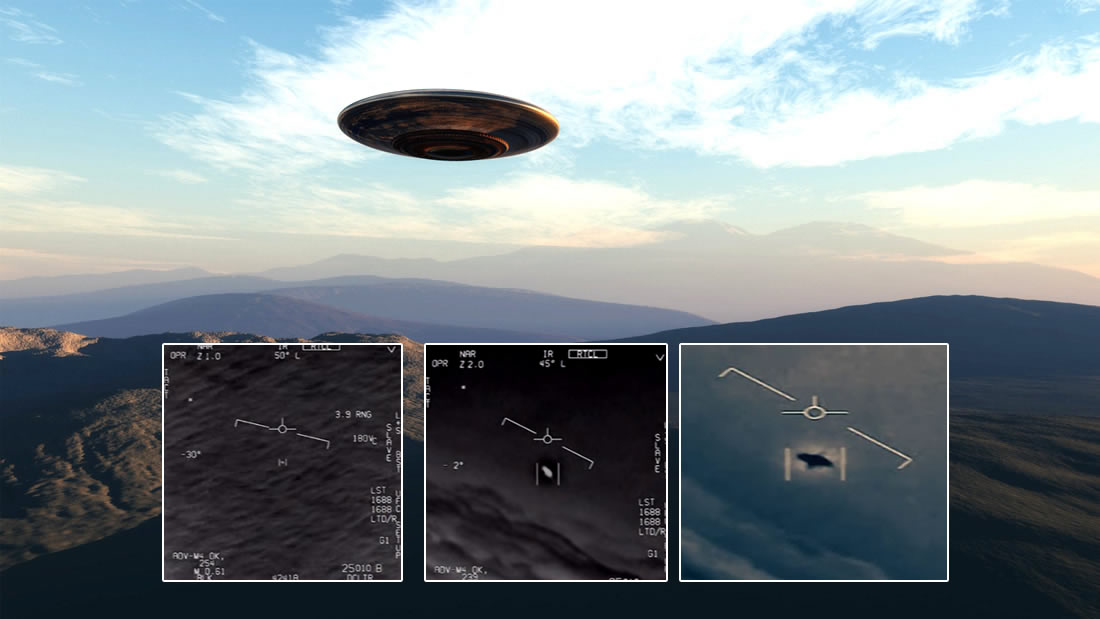





The Gulf of Mexico really does contain things we cannot easily see, classify, or explain. What it does not contain, at least in any publicly traceable record, is the extraordinary dataset described in viral accounts of unidentified submerged objects racing at 2,000 kilometers per hour, emitting unexplained radiation, and disappearing with such regularity that dozens of cases supposedly accumulated between 2014 and 2018.
That distinction matters. There is a real and increasingly serious scientific and military interest in unidentified objects in the ocean, but the strongest evidence for that subject is not a secret table of impossible speeds. It is the much more frustrating reality that sonar produces ambiguous contacts, large areas of the seafloor remain incompletely mapped, naval activity is not always public, and some reported UAP incidents genuinely remain unresolved. The interesting question is therefore not whether the Gulf of Mexico is hiding an impossible fleet. It is how quickly an ordinary unknown becomes an extraordinary story once somebody supplies numbers that nobody can trace.
The Numbers Are the First Problem

The viral version of the story arrives already quantified: underwater objects allegedly moving at 280 to 300 kilometers per hour, sudden bursts approaching 2,000 kilometers per hour, unexplained gamma-radiation readings, and roughly thirty documented incidents between 2014 and 2018. Those figures sound authoritative because precision creates the appearance of measurement. But a measurement without a provenance is not evidence merely because it has a decimal place attached to it. The account does not identify a dataset, sensor log, mission report, scientific paper, Navy document, NOAA investigation, named principal investigator, or other primary record from which those numbers can be independently reconstructed.
That becomes particularly revealing when compared with the people who are actually investigating the USO question. Retired Rear Admiral Tim Gallaudet has publicly discussed interviewing mariners, submariners, and Coast Guard personnel about unexplained underwater observations, including reports from the Gulf and other regions. But his own earlier public description of the project emphasized that the evidentiary stage was still developing: he did not present a finished database establishing dozens of extraordinary underwater vehicles with precisely measured speeds. That is an important distinction. Gallaudet’s later public statements have become considerably more expansive, including his view that some UAP may involve what he calls a higher-order intelligence that is not human. But that remains his interpretation, not an independently established finding, and it certainly does not retroactively authenticate an unattributed list of Gulf of Mexico sensor statistics.
The same evidentiary rule applies in the other direction. Failure to find a public record does not prove that no classified sensor data exists. It proves something narrower and more useful: the specific claim cannot presently be checked from the evidence supplied with it. That is enough to reject the numbers as established fact without pretending to know everything that may exist behind classified doors.
Seven Vanishing Probes Need Seven Sources

The same problem appears in the stories about research probes allegedly disappearing at great depth throughout the 1990s and then again in 2005, 2008, 2013, 2017, 2019, and 2022. The story is unusually specific about the chronology while being remarkably vague about the institutions involved. There is no named expedition, no vessel, no research program, no university, no government agency, no principal investigator, no mission number, and no technical report attached to the individual incidents. One account even adds three supposedly observed metallic spheres roughly thirty meters across, but again without identifying the observation platform or the original record.
That is not how a genuine history of deep-ocean equipment loss normally looks. A serious expedition can certainly lose equipment. Deep-sea instruments operate under enormous pressure, communication can fail, cables can break, vehicles can become trapped or disoriented, and recovery itself can become a major operation. But the more spectacular the alleged event, the more important the provenance becomes. A missing probe is one thing. Seven separate disappearances across decades, accompanied by enormous unidentified objects, are a very different proposition. If those events happened as described, the basic question is simple: which missions?
Until those missions can be named and their records examined, the responsible classification is not “secret underwater technology.” It is unverified narrative. That distinction is not pedantry. It is the difference between investigating an event and investigating a story about an event.

There is also a recognizable mechanism by which these stories become more convincing with every retelling. An early anecdote says that a sonar operator saw something strange. The next version supplies a speed. A later version supplies a depth. Someone adds a radiation measurement. Eventually the account acquires the vocabulary of a classified technical report without acquiring the report itself. The numbers survive because they make the story feel documented. The original source disappears because nobody asks where the numbers came from.
The Ocean Is an Awful Place to Measure a Mystery

One reason USO stories are unusually resistant to resolution is that the underwater environment is almost perfectly designed to produce incomplete information. Sonar is not an underwater camera. Active sonar sends sound into the water and interprets returning echoes; passive sonar listens to acoustic energy generated by other sources. Range, direction, strength, background noise, propagation conditions, reflections from the seafloor, biological activity and the geometry of the sensor all affect what the operator can infer. NOAA itself describes sonar as an essential tool for locating objects and mapping the ocean, but also documents how biological scattering layers can create striking false-bottom effects in which dense concentrations of fish, squid, jellyfish and other organisms generate acoustic returns that can initially look like something much larger or farther away.
The Gulf of Mexico provides an especially useful illustration. NOAA researchers have specifically studied the Gulf’s deep scattering layers using autonomous platforms and echosounders because enormous concentrations of marine organisms migrate vertically through the water column and can produce complex acoustic signatures. In other words, the Gulf already contains enormous moving structures that sonar can detect collectively without providing an intuitive visual explanation of what the operator is seeing. That does not explain every unidentified contact. It does explain why an unidentified sonar return should not automatically be promoted into an unidentified machine.
And there is another limitation that is much harder to dramatize but far more important: we simply have not observed the ocean everywhere at comparable resolution. NOAA reported in 2026 that 44 percent of U.S. ocean, coastal and Great Lakes waters remained unmapped at its specified 100-meter resolution. Globally, only a minority of the seafloor has been mapped with modern high-resolution techniques. Even where a map exists, a map is not the same thing as continuous observation of everything moving through the water above it.
The unknown is therefore real. But an unknown is a category of evidence, not an explanation.
What a Real Sonar Operator Actually Says

Aaron Amick is useful here precisely because the real technical story is more restrained than the mythology built around it. The retired U.S. Navy submariner has described unusual sonar contacts sometimes referred to as “fast movers,” contacts that appear to move too quickly or behave in ways that make them difficult for an operator to track conventionally. That is a legitimate description of a detection problem. It is not the same thing as identifying a machine, establishing its propulsion system, determining its origin, or proving that it is non-human.
This distinction is fundamental to sonar work. A trained operator is interpreting a signal, not looking through a transparent window into the ocean. A contact can be real while its identity remains unknown. Its apparent motion can be real while its calculated range or bearing remains uncertain. A sensor can accurately report that something produced a return without telling you whether that something was a vehicle, animal, debris, thermal structure, acoustic artifact, or another phenomenon capable of interacting with the sensor.
That is why “unidentified” is such an important word. It describes the state of the investigation. It does not describe the nature of the object.
The 2,000 km/h Claim Has a Physics Problem — But Not Quite the One Usually Given
The most sensational number in the story is the alleged burst to 2,000 kilometers per hour underwater. That is roughly 1,080 knots, a speed so far beyond ordinary submerged vehicles that it would demand extraordinary propulsion, control and hydrodynamic solutions. But the original argument that such a speed is impossible simply because sound travels through water at roughly 1,500 meters per second is itself too crude. An object does not become impossible merely because it exceeds or approaches the local speed of sound; underwater hydrodynamics is more complicated than that.
The real engineering problem is cavitation, drag and control. At sufficiently high speeds and appropriate pressure conditions, the pressure around a moving body can fall below water’s vapor pressure, producing a vapor cavity. Engineers have spent decades studying supercavitation precisely because deliberately creating such a cavity can dramatically reduce drag. Experimental and engineering literature documents supercavitating underwater vehicles operating at extraordinarily high speeds, including research around the 200-knot class and beyond. So “nothing can move that fast underwater” would be false.
But that correction actually makes the original claim more demanding, not less. A 2,000-kilometer-per-hour object would not be an ordinary submarine quietly accelerating through seawater. It would require an extreme hydrodynamic regime, specialized propulsion and a way to generate and maintain a cavity or otherwise overcome enormous fluid forces. The transition into and out of such a regime would itself be physically conspicuous. If someone has genuinely measured a conventional-looking object moving through ordinary seawater at roughly 1,080 knots, the evidence needed to establish that fact would be extraordinary: synchronized sensors, calibrated ranges, multiple independent measurements, environmental data, trajectory reconstruction and preferably repeat observations.
A number printed in an unattributed story is not that evidence.

Gamma Radiation Would Make the Claim More Testable, Not More Mysterious
The alleged gamma-radiation readings deserve the same treatment. “Gamma radiation” sounds like exotic technology because it is a phrase associated with nuclear processes and high-energy astrophysics, but a radiation measurement without an instrument, calibration record, energy spectrum, location, background level and environmental context is almost meaningless. A real detector can register something that later turns out to have an entirely conventional source, and a claimed reading cannot be converted into evidence of an exotic vehicle merely by giving it a dramatic name.
If these measurements actually exist, they should be among the easiest claims in the story to investigate. Identify the detector. Identify the platform. Give the timestamp. Show the spectrum. Establish the background count. Show the location. Provide the raw or appropriately declassified data. Explain what changed relative to baseline. The more specific the measurement, the easier it should be to test. That is precisely why an unsupported claim of “gamma radiation” is weaker than a vague eyewitness account: it promises a level of instrumented evidence that the story never actually produces.
The Genuine USS Omaha Mystery Is Somewhere Else

There is a genuine reason the USO subject refuses to disappear. In July 2019, the USS Omaha incident off Southern California produced publicly released Navy footage of a spherical object that appeared to descend toward the ocean. Retired officials, investigators and journalists have debated what exactly happened, and the incident remains part of the wider UAP record. But it is crucial not to relocate the case geographically: the Omaha incident occurred in the Pacific off San Diego, not in the Gulf of Mexico. Nor should an unresolved observation be transformed into proof that the object demonstrated exotic transmedium propulsion. The public record establishes an unusual observation; the explanation remains contested.
That is actually a much stronger story than the Gulf account, and it connects to a broader pattern examined in unseen leviathans and the ocean’s secret intelligence. The Omaha footage has identifiable military provenance. It has a date and location. It has witnesses and associated reporting. It can be examined. That does not mean the most extraordinary interpretation is correct. It means there is an actual evidentiary object on the table.
And that is the standard the sensational Gulf claims fail to meet.
The Ocean Really Is Still a Frontier

Rejecting the unsupported dataset does not make the ocean less mysterious. If anything, it makes the genuine mystery easier to see. Vast areas of U.S. waters remain incompletely mapped. Sonar operates through complicated acoustic environments. The Gulf contains deep scattering layers, currents, geological structures, biological migrations and other phenomena capable of producing difficult observations. Military vessels operate under conditions in which not every sensor track will become public, while scientific expeditions routinely encounter technical limitations that make the deep ocean one of the hardest environments on Earth to study.
That leaves plenty of room for legitimate unknowns. A sensor contact can be real and unidentified. A witness can be honest and mistaken. A military encounter can remain classified. A strange acoustic signature can eventually turn out to be an animal, a vehicle, a current, a reflection, or something researchers have not yet identified. Those possibilities should remain open until the evidence closes them.

The U.S. government is also treating unidentified phenomena as a legitimate investigative category. The All-domain Anomaly Resolution Office explicitly describes its mission as applying a rigorous, data-driven framework to UAP and continues to publish unresolved cases. At the same time, its historical review found no empirical evidence that U.S. government investigations had confirmed extraterrestrial technology and emphasized a recurring problem: many cases remain unresolved simply because the available data are incomplete or poor quality. That is almost the exact opposite of the logic behind the viral Gulf story. The official lesson is not that every unexplained contact is extraordinary. It is that better data are what separate an unknown from an explanation.
What the Evidence Actually Leaves Us With
After the dramatic numbers are removed, the picture becomes less cinematic but far more defensible. There is no publicly traceable source establishing the alleged thirty Gulf cases from 2014–2018. There is no identified dataset supporting the claimed 280–300 kilometer-per-hour speeds or 2,000-kilometer-per-hour bursts. There is no named expedition behind the sequence of supposedly vanished deep-sea probes. There is no supplied detector record establishing mysterious gamma radiation. And there is no reason to treat the Gulf of Mexico as the proven home of machines “that have nothing to do with our civilization.”
What remains is better: a real ocean that is incompletely observed; real sonar systems operating at the limits of what acoustic sensing can tell us; real underwater anomalies that sometimes resist immediate identification; real military cases whose full data are not publicly available; real scientific efforts to map and understand the seafloor; and real investigators who are still trying to determine what some witnesses and sensors have actually encountered.
The temptation in anomalous research is to believe that mystery becomes more interesting when the explanation becomes more extraordinary. Usually the opposite is true. The unknown is already difficult enough. The moment an unsupported number is allowed to masquerade as a measurement, an unidentified contact becomes a vehicle; a vehicle becomes a civilization; and a missing report becomes a secret.
The Gulf of Mexico does not need a fleet of impossible machines to remain one of the least completely understood environments on Earth. It already is. The real story is not that we have proved something alien is moving beneath the Gulf. It is that we still do not have enough good data to say what every strange signal is—and that is precisely where the investigation should begin.