


Before doctors could name autism, epilepsy, cerebral palsy, genetic disorders, or severe developmental impairment, people still had to explain what happened when a child was born sick, failed to thrive, developed differently, or seemed to change before their parents’ eyes. Across parts of Europe, one answer appeared again and again: the fairies had taken the real child and left a substitute behind. The creature in the cradle was a changeling, a fairy child, demon, enchanted object, or other supernatural replacement masquerading as human.
It’s tempting to look backward and call this an ancient diagnosis of autism. It wasn’t. That popular explanation gets something important right, changeling stories often gathered around children whose bodies or behavior frightened, confused, or exhausted the adults caring for them, but it imposes modern medical categories on societies that did not possess them. The historical record is considerably stranger. The changeling was not one diagnosis. It was a flexible explanation for illness, disability, developmental difference, infant mortality, sudden deterioration, and sometimes simply the terrifying fact that a child could become incomprehensible to the people who loved them. And sometimes the story became an excuse for violence.

The Changeling Was Never Just One Thing
The basic motif is remarkably durable. A healthy child is taken away by supernatural beings and replaced by something that only looks human. In Irish and Scottish traditions the abductors might be fairies or the Aos Sí; elsewhere the agents could be trolls, demons, witches, or other supernatural beings. The substitute might be described as a sickly fairy child, an aged creature trapped in an infant’s body, a monstrous being, or in some traditions a piece of wood given the appearance of a living child through enchantment.
But the idea was never confined to one neat set of symptoms. Stories describe infants who cried constantly, failed to grow, demanded enormous quantities of food, behaved strangely, displayed unusual physical characteristics, or seemed uncannily intelligent. Other traditions describe children who appeared normal and then deteriorated. Some stories involve congenital conditions; others involve illness acquired after birth. Some are explanations for a child who never developed as expected. Others are stories about a child who seemed to have become a different person.
That flexibility matters because the changeling was not a medical theory in disguise. It was a supernatural explanation capable of absorbing many different kinds of human misfortune. Modern scholarship has found changeling material in a much wider geographical and historical range than the familiar Irish-fairy version suggests, extending across West Eurasia and the Mediterranean. Recent scholarship has also challenged the assumption that all of these traditions represent one unchanged “myth” handed down intact through thousands of years. They do not. The stories evolved, changed names, acquired theological meanings, and were repeatedly reinterpreted by the people who recorded them.
The Myth Did Not Begin With Modern Disability Categories
This is where one of the most popular explanations of the changeling story needs to be turned upside down.
It’s now common to read changeling folklore and immediately see autism. A child stops making eye contact. A child behaves differently. A child loses language. A child seems unusually sensitive to sound. The comparison can be emotionally compelling because modern parents recognize some of these experiences. Susan Schoon Eberly’s influential 1988 essay explicitly examined the relationship between fairy changelings and disability folklore, and later writers developed the comparison further.
But that doesn’t mean medieval or early modern communities were describing autism before medicine invented the word. C.F. Goodey and Tim Stainton made precisely this warning in their 2001 study published in the Journal of the History of the Behavioral Sciences. They found that the historical sources do not describe intellectual disability in a form that can simply be mapped onto modern clinical categories. The very idea of a single, transhistorical “changeling myth” linked to a modern concept of intellectual disability is itself partly a product of later psychological and disability scholarship.
That distinction matters. A medieval parent did not look at a child and think, “This is autism.” They had no such category. They might see an infant who failed to develop, a child who behaved in an unfamiliar way, a body that seemed malformed, a sickness that appeared to arrive from nowhere, or a child who simply did not resemble the healthy children around them. The changeling story gave those observations a cause. The resemblance to some modern conditions is real. The historical equivalence is not.

The Medieval Record Is More Complicated Than the Fairy Tale
Medieval evidence makes the picture even more complicated. A major 2023 study by Rose A. Sawyer examined changeling ideas in medieval sources and found them embedded not simply in peasant fairy stories but in medical, religious, miracle, and literary traditions. The changeling could become a way of talking about unhealthy children, supernatural interference, demonic substitution, and the anxieties surrounding childbirth and childcare. The material doesn’t fit neatly into the modern picture of a parent discovering that a disabled child has been “replaced.”
Jenni Kuuliala’s work on children with impairments in medieval Europe likewise places changeling beliefs inside a much larger world of religious and social ideas about disabled children. These were societies trying to understand childhood through categories of sin, miracle, demonology, heredity, bodily weakness, divine providence, and supernatural intervention. The fairy story was only one piece of that much larger intellectual landscape.
This is why the changeling shouldn’t be turned into a simplistic morality tale about ignorant people mistaking autism for fairy possession. That interpretation may feel satisfying from the present, but history is rarely that tidy. The people telling these stories weren’t working with the same concepts of childhood, personhood, disability, or disease that we use now. They were trying to explain something they could see. They simply did not possess our explanation.
And Then There Were Tests
Once a culture accepts that a supernatural substitute can occupy a human child’s body, the obvious question follows: how do you prove it? Irish folklore collected in the nineteenth century preserves several supposed methods. Iron could be placed near a child to repel supernatural beings. Salt and protective plants appeared in various traditions. Baptism could carry enormous protective significance. Children might be watched carefully around suspected supernatural danger. And some of the most disturbing traditions involved deliberately provoking the suspected changeling into revealing itself.
W.B. Yeats’s collection of Irish folklore records a particularly horrifying example attributed to Lady Wilde: place the suspected changeling on a fire and recite a formula. If it was really a changeling, the belief held, it would escape up the chimney while the stolen human child would somehow be restored. The fact that this method appears in nineteenth-century folklore collections is not evidence that it was universally practiced, but it demonstrates how easily a supernatural belief could become a physical test performed on a real child.
The distance between folklore and violence was therefore not theoretical. If a person genuinely believed that the being in front of them was not their child, harming that being could be reinterpreted as an act of rescue. The moral category changed before the physical act did. What looked like cruelty from the outside could feel, to the believer, like treatment. That is the mechanism worth understanding.
The Changeling Could Become a Way of Rejecting a Child
The historical literature has long recognized a connection between changeling stories and attitudes toward children who were sick, impaired, or otherwise perceived as abnormal. Carl Haffter’s 1968 study, also published in the Journal of the History of the Behavioral Sciences, explicitly examined the changeling as part of the history and psychology of European attitudes toward handicapped children. Later scholars have complicated that interpretation rather than simply rejecting it.
The distinction is crucial. A changeling story did not necessarily mean that a family hated a disabled child. Sometimes the story could externalize a tragedy that was otherwise impossible to explain. The parents could still love the “real” child while believing that the child they were caring for had been substituted. In that sense, the myth could express grief as much as rejection.
But the same mechanism could become brutally dangerous. If the child was believed to be an impostor, then ordinary parental obligations could be suspended. Feeding, comforting, and protecting the child could become secondary to the supposed task of forcing the supernatural being to leave. The changeling myth contained both possibilities: an attempt to make suffering intelligible, and a framework through which a vulnerable person could be denied their humanity.
Bridget Cleary Was Not a Child, and That’s What Makes the Case So Important
The most famous modern example is also one of the easiest to misunderstand.
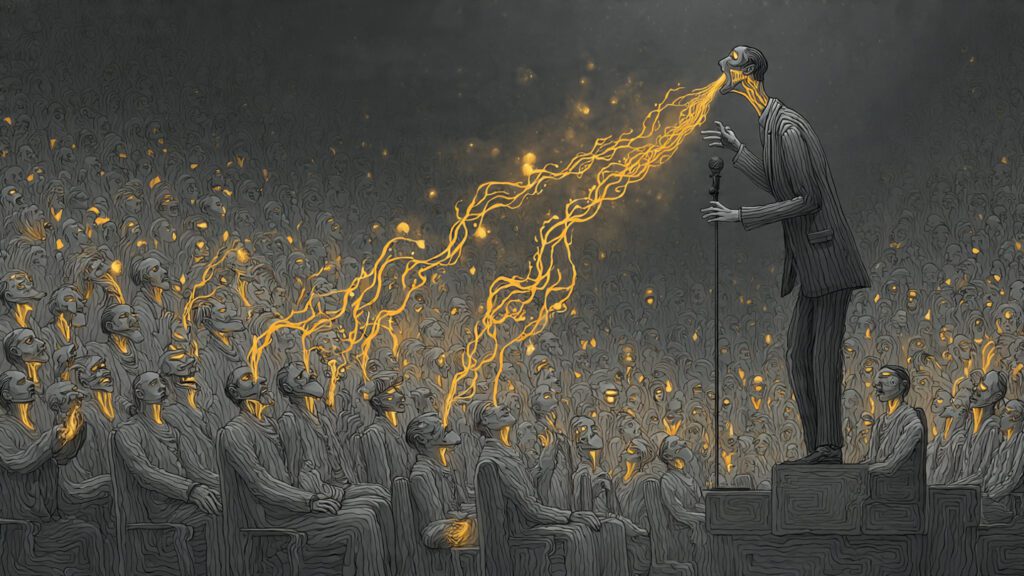
Bridget Cleary was not an infant. She was a young married woman, a dressmaker in County Tipperary. In March 1895 she became seriously ill. Her husband, Michael Cleary, and others around her became convinced that the woman in the house was not Bridget but a fairy changeling who had replaced her. The supernatural explanation did not arise in isolation: local folk beliefs, a fairy doctor, herbal remedies, and Christian religious practices all became entangled in the desperate attempt to determine what was wrong with her.
What followed was not a fairy tale but a criminal case. Bridget was subjected to repeated attempts to force the supposed changeling out. She was given herbal preparations. She was questioned about her identity. She was physically restrained. She was held near the fire. On the night of March 15, 1895, she was fatally burned. Her body was later buried in a shallow grave, and the police investigation exposed a case that became an international sensation.
Michael Cleary stood trial in Clonmel alongside eight others, mostly Bridget’s own relatives, with the grand jury initially indicting five of them for murder. After a two-day trial concluding July 5, 1895, the court reduced the charge to manslaughter, in part because the presiding judge found the defendants’ belief that they were fighting a fairy substitute genuinely sincere. Michael Cleary received twenty years’ penal servitude and emigrated to Montreal after his release; Patrick Kennedy, found most responsible after Cleary for his role disposing of the body, received five years; the remaining defendants received shorter sentences ranging from eighteen months to six months, and the eldest defendant, Mary Kennedy, was spared imprisonment on account of her age.
Justice O’Brien described the case as revealing “a moral darkness” and “even religious darkness” in the minds of several people involved. The words captured something larger than the individual crime. The case demonstrated what happens when an explanatory system becomes so powerful that it can override ordinary recognition of another person’s humanity.
And even here, caution is necessary. Bridget Cleary is often described as the “last witch burned in Ireland,” but that label is misleading. She was killed because people believed she had been replaced by a fairy changeling, not because she had been convicted of witchcraft by a formal witch trial. Modern historians have also emphasized that the case was exploited by newspapers and political interests eager to portray rural Ireland as primitive or incapable of self-government. So even the most famous changeling killing became another battleground over who got to define what “backward” meant.
The Cleary Case Was Extreme. The Belief Was Not.
Bridget Cleary’s murder shouldn’t be used to claim that European parents routinely murdered disabled children because they believed them to be changelings. The surviving evidence does not support such a sweeping statement. What it does show is that changeling beliefs could coexist with real practices of exclusion, abuse, and violence, and that the potential for violence was recognized in folklore itself.
Nor was every changeling story a story of abuse. Some narratives end with the fairy child disappearing. Others describe the return of the stolen human child. Some portray supernatural beings as mischievous rather than murderous. Others allow the changeling to become a sympathetic or even tragic figure. The tradition is not a single historical record of cruelty. It is a large body of stories built around one terrifying idea: that the person you love can be physically present while something essential about them has changed. That emotional structure may be the reason the story endured.
Why a Changeling Can Feel Like a Modern Story
The psychological power of the changeling is easy to understand even without believing in fairies. Imagine a parent watching a child develop normally and then become severely ill. Imagine a child who never develops speech. Imagine an infant who cannot feed properly, cannot sleep, cannot stop crying, or whose body behaves in ways no one in the household understands. Imagine having no laboratory, no genetic testing, no developmental assessment, no antibiotics, no modern neurology, and no reliable concept of many of the diseases that could produce those symptoms. The mystery would be enormous, and humans are exceptionally uncomfortable with unexplained change.
The changeling provides a brutally elegant answer. The child has not become sick. The child has not developed differently. The child has not been altered by a disease nobody can see. The child has been replaced. That explanation transfers the problem from the body to the world. Something happened. Someone did it. There is an identifiable enemy. And, most importantly, the original child still exists somewhere beyond reach. That last idea may be the emotional heart of the myth. The fairy story does not merely explain why a child is different. It preserves the possibility that the child the parents remember is still alive somewhere.
The Myth Survived Because the Fear Survived
W.B. Yeats helped preserve Irish fairy traditions at exactly the moment modern folklore scholarship was turning oral traditions into printed literature. Later writers transformed the changeling into something different again. The supernatural substitute became a literary device for estrangement, alienation, and the fear that the familiar world has been quietly replaced by something almost identical but fundamentally wrong.
That’s why the changeling keeps appearing in modern fantasy and horror. The story doesn’t require belief in fairies to work. It requires only the recognition of an ancient human fear: what if the person I love is still standing in front of me, but something has changed? Modern fiction can use that fear without endorsing the historical explanation. The changeling can represent grief, disability, parenthood, trauma, alienation, domestic violence, or the terror of watching someone you love become unfamiliar. The supernatural creature survives because the emotional problem never disappeared.
What the Changeling Myth Actually Tells Us
The most tempting conclusion is that ancient people were secretly describing autism. The more defensible conclusion is more complicated.
Changeling traditions preserve evidence that people in different historical societies encountered children and adults whose illnesses, bodies, and behavior did not fit the explanatory systems available to them. Some of those people may have had conditions that modern medicine would now identify as neurological, developmental, or genetic. Others may have been suffering from infections, malnutrition, injury, or entirely different conditions. Some probably had no medical condition at all. The historical record is not a diagnostic chart waiting for us to decode it. What it preserves is something more fundamental: the human need to explain inexplicable change.
Sometimes the explanation offered comfort. Sometimes it offered a way to preserve the idea that the “real” child was still somewhere out there. Sometimes it gave families a language for grief. Sometimes it helped communities construct meaning around illness. And sometimes it gave frightened people permission to hurt the person they were supposedly trying to save. That is why the changeling deserves to be remembered neither as quaint fairy folklore nor as a primitive diagnosis of modern disability.
It was a story about uncertainty. And uncertainty can be dangerous. The fairies never had to steal the child. The child only had to become strange enough that the people around them stopped knowing how to explain what they were seeing. That is the part of the changeling story that survived the disappearance of the fairies. Medicine eventually learned the names of many things that folklore had bundled together under one supernatural explanation. But the deeper problem remains familiar: when reality becomes frightening and incomprehensible, human beings will build a story around it. The story can be beautiful. It can be comforting. And, in the wrong hands, it can kill.